A late-night diner, a $15 check, and one unsolicited act of generosity: what could possibly go wrong? Apparently, quite a lot.
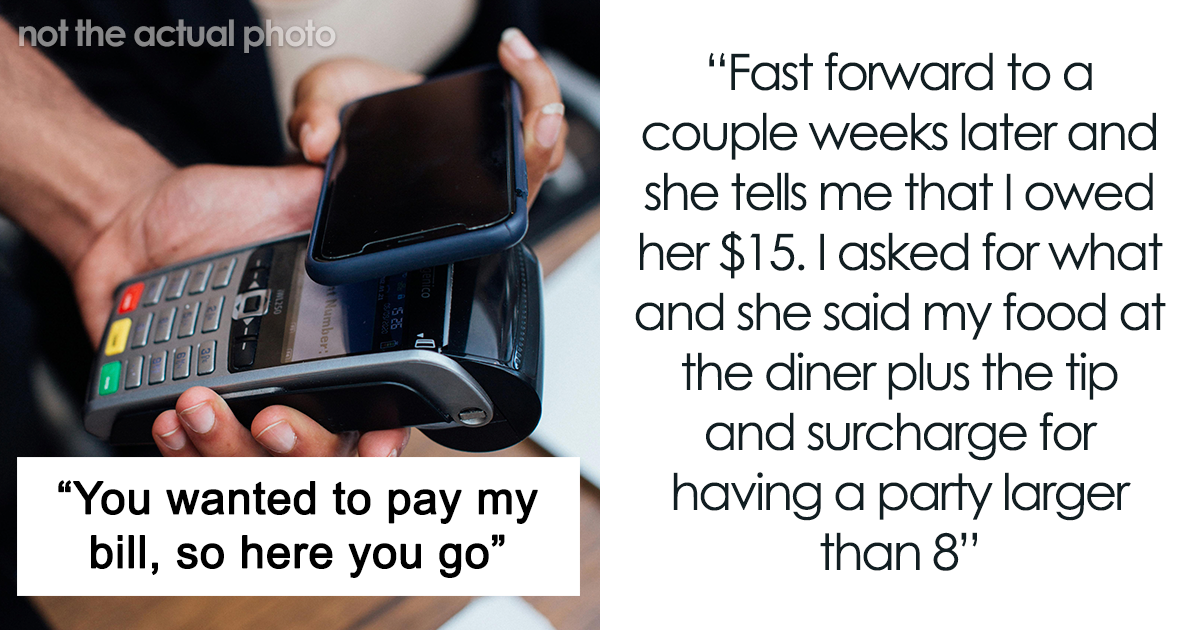
In a story originally shared with Reddit’s Malicious Compliance community, a woman described how a college friend prevented her from paying for her own meal because she was supposedly too intoxicated to calculate the tip. The friend confidently took the check and announced that she would cover it. Weeks later, however, that same friend asked to be reimbursed.
The diner’s response was simple: she had repeatedly tried to pay, had never requested a loan, and had never promised repayment. Her friend had insisted on paying, so she accepted the offer exactly as presented. Call it malicious compliance, financial boundary-setting, or the most expensive $15 lesson ever taught over diner food.
How a Small Restaurant Bill Became a Friendship Test
The incident reportedly happened while the storyteller was in college. She met friends near the end of a night out and acknowledged that she had been drinking. The group eventually visited a diner, where the restaurant provided separate checks.
She took out her card and prepared to pay her portion. According to her account, she had always been good at mental matheven after drinkingand mathematics was her college minor. Her friend nevertheless decided that she was too intoxicated to calculate an appropriate tip.
A genuinely helpful response might have been, “Your total with a 20% tip is approximately this much.” Instead, the friend took her check, placed her card back on the table, and told the server she would pay both bills.
The two women argued about it for several minutes. The storyteller continued trying to pay, while her friend continued refusing. Eventually, the payment was processed using the friend’s card.
That could have been the end of a mildly annoying but generous gesture. Instead, the bill returned from the dead a few weeks later, like a financial ghost wearing a name tag and carrying a calculator.
The Surprise Repayment Request
The friend later announced that she was owed $15 for the meal, tip, and large-party surcharge. The storyteller asked what the charge was for because no repayment arrangement had been discussed.
She then reminded her friend that she had attempted to pay several times. More importantly, she had never asked the friend to cover the check or agreed that the payment would be a loan. If the friend said she was paying, the storyteller reasoned, then she had done precisely that.
The friend was unhappy about losing the money, but the storyteller declined to reimburse her. The malicious compliance was not a complicated revenge plot. There were no fake invoices, dramatic courtroom speeches, or calculators thrown through windows. She simply held her friend to the original statement.
Was It Really Malicious Compliance?
Malicious compliance occurs when someone follows another person’s instruction literally, knowing that the result may expose the instruction’s weakness. The person complies with the words while declining to rescue the speaker from the predictable consequences.
In this case, the instruction was effectively, “You are not paying; I am paying.” The storyteller objected, offered her card, and was overruled. When the friend later tried to redefine “I am paying” as “I am secretly lending you money under terms I will reveal in several weeks,” the storyteller refused to participate.
It was certainly petty. It was also remarkably efficient. Fifteen dollars purchased a permanent reminder that financial terms should not be delivered by surprise.
The Friend’s Concern Was Not Completely Irrational
Alcohol can impair judgment, attention, decision-making, memory, and coordination. The National Institute on Alcohol Abuse and Alcoholism explains that alcohol interferes with brain regions involved in judgment and other important functions. At high blood alcohol levels, a person may appear awake and active while forming incomplete or no memories of events.
The Cleveland Clinic similarly notes that alcohol-related blackouts involve an inability to record new memories. Intoxication should therefore be taken seriously, especially when safety, transportation, additional drinking, or a medical emergency is involved.
If the friend honestly believed the woman was dangerously intoxicated, checking on her condition was reasonable. Helping her review the check, arranging safe transportation, staying with her, or calling for medical assistance if she showed signs of alcohol poisoning would have been responsible choices.
However, concern does not automatically create an unspoken debt. Someone who voluntarily takes another person’s check after being told not to do so should clarify whether the payment is a gift or a loan. Intoxication may explain why extra care was appropriate, but it does not explain why the repayment condition appeared weeks later.
Helping Is Different From Taking Control
The disagreement illustrates the thin line between assistance and control. Helpful behavior respects the other person’s needs and uses the least intrusive solution available. Controlling behavior makes the decision for them, sometimes while insisting that it is “for their own good.”
The friend could have calculated the tip, asked the server to confirm the total, or suggested that the storyteller review the receipt again the next morning. Taking the check entirely was unnecessary unless the payment was intended as a genuine gift.
Healthy relationships rely on respect, honesty, communication, and personal boundaries, principles also emphasized in relationship guidance from Johns Hopkins University. A favor stops feeling generous when it ignores a clear refusal and later arrives with an invoice attached.
The Real Problem Was the Missing Agreement
The amount was small, but the communication failure was enormous. One person apparently interpreted the payment as temporary assistance. The other interpreted it as an unwanted but unconditional offer. Neither interpretation was formally documented, yet only one had been stated aloud.
The Consumer Financial Protection Bureau advises friends and family to discuss financial arrangements before exchanging money. The parties should establish whether the money is a gift or loan, how much is involved, and when repayment is expected.
That advice may sound comically formal for a diner check. Nobody wants to pull out a six-page lending agreement before ordering mozzarella sticks. A single sentence, however, would have prevented the entire dispute:
- “I’ll cover you tonight, but please send me $15 tomorrow.”
- “This one is my treat.”
- “I’ll calculate the tip, but you can use your own card.”
Any of those options would have been clearer than making a dramatic public offer and quietly adding repayment terms later.
Why Money Disputes Hurt More Than Their Dollar Value
A financial disagreement between friends is rarely just about money. It may also involve fairness, trust, embarrassment, power, and competing memories of what was promised.
Bankrate recommends setting clear expectations when lending to friends because informal arrangements can lead to both lost money and hurt feelings. Experian likewise advises lenders to establish repayment terms and lend only what they can afford to lose.
Those principles apply even to small amounts. A $15 disagreement can become symbolic: one person feels exploited, while the other feels manipulated. By the time they are arguing, neither is defending fifteen dollars. They are defending their character.
Financial expectations can be particularly sensitive among students and young adults, for whom a modest restaurant charge may affect groceries, transportation, or an already strained bank account. NerdWallet’s consumer research has repeatedly shown that Americans turn to friends and family for financial advice and assistance, making clear communication within those relationships especially important.
Public Generosity Can Create Private Pressure
The storyteller later said she believed the friend wanted to appear helpful in front of the group without actually absorbing the cost. That interpretation cannot be independently confirmed, but it explains why the later request felt so irritating.
A public gesture earns immediate social credit: everyone sees the person grab the check and save the day. A private repayment request transfers the actual cost back to the supposed beneficiary. The generous person keeps the applause while quietly requesting a refund.
This does not mean every person who fronts a group bill is performing generosity. Most simply want to make payment easier and reasonably expect everyone to send their share. The difference is consent. When someone agrees to repay, the arrangement is clear. When someone repeatedly says, “Let me pay my own bill,” overriding that choice should not produce a surprise debt.
What About the Tip and Large-Party Charge?
The friend said the $15 included the food, tip, and a surcharge for a party larger than eight. Automatic charges can make group checks confusing, particularly when diners are tired or have been drinking.
The Internal Revenue Service distinguishes voluntary tips from mandatory service charges. A large-party automatic gratuity is generally treated as a service charge rather than a discretionary tip. Diners should review the check before adding another gratuity so they do not unintentionally pay twice.
The storyteller later estimated that her food subtotal had been a little over $9, meaning her friend may have paid more than necessary once tax, gratuity, or other charges were added. That possibility strengthens the case for checking the receipt together rather than confiscating it in the name of superior sobriety.
Who Was Right?
The most balanced answer is that both women had understandable concerns, but only one created the disputed transaction.
The friend was not wrong to notice possible impairment or offer assistance. Alcohol can reduce judgment before a person displays obvious signs of intoxication. Friends should look out for one another during a night out.
She was wrong to prevent someone from using an available payment card, announce that she would pay, and introduce repayment terms weeks afterward. If reimbursement mattered, she needed to say so before taking the checkor at least the next morning, while the details were fresh.
The storyteller’s refusal was strict and arguably unforgiving. Paying $15 might have ended the argument quickly. Yet repayment would also have validated an arrangement she never requested and actively resisted. Her response defended a reasonable financial boundary: nobody gets to create a loan on another adult’s behalf and disclose the terms later.
How Friends Can Avoid Similar Restaurant-Bill Drama
Clarify the Payment Before Taking the Check
Use the words “gift,” “treat,” “loan,” or “pay me back.” Ambiguity is not charming when money is involved.
Respect a Person Who Wants to Pay Independently
If a friend has a working card and understands the transaction, help with the arithmetic instead of replacing their decision. If they are too impaired to handle basic tasks safely, prioritize their health and transportationnot a debate over who gets credit-card reward points.
Settle Shared Expenses Promptly
When one person intentionally fronts the bill, send payment requests the same night or the next morning. Include the receipt and explain how tax, tip, and fees were divided.
Discuss Unequal Orders
An even split may be convenient, but it is not always fair. Someone who ordered water and a sandwich should not automatically subsidize three cocktails and a lobster tower simply because dividing by eight is easier.
Repair the Relationship, Not Just the Balance
If a misunderstanding occurs, acknowledge the impact, explain the intent, and agree on a better rule for the future. The Greater Good Science Center emphasizes that authentic repair begins by acknowledging the offense and understanding the other person’s hurt before becoming defensive.
Friendships contribute to connection, belonging, and emotional support, benefits highlighted by both the American Psychological Association and Mayo Clinic. Saving a friendship can therefore be worth more than winning a small financial standoffbut repair requires effort from both people.
Related Experiences: Five Ways an Unspoken Bill Can Become a Big Problem
The diner disagreement feels familiar because variations of it happen constantly. The following composite experiences reflect common social situations rather than claims about specific individuals.
1. The “I Ordered It for You” Surprise
A college student declines takeout because money is tight. A friend orders an extra meal anyway and presents it as a kind gesture. Later, the friend asks for $30 and becomes irritated when repayment is not immediate.
The recipient is trapped between gratitude and financial reality. Refusing the food looks rude, but accepting it creates a cost that was deliberately avoided. The lesson is straightforward: ordering something “for” another person does not automatically authorize charging that person.
2. The Group Check That Rewards the Biggest Spenders
Eight friends have dinner. Two order inexpensive entrées and no alcohol, while several others order appetizers, premium cocktails, and desserts. Someone cheerfully suggests splitting the total equally because it is “less complicated.”
It is certainly less complicated for the people who ordered more. A polite alternative is to request separate checks at the beginning or divide the bill according to each person’s purchases. Convenience should not repeatedly flow in one financial direction.
3. The Rideshare Nobody Agreed to Share
After a party, one person orders an expensive rideshare without discussing the route or price. The driver makes several long stops, and the person who booked the car later divides the entire fare evenlyincluding portions that other passengers did not use.
Because safe transportation after drinking is essential, arguing on the curb is rarely wise. The group can still establish the cost before leaving: identify the route, estimate each share, and decide whether one person is intentionally covering anyone who cannot pay.
4. The Generous Round With a Hidden Receipt
A friend insists that everyone try a particular drink. Several people decline, but enthusiastic pressure eventually wins. When the bar closes, the organizer includes every drink in the group payment request.
If someone insists on ordering an optional item after another person declines, the organizer should clearly state whether it is a gift. “You have to try this” sounds very different from “You have to buy this.” One is hospitality; the other is surprise retail.
5. The Vacation Planner Who Upgrades Everything
A group agrees on a modest weekend trip. One organizer later upgrades the rental car, chooses a more expensive property, and purchases add-ons without approval. The final spreadsheet treats every decision as a shared obligation.
Organizing takes work, but it does not grant unlimited spending authority. Group expenses should have a budget, an approval process, and a clear cancellation policy. A simple message“This upgrade adds $40 per person; is everyone comfortable with that?”can preserve both the vacation and the group chat.
Across all five experiences, the pattern is the same: one person makes a financial decision, assumes agreement, and presents the cost afterward. The solution is not advanced accounting. It is timely, unambiguous communication.
Conclusion: The $15 Was Never Just $15
The college diner story became memorable because the financial stakes were tiny while the interpersonal stakes were large. The friend may have intended to help, perform generosity, prevent a tipping mistake, or some combination of the three. Whatever her intention, she failed to communicate that repayment was expected.
The storyteller responded by accepting the offer literally. If her friend insisted on paying, then her friend could pay. The decision may not have preserved the friendship, but it established a useful rule: generosity should not come with invisible terms.
The best way to avoid similar conflicts is almost embarrassingly simple. Say whether the payment is a gift or loan. Respect a person who declines financial help. Share receipts. Discuss fees. Ask before spending someone else’s money. Friendship can survive an awkward conversation about a bill much more easily than it can survive a surprise invoice served several weeks late.