
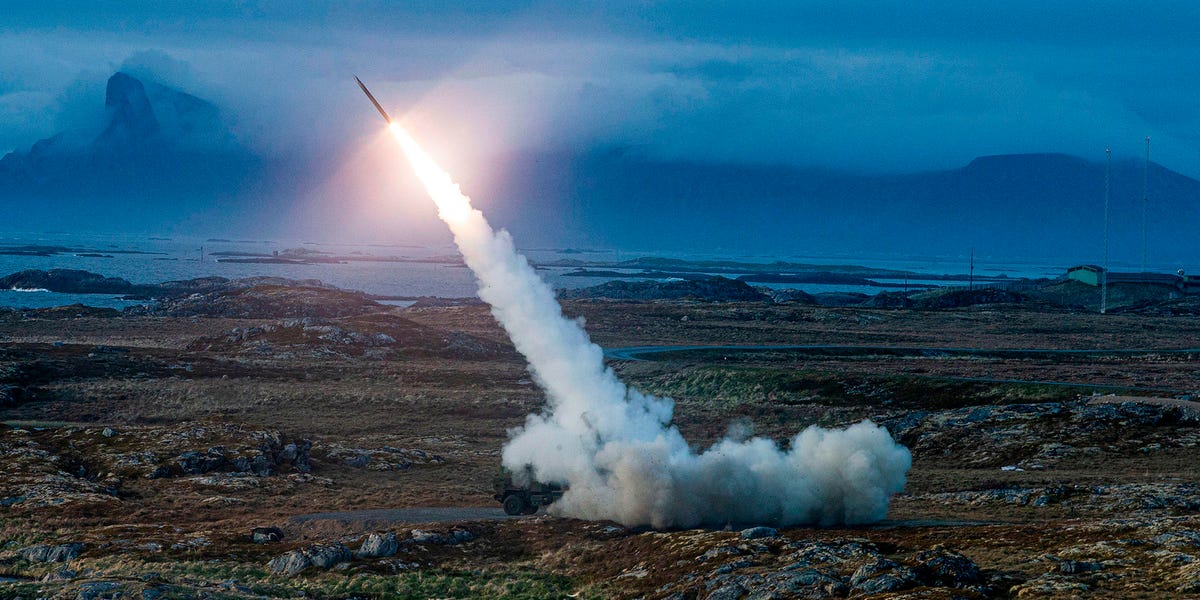
Some weapons arrive on the battlefield with a bang. HIMARS arrived with a reputation, a supply chain headache for Russia, and the tactical charm of a very mean accountant. It did not flatten every problem in Ukraine’s favor, and it certainly did not end the war with one dramatic movie trailer moment. But it did change the conversation. That matters. When a weapon forces a larger army to move its ammunition depots, relocate command posts, spread out its logistics, invest in jamming, and obsess over decoys, that weapon is no longer just hardware. It becomes strategy on wheels.
That is why the title “Russia Fears Ukraine’s HIMARS Rocket Launchers” is not just clicky drama. It reflects a real military truth. In this war, Russia has treated HIMARS not as a side note, but as a serious operational threat. Not because the launcher is magical. Not because six rockets turn into fairy dust and battlefield wishes. Russia fears HIMARS because it punishes the exact things Moscow has long relied on: centralized command, bulky ammunition storage, exposed supply routes, and the assumption that the rear area is relatively safe.
What HIMARS Actually Is
HIMARS, short for High Mobility Artillery Rocket System, is a wheeled rocket launcher built for speed, precision, and what soldiers love to call “shoot and scoot.” In practical terms, that means it can fire and move quickly before the other side can answer. Standard Guided Multiple Launch Rocket System rounds give it a reach of roughly 70 kilometers, or about 45 to 50 miles. Depending on the munition, the same launcher family can also fire much longer-range missiles. And the U.S. Army is now moving toward an Extended-Range GMLRS that pushes that reach even farther.
That combination matters. Mobility keeps the launcher alive. Precision makes each shot count. Range lets Ukraine strike military targets that Russian planners would prefer to keep comfortably out of harm’s way. On paper, that sounds technical. On the battlefield, it means warehouses burn, headquarters move, and bridge crossings suddenly look a lot less relaxing.
Why Russia Worries About HIMARS
It Targets the Nerve System, Not Just the Muscles
Russia’s military advantage has often depended on mass: more shells, more fire, more pressure, more grinding attrition. HIMARS was dangerous because it did not try to beat Russia at that game. It attacked the support structure behind the game. Ukrainian forces used it to strike ammunition dumps, command posts, logistics hubs, and key crossings. That is the military version of unplugging the office server during the busiest workday of the year. The front line still exists, but everything behind it starts sweating.
Analysts quickly noticed that HIMARS helped Ukraine hit where it hurt most: not always the most visible target, but the most valuable one. A big army can survive losing a truck. It cannot function smoothly when its supply rhythm is broken, its commanders have to keep relocating, and its rear area becomes a place of constant anxiety.
It Turns Distance Into Pressure
Russia has repeatedly tried to solve problems with geography. Put the depot farther back. Move the headquarters deeper to the rear. Launch attacks from just across the border. Use depth as insurance. HIMARS reduced the comfort of that insurance. Even when it did not erase Russian advantages, it forced Russia to spend more time, fuel, protection, and planning to preserve them.
That is one reason the system gained such outsized attention. The military effect was physical, but the psychological effect was just as important. Once commanders know they can be reached with precision, they behave differently. They disperse faster. They hide more. They talk less freely. They plan around vulnerability rather than convenience. Fear, in war, often looks a lot like paperwork and relocation orders.
It Helped Set Conditions for Ukrainian Successes
During key stretches of the war, HIMARS helped Ukraine degrade Russian logistics and pressure transport routes, including in the broader Kherson fight. This did not mean Ukraine won because of one launcher system alone. Wars are not vending machines where you insert a shiny weapon and receive victory in neat change. But HIMARS gave Ukraine something precious: the ability to impose operational costs on a larger force in a way that was smart, efficient, and repeatable.
Why HIMARS Became a Symbol
Some weapons become famous because they are huge. HIMARS became famous because it was useful. It fit perfectly into a broader Ukrainian pattern: use precision, mobility, ingenuity, and timing to offset Russia’s size. It also became a symbol because it embarrassed Russia in a very modern way. Russia was not simply being hit. It was being hit in the places it had assumed were protected.
That is a bad feeling for any military. It is an even worse feeling for one that has tried to project overwhelming strength. The symbolism grew when reports showed Russia wasting expensive missiles on decoys made to resemble HIMARS. That detail may sound almost comedic, and honestly, history does love a dark little irony, but it was strategically revealing. If Russia was dedicating real effort and real munitions to hunting HIMARS, then Moscow was confirming how seriously it took the threat.
Russia Adapted, and That Also Proves the Point
If you want proof that a weapon matters, watch what the other side changes. Russia changed plenty. It dispersed supplies. It moved some depots farther from the front. It improved camouflage and concealment. It invested more heavily in electronic warfare, especially GPS jamming and spoofing, to reduce the effectiveness of precision-guided weapons. By 2024 and 2025, U.S. and Ukrainian officials were openly discussing how Russian electronic warfare had made some precision systems harder to use effectively.
That adaptation matters for two reasons. First, it shows HIMARS was never a one-button solution. Second, it shows Russia was not dismissing it. Russia was working hard to survive it. That is the difference between battlefield hype and battlefield impact. Hype gets social media clips. Impact forces countermeasures.
So yes, Russia learned. It jammed. It dispersed. It adapted. But all of that came with costs. A depot placed farther back takes longer to resupply the front. A command node that keeps moving loses efficiency. Defensive adaptation is still adaptation. It means the weapon got inside your planning cycle and made itself your problem.
Not a Magic Wand, Not a Myth
It is important to keep the story honest. HIMARS did not make artillery shortages disappear. It did not replace air power. It did not solve manpower problems. It did not eliminate Russian defenses. Military analysts have repeatedly stressed that systems like HIMARS are important but not decisive on their own. Precision strike is one part of a larger ecosystem that includes intelligence, training, logistics, repair, survivability, and ammunition supply.
In other words, the launcher is only as good as the network around it. Ukraine’s ability to use advanced precision fires has depended not just on the launcher itself, but also on Western support, munitions, targeting assistance, and sustainment. That point became even more important as political uncertainty around military aid grew in 2025. By early 2026, analysts were still identifying HIMARS and its munitions as among the hardest U.S.-supplied capabilities for Europe to replace quickly.
That is the grown-up version of the HIMARS story. It is not a superhero origin tale. It is a lesson in how advanced weapons work in real war: brilliantly at times, imperfectly always, and only as part of a larger system that must be maintained under pressure.
Why the Fear Is Strategic, Not Just Tactical
Russia’s concern about HIMARS is bigger than any single strike. The real issue is strategic. HIMARS challenged Russia’s assumption that it could dominate through mass while keeping enough of its operational machinery safely tucked away. Once Ukraine could reliably threaten depots, bridges, staging areas, and command infrastructure, Russia had to spend more effort defending the back end of its war.
That slows momentum. It complicates offensives. It reduces the comfort of concentration. And in a war where logistics and tempo often matter as much as headline-grabbing territorial shifts, that is a big deal.
Even policy debates around HIMARS showed how seriously all sides viewed it. When the United States eased restrictions in 2024 to allow limited use of U.S. weapons against targets inside Russia near Kharkiv, the Kremlin denounced the move as escalatory. That reaction made sense from Moscow’s perspective. Precision launchers are dangerous enough when they hit occupied Ukrainian territory. They are even more uncomfortable when they can disrupt forces staging just across the border.
The Bigger Lesson of the HIMARS Era
If there is a broader lesson here, it is that modern war punishes laziness in the rear. Ammunition dumps, headquarters, fuel storage, bridges, and logistics corridors are no longer sleepy supporting actors. They are prime targets. HIMARS helped make that obvious in Ukraine.
It also reminded the world that precision has political value. Ukraine did not just need bigger blasts. It needed ways to use scarce ammunition intelligently, strike high-value military targets, and show Western supporters that advanced systems could be integrated effectively. HIMARS became proof of concept. Ukraine could absorb sophisticated equipment, use it creatively, and produce battlefield effects that were visible enough for partners to notice.
That is another reason Russia fears it. HIMARS is not just a launcher. It represents an entire Western style of warfare: precision, mobility, networking, decentralization, and adaptation. Russia can jam parts of that model, blunt parts of it, and respond to parts of it. But none of that changes the underlying problem. Ukraine with HIMARS is harder to pressure, harder to predict, and harder to isolate.
What the HIMARS Experience Has Taught the World
The HIMARS story has also produced a powerful set of experiences and lessons that go beyond Ukraine. The first is that logistics is no longer the quiet background of war. It is the plot. For years, many military observers talked about supply chains, maintenance, and transport as supporting details. Ukraine’s use of HIMARS helped drag those details into the spotlight. Ammunition storage, command nodes, rail connections, crossing points, and staging areas are not just military plumbing. They are targets that can shape an entire campaign.
The second lesson is that mobility matters as much as firepower. A launcher that can fire quickly and relocate creates persistent stress for the other side. The goal is not simply to hit. The goal is to survive, hit again, and force the enemy into a cycle of reaction. That is one reason HIMARS has remained relevant even as Russia improved its countermeasures. The launcher’s value lies not only in the rockets it fires, but in the uncertainty it creates.
The third lesson is that adaptation never stops. In 2022, HIMARS looked like a dramatic battlefield disruptor. By 2024, Russian electronic warfare had made its job harder. By 2025 and 2026, the conversation had shifted again toward protecting precision fires from jamming, sustaining ammunition supplies, and thinking about new range options like Extended-Range GMLRS. That arc is important. No weapon stays new forever. Success creates countermeasures, and countermeasures create the next round of innovation. War is a brutal competition in learning speed.
The fourth lesson is that decoys, deception, and affordability still matter. One of the funniest and most revealing episodes of the HIMARS saga involved Russian strikes on fake launchers. It was not funny because war is funny. It was revealing because it showed that low-cost deception can impose high costs on the enemy. In a conflict full of expensive technology, a wooden imitation still had battlefield value. That is almost absurd, but it is also deeply modern: smart, cheap tricks can still force expensive decisions.
The fifth lesson is political. Advanced systems do not arrive in a vacuum. They arrive with debates over escalation, authorization, training, supply, and rules for use. HIMARS was never just a tactical tool. It was also a diplomatic subject, an alliance management issue, and a test of how far Western governments were willing to go. That political layer remains central. A launcher with no rockets is a sculpture. A launcher with rockets but no intelligence is a reduced threat. A launcher backed by sustained support becomes something much more serious.
Finally, the HIMARS experience has taught outside observers that “fear” in military terms does not necessarily mean panic. It means respect enforced by consequences. Russia fears HIMARS the way serious armies fear anything that can repeatedly disrupt plans, expose vulnerabilities, and turn rear areas into danger zones. That fear is practical. It is visible in dispersal, jamming, relocation, rhetoric, and the steady effort to suppress or outlast the system’s advantages.
If 2022 was the arrival, 2024 was the counterpunch, and 2025 into 2026 became the sustainment question, then the HIMARS chapter still has not ended. It has simply matured. The launcher is no longer the new celebrity at the military party. It is the proven professional everyone still has to account for. And in war, that may be even more important.
Conclusion
Russia fears Ukraine’s HIMARS rocket launchers because they expose a basic truth of this war: precision can make mass uncomfortable. HIMARS did not win the conflict by itself, and it never promised to. What it did do was force Russia to think harder, move farther, hide better, and spend more energy protecting the machinery of war. That is real impact.
Even after Russian adaptation, electronic warfare, and shifting aid politics, the system remains strategically important because it represents more than a launcher. It represents Ukraine’s ability to turn intelligence, mobility, and precision into pressure. In that sense, HIMARS is not frightening because it is flashy. It is frightening because it is effective. And on modern battlefields, effectiveness is what keeps generals awake at night.














