Moving heavy furniture by yourself sounds like the kind of idea that begins with confidence and ends with you negotiating with a sofa in the hallway. A couch can suddenly become a geometry problem. A dresser can develop the personality of a stubborn mule. And that innocent-looking bookcase? Somehow it weighs as much as a small piano once you try to lift it.
The good news is that moving heavy furniture alone is possible when you approach it with planning, patience, and the right tools. The bad news is that brute strength is not the plan. In fact, the smartest solo movers use leverage, sliders, dollies, blankets, straps, and common sense instead of trying to prove something to their lower back.
This guide explains how to move heavy furniture by yourself using 15 practical tips that protect your body, your walls, your floors, and your furniture. Whether you are rearranging a bedroom, moving into a new apartment, or finally shifting that oversized sectional that has been “temporarily” blocking the outlet since 2021, these methods will help you work smarter.
Before You Move Anything: Think Like a Mover, Not a Superhero
Professional movers do not simply grab the heaviest end and hope for applause. They measure, plan, disassemble, protect, slide, roll, and load in a controlled order. That is the mindset you want. Moving heavy furniture safely is less about muscle and more about reducing friction, improving grip, managing balance, and avoiding awkward lifting positions.
Before you begin, remember one important rule: if an item is too heavy, too tall, unstable, fragile, or impossible to control alone, stop. Some pieces truly need a second person or professional movers. Your coffee table is replaceable. Your spine is not available in the clearance aisle.
How to Move Heavy Furniture by Yourself: 15 Tips
1. Measure the Furniture and the Route First
Before touching the furniture, measure it. Measure the height, width, and depth of the piece, then measure doorways, hallways, stair turns, elevator openings, and truck or storage-unit entrances. This one step can save you from getting a dresser wedged in a doorway while you question every life decision that led to that moment.
Pay special attention to tight corners. A couch may fit through a doorway only if it is turned vertically or angled. A bookcase may need to be carried on its side. If you are moving into another room, sketch the route in your head before you begin. If you are moving into a truck, plan where the heavy items will go first.
2. Clear a Wide Pathway
Remove rugs, shoes, toys, pet bowls, side tables, loose cords, and anything else that can turn your moving day into an obstacle course. Open doors fully. If needed, remove doorstops or temporarily take a door off its hinges to create extra clearance.
Also check overhead space. Low light fixtures, hanging plants, and ceiling fans can become surprise enemies when you tilt a tall cabinet. A clear path helps you move slowly and confidently instead of performing emergency furniture ballet.
3. Empty the Furniture Completely
A dresser full of clothes, a cabinet full of dishes, or a desk packed with mysterious old chargers becomes much heavier than necessary. Remove drawers, shelves, cushions, glass panels, and loose parts before moving the main frame.
This does two things. First, it reduces weight. Second, it prevents parts from sliding open and throwing off your balance. Tape drawers closed only after emptying them, or remove them entirely and carry them separately. Put screws, pegs, shelf supports, and small hardware in a labeled bag so you do not end up with a “modern minimalist bed frame” that is actually just missing six bolts.
4. Disassemble What You Can
Many heavy furniture pieces become manageable when taken apart. Remove table legs, bed rails, headboards, sofa feet, detachable shelves, mirror frames, and sectional connectors. Use the correct screwdriver, Allen key, wrench, or drill bit, and keep hardware organized.
Disassembly is especially helpful for bed frames, dining tables, modular sofas, entertainment centers, and large desks. Even removing small legs from a sofa can create enough clearance to get through a doorway. Take photos before disassembling anything complicated. Future you will appreciate the visual reminder when it is time to rebuild the furniture and your patience.
5. Protect the Furniture With Moving Blankets
Wrap corners, edges, legs, and polished surfaces with moving blankets, furniture pads, towels, or thick quilts. Secure the padding with stretch wrap, bungee cords, or packing tape, but avoid putting tape directly on finished wood, leather, or painted surfaces because it may leave residue or damage the finish.
Padding does more than prevent scratches. It also improves grip and gives the furniture a little cushion when it brushes a wall or doorway. If you are moving a leather couch, use breathable blankets first rather than wrapping plastic directly against the leather for a long period.
6. Use Furniture Sliders for Floors
Furniture sliders are one of the best tools for moving heavy furniture by yourself. They reduce friction so you can slide rather than lift. Place one slider under each leg or corner. Use felt sliders for hard floors and plastic sliders for carpet. If you do not have sliders, thick towels, cardboard, or carpet scraps may work for short indoor moves, though proper sliders are usually smoother and safer.
To place sliders, gently tilt one corner of the furniture just enough to slip the slider underneath. Do not lift the whole item. Once all sliders are in place, push from the lower half of the furniture, not the top. Pushing high can cause tall pieces to tip.
7. Use a Dolly or Hand Truck for Distance
If the furniture must travel more than a few feet, use a dolly or hand truck. A flat furniture dolly works well for dressers, cabinets, and boxes. A two-wheel hand truck is useful for tall or narrow items such as bookcases, appliances, and stacked boxes.
Always check the dolly’s weight rating before loading. Center the item on the platform, strap it if possible, and move slowly. A dolly is not a race car, no matter how tempting the hallway straightaway looks. For heavier items, choose larger wheels when crossing thresholds, uneven surfaces, or outdoor areas.
8. Try Lifting Straps for Awkward Pieces
Moving straps can help distribute weight and improve control, especially with bulky furniture that is hard to grip. They are commonly used for couches, mattresses, dressers, and appliances. However, many lifting straps work best with two people. If you are alone, straps can still help stabilize or guide an item, but they should not convince you to lift something beyond your limit.
Use straps according to the manufacturer’s instructions. Make sure the furniture is balanced before moving. If the piece swings, shifts, or feels unstable, lower it and rethink the method.
9. Lift With Your Legs and Keep the Load Close
When you must lift, use safe lifting technique. Stand close to the furniture, bend your knees, keep your back as neutral as possible, tighten your core, and lift with your legs. Hold the load close to your body instead of reaching forward. Avoid twisting while carrying; turn your feet and whole body together.
One of the biggest mistakes is bending at the waist and pulling with the back. Another is trying to catch a falling item. If furniture starts to tip or slip, step away if needed. Walls can be repaired. Ankles and fingers are less convenient projects.
10. Push More, Pull Less
When using sliders, pushing is usually better than pulling because it gives you more control and keeps your body behind the furniture. Push low and steady. Use your legs, not your back, to drive the movement. If you pull, you may strain your shoulders or lose balance if the furniture suddenly moves.
For tall items, keep one hand high enough to guide but apply force lower down. This reduces the chance of tipping. Move in small increments. A slow furniture move is still a successful furniture move.
11. Protect Floors, Walls, and Door Frames
Heavy furniture can scratch floors, dent walls, and chip door frames. Before moving, lay down floor runners, cardboard, ram board, old blankets, or flattened boxes along the route. Add corner guards or folded towels around tight door frames.
If you are moving across hardwood, tile, or laminate, never drag furniture directly on the floor. Even tiny grit under a leg can leave scratches. If you are moving across carpet, use hard plastic sliders to prevent the furniture from digging into the fibers.
12. Use the “Walk and Pivot” Method
Large furniture often needs to be pivoted rather than carried straight. For example, a couch may move through a doorway by standing it on one end, rotating it slightly, then easing the back through first. A tall dresser may need to be angled around a hallway corner.
The key is to move one side at a time. Slide, pivot, pause, check clearance, and repeat. Do not force the piece. If it stops, there is usually a reason: a leg is catching, a corner is hitting trim, or the angle is wrong. Back up and try another angle.
13. Be Extra Careful With Stairs
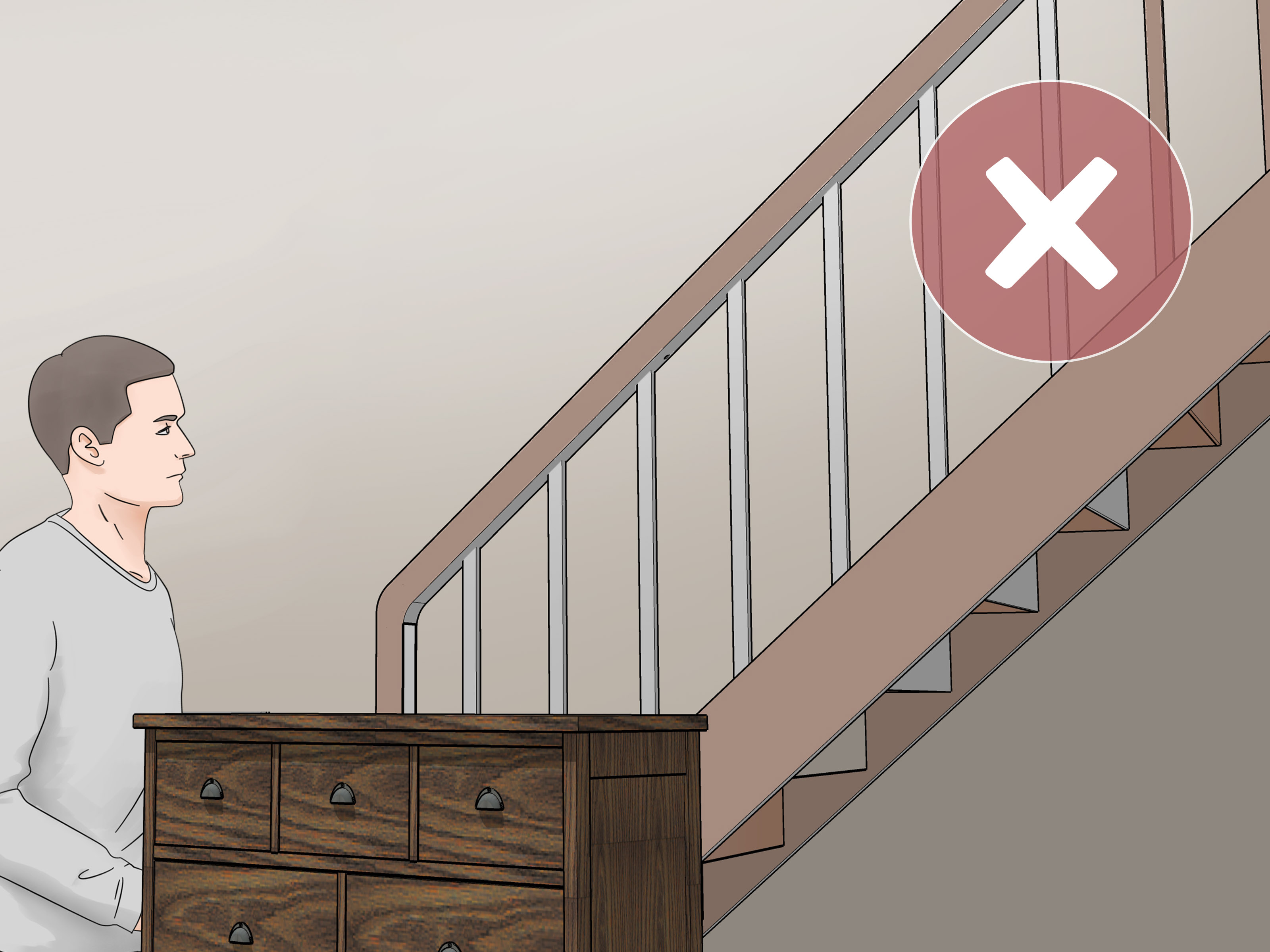
Stairs are where solo moving becomes risky. If the furniture is heavy, awkward, or taller than you can control, do not move it alone on stairs. Hire help or ask another adult for assistance. A heavy item on stairs can shift quickly, and gravity is not known for being forgiving.
For lighter items, use a stair-climbing dolly if available and strap the item securely. Move one step at a time. Keep the furniture below you when going down only if you can control it safely; otherwise, do not attempt the move. Never rush, never walk backward blindly, and never let the item block your view.
14. Load Heavy Furniture Correctly
If you are loading a moving truck, storage container, or trailer, place the heaviest furniture low and toward the front or sides to help balance the load. Keep weight distributed evenly. Use tie-down straps to secure furniture so it does not shift during transport.
Stand mattresses upright along the side if appropriate, protect wood pieces with blankets, and avoid placing heavy items on fragile furniture. If drawers were removed, transport them separately or secure them properly. A well-loaded truck should feel organized, not like a game of furniture Jenga with emotional consequences.
15. Know When to Stop and Get Help
The best solo moving tip is knowing when not to move something solo. Get help for pianos, oversized armoires, heavy appliances, large sectionals, marble tables, glass cabinets, safes, and anything that requires stairs or tight turns beyond your control.
Also stop if you feel sharp pain, dizziness, numbness, unusual weakness, or loss of grip. Moving heavy furniture by yourself is not a personal-worth exam. Smart movers protect themselves first.
Recommended Tools for Moving Heavy Furniture Alone
You do not need a professional moving truck full of equipment, but a small set of tools can make the job dramatically easier. Consider keeping these items ready:
- Furniture sliders for carpet and hard floors
- A flat furniture dolly
- A two-wheel hand truck
- Moving blankets or thick padding
- Stretch wrap and packing tape
- Work gloves with grip
- Tie-down straps or ratchet straps
- Basic tool kit for disassembly
- Measuring tape
- Closed-toe shoes with good traction
These tools help reduce lifting, protect surfaces, and give you more control. In many cases, renting a dolly or hand truck for a day is cheaper than repairing scratched floors or paying for a back injury with three days of walking like a question mark.
Common Mistakes to Avoid When Moving Heavy Furniture
Dragging Furniture Without Protection
Dragging furniture directly across the floor can damage both the floor and the furniture legs. Always use sliders, blankets, or a dolly.
Forgetting to Check Doorway Clearance
Furniture that looks small in a room can become enormous in a hallway. Measure before moving, especially for sofas, dressers, and desks.
Leaving Drawers and Shelves Inside
Loose drawers can slide out, shelves can fall, and hidden weight makes the furniture harder to control. Empty and secure everything first.
Trying to Lift Instead of Slide or Roll
The safest solo move usually involves sliding or rolling. Lifting should be limited and controlled.
Ignoring Pain or Fatigue
Fatigue leads to sloppy technique. Take breaks, drink water, and stop when your body tells you the furniture has won this round.
Room-by-Room Examples
How to Move a Heavy Dresser by Yourself
Empty every drawer and remove them if possible. Wrap the dresser in a blanket, place sliders under each corner, and push from the lower frame. If moving to another room, sliders may be enough. If moving to a truck, transfer the dresser onto a furniture dolly and secure it with straps.
How to Move a Couch by Yourself
Remove cushions, legs, and detachable sections. Measure the couch and the doorway. Wrap the frame with blankets, then use sliders to position it near the exit. For tight doorways, stand the couch on one end and pivot carefully. Do not force it; change the angle instead.
How to Move a Bed Frame by Yourself
Disassemble the frame completely. Bag and label bolts and screws. Carry rails, slats, and headboard pieces separately. Wrap the headboard if it has a wood, fabric, or metal finish that scratches easily.
How to Move a Bookcase by Yourself
Remove all books and shelves. Tall bookcases are top-heavy, so never push from the top. Use sliders for short moves and a dolly for longer ones. Strap the bookcase to the dolly so it does not tip.
Extra Experience-Based Advice for Moving Heavy Furniture by Yourself
Experience teaches you quickly that moving furniture is not just a strength challenge. It is a patience challenge. The first lesson is to slow down before the furniture teaches you humility. Many people make mistakes because they want the job finished quickly. They grab, yank, twist, and rush. That is usually when walls get scuffed, floors get scratched, and backs start sending angry emails.
One helpful habit is to do a “dry run” before the real move. Walk the route without the furniture. Open every door. Check where your feet will go. Look for thresholds, rug edges, uneven flooring, and tight turns. Imagine the largest part of the furniture passing through each space. This sounds simple, but it prevents a lot of mid-move panic.
Another practical experience is to keep a small “moving station” nearby. Put your tape, scissors, screwdriver, gloves, sliders, hardware bags, and water bottle in one place. When you are tired, even a missing screwdriver can feel like a dramatic plot twist. Keeping tools together saves time and keeps the process calm.
When moving furniture across a room, sliders are usually the hero. For example, a heavy bed can often be shifted by lifting one corner at a time, placing sliders under the legs, and then pushing the frame slowly. The move feels almost suspiciously easy compared with trying to lift the whole bed. For a dresser, removing drawers can cut enough weight to make the difference between “manageable” and “absolutely not.”
For awkward items like couches, the secret is angle control. A couch rarely moves in a straight line through a door. It needs to rotate, tilt, and pivot. Move slowly and watch the corners. If one corner catches, do not shove harder. Back up an inch and change the angle. Furniture is often stubborn, but it is usually not smarter than geometry.
Protective padding is also more important than people think. A moving blanket is not just for keeping furniture pretty. It gives you a better grip, softens accidental bumps, and makes sliding easier in some situations. Even old towels can help protect corners when passing through narrow doors.
One of the best solo moving lessons is to break the job into small stages. Move the item away from the wall. Pause. Add sliders. Pause. Move it to the doorway. Pause. Adjust the angle. Pause. This step-by-step rhythm keeps you from getting trapped under pressure. It also lets you notice problems before they become expensive.
Finally, respect your limits. There is no trophy for moving a refrigerator alone. If a piece feels unsafe, unstable, or beyond your control, call for help. The most experienced DIY movers are not the ones who lift the most; they are the ones who know how to finish the job without injury, damage, or unnecessary drama.
Conclusion
Moving heavy furniture by yourself is possible when you trade brute force for smart technique. Measure first, clear the route, empty and disassemble furniture, use sliders and dollies, protect surfaces, lift properly, and know when to stop. The goal is not to prove you can defeat a wardrobe in single combat. The goal is to move it safely, calmly, and without turning your hallway into a repair project.
With the right tools and a careful plan, you can rearrange a room, load a truck, or move bulky pieces with much more confidence. Take your time, protect your body, and let physics do the hard work whenever possible. Your furniture may be heavy, but your strategy should be light, clever, and just a little smug.
Note: This article is written for web publishing in standard American English and synthesizes practical moving, home improvement, and safety guidance into original, reader-friendly content.