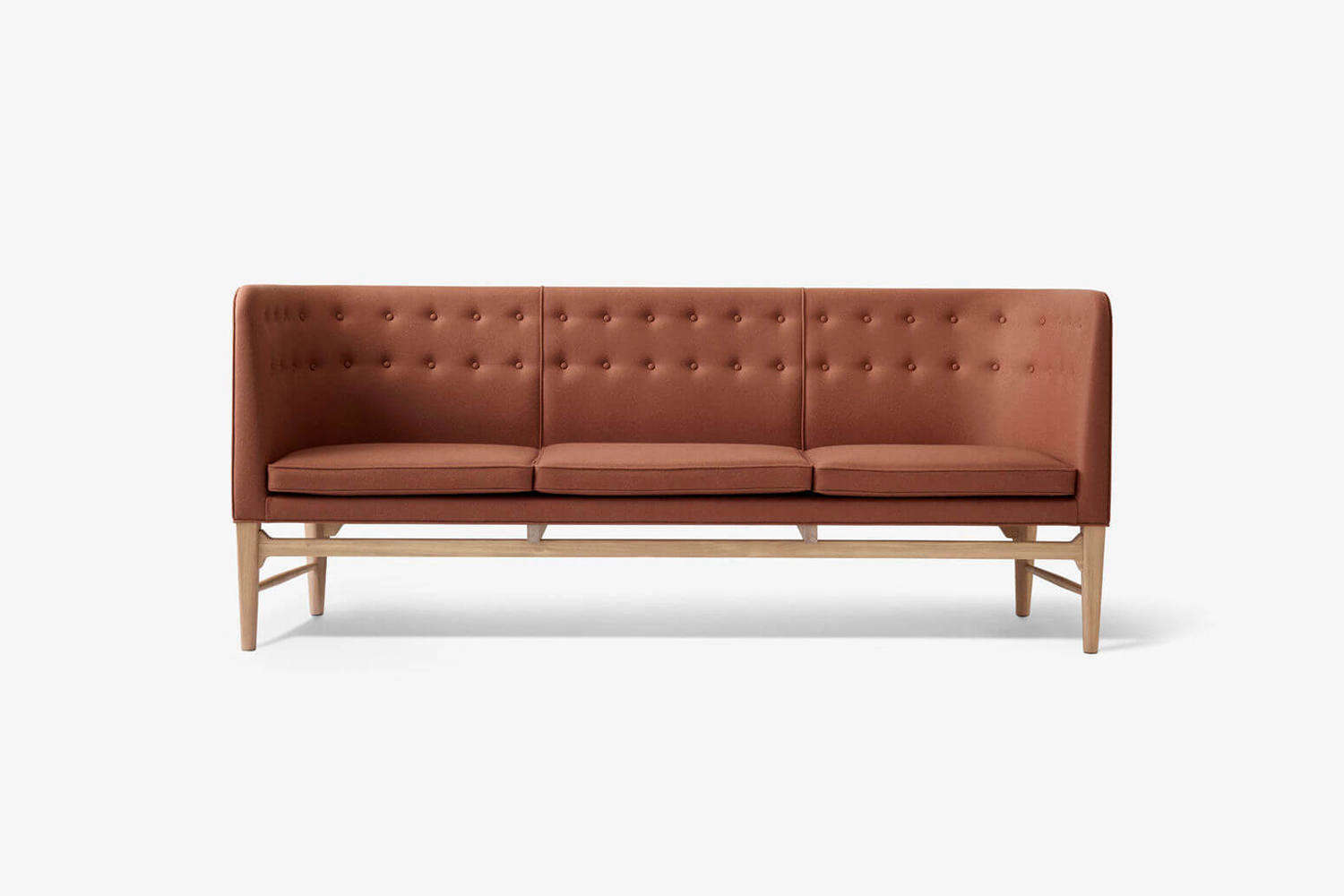
The Mayor Sofa sounds like a piece of furniture that might raise your taxes, cut a ribbon at a new shopping center, and insist on being addressed as “Your Honor.” In reality, it is one of the quieter triumphs of Danish modern design: an elegant, upright sofa created by architects Arne Jacobsen and Flemming Lassen for a municipal building in Denmark.
With its solid-wood base, tailored upholstery, buttoned back, and unusually compact depth, the Mayor Sofa sits somewhere between a formal bench, a mid-century couch, and a very well-dressed architectural statement. It does not sprawl across the room or bury its occupants beneath mountains of cushions. Instead, it offers structure, craftsmanship, and a timeless silhouette that still looks surprisingly current more than eight decades after it was conceived.
This guide explores the Mayor Sofa’s history, construction, comfort, dimensions, styling possibilities, maintenance needs, and real-world ownership experience. It also explains who should consider buying oneand who may be happier with a sofa that encourages horizontal television marathons.
What Is the Mayor Sofa?
The Mayor Sofa is a Danish furniture design developed by Arne Jacobsen and Flemming Lassen as part of the custom interior for Søllerød Town Hall, now known as Rudersdal Town Hall. The architects won the competition for the civic project in 1939, and the building was completed in 1942.
Jacobsen and Lassen approached the town hall as a complete environment rather than simply a building. They designed furniture, lamps, fixtures, built-in cabinetry, and other interior details to create a unified visual language. The Mayor Sofa was intended for one of the building’s formal rooms, which helps explain its dignified posture and composed personality.
The design later returned to production through Danish design company &Tradition. The three-seat version is generally identified as the Mayor AJ5, while the more compact two-seat model is known as the Mayor AJ6. The reissued sofa received international attention, including recognition as a notable furniture reissue during the 2013 design-award season.
The History Behind the Mayor Sofa
A Civic Building Designed From the Outside In
Søllerød Municipality originally planned a larger complex containing a town hall, library, and cinema. World War II and the German occupation of Denmark forced the project to be reduced, leaving the town hall as the principal completed structure. Even under those restrictions, Jacobsen and Lassen produced a remarkably coherent example of Scandinavian functionalism.
The architects did not treat the interior as an afterthought. Each room received furniture suited to its purpose, and the architecture, joinery, lighting, and furnishings were designed to work together. That “total design” philosophy would later become closely associated with Jacobsen’s most famous projects.
The Mayor Sofa reflects this architectural origin. It was not created as an oversized lounging platform for a suburban family room. It was designed for conversation, ceremonies, waiting, and formal civic encounters. In other words, it needed to look respectable even when nobody remembered where they had placed the meeting agenda.
Humanizing Early Modernism
Early modernist furniture could occasionally look as though comfort had been removed for ideological reasons. Jacobsen and Lassen took a more human approach. The Mayor Sofa uses functional geometry, but it softens that geometry through upholstery, curved transitions, natural wood, and loose seat cushions.
The result is disciplined without feeling cold. Its shape is rectangular and economical, yet the upholstered arms and back wrap gently around the sitter. Two horizontal rows of buttons add rhythm without producing the deep diamond tufting associated with traditional Chesterfield sofas.
This balance is a major reason the Mayor Sofa has aged well. It is clearly connected to twentieth-century modernism, but it is not trapped inside a particular decorating decade. Place it in a historic townhouse, a modern apartment, a boutique office, or a minimalist hotel lobby, and it can adapt without looking like a misplaced museum exhibit.
Mayor Sofa Design and Construction
A Solid-Wood Foundation
The exposed base is one of the Mayor Sofa’s defining elements. Current versions are offered with solid oak or walnut options, depending on the configuration and market. Oak finishes may include light, smoked, oiled, or dark treatments.
Unlike sofas that hide their structure beneath upholstery reaching all the way to the floor, the Mayor displays its craftsmanship openly. The wooden base visually supports the upholstered shell while creating a thin line of space beneath the sofa. That elevation gives the piece a lighter appearance and can help a compact room feel less crowded.
The internal construction uses a solid-wood framework, supportive webbing, foam, and tailored upholstery. The workmanship is deliberately precise. Loose seat cushions provide a degree of softness, while the back and arms maintain a controlled architectural shape.
Button Detailing Without Excess Decoration
The two rows of buttons running across the back and continuing along the arms are decorative, but they also reinforce the sofa’s horizontal proportions. The treatment gives the upholstery definition without turning it into a heavily tufted antique reproduction.
That restraint makes fabric selection especially important. In a neutral wool, the Mayor Sofa appears calm, architectural, and unmistakably Scandinavian. In dark blue, forest green, burgundy, or textured bouclé, it becomes more expressive. Leather emphasizes its formality and may suit a library, executive office, or sophisticated reception space.
Compact Dimensions
The Mayor AJ5 three-seat sofa is approximately 78.7 inches long, 24.4 inches deep, and 32.3 inches high. Its seat height is about 16.9 inches, and its usable seat depth is approximately 19.7 inches. The AJ6 two-seater is approximately 54.2 inches long while retaining a similarly shallow overall depth.
Those dimensions make the Mayor notably slimmer than many contemporary sofas. Modern lounge-oriented couches commonly extend more than 35 inches from front to back, and large sectionals may consume considerably more space. The Mayor’s roughly 24-inch overall depth allows it to work in narrow living rooms, dining areas, entrance halls, offices, or spaces where circulation matters.
However, buyers must measure the actual delivery route as carefully as the final room. Doorways, elevators, stairwells, corners, and hallway widths can transform an innocent furniture delivery into a live-action geometry examination.
Is the Mayor Sofa Comfortable?
Comfort depends heavily on expectations. The Mayor Sofa is supportive, upright, and relatively shallow. It encourages seated conversation, reading, dining, working, or enjoying a drink without gradually disappearing into the cushions.
The loose seat cushions add softness, but this is not a cloud-style sofa. People who prefer an upright posture may find the proportions refreshing. Shorter users may also appreciate a seat that does not force them to perch with their feet hovering several inches above the floor.
Taller users or committed loungers may want to test the sofa before purchasing. The limited seat depth does not provide much space for curling up with several pillows, a dog, a laptop, and the emotional burden of an entire streaming series. It can accommodate relaxed sitting, but it was not designed primarily for sprawling.
In practical terms, the Mayor works particularly well in rooms where people socialize face-to-face. It is also appropriate for commercial interiors, waiting areas, meeting spaces, and dining arrangements where a deeper sofa would interfere with movement or table access.
How to Style a Mayor Sofa
Use It in a Scandinavian Modern Room
The easiest approach is to pair the Mayor Sofa with light wood, soft gray walls, wool rugs, simple lighting, and a restrained color palette. Add one sculptural lounge chair and a low coffee table rather than surrounding it with an entire furniture battalion.
A white-oiled or natural oak base looks especially good with cream, gray, camel, or muted green upholstery. Black-stained wood creates sharper contrast and works well with contemporary art, darker walls, or metal lighting.
Mix It With Traditional Architecture
The Mayor Sofa does not require a glass-walled Copenhagen apartment. Its button detailing and formal profile allow it to sit comfortably in rooms with decorative molding, wood paneling, built-in bookshelves, or vintage rugs.
To prevent the room from feeling too ceremonial, add relaxed materials: a linen curtain, a handwoven throw, a ceramic lamp, or an irregular wooden side table. The sofa already knows how to behave at city hall. Your accessories can loosen the tie.
Place It Beside a Dining Table
Its shallow depth and supportive back make the Mayor an interesting alternative to a conventional dining bench. It can create a comfortable banquette effect in an open-plan kitchen or dining room, provided the seat height works with the chosen table.
Before trying this arrangement, compare the sofa’s seat height with the tabletop and allow adequate legroom. A beautiful setup becomes less charming when everyone must lean forward like they are negotiating a peace treaty.
Use It in an Office or Reception Area
The Mayor Sofa’s original civic purpose makes it a natural fit for professional spaces. It communicates quality without shouting for attention, and its upright seat supports shorter conversations better than an excessively deep lounge sofa.
In an office, pair it with a small table and one or two contrasting chairs. In a reception area, durable wool upholstery and a darker wooden base can provide a polished appearance while concealing everyday wear more effectively than very pale fabric.
Choosing Upholstery and Wood Finishes
Upholstery should be selected according to lifestyle rather than online photographs alone. Textured bouclé may look inviting but can collect debris in active households. Smooth wool blends are versatile and often durable. Velvet adds richness, while leather gives the sofa a more formal and architectural character.
Households with children or pets should investigate abrasion ratings, stain resistance, cleaning requirements, and replacement options. A beautiful fabric that causes panic every time someone approaches with coffee is not technically relaxing.
Wood selection also changes the sofa’s mood. Light oak emphasizes Scandinavian simplicity. Smoked oak adds warmth and visual weight. Black-lacquered oak feels more graphic and contemporary. Walnut introduces a richer, more traditional tone.
Requesting physical fabric and wood samples is strongly recommended. Screens alter color, texture, and scale, while natural daylight can reveal undertones that were invisible in a product photograph.
Who Should Buy a Mayor Sofa?
The Mayor Sofa is a strong choice for design collectors, admirers of Danish modern furniture, and homeowners who value craftsmanship over oversized softness. It is especially practical for narrow rooms, formal living spaces, offices, libraries, dining areas, and interiors requiring a visually light sofa.
It may be less suitable for buyers seeking a budget couch, a removable slipcover, a sleeper mechanism, reclining features, or an extra-deep family sofa. The Mayor is an investment-level design with specialized upholstery and made-to-order configurations. Current prices and lead times can vary significantly by fabric, leather, finish, retailer, and location.
Prospective buyers should confirm the current specifications, warranty, return policy, delivery method, and authenticity before ordering. Vintage examples also appear on the secondary market, but age, previous repairs, upholstery quality, and provenance should be carefully evaluated.
Mayor Sofa Care and Maintenance
Vacuum Upholstery Regularly
Use a low-suction upholstery attachment to remove dust, crumbs, and loose debris. Pay attention to seams, buttons, and the spaces around loose cushions. Regular vacuuming helps prevent grit from becoming embedded in the fibers.
Respond Quickly to Spills
Blot liquid immediately with a clean, absorbent cloth. Do not scrub aggressively, as rubbing may spread the stain or damage the fabric’s surface. Cleaning methods vary by textile, so consult the instructions for the exact upholstery rather than applying a universal internet potion.
Care for the Wood Base
Dust oiled wood with a soft, dry cloth. For more thorough cleaning, use a lightly dampened cloth and dry the surface afterward. Avoid soaking the wood or applying harsh household chemicals. Periodic oil treatment may be appropriate, but it should match the manufacturer’s instructions and the original finish.
Protect the Sofa From Environmental Damage
Strong direct sunlight can fade upholstery and alter wood color over time. Excessive heat and low humidity may also affect natural materials. Position the sofa thoughtfully, rotate loose cushions, and avoid placing it directly beside radiators or heating vents.
Experience Notes: What Living With a Mayor Sofa Feels Like
The most noticeable part of the Mayor Sofa experience is not the button detailing or the famous designers’ names. It is the amount of room the sofa does not consume. In a narrow living room, its compact depth can leave noticeably more walking space than a conventional deep couch. The exposed legs and slim wooden base also allow the floor to remain visible, which makes the room feel more open.
Sitting down produces another surprise. The sofa does not swallow the body. Your posture remains upright, your feet are more likely to reach the floor, and getting up does not require the momentum of a small athletic event. This makes it pleasant for coffee, conversation, reading, laptop work, or an hour with a magazine.
During a long movie, however, the experience changes. A person accustomed to deep cushions may begin adding pillows behind the back or shifting sideways. Two people can relax comfortably, but the Mayor encourages civilized positioning. It does not naturally inspire the household formation known as “everyone lying diagonally while one person loses circulation in a leg.”
The loose seat cushions provide useful flexibility. They can be rotated to distribute wear, adjusted after use, and removed for cleaning around the frame. The tight upholstered back always looks tidy, so the sofa requires less daily reshaping than designs built from numerous loose back pillows.
The arms feel more enclosing than the narrow profile suggests. Because the back flows into the sides, the sitter receives a subtle sense of privacy. This quality is especially valuable in an office, library, hotel lobby, or open-plan home where the sofa helps define a smaller conversational zone.
Living with the Mayor also changes how the surrounding room is decorated. Bulky furniture can overpower it, while too many delicate pieces can make the room feel visually underweight. A substantial rug, low coffee table, or sculptural armchair usually provides the right balance.
The sofa’s tailored appearance can make ordinary household clutter look slightly more guilty. A pile of unfolded laundry beside it resembles evidence from an investigation. Fortunately, a textured throw or one relaxed pillow can soften the formality without hiding the design.
Fabric choice strongly affects the ownership experience. Neutral wool feels calm and forgiving, while velvet turns the Mayor into a statement piece. Light bouclé creates warmth but may require more frequent cleaning. Leather is easier to wipe in some situations, though it develops marks and patina that owners must either appreciate or spend years attempting to defeat.
Another practical advantage is versatility. The Mayor can move from a living room to an office, dining room, bedroom, or reception area without losing its purpose. Its compact footprint also makes future rearrangement easier, assuming the delivery path has been measured correctly.
Overall, the experience is best described as supportive, composed, and architectural. The Mayor Sofa is not trying to become a mattress with armrests. It offers a comfortable place to sit while preserving the proportions and visual order of the room. For the right owner, that restraint is not a compromise. It is the main attraction.
Final Verdict
The Mayor Sofa remains relevant because it solves a familiar design problem with unusual discipline. It provides seating for two or three people without dominating the room, combines natural wood with carefully tailored upholstery, and offers enough decorative detail to feel distinctive without becoming trendy.
Its upright proportions will not satisfy everyone. Dedicated loungers may prefer a deeper sofa, and practical families may prioritize washable covers or modular components. Yet buyers seeking an authentic Danish modern sofa with architectural history, compact dimensions, and enduring craftsmanship will find much to admire.
More than 80 years after its creation, the Mayor Sofa still looks ready for public service. Fortunately, its only campaign promise is to make the room better.