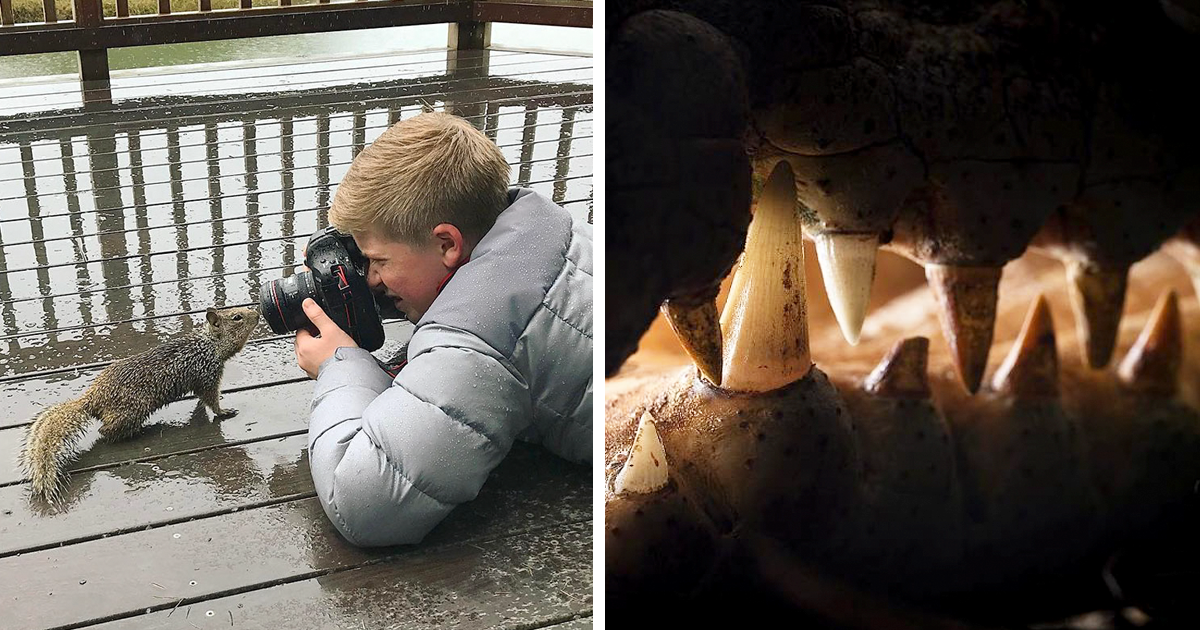
Robert Irwin grew up among crocodiles, koalas, cameras, and the kind of family conversations in which “Watch your fingers” probably came up more often than “How was school?” By age 14, Steve Irwin’s son was already earning international recognition for wildlife photography. His images go beyond cute animals and impressive camera equipment: they reveal behavior, habitat, danger, humor, and the fragile relationship between wildlife and the modern world. A collection of 50 Robert Irwin photos shows how patience, field knowledge, visual storytelling, and genuine conservation work can turn a brief encounter with an animal into a photograph people remember.
The Important Timeline Behind the “14-Year-Old” Headline
The headline captures Robert Irwin at a particular moment in his development. Born on December 1, 2003, Robert was 14 when the original photo collection gained widespread attention in 2018. He is no longer 14, of course, unless someone at Australia Zoo has discovered a youth-preserving serum made from crocodile enthusiasm. The age remains relevant because it shows how advanced his work had become while most teenagers were still trying to take a non-blurry lunch-table selfie.
Robert grew up at Australia Zoo in Queensland, surrounded by animals, conservation programs, film crews, and the legacy of his father, Steve Irwin. His mother, Terri, and sister, Bindi, continued the family’s wildlife mission after Steve’s death in 2006. Robert gradually developed his own voice within that mission, using photography as a way to combine scientific curiosity, creative expression, and public education.
According to Robert’s official biography, his interest in photography began when he was about six. He later carried a camera on expeditions and used his images to encourage people to appreciate wildlife and protect natural habitats. That early start matters, but access alone does not explain the results. Plenty of people own expensive cameras. Far fewer know when to wait, when to move, when not to move, and when an unusual animal behavior is about to become a once-in-a-lifetime frame.
Robert Irwin Was Already an Award-Winning Photographer
Calling Robert an award-winning wildlife photographer at 14 was not an honorary compliment handed out because of his surname. He had competition results to support it.
In 2016, at approximately 12 years old, he became the junior runner-up in the Australian Geographic Nature Photographer of the Year competition. He returned as a junior finalist in subsequent years. His official photography biography also records recognition from the Windland Smith Rice International Awards, BirdLife Australia Photography Awards, regional exhibitions, and other nature photography competitions.
“The Catch” Proved He Could Recognize a Story
One of his most memorable early photographs was titled The Catch. It showed a huntsman spider suspended in darkness while holding a dead frog. Robert encountered the scene while walking through dense woodland at night. Rather than treating the spider as merely a creepy subjectwhich, to be fair, would be a perfectly reasonable reactionhe recognized an extraordinary example of predator behavior.
The photograph was highly commended in the 11–14 age category of the 2018 Wildlife Photographer of the Year competition. The Natural History Museum’s account explains that huntsman spiders do not rely on webs to capture prey. The spider had apparently fallen while struggling with the comparatively large frog and remained suspended by a silk safety line. The result was dramatic, scientifically interesting, and just unsettling enough to make viewers check the ceiling above them.
A Tundra Swan Reached the Smithsonian
Another early image, featuring a tundra swan photographed in the Klamath Basin region of Oregon, received recognition in the youth category of the Nature’s Best Photography Windland Smith Rice International Awards. The honored work was associated with an exhibition at the Smithsonian’s National Museum of Natural History in Washington, D.C.an impressive destination for any photographer, never mind one who still needed parental permission for many ordinary activities.
Why These 50 Robert Irwin Photos Feel Different
A 50-photo wildlife gallery could easily become a digital parade of feathers, scales, and large eyes. Robert’s portfolio holds attention because the images do not all perform the same job. Some are portraits. Some document animal behavior. Others show landscapes, environmental threats, or tiny details that many visitors would walk straight past.
The strongest images generally share four qualities: a clear subject, an emotionally readable moment, a sense of place, and evidence that the photographer understands the animal. The camera records the fraction of a second, but knowledge creates the opportunity.
1. Reptiles Become Individuals, Not Movie Monsters
Crocodiles, snakes, lizards, and turtles naturally appear throughout Robert’s work. He grew up around reptiles and learned to observe their behavior closely. That familiarity helps him photograph them as living animals rather than generic symbols of danger.
A crocodile portrait can emphasize ancient textures, watchful eyes, or the stillness that comes before movement. A snake photograph can reveal elegant body patterns instead of relying on a dramatic open-mouth pose. The best reptile images make viewers curious before they make them nervouswhich is no small achievement when the subject could swallow a shoe without chewing.
2. Birds Reward Patience and Fast Reactions
Bird photography demands a strange mixture of preparation and panic. A photographer may wait quietly for an hour, only to receive three seconds of action followed by an excellent view of an empty branch.
Robert’s bird images demonstrate the value of watching posture, direction, wind, feeding behavior, and flight patterns. Wings become graphical shapes. Eye contact creates personality. Environmental space shows how the bird belongs within a larger ecosystem. His swan recognition was especially significant because it showed that he could create compelling work far beyond the familiar surroundings of Australia Zoo.
3. Mammals Supply Expression Without Needing Costumes
Mammals often connect quickly with viewers because their expressions feel familiar. A curious primate, cautious fox, resting big cat, or wide-eyed marsupial can appear thoughtful, annoyed, sleepy, or suspiciously aware of the camera.
Good wildlife photography does not need to pretend animals experience emotions exactly as humans do. It simply needs to preserve behavior honestly. Robert often leaves enough space around a mammal to include the grasses, trees, rocks, or weather that shape its life. The animal remains the star, but the habitat gets a speaking role.
4. Small Creatures Receive Big-Creature Attention
Macro and close-range photography can transform insects, spiders, amphibians, and tiny reptiles into commanding subjects. Texture becomes landscape. A frog’s eye resembles polished glass. A spider becomes a complicated engineering project with legs.
The Catch is the clearest example of Robert’s willingness to stop for an overlooked subject. The photograph was not powerful because the animal was famous or endangered. It was powerful because the behavior was surprising, the composition was clean, and the moment contained a complete story.
5. Animal Behavior Matters More Than a Perfect Pose
Wild animals do not take direction. They will not move two inches toward better light, repeat a leap, or hold a smile until the memory card is ready. Wildlife photographers must anticipate instead of command.
The most engaging photos in a large Robert Irwin collection often involve animals feeding, flying, climbing, watching, hunting, interacting, or reacting to their surroundings. Behavior gives an image a beginning and an implied ending. Viewers naturally wonder what happened a second earlier and what will happen next.
His Greatest Advantage Is Not the Camera
Robert has worked with professional cameras, long telephoto lenses, drones, and other specialized equipment. Those tools expand what is technically possible, but equipment is only part of the equation. A long lens cannot identify an animal’s warning signals. A fast shutter cannot decide which behavior matters. A drone cannot automatically turn a landscape into a conservation story.
In an interview about his photography process, Robert emphasized knowing the subject and understanding the story before becoming obsessed with settings. He has also discussed using practical automatic controls when an unpredictable animal first appears, then refining settings once the essential shot is secured. That is refreshingly sensible advice. Wildlife rarely pauses while a photographer whispers, “One moment, pleaseI appear to have opened the white-balance menu.”
His upbringing gave him regular access to experts, animals, habitats, and expeditions. More importantly, it gave him years of observation. Learning an animal’s rhythm can help a photographer anticipate a yawn, a wingbeat, a strike, a glance, or a change in direction. Technical skill captures the moment; field knowledge predicts it.
From Beautiful Wildlife to Environmental Evidence
Robert’s later work confirmed that his photography was not limited to attractive animal portraits. In 2020, he created an aerial image titled Bushfire, showing a line of fire cutting through woodland near the Steve Irwin Wildlife Reserve in Cape York, Queensland. One side of the scene remained green; the other was scorched and dark.
The image won the Wildlife Photographer of the Year People’s Choice Award. It documented a direct threat to an area containing numerous ecosystems and species of conservation importance. The elevated perspective made the damage immediately understandable. Viewers did not need a chart, a lecture, or a dramatic soundtrack. The dividing line between living forest and burned ground told the story by itself.
The photograph also illustrated a larger principle: wildlife photography is sometimes strongest when no animal is visible. Habitat destruction, drought, wildfire, pollution, and development all shape wildlife survival. Showing the place can be as meaningful as showing the creature.
Robert later released Robert Irwin’s Australia, a photography book celebrating the country’s wildlife and landscapes while highlighting environmental pressures. Profits from the book were directed toward conservation work, giving the project a practical purpose beyond the coffee table. It may sit nicely beside a sofa, but unlike most decorative objects, it is trying to save ecosystems.
Photography Continues Steve Irwin’s Mission in a New Language
Steve Irwin became internationally famous because he made wildlife education energetic, accessible, and emotional. He did not speak about animals as distant textbook entries. He introduced them as extraordinary neighbors sharing the planet with us.
Robert’s photography follows the same basic philosophy through a quieter medium. A still photograph cannot shout “Crikey!” but it can stop a person mid-scroll. It can make a snake look elegant, a spider look astonishing, a bird look vulnerable, or a burned forest look impossible to ignore.
Conservation photography works when it creates connection without distorting reality. National Geographic conservation projects, the U.S. Fish and Wildlife Service, and other environmental organizations recognize photography as a valuable tool for education, documentation, and public engagement. A memorable image can introduce audiences to a species, record changes in habitat, support scientific work, and motivate people to care about places they may never personally visit.
That is why Robert’s portfolio should not be viewed merely as the side project of a famous conservationist’s son. Photography became one of the ways he developed an individual creative identity while carrying the family mission forward.
What Young Photographers Can Learn From Robert Irwin
Study the Subject Before Buying More Equipment
Knowing where an animal lives, what it eats, when it becomes active, and how it signals stress can improve both photographs and safety. Research frequently produces better results than an impulsive equipment upgrade. A new lens is exciting, but it cannot tell whether the bird you are approaching is guarding a nest.
Look for a Story, Not Just a Species
A technically sharp animal portrait may be attractive, but behavior gives the image meaning. Look for interaction, movement, weather, habitat, contrast, or a moment that reveals how the animal lives. A common backyard bird doing something unusual can make a stronger photograph than a rare animal sitting motionless in poor light.
Let the Background Participate
Branches, water, sky, grass, shadows, and distant landscapes can either support the subject or compete with it. Moving a few feetwhen safe and ethicalmay simplify the frame. Leaving additional space in the direction an animal is looking or moving can also make a photograph feel more natural.
Take the Safe Shot Before Chasing the Perfect Shot
Wildlife opportunities disappear quickly. Secure a correctly exposed, reasonably composed frame first. Then experiment with slower shutter speeds, unusual angles, lower viewpoints, or more precise manual settings. The perfect settings are useless when the animal has already left for an appointment it neglected to add to your calendar.
Respect Is More Important Than Reach
Responsible wildlife photography means avoiding behavior that frightens, displaces, feeds, corners, or harasses an animal. The U.S. Fish and Wildlife Service encourages photographers to minimize their impact, while Audubon places the welfare of birds and habitat ahead of getting a photograph. National Park Service guidance similarly recommends maintaining safe distances and using binoculars or telephoto lenses rather than approaching animals.
A dramatic photograph is never worth causing a nest to fail, separating a parent from its young, changing feeding behavior, or putting another visitor at risk. When an animal repeatedly looks toward the photographer, stops feeding, changes direction, raises an alarm posture, or attempts to leave, the photographer may already be too close.
A 50-Photo Gallery Is Really 50 Lessons in Observation
Viewed together, 50 Robert Irwin wildlife photos reveal more than a list of attractive species. They show how many visual possibilities exist within the natural world. One frame may be built around symmetry; another around movement. One relies on warm sunset light; another uses the darkness of a forest. Some subjects are enormous, while others could comfortably stand on a coin and still have room to complain.
The variety also helps explain why wildlife photography can become addictive. No two encounters unfold in exactly the same way. The light changes, the animal moves, the weather interrupts, and the photographer must make decisions quickly. Even familiar species can produce original images when behavior, habitat, and timing come together.
Robert’s early portfolio demonstrates that age does not prevent serious creative work. Young photographers may lack large budgets or international travel, but they often have curiosity, time, and fewer assumptions about which subjects are “important.” A backyard lizard, city pigeon, garden spider, or squirrel can become excellent practice. Wildlife does not become artistically valid only after someone purchases a plane ticket.
Field Experiences Inspired by Robert Irwin’s Photography
Spending time with wildlife photography changes the way a person experiences ordinary outdoor spaces. A wooded trail stops being a green hallway between the parking lot and the overlook. It becomes a collection of possible stories: claw marks on bark, feathers caught in grass, disturbed soil, warning calls, reflected movement, and the sudden silence that sometimes signals a predator nearby.
The first lesson is usually humility. Beginners often imagine they will walk outside, find a majestic animal standing in perfect golden light, and create an award winner before breakfast. Reality offers a distant tail, three blurry wings, and a photograph of a branch that looked extremely promising half a second earlier.
That frustration is useful. It teaches anticipation. Instead of pointing the camera only after something happens, the photographer begins watching patterns. A bird repeatedly returns to the same perch. A lizard emerges when sunlight reaches a particular rock. A small mammal pauses before crossing open ground. Predicting those behaviors creates better photographs and a deeper understanding of the subject.
Another important experience is learning to appreciate waiting. Wildlife photography involves long periods in which seemingly nothing happens. During those quiet intervals, the photographer becomes more aware of changing light, wind direction, background noise, and smaller creatures. The planned subject may never appear, but an insect, frog, or common bird can provide a more interesting story. Nature rarely follows the shot list, possibly because nobody remembered to email it.
Ethical distance also improves the experience. When photographers stop chasing animals, wildlife often resumes natural behavior. A nervous bird begins feeding again. A reptile settles into sunlight. A grazing animal stops staring at the camera and returns to the landscape. The resulting photographs feel more honest because they show a life being observed rather than a life being interrupted.
Editing the images later provides a final lesson. The photograph that felt most exciting in the field is not always the strongest one. A quieter frame may contain cleaner composition, better eye contact, or a more meaningful interaction. Reviewing an entire sequence reveals which movements were predictable and which camera settings failed. Missed shots become information for the next outing.
Robert Irwin’s work encourages photographers to treat every encounter as both a creative opportunity and a responsibility. The goal is not simply to return with proof that an animal was seen. It is to create an image that helps another person notice something: the power of a crocodile, the precision of a bird in flight, the unexpected behavior of a spider, or the vulnerability of a forest divided by fire.
That mindset can be practiced almost anywhere. Start close to home. Choose one species. Learn its habits. Visit repeatedly. Work with the light available, keep a respectful distance, and wait for behavior instead of forcing it. The resulting portfolio may not begin with rare animals or exotic scenery, but it will begin with the skill that supports nearly every memorable wildlife photograph: paying attention.
Conclusion: More Than a Famous Name Behind the Camera
Robert Irwin inherited an extraordinary conservation legacy, but his photography demonstrates individual discipline, technical growth, and visual curiosity. By age 14, he had already earned recognition in respected nature photography competitions. His early images captured reptiles, birds, mammals, landscapes, and unusual behaviors with a maturity that made audiences look beyond his famous family name.
His later photographs, especially Bushfire, showed how that talent could document environmental threats as effectively as animal beauty. The transition from a spider carrying a frog to an aerial record of a damaged ecosystem reflects a photographer learning to tell larger and more urgent stories.
These 50 photos prove something simple: Robert Irwin does not merely happen to be near extraordinary wildlife. He knows how to observe it, understand it, and translate a fleeting encounter into an image that invites other people to care. The animals provide the wildness. The photographer provides the patience, knowledge, framing, and split-second decision that allow the rest of us to see it.