Kitchens have spent years trying to coordinate every visible finish with military precision. The faucet matched the cabinet pulls, the pulls matched the pendants, and the pendants practically submitted paperwork confirming that they belonged to the same metallic family.
In 2026, designers are loosening the matching rules. The design detail expected to appear everywhere is mixed metal hardware: intentionally combining finishes such as brass, polished nickel, stainless steel, bronze, chrome, and black within the same room.
This is not a permission slip to dump the contents of a hardware showroom into your kitchen. The new approach is controlled, layered, and surprisingly practical. One metal establishes the foundation, another provides contrast, and repeated details make the combination look deliberate rather than accidental.
The trend fits neatly into the broader 2026 movement toward personalized, collected interiors. Design forecasts are emphasizing natural materials, craftsmanship, patina, warmth, and spaces that look developed over time instead of purchased as one coordinated package. Mixed finishes offer exactly that effectand they can often be introduced without remodeling the entire room.
The 2026 Design Detail Hiding in Plain Sight
Cabinet knobs, drawer pulls, faucets, hinges, pot fillers, appliance handles, and light fixtures may seem like supporting characters. In reality, they determine how finished a kitchen feels. Designers frequently describe hardware as the jewelry of a room because it can sharpen, soften, modernize, or age an otherwise simple space.
Mixed metal hardware takes that idea one step further. Instead of choosing one finish and repeating it everywhere, designers combine metals according to function, location, temperature, texture, or visual importance.
What mixed metals can look like
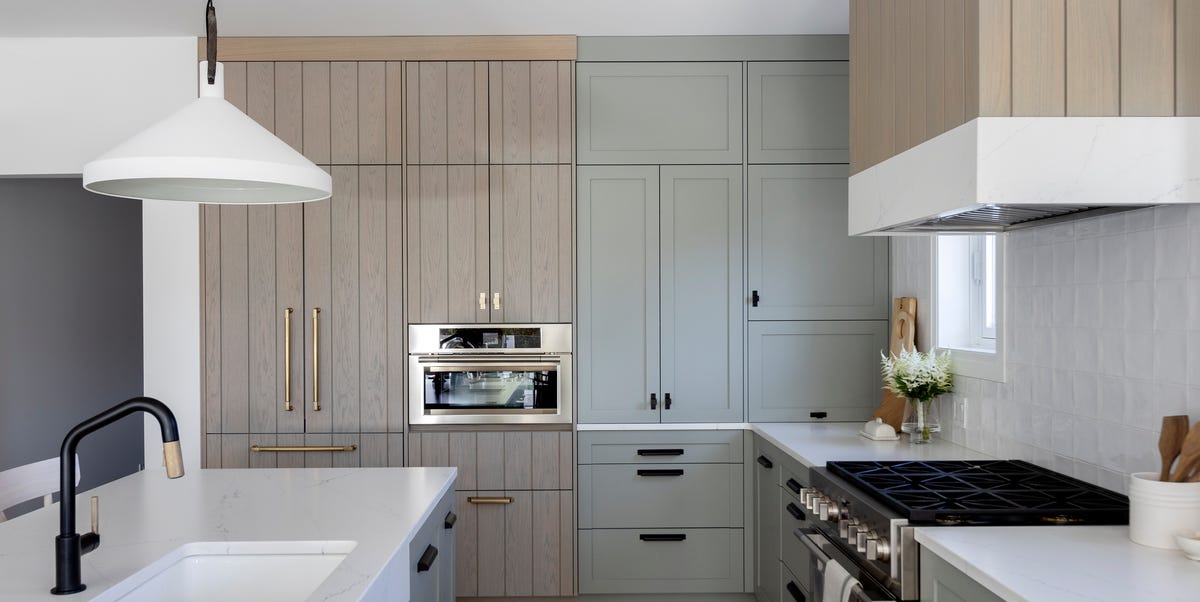
A kitchen might feature brushed brass cabinet pulls, a polished nickel faucet, stainless steel appliances, and dark bronze pendants. In a bathroom, chrome plumbing fixtures could be paired with antique brass sconces and bronze-framed mirrors. A living room might combine blackened steel curtain rods with warm brass lamps and aged silver accessories.
The finishes do not match, yet the room still feels connected because each metal has a role. That sense of hierarchy is the secret. Successful mixed-metal rooms are coordinated without looking overly coordinatedthe decorating equivalent of wearing a great outfit without appearing to have held a three-hour meeting with your closet.
Why Mixed Metal Hardware Is Taking Over in 2026
Homes are becoming more personal
Perfectly matched kitchens can look polished, but they can also feel predictable. As homeowners move away from generic showroom interiors, small irregularities are becoming desirable. Mixed finishes add the visual evidence of choice: one fixture may feel vintage, another architectural, and another clean and contemporary.
This layered appearance supports several larger interior design trends, including refined layering, modern heritage style, curated maximalism, and the renewed interest in rooms that feel collected rather than staged.
It works with existing appliances
Many homeowners assume stainless steel appliances force them to use silver-toned hardware everywhere. They do not. Stainless steel can function as a neutral background while warmer finishes appear on the cabinetry or lighting.
That flexibility is particularly useful during partial renovations. A homeowner can keep an existing refrigerator and range while introducing aged brass pulls, a darker faucet, or two-tone light fixtures. The kitchen gains personality without sending perfectly functional appliances to an early retirement.
Texture matters as much as color
The 2026 version of this trend is not limited to combining gold and silver. Designers are mixing surface treatments, too. Brushed, polished, hammered, knurled, burnished, antiqued, and matte finishes reflect light differently, creating depth even when their colors are similar.
For example, polished nickel can serve as a bright focal point beside softer brushed brass. Oil-rubbed bronze can ground a room filled with reflective stainless steel. A knurled pull can add tactile detail beside a smooth faucet.
Living finishes bring character
Unlacquered brass, aged bronze, and other evolving finishes are attracting attention because they develop visible variation over time. Their appearance responds to handling, cleaning, air exposure, and everyday use.
For homeowners who like pristine uniformity, this may require an emotional adjustment. For everyone else, patina can make a kitchen feel less like a catalog photograph and more like a real place where someone occasionally cooks pasta with alarming enthusiasm.
Current kitchen and hardware forecasts consistently point toward weathered finishes, warmer metals, tactile surfaces, custom-looking details, and combinations that avoid rigid matching.
How to Mix Metals Without Creating Visual Chaos
Choose one dominant finish
Start with the metal that will appear most frequently. This is the anchor finish, and it should cover roughly two-thirds of the visible hardware in the room.
In a kitchen, the dominant metal might appear on all cabinet pulls and knobs. In a bathroom, it could be used for the faucet, shower fittings, and towel bars. The secondary finish can then appear on lighting, mirrors, furniture hardware, or a statement fixture.
The exact ratio does not need to be measured with laboratory equipment. The goal is simply to make one finish feel established and the other feel intentional.
Limit the palette
Two prominent finishes are usually enough for an average-size room. A third may already exist through appliances, window frames, or architectural elements, but it does not necessarily need to become another decorative theme.
Three metals can work in a large open-plan kitchen, especially when each one belongs to a clear zone. Five unrelated finishes in a small powder room, however, may look less like eclectic design and more like the hardware aisle experienced a minor explosion.
Repeat every intentional finish
A metal used only once can look like a substitution made after the preferred product sold out. Repeating it at least twice creates visual logic.
Brass pendants might connect with brass cabinet knobs. A polished nickel faucet could relate to nickel details on a range. Bronze pulls on the island might echo a bronze frame in the adjacent dining area.
Repetition does not require identical products. Similar undertones, shapes, or textures are often enough to create a relationship.
Assign metals by category
One of the easiest formulas is to give each finish a job. Use one metal for plumbing, another for cabinet hardware, and allow appliances to keep their factory finish. This method makes the combination easy to understand at a glance.
Another option is to divide finishes by zone. The perimeter cabinets might use brushed nickel, while the island uses aged brass. This can visually distinguish the island as a furniture-like centerpiece without introducing another cabinet color.
Create obvious contrast
Finishes that are nearlybut not quitethe same can appear mistaken. Two slightly different brass tones may clash more noticeably than a clearly warm brass paired with a cool polished nickel.
Contrast announces intention. Warm and cool, dark and bright, matte and polished, or smooth and textured combinations are easier for the eye to understand.
Design guidance from kitchen organizations, manufacturers, and interiors publications repeatedly recommends establishing an anchor, limiting the number of metals, using contrast, and repeating finishes so the composition feels planned.
The Best Mixed Metal Combinations for 2026
Brushed brass and polished nickel
This pairing balances warmth and brightness. Brushed brass adds softness and age, while polished nickel provides a cleaner, more reflective counterpoint. It works especially well with marble, warm white cabinets, dark woods, and traditional millwork.
Antique brass and matte black
Black brings structure; brass keeps the combination from feeling severe. Use black for larger elements such as window frames, pendants, or a range hood, then introduce antique brass through smaller knobs, latches, or shelf rails.
Stainless steel and aged bronze
This is an excellent option for kitchens with professional-style appliances. Stainless steel handles the practical, high-performance side of the room, while aged bronze gives cabinetry and lighting a richer, more residential character.
Chrome and warm brass
Chrome is crisp, accessible, and easy to coordinate with common plumbing fixtures. Warm brass prevents it from feeling clinical. The pairing is particularly effective in bathrooms where chrome faucets are combined with brass mirrors or sconces.
Brushed nickel and champagne bronze
For homeowners who want low-contrast mixing, these softer finishes provide distinction without drama. Both have muted surfaces, making them easier to combine in transitional or contemporary interiors.
Where Mixed Metals Make the Biggest Impact
Kitchen islands
An island is a natural place for a contrasting hardware finish. It is already visually separate from the perimeter, so changing the pulls reinforces its identity. Pairing that finish with the pendants above the island makes the decision look even more intentional.
Lighting
Light fixtures sit away from faucets and cabinet pulls, which gives them enough breathing room to carry a contrasting finish. They are also visible from a distance, helping distribute the secondary metal throughout the room.
Open shelving
Metal shelf brackets, gallery rails, and hanging rods can introduce a new finish without replacing every knob. These pieces add architectural detail while linking hardware to decorative accessories.
Bathroom mirrors and sconces
A mirror frame and nearby lighting can act as a coordinated pair against plumbing fixtures in another finish. Because the elements occupy separate visual zones, the contrast usually feels clean rather than crowded.
Furniture-style cabinetry
Freestanding cabinets, beverage stations, vanities, and built-ins can use different hardware to make them feel like individual furniture pieces. This approach supports the collected, customized interiors appearing throughout 2026 design coverage.
Mistakes That Can Ruin the Look
Buying finishes by name alone
“Brushed brass” is not a universal color. One manufacturer’s version may be pale and muted, while another may lean orange or brown. The same problem occurs with bronze, nickel, gold, and black.
Order samples whenever possible and view them beside the actual cabinets, counters, appliances, and flooring.
Ignoring natural and artificial light
Metal is highly responsive to its environment. Polished finishes reflect nearby colors, while brushed surfaces appear flatter. A finish that looks neutral under showroom lighting may turn dramatically warmer near a sunny window.
Check samples in morning light, afternoon light, and after the room’s fixtures are switched on.
Mixing too many competing styles
Different metals are easier to combine when the hardware shares another trait. Similar shapes, scale, or design periods can create unity. Combining ornate Victorian knobs, minimalist bar pulls, industrial pipe handles, and novelty animal-shaped hardware may ask too much of one innocent kitchen.
Forgetting maintenance
Polished finishes show fingerprints more readily. Dark finishes may reveal mineral deposits around sinks. Living finishes change over time, while coated finishes are designed to remain more stable.
Select metals based on how the room is used, not only on how the samples look during their five-minute job interview.
Replacing everything at once
Mixed metals are most convincing when they feel connected to the room’s architecture and materials. Before buying new hardware, account for existing appliances, door handles, plumbing, light fixtures, window frames, and exposed structural metal.
Sometimes the best update is to keep most of the room intact and introduce one carefully repeated contrasting finish.
How to Try the Trend on a Realistic Budget
Mixed metal hardware is attractive partly because it does not require a full renovation. Homeowners can start with a small, reversible update and expand only when the combination proves successful.
Begin with a contained zone, such as a bathroom vanity, kitchen island, coffee bar, or built-in desk. Replace the hardware there and repeat the new finish in one nearby accessory or light fixture.
Another low-cost strategy is to keep existing cabinet pulls and change only the knobs. Kitchens that use pulls on drawers and knobs on doors naturally support two coordinated finishes.
Decorative objects can test a color direction before permanent purchases are made. A brass tray, chrome lamp, bronze bowl, or dark metal stool can reveal whether the proposed combination works with the room’s undertones.
For renters, lamps, mirrors, bar carts, stools, and removable cabinet hardware offer the same layered effect without altering plumbing or electrical fixtures.
A Practical Experience: What Happens When a Kitchen Stops Matching
The following composite renovation scenario reflects common decisions, problems, and solutions encountered when introducing mixed metal hardware.
Imagine a medium-size kitchen with white Shaker cabinets, stainless steel appliances, gray-veined quartz counters, and matte black pulls installed during an earlier renovation. Nothing is technically wrong, but the room feels flat. The black hardware outlines every cabinet so aggressively that the kitchen resembles a very tidy spreadsheet.
The first impulse might be to replace every metal surface with brass. That would be expensive, unnecessary, and likely too warm beside the stainless appliances. A more balanced plan begins by treating stainless steel as an existing neutral rather than an obstacle.
The perimeter cabinet pulls are replaced with brushed brass, but the stainless faucet and appliances remain. Brass adds warmth near eye level, while the cooler metals continue to serve the working parts of the kitchen. At this stage, however, the brass can look isolated. It needs a second appearance.
Two pendants above the island are changed to fixtures with warm metal details. They do not need to match the pulls exactly; their brushed texture and similar undertone are enough. Suddenly, the brass reads as a repeated design choice instead of an impulsive purchase.
The original black hardware is not completely discarded. A few black elements remain on the pantry doors, and the nearby window frame is already dark. Black now acts as a structural accent rather than the dominant finish. The kitchen contains three visible metal families, but each one has a clear job: stainless steel supports appliances and plumbing, brass warms the cabinetry and lighting, and black outlines selected architectural features.
The most important lesson arrives during sample testing. One brass pull appears elegant online but turns orange beside the quartz. Another is so pale that it disappears against the white cabinets. A third, slightly muted finish relates to the warm flecks in the countertop and looks more natural beside stainless steel.
Texture also changes the result. Highly polished brass competes with the reflective appliances, while brushed brass creates a softer transition. The winning combination works not because gold and silver magically get along, but because the finishes differ in a controlled way.
After installation, the room looks more layered without looking busier. The stainless appliances no longer seem like items that failed to match the decorating plan. They are part of it. The brass brings warmth, and the remaining black details provide definition.
This experience illustrates why mixed metal hardware is so likely to spread in 2026. It solves a real renovation problem. Most people are not designing empty rooms from scratch; they are working around appliances, fixtures, budgets, and earlier decisions. Mixing finishes allows those pieces to coexist while making the room feel intentional, personal, and gradually collected.
Will Mixed Metal Hardware Last Beyond 2026?
The popularity of specific finishes will change. Today’s aged brass may eventually make room for brighter chrome, deeper bronze, or an entirely new finish with a name such as “moonlit truffle.” The underlying principle, however, is more durable.
Historic interiors rarely depended on one perfectly matched finish. Objects were repaired, added, inherited, and replaced at different times. That variation helped rooms develop character. Modern mixed-metal design recreates the same sense of evolution, but with more planning and fewer mysterious attic discoveries.
The trend is also adaptable. Homeowners can replace one category of hardware without dismantling the entire palette. A room anchored by two complementary metals can absorb future changes more gracefully than a room whose identity depends on every fixture remaining identical.
Conclusion
The design detail poised to appear everywhere in 2026 is not a dramatic new countertop or a wildly impractical piece of sculptural furniture. It is the thoughtful mixing of metal hardware and finishes.
Brass can live beside stainless steel. Bronze can share a room with nickel. Chrome does not need to be exiled simply because a gold pendant moved in. The key is to choose a dominant finish, limit the palette, repeat each accent, and use contrast with purpose.
Done well, mixed metals make kitchens and bathrooms feel warmer, more customized, and less like every component arrived in the same cardboard box. Better still, the look can be tested through a few small hardware changes before anyone starts swinging a demolition hammer.
In 2026, matching is no longer the only route to a cohesive room. Sometimes a home looks most connected when its details are allowed to be slightly different.