A bed skirt has one very important job: hiding the mysterious under-bed zone where storage bins, dust bunnies, missing socks, and “I’ll deal with that later” boxes go to retire. The problem? Many store-bought bed skirts look either too fussy, too flimsy, or too much like they were borrowed from a hotel in 1998. That is where the humble painter’s drop cloth steps in wearing its farmhouse cape.
This guide will show you how to make a quick and easy no-sew bed skirt from drop cloth using simple tools, budget-friendly materials, and absolutely no sewing machine. The look is relaxed, neutral, slightly rustic, and surprisingly polished. Better yet, canvas drop cloth already has weight and texture, so it drapes better than many thin fabrics and hides under-bed storage like a professional magician with excellent taste.
Whether you want a farmhouse bed skirt, a cottage-style bedroom refresh, or a cheap DIY bed skirt that does not require threading a bobbin, this project is friendly for beginners. If you can measure, cut, fold, and clip or glue fabric, you can do this. If you cannot measure perfectly, congratulations: drop cloth is forgiving, and slightly imperfect is basically part of the charm.
Why Use Drop Cloth for a Bed Skirt?
Canvas drop cloth is one of the best-kept secrets in DIY home decor. It is affordable, widely available, sturdy, washable, and neutral enough to match almost any bedroom style. Unlike shiny polyester bed skirts that wrinkle if you look at them wrong, drop cloth has a natural linen-like texture that feels casual but intentional.
A drop cloth bed skirt also works beautifully because the fabric is heavier than a typical sheet. That extra weight helps it hang straight, especially around the foot of the bed where thin fabric can float, bunch, or look like it is plotting an escape. Many canvas drop cloths come with hemmed edges, which means you can use the finished edge along the floor and skip sewing altogether.
What You Need for a No-Sew Drop Cloth Bed Skirt
Materials
- One or two canvas drop cloths, depending on bed size
- Fabric scissors or a rotary cutter
- Measuring tape
- Iron and ironing board
- No-sew hem tape, fabric glue, upholstery twist pins, safety pins, or hook-and-loop tape
- Painter’s tape or chalk for marking
- Optional: bed risers, if you want more hidden storage space
Best Drop Cloth Size to Choose
For most beds, a 6-by-9-foot or 9-by-12-foot canvas drop cloth works well. A twin bed may only need one smaller cloth, while a queen or king bed often looks best with a larger drop cloth or two long runner-style drop cloths. If your bed is against a wall, you only need to cover the visible sides, usually the front and one or both sides. No one needs a hidden bed skirt panel pressed lovingly against drywall. That is between the mattress and the wall.
Choose a cotton canvas drop cloth if possible. Avoid plastic-backed drop cloths for this project because they are harder to wash, less flexible, and not exactly cozy bedroom material. Medium-weight canvas is usually easier to handle than very heavy contractor-grade cloth, but it should still have enough body to hang nicely.
Step 1: Wash, Dry, and Iron the Drop Cloth
Before measuring or cutting, wash and dry the drop cloth. This step matters because canvas can shrink. If you skip it, your perfectly measured bed skirt may become a slightly confused ankle skirt after the first wash. Use warm water, dry thoroughly, and remove it promptly to reduce deep wrinkles.
After washing, iron the drop cloth. You do not need to iron it into military-level crispness, but smoothing out the major wrinkles makes measuring easier and helps the finished bed skirt look intentional. Drop cloth naturally has small slubs, folds, and texture. That is good. Giant laundry mountains across the front panel? Less good.
Step 2: Measure the Drop From Box Spring to Floor
The “drop” is the distance from the top edge of your box spring, platform, or bed frame down to the floor. This measurement decides the height of your bed skirt panels.
Use a measuring tape and measure from the top of the box spring to the floor. If you want the bed skirt to gently graze the floor, use that exact measurement. If you prefer a cleaner floating look, subtract about half an inch. If your floors are uneven, measure in several spots and choose the shortest measurement so the fabric does not puddle awkwardly.
For example, if the top of your box spring is 16 inches from the floor, cut your panels about 17 to 18 inches tall if you need extra fabric at the top for attaching. If you are using hemmed edges along the floor, keep that finished edge intact and cut from the top side.
Step 3: Measure the Sides of the Bed
Next, measure the visible sides of the bed. Most bed skirts cover three sides: left side, right side, and foot. Standard mattress lengths are about 75 inches for twin and full, and about 80 inches for queen and king. Widths vary by size, but the easiest approach is to measure your actual bed instead of relying on a chart.
Add a few extra inches to each panel so you have room to overlap at the corners. If you want a flat tailored bed skirt, add only a little extra. If you want soft pleats or a gathered look, add more fabric. A drop cloth bed skirt looks especially nice with simple box pleats at the corners because the canvas holds the shape without looking stiff.
Step 4: Cut the Drop Cloth Panels
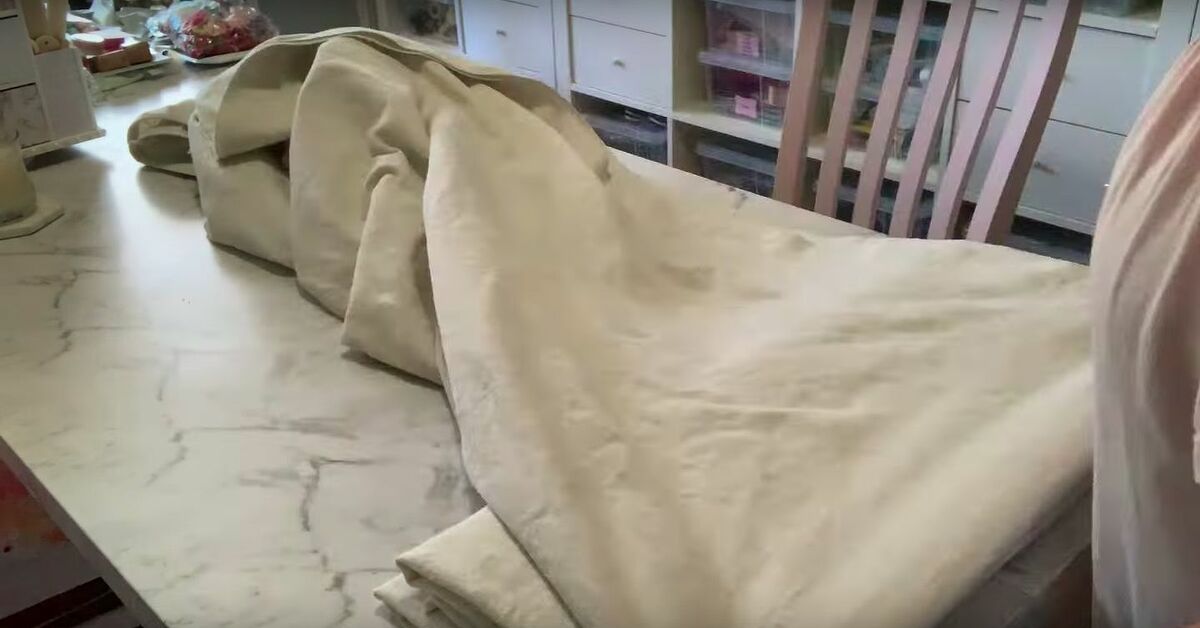
Lay the drop cloth on a clean floor or large table. Use the existing hemmed edge as the bottom edge whenever possible. Mark your panel height from the hem upward, then cut long strips for each visible side of the bed.
Do not panic if your cut edge is not perfect. The cut edge will usually be hidden under the mattress or attached to the inside edge of the bed frame. The finished edge along the floor is what people see, so protect that edge like it is the star of the show.
If you want a crisp tailored look, cut three separate panels: one for each side and one for the foot. If you prefer the quickest method, use one long continuous strip and wrap it around the visible sides of the bed. The continuous method is faster, but separate panels are easier to adjust and remove for washing.
Step 5: Choose Your No-Sew Attachment Method
Option 1: Upholstery Twist Pins
Upholstery twist pins are small spiral pins that twist into fabric and hold it in place. They work well if you are attaching the bed skirt to a box spring. They are removable, adjustable, and great for renters because there is no glue involved.
Option 2: Safety Pins
Large safety pins are inexpensive and practical. Pin the fabric to the box spring along the top edge, then cover the pinned area with the mattress. This method is not glamorous, but neither is crawling under the bed looking for a missing phone charger. Practical wins.
Option 3: Hook-and-Loop Tape
Adhesive hook-and-loop tape is ideal for a platform bed or metal frame. Stick one side to the frame and attach the other side to the fabric. For extra durability, reinforce the fabric side with fabric glue or iron-on hem tape.
Option 4: Hot Glue or Fabric Glue
Hot glue is fast and effective, especially if the skirt will not be washed often. Fabric glue creates a more flexible bond but takes longer to dry. This method works best when attaching fabric to a wood frame or hidden support rail.
Option 5: No-Sew Hem Tape
Iron-on hem tape is useful for making clean folds, creating pleats, or securing raw edges. It is not always the strongest choice for attaching an entire bed skirt to a frame, but it is excellent for finishing details.
Step 6: Attach the Bed Skirt
Start at one corner of the bed. Hold the fabric panel so the hemmed edge just touches the floor. Attach the top edge to the box spring, frame, or platform using your chosen method. Work slowly along the side, smoothing the fabric as you go.
For a tailored look, keep the fabric flat and straight. For a gathered look, gently bunch the fabric every few inches before securing it. For pleats, fold the fabric inward at the corners and press with an iron before attaching. Box pleats at the two foot corners give the bed a custom look without requiring custom skills.
Once the panels are attached, place the mattress back on top. Step back and check the drop. Adjust any areas that are too high, too low, or suspiciously wavy. This is the beauty of a no-sew bed skirt: you can fix it without seam ripping, emotional bargaining, or calling your crafty aunt.
How to Style a Drop Cloth Bed Skirt
A drop cloth bed skirt pairs beautifully with white bedding, linen duvet covers, chunky knit throws, striped pillows, and vintage-style quilts. Because the color is usually warm beige or natural cotton, it softens a bedroom without demanding attention.
For a farmhouse bedroom, leave the drop cloth natural and slightly relaxed. For a coastal cottage look, wash it several times for extra softness and pair it with pale blue or white bedding. For a more polished style, iron the panels well and create sharp pleats at the corners.
You can also customize the skirt with trim. Add cotton fringe, ribbon, jute tape, or a narrow decorative border along the bottom edge using fabric glue or hem tape. Keep the trim simple so the bed skirt still feels relaxed and timeless.
Common Mistakes to Avoid
Skipping the Wash
Always wash and dry the drop cloth before cutting. Shrinkage is real, and it does not care about your design plans.
Cutting the Hemmed Edge Off
Use the existing finished edge as the bottom of the bed skirt whenever possible. It saves time and gives you a cleaner result.
Making the Skirt Too Long
A bed skirt should usually touch or almost touch the floor. If it puddles, it can collect dust and look messy. If it floats too high, it may reveal the storage bins you were trying to hide in the first place.
Using Too Little Fabric
If you want pleats or a gathered look, add extra length. Flat panels can be measured close to the bed size, but gathered panels need fullness to look intentional.
Cleaning and Care Tips
A drop cloth bed skirt is low-maintenance. Vacuum it with a brush attachment during regular bedroom cleaning. If it gets dusty or stained, remove the panels and wash them according to the fabric’s needs. Cotton canvas usually softens over time, which makes the skirt look even more relaxed and natural.
If you used hot glue, be careful with high heat in the dryer because it may weaken the bond. If you used pins or hook-and-loop tape, remove hardware before washing when possible. A quick press with an iron after drying will bring the panels back to their best shape.
Budget Breakdown
This project is popular because it looks more expensive than it is. A basic canvas drop cloth often costs far less than a custom bed skirt, and you may already have some of the supplies at home. Your total cost depends on bed size and attachment method, but many DIYers can complete the project with one drop cloth, a pack of pins, and a little patience.
If you are decorating a guest room, kids’ room, rental bedroom, or budget-friendly primary bedroom, this is one of those projects that delivers a big visual upgrade without a big receipt. That is the DIY sweet spot: low cost, high impact, minimal chance of crying into a pile of fabric.
Experience Notes: What I Learned From Making a No-Sew Drop Cloth Bed Skirt
The first thing you learn when making a no-sew drop cloth bed skirt is that the floor is never as clean as you think it is. Lay down a sheet before spreading out the drop cloth, unless you want your new bed skirt to come with bonus lint. Canvas loves to collect little threads, pet hair, and mysterious crumbs that no one admits creating.
The second lesson is that measuring matters, but perfection does not. A drop cloth bed skirt has a casual texture, so tiny variations disappear once the mattress is back in place. The most important measurement is the drop from the top of the box spring to the floor. Get that right, and the project looks good. Get it wrong, and the bed skirt either sweeps the floor like a dramatic theater curtain or shows off the storage bins underneath like they are part of the decor.
I also learned that washing the drop cloth first makes a huge difference. Fresh out of the package, canvas can feel stiff and smell a little like a hardware store aisle. After washing and drying, it becomes softer and easier to fold. Ironing takes time, but it is worth it. You do not need every wrinkle gone, but pressing the bottom edge and pleats helps the whole bed look more finished.
Another helpful trick is to attach the foot panel first. That is the side most people notice when they walk into the room. Once the foot looks straight, the side panels are easier to line up. If you are using pins, do not pin too loosely. The fabric will shift when the mattress moves, especially if the bed is used daily. A few extra pins along the top edge can save you from adjusting the skirt every time you change the sheets.
If your bed frame is wood, hook-and-loop tape or hot glue can be wonderfully fast. If you have a box spring, twist pins are easier to reposition. For renters or anyone who changes decor often, removable methods are the safest choice. They let you wash, adjust, or replace panels without damaging the bed frame.
The biggest surprise is how much the bed skirt changes the room. It hides clutter, softens the bed frame, and makes the bedding look layered. Even a plain white comforter suddenly feels more styled when there is a natural canvas skirt underneath. It is a small project, but it gives the bed that “finished bedroom” look, as if an adult lives there and definitely does not store holiday wrapping paper under the bed year-round.
Conclusion
Learning how to make a quick and easy no-sew bed skirt from drop cloth is one of the simplest ways to upgrade a bedroom on a budget. With one washable canvas drop cloth, a few basic tools, and a no-sew attachment method, you can hide under-bed storage, soften a bed frame, and add relaxed farmhouse style in an afternoon.
The best part is that this DIY drop cloth bed skirt does not require advanced skills. You do not need a sewing machine, a design degree, or a heroic amount of patience. Just wash the fabric, measure carefully, use the hemmed edge wisely, and attach the panels securely. The result is clean, cozy, practical, and charmingly unfussy.
If your bedroom needs a quick refresh, start with the space under the bed. A drop cloth bed skirt may not solve every decorating problem, but it will definitely hide the evidence.