David Stark does not merely decorate rooms; he gives them a plot, a point of view, and occasionally something wonderfully unreasonablelike a working Ferris wheel indoors. The New York event designer has built a career by treating parties, galas, weddings, and brand experiences as temporary works of art. His signature is not one flower, color, or fashionable motif. It is the transformation of a client’s story into a space guests can walk through, photograph, discuss, and remember.
Who Is David Stark?
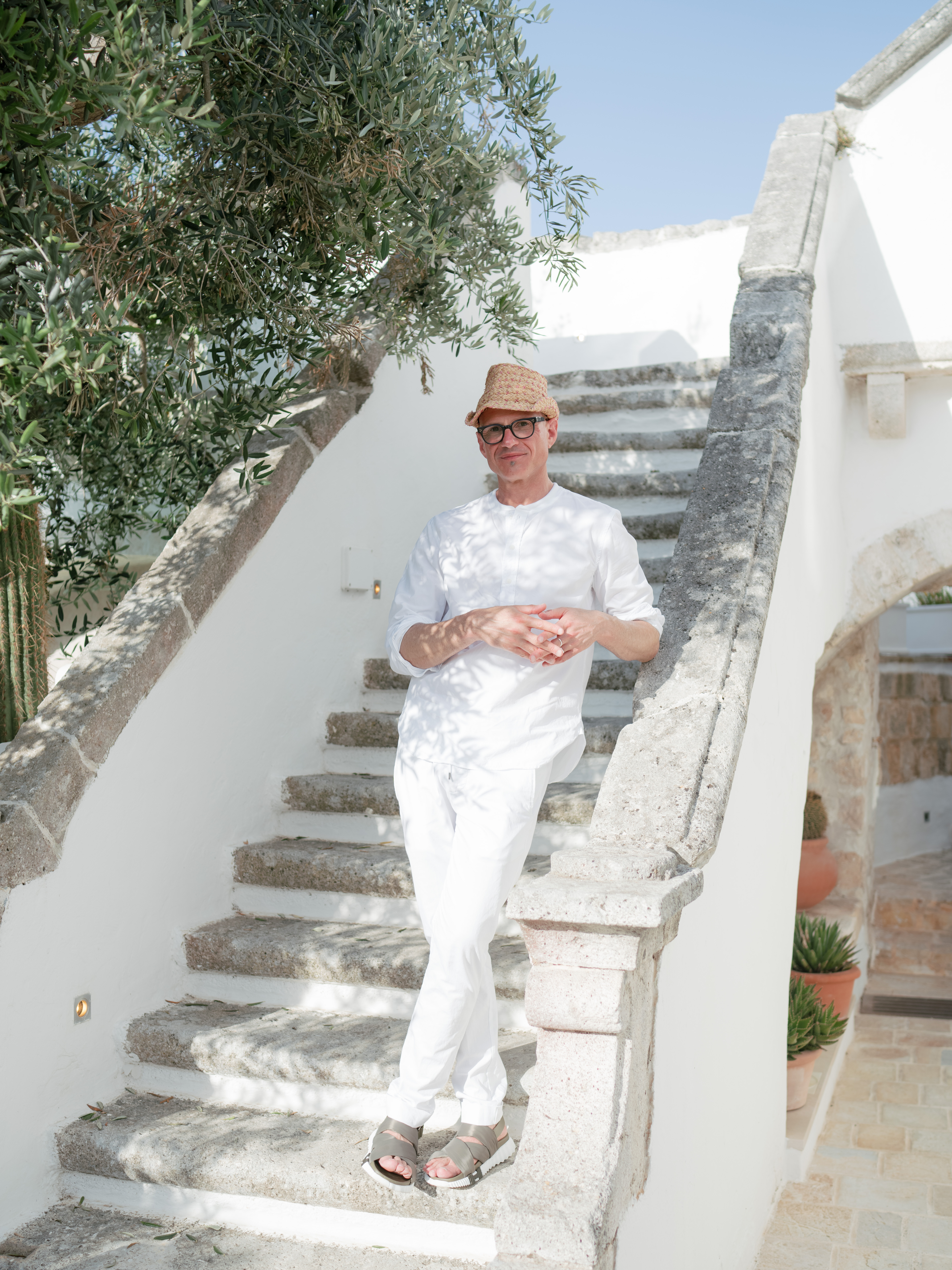
David Stark is a New York-based event producer, designer, author, and founder and chief creative officer of David Stark Design and Production. Before entering event design, he trained as a painter and earned a BFA in Painting from the Rhode Island School of Design. That fine-art background still shapes how he talks about his work: not as conventional decorating, but as an immersive, three-dimensional composition inhabited by people rather than hung on a wall. His firm now works across brand experiences, nonprofit fundraisers, cultural events, weddings, and personal celebrations.
His client and project history spans major cultural institutions, philanthropic organizations, brands, and private hosts. Publicly documented work includes events for the Whitney Museum of American Art, Carnegie Hall, the Metropolitan Opera, Cooper Hewitt, the Robin Hood Foundation, Louis Vuitton, and other high-profile organizations. Yet the most revealing part of his portfolio is not the guest list. It is the way each event is designed to belong specifically to its host, mission, venue, and audience.
Quick Take: His Real Medium Is Storytelling
The easiest way to misunderstand David Stark is to call him a florist with a very large ladder. Flowers matter in his work, but they are only one material among many. Paper, tape, paint chips, pencils, backpacks, chalk, fruit, fabric, light, sound, and graphic design can all become part of the visual language. The material choice follows the story rather than leading it.
That distinction separates immersive event design from ordinary decoration. A decorated ballroom may look polished. A story-driven ballroom explains why the gathering exists. For a museum, the design may emerge from the institution’s archive. For a nonprofit, the physical environment can make the mission visible. For a wedding, a private joke, family ritual, beloved recipe, or shared obsession can become the seed of an entire experience. Stark has repeatedly emphasized that the strongest concepts are event-specific, site-specific, and client-specificnot generic beauty dropped into a rented room.
A Design Should Answer “Why?”
A good event concept should survive one brutally useful question: Why is this here? When the answer is “because everyone is doing it,” the idea is already tired. Stark’s approach begins with researchinto the host, organization, venue, audience, and purposethen turns that research into visual decisions. The result may be glamorous, funny, strange, restrained, or monumental, but it should never feel interchangeable.
Quick Take: Everyday Materials Can Become Extraordinary
One of Stark’s best-known creative habits is elevating humble materials through repetition, scale, and context. He has discussed using materials such as Post-it notes, hardware-store paint swatches, tape, paper, and pencils in sophisticated environments. The point is not thrift-store gimmickry. It is transformation. A familiar object becomes unfamiliar when multiplied by the thousand, arranged architecturally, or connected to the subject of the event.
This is where Stark’s painting background becomes especially visible. A painter considers rhythm, mass, contrast, negative space, texture, and composition. Stark applies those same principles at room scale. A row of pencils can become a wall. A field of paper can become a ceiling. A practical backpack can become both a stripe of color and a symbol of educational opportunity. Suddenly, the supply closet has a graduate degree.
Scale Changes the Meaning
One flower is a flower. Five hundred paper flowers suspended overhead become an atmosphere. One paint chip is a sample. Thousands create a chromatic landscape. The lesson for event planners is not simply “use inexpensive things.” It is to select materials with conceptual relevance and then deploy them confidently enough to alter how guests perceive the space.
Quick Take: Big Ideas Still Need to Fit Through the Door
Stark’s projects may look dreamlike, but they are engineered realities. A famous example involved installing a functioning Ferris wheel inside the Park Avenue Armory for The Jewish Museum’s Purim Ball. The visual joke was spectacular, but the production depended on practical facts: the venue’s scale, ceiling height, truck access, assembly method, safety requirements, timing, and load-in route. Event magic is usually wearing steel-toed shoes behind the curtain.
This balance between imagination and logistics is central to professional event design. Every concept eventually becomes a schedule, budget, floor plan, fabrication drawing, staffing plan, and list of things that must not catch fire. Stark’s firm describes a team spanning experiential strategy, planning, technical and environmental design, graphic design, 2D and 3D modeling, floral work, styling, and scenic fabrication. That multidisciplinary structure explains how a sketch can become a temporary world without becoming a temporary disaster.
Quick Take: Sustainability Works Best When It Is Part of the Idea
Event décor has an awkward problem: it may require weeks or months to create and only hours to use. Stark’s work offers a more thoughtful model by asking whether materials can have a meaningful life after the guests leave. For a Robin Hood Foundation benefit, his team created a vivid entry installation from backpacks filled with school supplies. After the event, more than 7,000 backpacks were donated to New York City schoolchildren. The objects were visually powerful, directly tied to an education theme, and useful after the final song ended.
That is stronger than placing a recycling symbol beside a mountain of disposable props. Sustainable event design can involve rental systems, modular scenic elements, salvaged materials, donation plans, reusable graphics, local fabrication, or décor that becomes a gift or community resource. The best solution supports the concept instead of feeling like an environmental apology stapled on during load-out.
Quick Take: Personal Beats Perfect
In weddings and private celebrations, Stark consistently favors personal lore over generic luxury. A love of sunflowers once inspired a simple escort-card display using sunflower seeds. In another example, a couple’s story about homemade chocolate chip cookies became a meaningful favor built around ingredients and a recipe. These ideas work because guests can understand the people behind them. They are not merely expensive; they are specific.
Specificity also protects an event from trend fatigue. A fashionable color palette can be copied by thousands of hosts. A family tradition, shared joke, favorite neighborhood, or unusual courtship story belongs to one client. That is excellent creative materialand it usually creates better conversation than a monogram projected onto every available surface.
Do Fewer Things, Better
Personalization does not require turning every napkin, cocktail, chair back, and canapé into a biography. Stark has warned against overdoing custom details because too many “special” moments can flatten the experience. A few strong, coherent gestures create greater impact than a confetti storm of unrelated cleverness. Editing is part of design, even when the design includes twelve-foot topiary chickens.
Quick Take: A Party Needs an Emotional Arc
Visual beauty gets guests through the door, but pacing determines whether they stay engaged. Stark’s advice across interviews points toward designing an evening in chapters: arrival, discovery, gathering, dining, transition, surprise, and release. Music, lighting, performers, food service, speeches, and movement between spaces should work together. A marching band, choir, theatrical reveal, or sudden change in atmosphere can signal that the next chapter has begun.
The host matters, too. Stark has advised that the host’s energy sets the tone. Guests notice tension faster than they notice imported peonies. A relaxed host gives everyone permission to enjoy themselves; an anxious host can make a flawless room feel like a board meeting with better glassware. Event planning should therefore protect not only the timeline but also the host’s ability to be present.
Quick Take: Trends Are Information, Not Instructions
Stark keeps track of cultural shifts but does not treat trends as creative commandments. In a 2025 discussion of his process, he described an approach centered on making art and solving client problems rather than deliberately chasing or manufacturing trends. That position makes sense in an era when social media can turn a fresh event idea into a visual cliché before the rental truck is returned.
His own work demonstrates wide stylistic range. Fashion collections have inspired tablescapes; greenery has become graphic architecture; bold maximalist settings have been organized through disciplined color; and traditional florals have been combined with sharper textures and unexpected forms. The connective tissue is not a single “David Stark look.” It is conceptual clarity, strong composition, and a willingness to use whatever tool best tells the story.
What Emerging Event Designers Can Learn From David Stark
Start With Research, Not Shopping
Before choosing flowers or rental chairs, learn the story. Study the organization’s archive, the couple’s history, the brand’s product, the building’s architecture, and the audience’s expectations. Research creates a concept; shopping merely fills a cart.
Choose Materials for Meaning
Ask what objects naturally belong to the subject. Books may suit a literary fundraiser. Measuring tools may suit an education theme. Seed packets may suit gardeners. The material does not need to be precious, but its connection should be legible.
Design From the Guest’s Point of View
Sketch the experience as a journey. What is the first impression? Where do guests pause? What encourages conversation? When does the energy change? What will they remember the next morning? Event design is choreography with furniture.
Build With the End in Mind
Plan fabrication, transport, installation, maintenance, dismantling, reuse, and disposal before approving the beauty shot. A concept is only successful if it survives contact with the venue, schedule, budget, and human beings carrying it.
Protect the Core Idea
Large events invite many opinions. The designer’s job is to listen, synthesize, and keep the central narrative recognizable. Collaboration should sharpen the concept, not turn it into a committee-produced casserole.
Experience Notes: Applying Stark-Inspired Ideas in Real Event Planning
The most useful experience in event design often begins with a constraint. Imagine planning a nonprofit dinner in a plain conference hall with a limited décor budget. The first instinct may be to hide the room with drape and order enough flowers to create a small weather system. A Stark-inspired process would begin elsewhere: What does the organization actually do, and what physical object represents that work?
Suppose the nonprofit distributes books to children. Donated books could form sculptural entry walls, colorful table runners, stage elements, or a graphic “library” that frames the mission. Guests would immediately understand the evening’s purpose. Afterward, every book could enter the distribution program. The design would be economical, photogenic, mission-driven, and responsible. Most importantly, the story would not disappear when the centerpieces went into a dumpster.
A second lesson appears when working with personal celebrations. Couples often arrive with hundreds of saved images but few words describing themselves. The productive conversation is not “Which centerpiece do you like?” It is “What do your friends tease you about?” One couple may spend every weekend exploring roadside diners. Another may exchange handwritten notes. Another may have met while volunteering at an animal shelter. Each detail can lead to a distinct visual language, menu, favor, escort-card idea, or entertainment moment.
In practice, the strongest concept may be surprisingly small. A wall of handwritten notes can feel more emotional than a truckload of imported flowers. Diner-style matchbooks and pie boxes can make a polished reception playful without turning it into a costume party. Illustrations of adopted pets can appear on cocktail napkins or table cards. The aim is not to theme every inch. It is to place a few unmistakably personal signals where guests will encounter them naturally.
Scale is another experience-based lesson. Designers sometimes add many small objects because they fear empty space. The result is visual noise and a production team that develops a personal grudge against tiny candleholders. One large gesturea suspended paper canopy, an oversized graphic, a dramatic field of color, or a repeated everyday objectcan be more memorable and easier for guests to read. Bold does not always mean expensive; it often means decisive.
Then comes the reality check. Every exciting idea must be tested against doors, elevators, ceiling points, sprinkler rules, power loads, accessibility, weather, labor hours, and strike time. A beautiful installation that blocks a service route is not avant-garde. It is in the way. Experienced teams prototype, measure, label, rehearse, and build backups. The visible result may feel spontaneous, but the hidden process is disciplined.
Finally, the guest experience should remain the measure of success. An event is not a showroom where people are inconveniently moving through the photographs. Guests need comfortable paths, readable signage, places to talk, sensible timing, and reasons to participate. The best immersive event design creates wonder without creating confusion. It makes people feel that the room was built for this particular gatheringand that, for a few hours, they belong inside its story.
Conclusion: The Art of Making a Moment Last
David Stark’s influence comes from expanding the definition of event design. In his hands, a party is not a collection of attractive objects. It is a temporary, collaborative artwork shaped by narrative, material, scale, logistics, performance, and human behavior. His work proves that humble supplies can look luxurious, sustainability can strengthen a concept, and personal details can outperform generic extravagance.
The lasting lesson is simple: begin with meaning. Once the story is clear, flowers, paper, light, sound, graphics, food, and architecture can become supporting characters. Without that story, even the grandest room is merely dressed up. With it, guests enter an experienceand leave carrying a memory.