Some kitchens are born in showrooms. Others are born in the way old houses actually live: a little quirky, a little stubborn,
and weirdly charming once you stop fighting them. The West End Eclectic Kitcheninspired by a renovated 1875
Portland, Maine homeleans into that reality. Instead of sanding away the personality, it polishes it, puts it under good lighting,
and gives it a barstool.
Picture a bright, high-ceilinged space that used to be a mash-up of “old bathroom + closet + sitting area,” now transformed into the
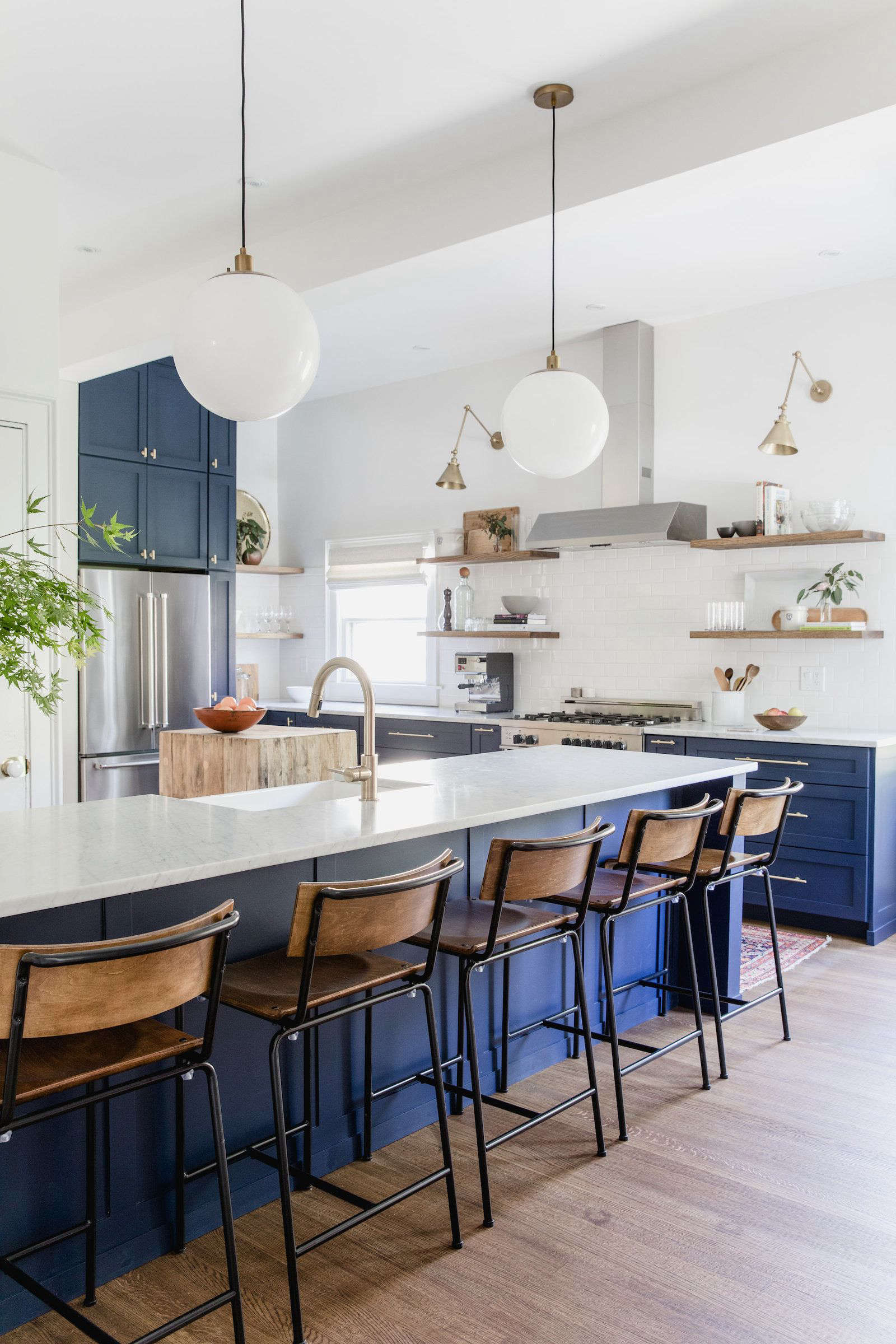
heart of the house. Navy cabinetry anchors the room, warm brass adds sparkle, white tile keeps it crisp, and a vintage-style rug
gives the whole thing a collected, lived-in wink. It’s old-meets-newbut in a way that feels natural, not like two strangers
awkwardly sharing a kitchen island.
What “West End Eclectic” Really Means
“Eclectic” gets misused a lot. Sometimes it’s code for “I can’t decide,” or “I bought one thing from seven eras and now it’s
everyone’s problem.” A true eclectic kitchen, though, is about curation: mixing periods, materials, and textures
with a steady hand so the room feels layerednot chaotic.
The three rules that keep eclectic from becoming hectic
- Pick a visual anchor: one dominant cabinet color, one primary countertop tone, one main metal finish.
- Repeat a few elements: wood tones, brass accents, and clean white surfaces show up more than once.
- Let personality live in the “swap-able” stuff: rugs, stools, lighting, art, and open-shelf styling.
In other words: your kitchen can have a lot of opinions, as long as it still speaks in complete sentences.
The Story: An 1875 House Gets a Kitchen That Finally Fits
Older homes often have great bones and… let’s call it “creative” room planning. In the West End-inspired renovation, the kitchen was
created by taking over smaller, less-useful spaces and turning them into one generous roomwhile also highlighting those high ceilings
that old houses love to show off.
Why this matters (especially in historic homes)
When you remodel a historic home, your goal isn’t to make it look brand-new. The goal is to make it look like it evolved into its
best self. That means:
- Keeping the room bright and open so the architecture can breathe.
- Choosing finishes that feel timeless next to original details.
- Adding “warmth” through texturewood, brass, rugsso white surfaces don’t feel clinical.
The result is a kitchen that feels gracious for entertaining and practical for daily lifelike it can handle a dinner party
and a Tuesday-night cereal emergency.
The Signature Palette: Navy, White, and Warm Brass
Navy cabinetry is the power move here. It brings depth, contrast, and a slightly tailored vibelike your kitchen put on a blazer.
Pair it with white tile and light countertops, and the room stays airy instead of moody. Add warm brass hardware and fixtures,
and suddenly the whole space looks intentionally designed, not accidentally painted.
Why navy works so well in an eclectic kitchen
- It’s flexible: navy looks equally at home with vintage pieces and modern lines.
- It plays well with metal: brass, stainless, and even matte black look sharp next to it.
- It hides real life: fingerprints and scuffs don’t announce themselves as loudly as on bright white cabinets.
If you want this look but fear commitment, consider navy on lower cabinets or a single bank of tall cabinetry, with lighter uppers
(or open shelves) to keep the room balanced.
Materials That “Mix” Without Fighting
Eclectic kitchens succeed when materials feel like they were introduced at a party and immediately found something to talk about.
The West End Eclectic approach uses a few classicsand lets texture do the heavy lifting.
1) White subway tile (but make it feel current)
Subway tile is popular because it’s clean, bright, and historically compatible with older homes. But it can also scream “default
settings” if you aren’t careful. The trick is to add a subtle twist: slightly imperfect tile, a thoughtful grout choice, or
a layout variation (stacked, vertical, herringbone in a niche). That keeps the look timeless without feeling overdone.
2) Light countertops that reflect (not shout)
The bright countertop surface in this style is a functional choice disguised as a design choice. Light counters bounce daylight,
keep navy cabinetry from feeling heavy, and make the whole kitchen read bigger. Whether you choose quartz for low-maintenance
durability or marble for its veining and romance, the goal is the same: calm, continuous brightness.
3) Wood accents for warmth and “collected” character
Floating wood shelves soften the crispness of tile and stone. A vintage butcher block (or a worn wood prep table) adds the kind of
soul you can’t fake with a brand-new “distressed” finish. It’s also a sly way to bring in an antique note without sacrificing
the convenience of modern appliances.
Layout: The Island That Does Everything (Except Your Taxes)
The large island is the social and functional hubprep space, serving zone, snack bar, homework station, and “lean here while I
tell you my entire day” podium. With seating along one side and a sink/faucet for prep, it supports both cooking flow and
entertaining flow.
How to copy the island’s function in your own kitchen
- Build zones: prep (sink + trash), cook (range), store (fridge + pantry), serve (island overhang).
- Keep clearance comfortable: enough space behind stools so people can slide out without a choreographed apology.
- Use the island to hide storage: drawers for tools, deep cabinets for small appliances, pull-outs for recycling.
If your kitchen can’t fit a big island, don’t panicsteal the idea. A narrow island, a peninsula, or even a vintage worktable
can deliver the same “center of gravity” effect.
Lighting and Shelves: The Eclectic Secret Sauce
Eclectic kitchens aren’t built only with cabinets and tile. They’re built with the “in-between” choices: lighting, styling,
and the little moments that look collected over time.
Lighting that feels intentional (and flattering)
A mix of fixturesglobe pendants over the island, warm-toned sconces near the range, and discreet recessed lighting for workcreates
layers. Layered lighting makes the kitchen feel like a place you want to hang out, not a bright lab where you perform sandwich science.
Open shelves that stay pretty in real life
Open shelving works best when it’s curated and repeated. Keep daily-use items (glasses, bowls, mugs) in simple shapes and a tight
color palette. Add one or two personality pieceswood cutting boards, a planter, a favorite platterthen stop before the shelves
become a museum gift shop.
Yes, There’s a Rug in the Kitchenand It’s a Power Move
A patterned runner in a kitchen feels rebellious the first time you do ituntil you realize it’s also extremely smart. Rugs add
warmth, reduce echo in hard-surface rooms, and soften the transition between sleek finishes. In the West End Eclectic Kitchen vibe,
the rug is a signature: it makes the space feel lived-in, not staged.
Rug rules for kitchens (so you don’t regret everything)
- Go low pile or flatweave: easier to clean, less tripping, fewer crumbs disappearing into the abyss.
- Use a rug pad: keeps it from skating away like it’s late for an appointment.
- Choose pattern over solid: it hides life. And by “life,” we mean coffee splashes and pasta-water drama.
- Consider washable options: especially in high-traffic zones.
How to Create Your Own West End Eclectic Kitchen
Step 1: Decide what stays classic
Choose two or three “classic” elements that can anchor the room for years: simple cabinet profiles, a timeless backsplash,
and a countertop that won’t feel dated next season. Think of these as your kitchen’s reliable friendsthe ones who show up on time
and don’t start drama.
Step 2: Add eclectic personality in layers
Then bring in personality through pieces that are easy to change:
- Vintage or vintage-inspired stools
- A rug with color and history (or at least the look of history)
- Art, cutting boards, ceramics, and objects with a story
- Lighting that feels collectednot matchy-matchy
Step 3: Mix metals the grown-up way
Mixing metals is one of the fastest routes to “eclectic,” but it needs a plan. A simple formula:
pick one dominant finish (like warm brass), then add one supporting metal (like stainless through appliances),
and keep a third metal minimal (maybe matte black in stool frames or lighting accents). Repetition is what makes it look designed,
not accidental.
Step 4: Plan like a realistespecially in older houses
Old houses have surprises. Some are charming. Others require invoices. When you remodel, build in time for planning and a contingency
budget for the “we opened the wall and found…” moment. Clear goals, a realistic budget, and a thoughtful timeline are what separate
a dream kitchen from a months-long snack-prep obstacle course.
A Quick Design Cheat Sheet
- Cabinet color: deep navy or similarly saturated classic tone
- Hardware: warm brass (clean-lined pulls keep it modern)
- Backsplash: white subway tile (classic layout or a subtle pattern shift)
- Shelves: warm wood floating shelves for texture
- Island: big work surface + seating + storage (and ideally a prep sink)
- Rug: patterned runner, low pile/flatweave, with a non-slip pad
- Finishing touch: one vintage piece (worktable, butcher block, or found object)
Final Thoughts: Eclectic, But Make It Livable
The best part of the West End Eclectic Kitchen style is that it’s not trying to be perfect. It’s trying to be welcoming.
It respects the age of the home, embraces the quirks, and still delivers modern comfort: generous prep space, smart storage, bright
surfaces, and lighting that makes everyone look like they got eight hours of sleep.
If you take one idea from this look, let it be this: eclectic doesn’t mean “random.” It means “collected.” And a collected kitchen
one with warmth, contrast, and personal layersis the kind of room people remember long after dessert.
Experiences: Living With a West End Eclectic Kitchen (500+ Words)
The first thing you notice in a West End Eclectic Kitchen isn’t the navy cabinets or the brass hardwarethough yes, they’re handsome.
It’s the feeling of the room. The ceiling height gives you this quiet sense of space, like the kitchen is exhaling. Morning
light hits the white tile and the counters and bounces around in a way that makes even a basic cup of coffee feel mildly cinematic.
You don’t need a soundtrack, but if you add one, the kitchen won’t complain.
Daily life starts to organize itself around the island. Someone inevitably claims a “regular seat,” like it’s a neighborhood diner.
Breakfast becomes a small ritual: toast on a plate that looks like it came from a flea market, fruit in a bowl that’s too pretty to
hide in a cabinet, a cutting board that stays out because it’s both useful and charming. The island is also where grocery bags land,
where mail piles up (briefly, hopefully), and where conversations happen while somebody pretends they’re “just grabbing water” but
actually wants to talk.
Cooking feels different in a kitchen like thisnot because the appliances are magic, but because the space is friendly. Open shelves
mean your everyday glasses and bowls are within reach, which sounds small until you’re making dinner and not performing the ancient
ritual of “dig through the back of the cabinet while balancing a pot lid.” The shelves also create a gentle pressure to keep things
edited. You start to prefer fewer, better pieces. When you bring home a new mug, you retire an old one. Your kitchen becomes a
rotating gallery of what you actually use, which is oddly satisfying in a world full of clutter.
Then there’s the rugarguably the kitchen’s biggest personality trait. At first, you’ll treat it like a fragile houseguest. You’ll
step around it. You’ll apologize to it when you spill something nearby. And then, slowly, you’ll realize it’s doing the heavy lifting:
it softens the room visually, it warms up the floor under your feet, and it makes the space feel lived-in instead of staged. You’ll
also learn that a patterned rug is basically an emotional support design choice. It forgives crumbs. It forgives splashes. It even
forgives the occasional “I was sure the lid was on” smoothie incident. With a low pile and a good pad, it stays put and cleans up
better than you expectedespecially if you’ve chosen a washable or easy-care option.
Entertaining is where the West End Eclectic Kitchen really earns its reputation. People naturally drift to the island, and the
kitchen becomes the party’s headquarters even if you set up snacks elsewhere. Someone leans on the counter with a glass of something.
Someone else asks where you got the stools. A friend notices the brass sconces and says, “Waitthose are so good,” like they just
discovered a new species. The vintage butcher block (or any found, old-wood moment) becomes an instant conversation starter. It’s
proof the room wasn’t assembled in one shopping trip. It has a past.
And that’s the real experience: you stop thinking of the kitchen as a “project” and start thinking of it as a place that holds your
life. The navy cabinets feel steady. The white tile keeps everything bright. The brass adds warmth without trying too hard. The
collected layerswood shelves, vintage touches, patterned rugmake it feel human. A West End Eclectic Kitchen doesn’t demand that
you live perfectly. It just gives you a beautiful, functional stage for the messy, lovely reality of feeding people (including
yourself) day after day.