
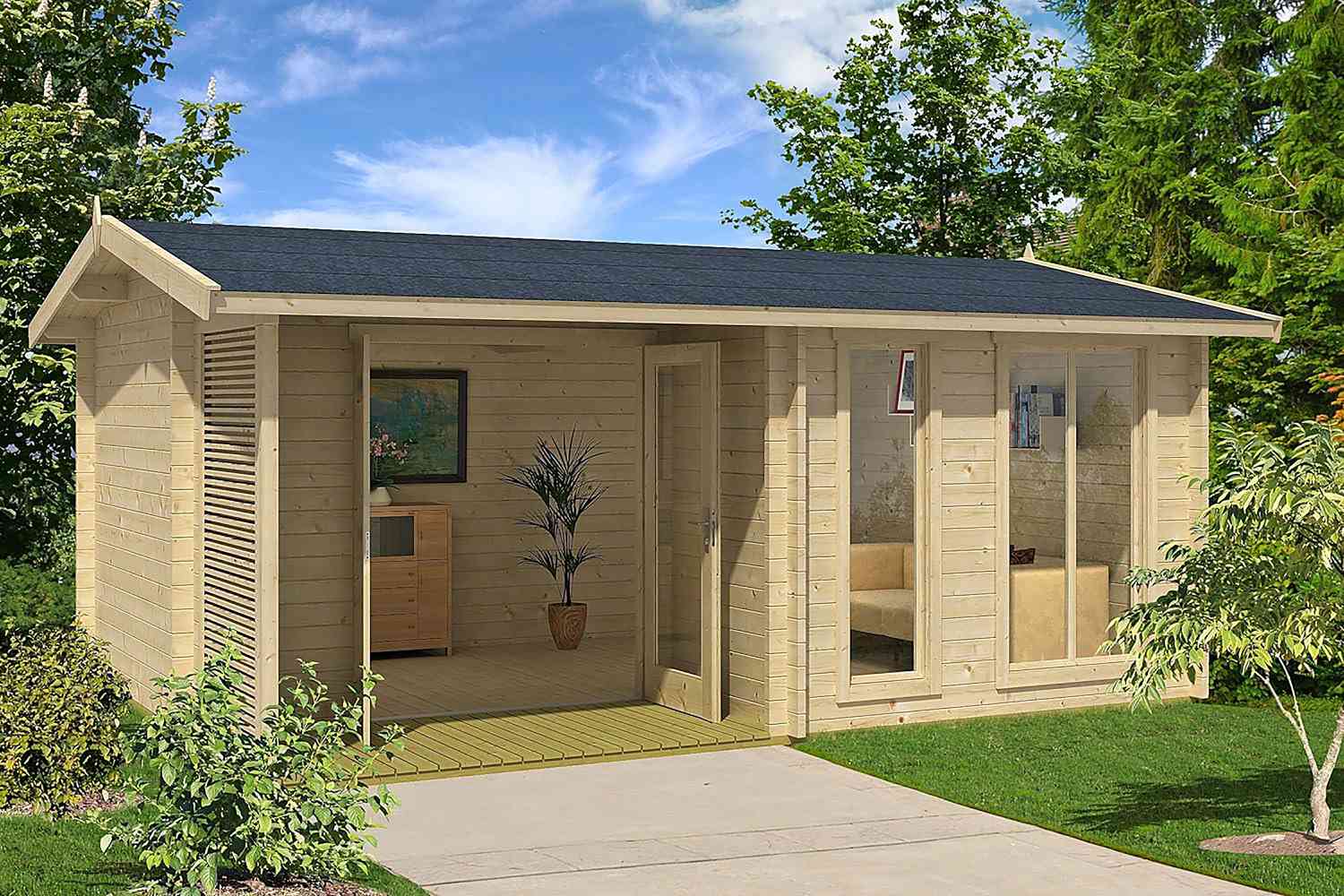
Some people impulse-buy throw pillows. Some people impulse-buy air fryers. And then there are the truly ambitious among us who look at Amazon and think, “You know what? I might add a tiny house to my cart.” That is exactly why the Allwood Sommersby has become such a conversation starter. For around $10,000, this compact cabin kit promises the kind of dreamy details that usually get reserved for much pricier backyard studios and guest cottages: French doors, huge windows, a covered porch, and the kind of Scandinavian-inspired look that makes you want to start drinking coffee from a stoneware mug immediately.
But before we all sprint toward the “Buy Now” button like it’s the last discounted candle at a home store, it’s worth slowing down and asking a few practical questions. Is this Amazon tiny house actually a bargain? What do you really get for the price? And perhaps most importantly, is it a true tiny home or a very charming shell that still needs a meaningful amount of work before anyone can call it livable?
The short answer is this: the Allwood Sommersby is genuinely eye-catching, and the price is low enough to make people do a double take. Still, the $10K headline only tells part of the story. Like many prefab and cabin kits sold online, the magic lives in the design, while the real-world cost lives in everything that comes after delivery.
Why This Tiny House Is Getting So Much Attention
The big draw is obvious. The Sommersby looks far more polished than most people expect from something sold online at this price point. Instead of reading like a glorified shed, it reads like a compact glassy garden cabin. The design leans bright and airy, with glass French doors, tall windows, and a covered front porch that gives the structure some instant personality. It is the sort of tiny house that photographs extremely well, which is probably why it has been making the rounds across home and lifestyle publications.
Its appeal also makes sense in the current housing climate. Traditional housing still feels painfully expensive for many buyers, which is why alternative spaces keep generating interest. A tiny house kit at roughly $10,000 sounds almost rebellious when compared with mainstream housing prices. It feels less like buying real estate and more like hacking the housing system with good taste and a screwdriver.
That emotional appeal matters. The Sommersby is not just selling square footage. It is selling possibility. A backyard office. A reading room. A guest cottage. A studio for painting, writing, yoga, music, or escaping your household when everybody suddenly decides to run the blender, vacuum, and television at the same time.
What You Actually Get for Around $10K
A Compact Footprint With Big-Window Energy
The Allwood Sommersby offers roughly 175 square feet of interior space, with a footprint around 14 by 19 feet and a height of about 8 feet. On paper, that is small. In photos, it looks surprisingly open thanks to the oversized glazing and double doors. This is one of those structures that uses natural light as a design cheat code. The windows do a lot of heavy lifting, making the cabin feel larger, brighter, and less boxy than many tiny structures in the same price range.
A Kit, Not a Fully Finished Home
This is the part shoppers need to read with both eyes open. The Sommersby is sold as a cabin or garden house kit, not as a fully finished, move-in-ready house with every utility waiting on standby. That distinction is important. What arrives is the structure itself: precut materials, predrilled components, and a design meant to be assembled on-site. In other words, you are not getting a turnkey little cottage with a hidden marble bathroom and a refrigerator humming in the corner. You are getting the bones of a very stylish small building.
Materials and Assembly
One reason the Sommersby gets positive attention is that the setup appears more approachable than a fully custom build. Coverage of similar Allwood kits describes tongue-and-groove wall planks and predrilled parts that simplify assembly. That does not mean it is an afternoon project between brunch and a trip to Target, but it does mean the kit format is designed to be more beginner-friendly than building a backyard cabin from scratch.
What Is Not Included
This is where the fantasy gets an invoice attached to it. The base price typically does not include land, site preparation, foundation work, plumbing, electrical, insulation upgrades, HVAC, interior finishes, or permit costs. Depending on how you plan to use the structure, those “little extras” can quickly stop being little. If you want a polished backyard office, the final cost may still be manageable. If you want a legally habitable full-time dwelling, the budget climbs much faster.
That is also why some coverage positions the Sommersby less as a plug-and-play primary residence and more as a backyard retreat, home office, pool house, studio, or guest space. It can certainly inspire tiny-house dreams, but it is smartest to treat it as a flexible shell rather than a complete lifestyle solution out of the box.
Why the French Doors Matter More Than You Think
Let’s talk about the French doors, because they are not just decorative fluff. In a small structure, doors and windows can completely change how the space feels. Solid walls make small rooms feel smaller. Glass opens them up. With the Sommersby, the doors help create a visual extension into the outdoors, which is a fancy design-world way of saying the cabin feels less like a box and more like a place you might actually want to spend time in.
French doors also make the structure more flexible. If the tiny house becomes a home office, opening the doors turns it into an indoor-outdoor workspace. If it becomes a guest room, the entry feels more charming than a standard utility-style door. If it becomes a garden retreat, the whole design suddenly leans storybook instead of storage unit. Design details like this are the reason some tiny houses feel lovable while others feel like punishment.
And then there is the porch. It may not be huge, but it gives the building an extra layer of usefulness. Even a small covered front area makes space for a chair, potted plants, a side table, or just the psychological pleasure of standing under a roof while pretending you live in a much larger cabin on a very expensive piece of land.
Who This Amazon Tiny House Is Really For
The best buyer for this structure is not necessarily someone trying to replace a full-size suburban home next month. The best buyer is someone who already has land or backyard space and wants to add function without launching a giant construction project.
For that person, the Sommersby makes sense in several ways:
Backyard Office
If you work from home and your dining table has become your permanent headquarters, this tiny house starts to look very attractive. A detached office creates separation, quiet, and the comforting illusion that you “commute” by walking twenty feet across your yard.
Guest Space
As a guest cabin, the Sommersby has charm in its favor. It looks thoughtful, not makeshift. Add electricity, climate control, insulation, and a smart interior layout, and it could become a guest retreat people genuinely enjoy.
Creative Studio
Writers, artists, crafters, and remote workers are exactly the kind of people who fall hard for spaces like this. All that glass means daylight, and daylight is basically free emotional support for any creative project.
Backyard Escape Hatch
Sometimes the use case is simple: you want a separate place to read, work out, sip coffee, or avoid hearing someone ask where the phone charger went for the ninth time today. That is not silly. That is luxury, tiny-house edition.
Before You Buy: The 5 Reality Checks That Matter
1. Zoning Comes First, Dreams Come Second
Tiny homes may qualify as ADUs in some places, especially if they sit on a foundation and meet local rules, but zoning varies dramatically by city and county. Translation: one town may welcome your backyard cabin, while another may treat it like you are trying to smuggle a second moon onto your property. Always check local zoning, detached structure rules, setbacks, and ADU requirements before buying anything larger than a birdhouse.
2. The Foundation Is Not a Footnote
The structure can be installed on options like gravel with treated supports or a concrete slab, depending on the use case and site. That matters because the foundation influences durability, utility access, code compliance, and total cost. The tiny house itself may be the headline, but the ground underneath it is where many budgets quietly go to lie down.
3. “Tiny House” Does Not Automatically Mean “Move-In Ready”
Many buyers hear the phrase tiny house and imagine a mini version of a conventional home with a kitchen, bathroom, and all the legal boxes checked. That is not always what a kit includes. Some Amazon listings are better understood as shells, studios, or cabin structures that can be customized further. The Sommersby is beautiful, but beauty and building-code readiness are not the same thing.
4. Financing Can Be Weird
Traditional mortgage rules do not always fit tiny homes, especially if the structure is treated more like a cabin kit, manufactured home, or nontraditional dwelling. Depending on the project, buyers may end up looking at personal loans, home equity products, land loans, or manufactured-home-style financing rather than a standard mortgage. That makes the sticker price feel simple, but the payment strategy can be anything but.
5. The Real Cost Is the “All-In” Cost
Around $10,000 may get the structure, but it may not get you the finished result you have in your head. Add delivery, site prep, foundation, assembly help, electrical work, plumbing, insulation, climate control, interior finishes, furnishings, and permits, and the number changes quickly. The good news is that it can still be cheaper than many home additions or full custom backyard builds. The bad news is that it is not truly a $10K life transformation unless your expectations are very, very humble.
So, Is It a Bargain?
Honestly? Yes, but only if you define the bargain correctly.
If you think this Amazon tiny house is a fully finished primary home for ten grand, then no, it is not a bargain. It is a misunderstanding wearing French doors.
If you think it is a beautifully designed small cabin kit with strong aesthetic appeal, solid backyard potential, and more charm than most prefab boxes in its price bracket, then yes, it absolutely earns the hype. The Sommersby stands out because it does not just solve for cost. It solves for style. That matters more than people admit. A cheap structure nobody wants to use is not a bargain. A compact, light-filled cabin that can become your office, studio, or guest retreat might be.
The smart way to look at it is this: the Sommersby is a low-entry-point design purchase, not a complete housing miracle. Buy it for what it is, and it can be a clever, attractive investment in your space. Buy it for what social media fantasies suggest it is, and you may end up shocked when the electrician, permit office, and delivery invoice all introduce themselves.
The Experience of Living With a Tiny House Like This
Now for the part that helps explain why people get emotionally attached to a structure like this so quickly. A tiny house like the Sommersby is not just about saving square footage. It changes the rhythm of how a space feels. Picture opening those French doors on a cool morning, coffee in hand, with the porch catching the early light and the inside still quiet in that clean, uncluttered way only small spaces can manage. There is no long hallway to march through, no extra room to ignore, no forgotten corner collecting random boxes from three birthdays ago. Everything is visible. Everything has a purpose. Your brain gets fewer visual interruptions, and that alone can make the place feel more restful than a larger home.
During the workday, a backyard cabin like this has a psychological magic trick built into it. Even if it is only steps from the main house, it feels separate. Closing the door behind you creates a mental shift that many remote workers crave. Inside a bright little cabin with oversized windows, the world feels edited. You notice the trees, the weather, the movement of light across the floorboards. Meetings feel slightly less soul-draining when you are taking them from a tiny room that feels like a Scandinavian retreat instead of the corner of a laundry room.
In the afternoon, the experience changes again. A structure like this can become a reading nook, a hobby room, a writing den, or the place where teenagers hang out without taking over the entire house. That flexibility is part of the appeal. In a big home, rooms often get assigned and frozen. In a tiny house, one room becomes many versions of itself depending on the hour. Office by morning, yoga spot by sunset, movie nook by night. That is not just efficient. It is oddly fun.
There is also something satisfying about the limits. In a small cabin, you edit yourself. You buy less. You store less. You become pickier in a good way. Every chair has to earn its keep. Every lamp needs to be both useful and attractive. The result can feel intentional instead of cramped, especially when the design includes generous glass and a connection to the outdoors. The French doors matter here again, because they let the porch become part of the experience. Even a tiny outdoor landing can feel like an extra room when the weather cooperates.
And then there is the emotional charm factor, which is hard to calculate but impossible to ignore. A little house with warm wood tones, big windows, and a porch triggers something in people. It feels hopeful. It feels personal. It feels like the kind of place where you might finally finish the novel, learn pottery, start a side business, or simply sit still for ten minutes without somebody shouting your name from the kitchen. That may sound dramatic for a cabin kit on Amazon, but that is exactly why these tiny houses keep grabbing attention. They are not just products. They are containers for a fantasy of simpler, calmer living.
Of course, real life is less cinematic. A tiny house can get hot, cold, crowded, or expensive to finish properly. The setup requires planning. The legal details matter. But once it is installed and thoughtfully designed, the day-to-day experience can be surprisingly rich. You are not just buying walls and a roof. You are buying a new kind of personal space. And for many people, that is the real reason a tiny house like this feels worth obsessing over in the first place.
Conclusion
The Amazon tiny house with French doors that costs about $10K is not a fairy tale, but it is not a gimmick either. The Allwood Sommersby succeeds because it combines a relatively accessible entry price with the kind of design people actually want to look at. It is bright, compact, versatile, and full of backyard-office or guest-cabin potential. Just remember that the attractive base price is the beginning of the budget, not the end of it. Go in with realistic expectations, a tape measure, and a call to your local zoning office, and this tiny house might turn out to be one of the more charming small-space ideas on the internet.













