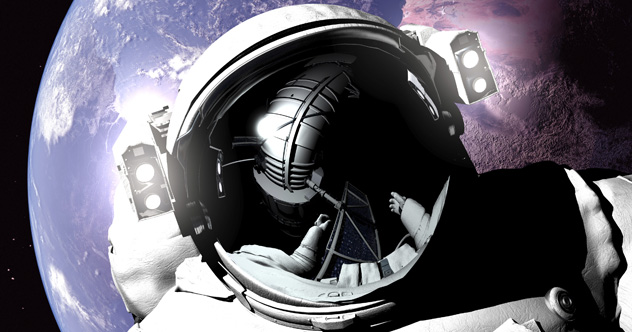
Sending humans to Mars sounds wonderfully heroic until someone remembers that the human body was designed for Earthnot months of radiation, weightlessness, recycled air, delayed communications, and roommates who cannot politely leave the planet.
NASA groups the major hazards of human spaceflight into five broad categories: space radiation, isolation and confinement, distance from Earth, altered gravity, and closed or hostile environments. Within those categories are specific astronaut health risks that could jeopardize individual crewmembers and entire deep space missions.
The International Space Station has taught researchers an enormous amount about living in orbit. A Mars expedition, however, would last much longer, travel beyond much of Earth’s magnetic protection, and operate without rapid evacuation. Here are 10 of the most serious medical challenges that mission planners must solve.
Why Deep Space Is Harder on the Human Body
Astronauts aboard the International Space Station remain relatively close to Earth. Medical specialists can communicate with them almost continuously, cargo vehicles deliver supplies, and an emergency return is at least theoretically possible.
A Mars crew would face a different reality. Depending on planetary positions, one-way communication delays may approach 20 minutes. Resupply would be unavailable, evacuation could take months, and the crew would pass beyond the strongest protection provided by Earth’s magnetosphere. Even a manageable headache, tooth infection, or equipment malfunction could develop into a mission-level problem.
1. Space Radiation Can Damage Cells and DNA
Outside Earth’s protective magnetic neighborhood, astronauts are exposed to galactic cosmic rays and energetic particles released by the Sun. These forms of ionizing radiation can pass through spacecraft, strike human tissue, damage DNA, and create secondary particles when they collide with shielding materials.
Long-term exposure may raise the risk of cancer, cardiovascular disease, cataracts, and central nervous system damage. A powerful solar particle event could also produce short-term symptoms such as nausea, fatigue, or changes in blood cells if a crew did not reach adequate shelter quickly.
NASA modeling illustrates the scale of the concern: for a representative nonsmoking astronaut, a roughly 1,000-day Mars mission could increase estimated lifetime cancer mortality from about 15% to approximately 20%. That projection contains significant uncertainty because deep-space radiation is difficult to reproduce on Earth and relatively few people have experienced it.
How missions may reduce the risk
Proposed defenses include radiation storm shelters, water or food positioned around crew quarters, improved forecasting of solar activity, shorter transit times, personal dosimeters, and mission timing that balances different radiation conditions. Unfortunately, galactic cosmic rays are extremely penetrating, so simply adding thick metal walls is not a magical force field.
2. Bones Lose Strength in Reduced Gravity
On Earth, walking, standing, and climbing stairs continually load the skeleton. In microgravity, the hips, legs, and spine no longer work against body weight. Bone breakdown can then outpace bone formation, releasing calcium into the bloodstream and urine.
Without effective countermeasures, astronauts can lose approximately 1% to 2% of bone mineral density per month in vulnerable areas such as the hip and spine. Recovery after landing may take months or years, and some changes in bone structure may not reverse completely.
Weak bones create more than a future osteoporosis concern. A crewmember must be strong enough to handle equipment, climb ladders, perform emergency repairs, and walk safely after arriving on Mars. That first heroic step looks less cinematic if the astronaut immediately needs help standing.
How missions may reduce the risk
Current countermeasures combine resistance exercise, aerobic training, adequate calories, vitamin D, and careful nutritional monitoring. The International Space Station’s resistance equipment can simulate heavy weightlifting, but a smaller exploration vehicle may not have room for comparable machinery. Researchers are therefore studying compact exercise systems, pharmaceuticals, and artificial-gravity concepts.
3. Muscles and Aerobic Capacity Decline
Muscles used to maintain posture become less active in microgravity. Over time, the calves, thighs, back, and core can lose mass, strength, endurance, and power. The cardiovascular system also becomes accustomed to moving blood without fighting Earth’s gravity.
These adaptations are efficient while floating, but troublesome after landing. Astronauts may experience weakness, reduced aerobic capacity, dizziness, or difficulty remaining upright. On Mars, gravity is only about 38% as strong as Earth’s, yet the crew would still need to carry tools and function immediately after months in transit.
Daily exercise can substantially limit deconditioning, but it consumes time, electrical power, oxygen, maintenance effort, and spacecraft volume. Deep-space fitness is not merely a lifestyle perk; it is part of the vehicle’s life-support strategy.
4. Fluid Shifts Can Change the Eyes and Brain
Gravity normally pulls blood and other fluids toward the lower body. In microgravity, fluid shifts toward the chest and head, producing the familiar puffy face and temporarily thinner-looking legs seen in orbit.
For some astronauts, the shift is associated with spaceflight-associated neuro-ocular syndrome, or SANS. Findings can include swelling of the optic disc, flattening at the back of the eye, retinal folds, and changes in focusing ability. NASA reports that roughly 70% of astronauts aboard the International Space Station experience some swelling at the back of the eye, although severity varies.
The precise cause remains under investigation. Venous congestion, pressure distribution, genetics, nutrition, carbon dioxide exposure, and mission duration may all contribute. Lasting vision changes would be especially dangerous when astronauts must read displays, operate robotic systems, or examine microscopic medical images.
Possible countermeasures
Researchers are testing lower-body negative-pressure devices, nutritional approaches, specialized exercise, medication, and other techniques intended to pull fluid away from the head. Crews also undergo detailed eye imaging so subtle changes can be detected before performance is affected.
5. Cardiovascular Changes May Increase Blood-Clot Risk
Headward fluid movement affects more than eyesight. Spaceflight changes blood volume, heart workload, vessel behavior, and blood flow through major veins. Investigators have observed stagnant or reversed flow in the internal jugular vein, and an in-flight jugular blood clot has been documented.
A clot is worrying anywhere; it is particularly alarming millions of miles from an emergency department. Diagnosis may depend on a crewmember operating an ultrasound system while an Earth-based specialist gives instructions delayed by several minutes.
Exercise, hydration, compression strategies, ultrasound monitoring, and carefully selected medications may help. However, anticoagulant treatment introduces another problem: controlling bleeding when surgery, laboratory testing, and replacement blood products are unavailable.
6. The Immune System and Microbiome Can Become Disrupted
Spaceflight does not simply “weaken” immunity in one predictable direction. It alters the activity and distribution of immune cells, stress hormones, inflammation, and interactions among the microbes living in and around the body.
Studies have detected reactivation and shedding of latent herpes-family viruses in some astronauts. These viruses may remain quiet on Earth but become active when confinement, disrupted sleep, radiation, workload, and other stressors affect immune regulation. Meanwhile, a spacecraft’s closed habitat allows microorganisms to circulate among people, surfaces, water systems, and air filters.
Researchers must also consider whether microbes become harder to control in space. A small infection could spread in a compact cabin, while antibiotics have limited shelf lives and cannot be restocked during a Mars mission.
How crews may stay protected
Countermeasures include vaccination, medical screening, environmental cleaning, microbial monitoring, nutritious food, stress management, and personalized tracking of immune biomarkers. Future missions may carry compact genetic-analysis tools to identify an infection without mailing a sample back to Houstona delivery service with truly terrible turnaround time.
7. Isolation Can Harm Mental Health and Team Performance
A Mars crew would live for years inside a noisy, confined habitat with limited privacy and no possibility of an ordinary day off. They would experience separation from family, monotonous surroundings, heavy workloads, communication delays, and the knowledge that help is far away.
Possible effects include irritability, anxiety, depressed mood, reduced motivation, interpersonal conflict, and impaired judgment. These problems do not require anyone to have a psychiatric disorder. Even psychologically healthy, highly trained professionals can become exhausted or frustrated under prolonged stress.
Team compatibility is therefore a safety system. Agencies use behavioral screening, realistic simulations, conflict-management training, private family communications, recreation, lighting controls, and structured schedules. Mars crews will also need enough autonomy to resolve disagreements without waiting 40 minutes for a round-trip message that essentially says, “Have you tried communicating better?”
8. Poor Sleep Can Undermine Cognition
Spacecraft are not luxury bedrooms. Noise, temperature, workload, operational alarms, artificial lighting, headward congestion, stress, and altered day-night cues can interfere with sleep. In low Earth orbit, astronauts may see many sunrises during a single Earth day, although mission schedules still follow a controlled 24-hour cycle.
Chronic sleep restriction can slow reaction time, weaken attention, disrupt mood, and increase errors. Those effects are especially dangerous during docking, landing, medical procedures, or emergency repairs.
Mission designers use scheduled sleep periods, quieter crew quarters, circadian lighting, workload controls, sleep monitoring, and carefully managed medication when necessary. The goal is not just to help astronauts feel refreshed. It is to prevent a tired brain from turning a small technical problem into a very expensive crater.
9. Bone Loss, Dehydration, and Diet Can Promote Kidney Stones
Calcium released from bones can enter the urine. Combine that with inadequate hydration, altered urinary chemistry, limited food choices, and environmental factors, and the risk of kidney stones becomes a serious operational concern.
A stone can cause intense pain, nausea, bleeding, infection, or urinary obstruction. On Earth, difficult cases may require advanced imaging or surgery. A deep-space crew would have only the equipment, medication, and expertise carried at launch.
Prevention includes regular hydration, balanced calcium and sodium intake, urine monitoring, and exercise that protects bone. NASA-supported research has also explored ultrasound methods that could detect, reposition, or help move stones without conventional surgery.
Food itself presents another challenge. It must remain nutritious, safe, acceptable, and appetizing for years. If menu fatigue causes astronauts to eat too little, losses in muscle, bone, immunity, and cognitive performance can accelerate.
10. Medical Emergencies Must Be Managed Without Immediate Help
Distance from Earth magnifies every astronaut health risk. A crew could face appendicitis, dental infection, trauma, burns, toxic exposure, decompression injury, allergic reactions, or equipment-related accidents. Yet a Mars vehicle cannot carry an entire hospital, every drug, or a specialist for each organ system.
Communication delays prevent real-time telemedicine, and solar conjunction can severely disrupt contact. Medical supplies may degrade under radiation, medications can expire, and the person trained to provide treatment may become the patient.
Exploration crews will need autonomous diagnostic systems, compact imaging equipment, decision-support software, medical cross-training, reliable drug storage, and procedures designed for limited resources. Artificial intelligence may help interpret scans or guide treatment, but it must work offline, explain its recommendations, and fail safely.
Mission planners must decide which conditions can be treated, which can only be stabilized, and when medical risk would require changing mission objectives. Deep-space medicine is ultimately the art of preparing for emergencies when the nearest house call is another planet away.
What a Deep-Space Crew Could Experience
Research statistics become more meaningful when viewed as a continuous human experience. Imagine a Mars crew beginning its interplanetary transit. During the first several days, some members develop space motion sickness while their brains attempt to reconcile visual information with signals from the inner ear. Their faces feel congested as fluid moves upward, familiar foods taste different, and sleeping while floating inside a small compartment requires practice.
After several weeks, exercise becomes as essential as eating. Each astronaut follows a demanding program of resistance and aerobic training, not because anyone is preparing for a beach photograph, but because unused muscles and bones are already adapting to reduced mechanical load. Crew medical officers track body mass, strength, hydration, sleep, vision, radiation dose, and urine chemistry. A missed trend could become a larger problem months later.
The psychological environment changes too. Earth gradually becomes a bright point rather than a visible world. Conversations with family are no longer natural exchanges because every message must travel across millions of miles. The crew learns to record longer updates, tolerate silence, and make decisions independently. Minor habitsa floating food wrapper, a noisy exercise session, an enthusiastically repeated jokecan become remarkably irritating inside a habitat with no exit.
Then a solar alert sounds. The crew stops routine work and moves into a compact storm shelter surrounded by water, food, and other shielding materials. Dosimeters track exposure while the astronauts wait for mission specialists to evaluate the event. Nothing may feel physically wrong, yet invisible particles outside the hull can influence lifetime health risks.
Months into the flight, one astronaut notices blurred near vision. Another develops persistent fatigue after several nights of poor sleep. The crew performs eye imaging, blood tests, cognitive checks, and ultrasound examinations using onboard equipment. Because Earth cannot provide immediate instructions, trained crewmembers and decision-support systems must interpret the findings locally.
Arrival does not end the challenge. After adapting to microgravity, the crew must suddenly work in Martian gravity while wearing restrictive suits. Balance may be imperfect, muscles may feel weaker, and cardiovascular reflexes must readjust. At the same time, astronauts must unload equipment, inspect the habitat, and respond to unexpected failures.
Surface operations introduce abrasive Martian dust, confinement inside another closed environment, and continued radiation exposure. The crew must exercise, maintain hygiene, monitor air and water, grow or prepare food, conduct science, repair machinery, and support one another emotionally. There is no separate “health department”; protecting health is woven into almost every task.
The return journey repeats many of these stresses after the excitement of Mars exploration has passed. That is why successful deep-space missions will depend on more than rockets. They will require resilient people, thoughtful habitat design, reliable medical technology, disciplined routines, and countermeasures that treat the human body as a central part of the spacecraft rather than unusually talkative cargo.
Conclusion: The Human Body Is the Mission’s Most Complex System
Radiation, altered gravity, isolation, sleep disruption, immune changes, and medical distance do not operate independently. Poor sleep may worsen mood and immunity; bone loss may increase kidney-stone risk; confinement can magnify stress; and radiation may interact with multiple biological systems. The greatest uncertainty may lie in these combined effects over a multiyear mission.
None of these astronaut health risks makes deep space exploration impossible. They do make it clear that reaching Mars is only half the assignment. The crew must arrive capable of working, survive the surface mission, travel home, and retain acceptable long-term health. Protecting that crew will require the same seriousness devoted to propulsion, navigation, and landing systemsplus considerably better snacks.