A small kitchen can feel like a design puzzle with one missing piece, three measuring spoons, and a mysterious drawer full of soy sauce packets. But here’s the good news: you do not need a sprawling chef’s kitchen, a walk-in pantry, or an island the size of Rhode Island to create a kitchen with charm. In fact, small kitchens often have a secret advantage: every choice counts. A colorful backsplash, a charming pendant light, or a perfectly styled shelf can make the whole room feel intentional instead of cramped.
The trick is learning how to add personality to a small kitchen without sacrificing space. That means choosing design ideas that do double duty: they look beautiful, work hard, and do not steal precious counter space from your cutting board, coffee maker, or emergency cookie plate. Whether you rent, own, remodel, or simply want your kitchen to stop looking like a plain white appliance closet, the following small kitchen ideas will help you bring in color, texture, warmth, and character while keeping the room practical.
Below are six smart, stylish, and realistic ways to make a compact kitchen feel more personal, polished, and funwithout turning it into a clutter museum.
1. Make Everyday Items Look Like Decor
In a small kitchen, the best decorative pieces are often the ones you already use. Instead of adding more “stuff,” upgrade the functional items that live in plain sight. Think patterned dish towels, a colorful tea kettle, a sculptural fruit bowl, handmade mugs, a pretty utensil crock, or glass jars filled with pantry staples. These pieces add personality while earning their keep. That is the small-space design equivalent of hiring someone who can cook, clean, and tell jokes.
Choose Useful Items With Visual Impact
Start with the objects that naturally sit on your counter or shelves. A wooden cutting board leaning against the backsplash adds warmth. A ceramic pitcher can hold spatulas. Clear jars filled with pasta, rice, coffee beans, or oats create a tidy, lived-in look. Even a colorful Dutch oven left on the stovetop can become a design statement, especially if cabinet space is limited.
The key is editing. A small kitchen does not need twelve decorative containers, five bowls of lemons, and a tiny framed quote about garlic. Pick a few practical pieces that match your style. If your taste leans modern, try matte black accessories, simple glass containers, and sleek metal hooks. If you prefer cottage charm, use woven baskets, floral towels, and warm wood. If you like bold eclectic style, bring in colorful ceramics, vintage tins, or mismatched mugs that look collected rather than chaotic.
Use Color in Small, Repeatable Moments
Repeating one or two colors helps a small kitchen feel cohesive. For example, a blue towel, blue-rimmed plates, and a blue planter can make the room feel designed instead of accidental. This method adds personality without overwhelming the eye. It also makes budget-friendly updates feel more intentional. A $10 dish towel suddenly becomes part of “the palette,” which sounds much fancier than “I bought this because it was on sale.”
2. Add a Bold Backsplash or Peel-and-Stick Accent
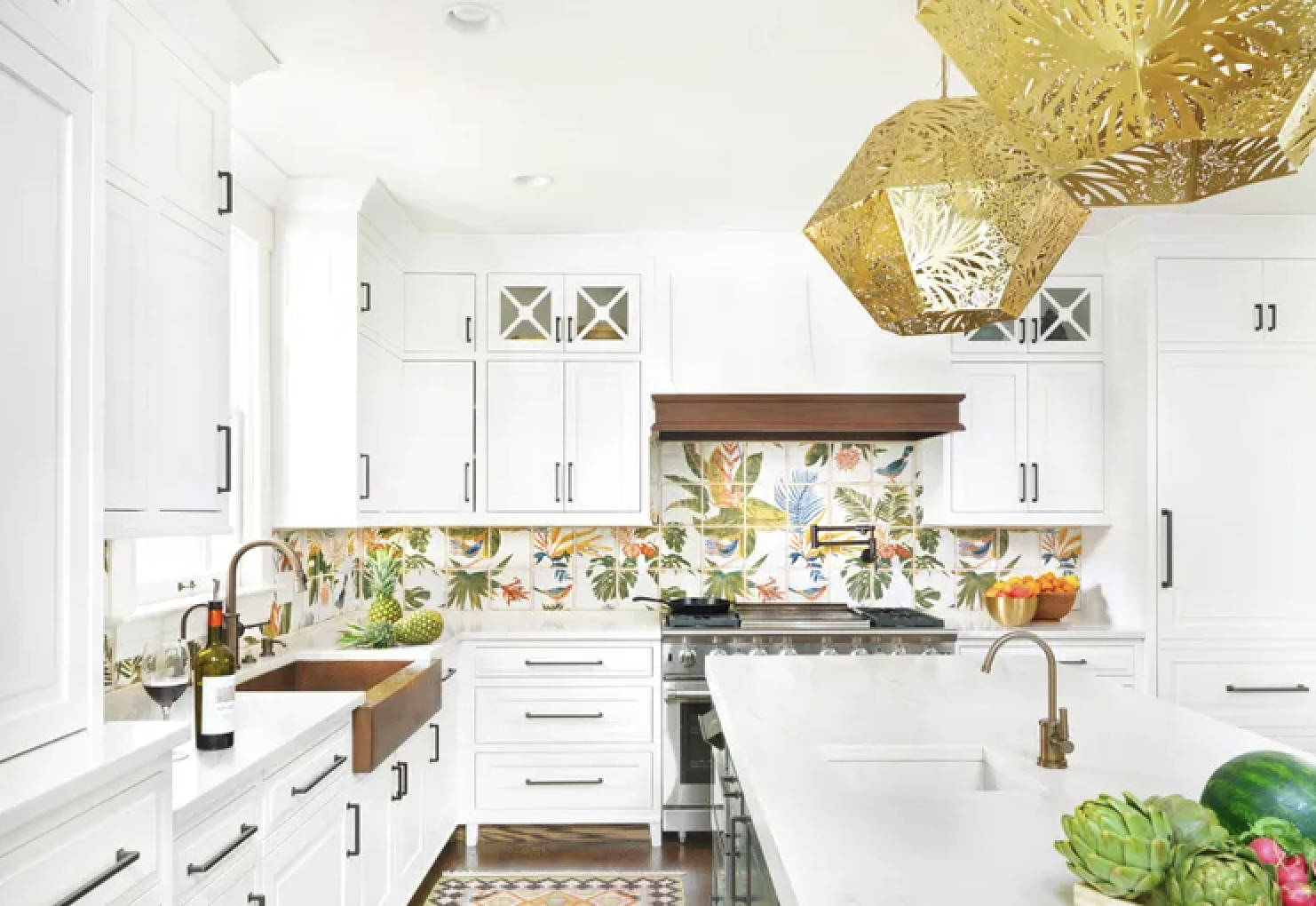
A backsplash is one of the most powerful design tools in a small kitchen because it uses vertical space, not floor space. It can bring in color, pattern, texture, and personality while keeping the counters clear. If your kitchen is tiny, a backsplash can act like jewelry: small in size, big in impact.
Go Bold Where It Makes Sense
Small kitchens can handle bold design when it is used strategically. A patterned tile behind the stove, a glossy ceramic backsplash, or a warm stone-look surface can make the room feel custom. If you love color, try deep green, terracotta, cobalt blue, soft blush, or sunny mustard. If you prefer a quieter look, consider handmade-style white tile, subtle texture, or a soft neutral pattern.
For renters or budget-conscious decorators, peel-and-stick tile and removable wallpaper can create a similar effect without a full renovation. Modern peel-and-stick options come in styles that mimic marble, zellige, subway tile, mosaic, and even painted patterns. The secret is proper prep: clean the surface well, measure carefully, and avoid installing it too close to high heat unless the product is rated for that use.
Keep the Pattern Balanced
If your backsplash is busy, let nearby elements breathe. Pair a patterned backsplash with simple cabinet hardware, plain counters, and a limited color palette. If your cabinets are colorful, a simpler backsplash may work better. Personality does not mean every surface needs to audition for a Broadway musical. Let one feature be the star, and let the rest of the kitchen play supporting roles.
3. Use Open ShelvingBut Keep It Curated
Open shelving is a favorite small kitchen design idea because it makes walls feel lighter than bulky upper cabinets. It can also turn your everyday dishes into decor. But open shelves come with one important rule: they are not an invitation to display every mug you have ever loved, including the chipped one from a 2011 office holiday party.
Display What You Actually Use
The most successful small kitchen shelves combine beauty and function. Use them for items you reach for often: plates, bowls, mugs, glasses, spices, coffee supplies, or small serving pieces. When frequently used items are displayed, they do not have time to gather dust, and your shelves feel practical instead of staged.
To create a polished look, group similar items together. Stack white plates, line up clear glasses, place spices in matching jars, or display a few cookbooks with a small plant. Leave some breathing room between objects. Negative space is not wasted space; it is what keeps open shelving from looking like a garage sale on a wall.
Mix Materials for Warmth
Small kitchens can sometimes feel flat, especially if they are mostly white or gray. Open shelves are a great place to add texture. Wood shelves warm up glossy tile. Brass brackets add a vintage note. Black metal brackets create contrast. A small woven basket can hide tea bags, snacks, or all the tiny items that somehow reproduce overnight.
If you are nervous about open shelves, start small. Replace one upper cabinet with two floating shelves, add a narrow shelf above the sink, or install a rail shelf for spices and mugs. You get the personality boost without committing to a full “everything is exposed” lifestyle.
4. Upgrade Lighting So the Kitchen Feels Designed
Lighting can completely change the mood of a small kitchen. A builder-basic ceiling light may technically illuminate the room, but so does the light inside a refrigeratorand nobody is calling that ambiance. The right lighting makes a compact kitchen feel warmer, bigger, and more personal.
Layer Your Lighting
A small kitchen works best with layers of light. Overhead lighting provides general brightness. Under-cabinet lighting helps with chopping, reading recipes, and discovering that the “clean” counter was not quite clean. Accent lighting, such as a small pendant or plug-in sconce, adds personality and softness.
Under-cabinet LED strips are especially useful because they brighten the work surface without taking up space. Many options are low-profile, energy-efficient, and easy to install. For renters, battery-operated or adhesive lights can be a game changer. They add function without requiring an electrician, a permit, or a dramatic phone call to your landlord.
Choose Fixtures With Character
A small kitchen does not need a giant chandelier, but it can benefit from one memorable fixture. Try a schoolhouse-style flush mount, a small globe pendant, a brass sconce, a woven shade, or a modern linear light. The fixture should match the scale of the room, but it does not have to be boring. In a compact kitchen, lighting is one of the easiest ways to say, “Yes, I have taste,” without sacrificing a single inch of storage.
5. Bring in Color Without Shrinking the Room
Many people assume small kitchens must be white to feel bigger. White can absolutely work, but it is not the only option. Color can add depth, personality, and warmth when used thoughtfully. The goal is not to paint every surface neon orange and hope for the best. The goal is to create a small kitchen color scheme that feels lively but balanced.
Try Color on Lower Cabinets
Painting lower cabinets is a smart way to add color while keeping the upper half of the room light and open. Deep green, navy, slate blue, mushroom, charcoal, terracotta, and warm beige can all create a grounded look. Pair darker lower cabinets with lighter walls or upper cabinets to prevent the room from feeling heavy.
If you want a smaller commitment, paint a single feature: the pantry door, a window trim, a narrow wall, or the inside of glass-front cabinets. Even a colorful toe-kick or cabinet interior can add a wink of personality. It is like wearing fun socks with a serious outfitsubtle, but delightful.
Use Gloss and Reflection
Reflective surfaces can help bounce light around a small kitchen. Glossy tile, satin paint, glass cabinet fronts, polished hardware, and mirrors used carefully can make the room feel brighter. A reflective backsplash behind a sink or stove can add both style and visual openness. Just avoid creating so much shine that your kitchen starts looking like a spaceship break room.
Work With a Simple Palette
A tight color palette keeps a small kitchen calm. Choose one main color, one neutral, and one accent. For example, soft white walls, sage green cabinets, and brass hardware create an easy, timeless look. Warm wood, cream, and black can feel modern and cozy. Blue, white, and natural rattan can feel breezy and coastal. The palette does not need to be complicated; it just needs to be consistent.
6. Add Smart Storage That Doubles as Style
Personality should never come at the cost of function. In a small kitchen, clutter is the fastest way to make a space feel smaller. Smart storage gives everything a home, and when that storage looks good, it becomes part of the design.
Use Vertical Space First
When floor and counter space are limited, look up. Wall-mounted rails, magnetic knife strips, pegboards, floating shelves, pot racks, and slim wall organizers can free up drawers and cabinets. A pegboard painted in a bold color can hold utensils, pans, cutting boards, and baskets while adding a playful workshop-inspired look.
Cabinet doors are another underused storage zone. Add adhesive hooks for measuring spoons, pot holders, or lightweight tools. Use over-the-door racks for wraps, cleaning supplies, or spices. Inside cabinets, vertical dividers can organize baking sheets, cutting boards, and trays so you do not have to perform a loud metal avalanche every time you want a cookie sheet.
Choose Furniture That Works Hard
If your kitchen has room for a small cart, narrow console, or rolling island, choose one with storage. A slim cart can hold coffee supplies, cookbooks, produce, or baking tools. Because it can move, it offers flexibility without permanently blocking traffic. In very tight kitchens, a fold-down table or wall-mounted drop leaf can create a tiny breakfast spot or prep surface when needed.
Storage pieces can also bring personality through material and color. A vintage wood cart adds warmth. A metal utility cart feels modern and practical. A painted cabinet can introduce charm while hiding less-attractive essentials. The best small kitchen storage does not scream “storage solution.” It simply looks like part of the room.
How to Keep a Small Kitchen Stylish Instead of Cluttered
Once you start adding personality, the hardest part is knowing when to stop. Small kitchens reward restraint. That does not mean they have to be minimalist, but every item should earn its place. Before adding decor, ask three questions: Is it useful? Is it beautiful? Does it make the kitchen easier or happier to use?
If the answer is no, it may belong somewhere else. Or nowhere else. Some things have fulfilled their destiny and are ready to leave your home, especially duplicate gadgets, expired spices, chipped mugs, and that novelty avocado slicer you bought during a very optimistic grocery phase.
Edit Before You Decorate
Decluttering is the unglamorous first step of small kitchen design, but it makes every style upgrade look better. Clear the counters, sort the drawers, donate unused appliances, and group similar items together. Once the space is edited, you can see where personality is needed. Maybe the room needs color. Maybe it needs warmth. Maybe it needs better lighting. Maybe it just needed you to remove seventeen takeout menus from the fridge.
Create One Focal Point
A small kitchen feels more spacious when it has one clear focal point. That might be a bold backsplash, colorful cabinets, a statement light, or beautifully styled shelves. When everything competes, the room feels crowded. When one feature leads, the space feels designed.
Experience Notes: What Really Works in a Small Kitchen
After seeing and working with small kitchens in apartments, older homes, rental units, and compact remodels, one lesson becomes very clear: the most successful small kitchens are not the ones with the most expensive finishes. They are the ones where the owner understands how the room is actually used. A kitchen that looks gorgeous but has nowhere to put a cutting board is not a kitchen; it is a photography backdrop with plumbing.
One of the best real-life strategies is to start with the daily routine. Where do you make coffee? Where do you chop vegetables? Which pan do you grab most often? Which drawer becomes a disaster by Wednesday? When you design around habits, personality becomes easier to add because you are not fighting the function of the room. For example, if coffee is part of your morning ritual, creating a tiny coffee zone with mugs, a tray, and a pretty canister can add charm while making mornings smoother. That is style with a job description.
Another experience-based tip is to avoid copying large-kitchen trends without adjusting the scale. Oversized pendant lights, huge islands, deep open shelves, and dramatic dark walls can look amazing online but feel overwhelming in a compact kitchen. Scale matters. A small globe light, a narrow shelf, a slim rolling cart, or a single accent wall often works better than a full-size design move squeezed into a half-size room.
Color is also more forgiving than many people think. In small kitchens, people often fear bold shades because they worry the space will feel smaller. But a rich cabinet color or patterned backsplash can actually make the kitchen feel more intentional. The secret is contrast and balance. Deep green lower cabinets can look beautiful with light walls. A patterned backsplash can shine when the counters are clear. A colorful rug can warm up the floor if the cabinets stay simple. Bold design works when it has room to breathe.
Storage is where experience gets very practical. Open shelving looks best when it holds everyday items, not random decorations. Clear containers only help if they fit your habits. A magnetic knife strip is wonderful if you cook often, but unnecessary if you mostly assemble snacks and call it dinner. The best small kitchen storage is personal. It should support the way you live, not the way a perfectly lit catalog kitchen pretends people live.
Finally, the most charming small kitchens usually include something personal: a framed recipe, a vintage tray, a handmade bowl, a favorite color, a travel mug collection, or a plant on the windowsill. These details make the room feel human. A small kitchen does not need to look bigger at all costs. Sometimes it just needs to feel better: warmer, brighter, smarter, and more like you.
Conclusion
Adding personality to a small kitchen is not about filling every corner with decor. It is about making smart, stylish choices that work harder than they look. Use everyday items as decoration, add a bold backsplash, curate open shelves, upgrade lighting, bring in color carefully, and choose storage that adds beauty as well as order. With the right balance, even the tiniest kitchen can feel inviting, efficient, and full of character.
Your kitchen may be small, but it can still have a big personality. It can be colorful without being cluttered, practical without being plain, and charming without sacrificing space. And if your kitchen can do all that while helping you find the measuring spoons in under ten seconds, congratulationsyou have achieved small-space greatness.
Note: This article is written in original American English for web publication and is based on current small-kitchen design, decorating, storage, and organization best practices from reputable home and lifestyle sources.