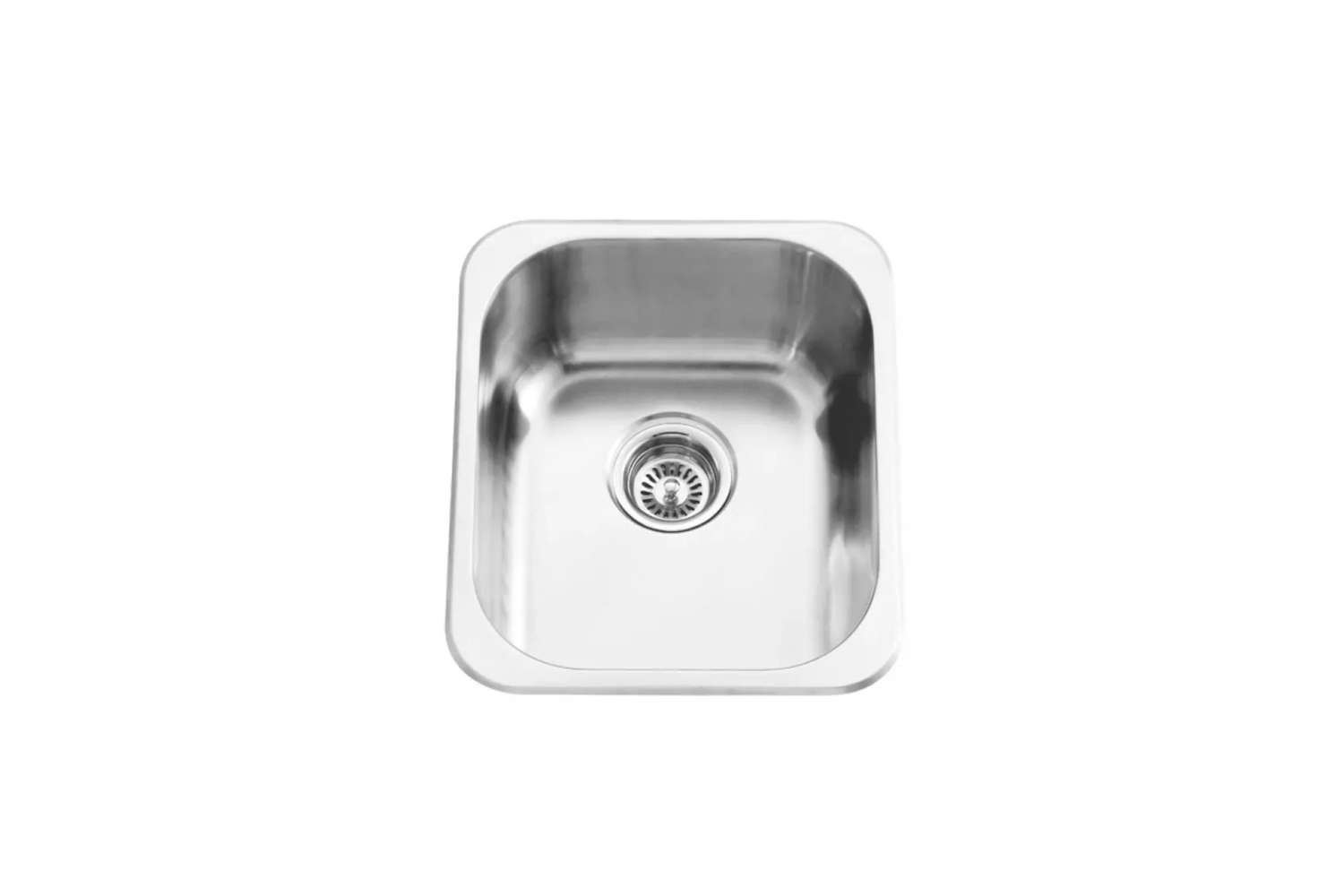
A full-size kitchen sink is great when you are scrubbing stockpots, rinsing baking sheets, or hiding an impressive collection of coffee mugs. For a wet bar, beverage station, kitchen island, or compact prep area, however, it can be comically oversized. That is where the Signature Hardware Stainless Steel Drop-in Bar Sink earns its counter space.
This compact stainless steel sink is designed to provide running water and practical cleanup without swallowing an entire countertop. Its drop-in installation makes it compatible with many counter materials, while the neutral metal finish works with everything from rustic wood cabinets to glossy contemporary surfaces. It is not trying to become the star of the room. It is the dependable supporting character that quietly rinses limes, catches melting ice, and prevents cocktail residue from migrating to the main kitchen.
What Is the Signature Hardware Stainless Steel Drop-in Bar Sink?
The original product listing described the Signature Hardware model as a mid-size stainless steel sink intended for bar and food-preparation stations. It was promoted as large enough for routine cleanup but compact enough to fit into smaller areas of the home. An archived product page listed it at $149 at the time of publication, although that historical price should not be treated as a current retail quote.
Signature Hardware’s current bar and prep sink selection has evolved, and shoppers may encounter related models under collection names such as Sitka, Calverton, Ortega, or Atlas. Some are strictly undermount sinks, while others are dual-mount designs that can be installed either above or below the countertop.
For example, a currently listed Signature Hardware 15-by-15-inch dual-mount model uses 16-gauge Type 304 stainless steel, has a 10-inch-deep single bowl, a center drain, sound-absorption pads, and an undercoating intended to reduce condensation beneath the sink. It requires at least a 21-inch cabinet. These specifications illustrate what buyers may find in a modern compact Signature Hardware prep sink, but the exact SKU should always be checked before cutting the counter.
A compact sink with several possible jobs
Despite the word “bar” in its name, this type of sink is not limited to mixing drinks. It can function as a secondary kitchen sink, produce-rinsing station, coffee bar basin, craft-room sink, butler’s pantry fixture, outdoor serving-area sink, or compact cleanup zone in a guest suite.
A bar or prep sink is generally a smaller secondary fixture used for preparing beverages, rinsing ingredients, or handling quick cleanup. It is particularly useful when several people are working in the kitchen and everyone would prefer not to negotiate access to the main sink like commuters merging into one lane.
Why Stainless Steel Makes Sense for a Bar Sink
It handles everyday wear without becoming dramatic
Stainless steel is popular because it resists stains, corrosion, heat, and ordinary household impact. Unlike a brittle sink material, it will not chip simply because a metal cocktail shaker slips out of someone’s hand. It can develop surface scratches, but those marks usually become less noticeable as the finish develops a more uniform patina.
Steel thickness is measured by gauge, and the numbering system is mildly determined to confuse everyone: a lower gauge means thicker metal. A 16-gauge sink is therefore thicker than an 18- or 20-gauge sink. Thicker steel generally feels more substantial and may resist denting and vibration better, although fabrication quality, bowl shape, pads, and undercoating also influence performance.
It coordinates with nearly every design style
Stainless steel pairs naturally with chrome, nickel, brushed brass, matte black, and mixed-metal fixtures. It also works with quartz, granite, butcher block, laminate, tile, concrete, and solid-surface counters. That versatility is useful in a bar area, where cabinet finishes and decorative hardware often carry more visual weight than the sink itself.
A brushed or satin finish is usually preferable to a mirror-like finish for everyday use because it disguises minor scratches, water spots, and fingerprints more effectively. In other words, the sink can look presentable even when nobody has polished it like a trophy.
Sound control matters more than buyers expect
Thin, uninsulated metal can amplify running water and clattering glassware. Better stainless steel sinks address this with sound-absorbing pads, sprayed undercoating, or both. These additions reduce vibration and can also help limit condensation that might otherwise drip into the base cabinet. Similar sound-dampening systems are widely used across premium stainless steel sink lines.
Advantages of a Drop-in Bar Sink
Straightforward installation
A drop-in sink, also called a top-mount sink, is lowered into a countertop opening from above. Its rim rests on the countertop, supporting the basin while clips and sealant help keep it secure. This configuration is generally easier to install than an undermount sink and does not require the exposed edge of the counter cutout to look decorative.
Drop-in sinks can be used with laminate, wood, stone, quartz, tile, and many other countertop materials. That broad compatibility is one of their biggest advantages, especially in remodeling projects where the existing counter will remain in place. Signature Hardware also identifies drop-in designs as practical options for wet bars because they are relatively easy to install, remove, and replace.
A practical choice for retrofits
When replacing an older bar sink, the visible rim of a drop-in model can conceal small imperfections around the opening. This is helpful when the original cutout is not perfectly smooth or when the countertop material would be difficult to refinish.
The important word is “small.” A rim cannot rescue a wildly oversized opening. If the new sink is smaller than the existing cutout, it may have nothing to rest on. Measure the old opening, the new sink’s exterior dimensions, the manufacturer’s cutout dimensions, and the available cabinet space before ordering.
Less installation complexity
Because the sink is supported from above, installers usually do not need the elaborate bracing associated with heavy undermount or farmhouse fixtures. That can lower labor costs and make the project approachable for experienced do-it-yourself homeowners.
The tradeoff is a visible rim. Water, crumbs, or sticky syrup can collect along that edge if it is not wiped regularly. This is hardly a household emergency, but it is worth knowing before declaring the sink rim your lifelong enemy.
Important Features to Check Before Buying
Overall dimensions and cutout size
Never shop by the advertised width alone. Review the complete exterior dimensions, interior bowl dimensions, bowl depth, rim width, cutout requirements, and minimum cabinet size. The plumbing, faucet connections, drain assembly, and mounting clips must all fit inside the cabinet without colliding with shelves or drawers.
Compact prep sinks are often around 15 to 18 inches wide, though smaller and larger options exist. A deep bowl can compensate for a modest footprint by containing splashes and accommodating pitchers, bottles, mixing bowls, and small cookware. A very deep bowl, however, may reduce storage underneath and require changes to the drain piping.
Stainless steel grade and gauge
Type 304 stainless steel is commonly used for quality residential sinks because it offers strong corrosion resistance and reliable durability. Gauge should be considered alongside finish quality, sound insulation, corner construction, and overall bowl design. A thick sink with poor drainage geometry can still leave you chasing puddles around the bottom with a sponge.
Drain position
A center drain creates a balanced appearance and straightforward plumbing layout. A rear-set or offset drain can preserve more usable space inside the cabinet and leave a larger uninterrupted area at the bottom of the bowl. The best choice depends on the location of the trap, water filter, beverage refrigerator, disposal, or storage bins.
Faucet-hole configuration
Some bar sinks include a faucet deck with one or more predrilled holes. Others require the faucet to be installed directly through the countertop. Confirm whether the sink accepts a single-hole faucet, widespread faucet, soap dispenser, filtered-water tap, or glass rinser.
A compact sink usually works best with a proportionate faucet. An enormous commercial-style spring faucet can overwhelm the area and launch water over the rim with the enthusiasm of a lawn sprinkler. A small pull-down or swivel-spout bar faucet is generally easier to control.
Included hardware and accessories
Check whether the package includes mounting clips, a cutout template, drain assembly, basket strainer, bottom grid, or faucet. Product photography may show accessories that are sold separately. A protective grid can reduce direct contact between glassware and the sink bottom, while a removable strainer makes it easier to catch citrus seeds and other debris.
Where This Sink Works Best
Wet bars and entertainment spaces
This is the obvious application. A compact bar sink provides a place to rinse glasses, empty leftover beverages, wash garnishes, fill an ice bucket, and clean small tools without walking back to the kitchen. In a basement bar or media room, that convenience can transform a decorative counter into a genuinely functional serving station.
Kitchen islands
A secondary island sink can separate food preparation from dishwashing. One person can rinse herbs and vegetables while another works at the primary sink. It also improves traffic flow in busy kitchens, especially when the refrigerator, prep counter, and cooktop are arranged around the island.
Coffee and beverage stations
A small sink beside an espresso machine is useful for filling reservoirs, rinsing milk pitchers, cleaning reusable filters, and disposing of leftover drinks. Add a filtered-water faucet and the station becomes more self-contained. Just remember that coffee grounds belong in the trash or compost, not in the drain pretending to be plumbing-friendly.
Butler’s pantries and guest areas
In a butler’s pantry, the sink can support meal staging, beverage preparation, and discreet cleanup during gatherings. In a guest suite, it can accompany a small refrigerator and microwave to create a compact hospitality area without installing a full second kitchen.
Outdoor covered bars
Stainless steel can be suitable for covered outdoor entertaining areas, but the specific sink must be approved for the intended environment. Coastal air, chlorinated pool water, harsh cleaners, and prolonged exposure to moisture can affect metal surfaces. Outdoor plumbing also requires freeze protection in cold climates.
How to Install a Stainless Steel Drop-in Bar Sink
Installation should follow the instructions supplied with the exact model, along with local plumbing and building requirements. A typical process includes the following stages.
1. Confirm the cabinet and counter measurements
Place the sink at the job site before making the final cut. Confirm that the bowl, clips, faucet, drain, supply lines, and trap will fit inside the cabinet. Verify that the faucet handle can move freely without striking a backsplash or wall.
2. Mark and cut the opening
Use the manufacturer’s template rather than tracing the outside of the sink. The cutout is smaller than the sink’s full dimensions because the rim must remain on top of the counter. Protect the surface, drill starter holes where appropriate, and support the waste piece so it does not break the countertop as the final cut is completed.
3. Test-fit the sink
Lower the sink into the opening and check that the rim makes even contact with the counter. This is the moment to correct a tight corner or uneven cutnot after sealant has been applied and everyone is suddenly speaking in short, unhappy sentences.
4. Install the faucet and drain
Attaching the faucet, strainer, and certain accessories before securing the sink may provide easier access. Apply plumber’s putty or the sealant recommended by the fixture manufacturer.
5. Seal and secure the rim
Apply a continuous bead of suitable silicone around the cutout. Lower the sink into position, align it carefully, and tighten the mounting clips gradually. Wipe away excess sealant before it cures. Signature Hardware’s general instructions recommend letting the silicone dry for at least 24 hours, although the curing directions printed on the actual sealant take priority.
6. Connect and test the plumbing
Connect the supply lines and drain components, then run water while checking every joint. Fill the bowl partially and release the water to test the drain under greater flow. Inspect the cabinet again after several hours because a slow leak may be too polite to reveal itself immediately.
Cleaning and Maintaining the Stainless Steel Surface
Routine care is simple. Rinse away food, juice, soap, and drink residue after use. Clean the bowl with mild dish soap, warm water, and a soft cloth or nonabrasive sponge. Follow the direction of the visible grain when wiping a brushed finish.
Rinse thoroughly and dry the surface to reduce water spots. In hard-water areas, regular drying makes a noticeable difference. Avoid steel wool, highly abrasive pads, harsh chloride cleaners, and leaving wet metal cans or cast-iron objects in the basin. Those objects can deposit particles that create rust-colored marks even when the sink itself is not rusting.
Light scratching is normal on stainless steel and often blends into the finish over time. Manufacturers generally recommend nonabrasive cleaning methods for routine care, with specialized stainless steel products reserved for stubborn marks or restoration.
Pros and Cons
Reasons to consider it
- Compact footprint suitable for bars, islands, and prep areas
- Durable stainless steel construction
- Neutral appearance that coordinates with many finishes
- Drop-in installation compatible with most countertop materials
- Single bowl provides flexible space for quick cleanup
- Potentially easier and less expensive to install than an undermount sink
- Modern models may include sound pads and condensation-resistant undercoating
Possible drawbacks
- The exposed rim requires regular wiping
- Stainless steel can show water spots and fine scratches
- A small bowl is not intended for full-size cookware or major dishwashing
- Thin or poorly insulated models may sound hollow
- Product names and specifications may differ among archived and current listings
- Accessories such as drains, grids, or faucets may cost extra
Real-World Ownership Experience: What the Sink Is Like to Use
A realistic experience with a compact stainless steel drop-in bar sink begins before the first drink is mixed. The most important part of the project is usually not choosing the finish; it is measuring the cabinet and planning the plumbing. A sink that looks petite from above can have a surprisingly deep bowl underneath. Once the drain, trap, shutoff valves, and supply lines are installed, the cabinet may offer less storage than expected.
In everyday use, the sink quickly becomes more valuable than its size suggests. During a small gathering, it keeps half-empty glasses, lemon wedges, cocktail tools, and melting ice away from the main kitchen. Guests can refill water or rinse a glass without entering the cooking area. The host gains a dedicated cleanup point, and the kitchen sink remains available for food preparation and larger dishes.
The single-bowl layout is especially practical. There is no divider taking up precious room, so the basin can hold an ice bucket, blender jar, coffee carafe, small cutting board, or several glasses. A deep bowl contains splashes well, although faucet selection becomes important. A high-flow faucet aimed directly at the drain can create more spray than expected. Adjusting the aerator or choosing a faucet with a controlled stream usually improves the experience.
The stainless steel surface is forgiving but not invisible. Water spots appear when droplets are allowed to dry, particularly in homes with mineral-rich water. Citrus juice, wine, coffee, and sugary mixers rinse away easily when handled promptly. A quick wipe with a soft towel at the end of the evening keeps the sink looking polished without requiring a ceremonial cleaning routine.
Fine scratches are likely to appear. The first one may feel tragic, especially under bright counter lighting. After a few weeks of normal use, additional faint marks tend to blend together and become part of the brushed finish. A bottom grid helps protect the basin, but it also needs to be removed and cleaned so residue does not collect around its feet.
Noise performance depends heavily on insulation. A sink with substantial sound pads and undercoating produces a duller, more controlled sound when water hits the bowl. An uninsulated basin can make every dropped spoon sound like the opening act of a percussion concert. If the sink feels noisy after installation, additional approved sound-dampening material may help, provided it does not interfere with clips, plumbing, or warranty requirements.
The exposed drop-in rim is both a strength and a maintenance detail. It supports the sink, simplifies installation, and covers the cut edge of the counter. At the same time, splashes and crumbs can settle along it. Wiping around the rim takes only a few seconds, but neglected silicone can discolor or separate over time. Good installation and regular drying prevent most problems.
Owners often discover uses beyond the original wet-bar plan. The sink becomes a flower-arranging station, a place to rinse paintbrushes used with water-based craft materials, a convenient basin for pet bowls, or a produce sink during holiday cooking. In a coffee bar, it eliminates repeated trips across the room with a dripping milk pitcher. In a kitchen island, it helps two cooks work without performing an awkward dance around the main sink.
The biggest practical limitation is capacity. A compact bar sink is not a replacement for a primary kitchen basin. Large pans, baking sheets, and piles of dinner plates will overwhelm it. Used for drinks, produce, coffee equipment, and quick rinsing, however, it feels appropriately sized rather than restrictive.
Overall, the experience is one of quiet convenience. The sink rarely becomes the most admired object in the room, but it repeatedly saves steps, separates tasks, and keeps entertaining messes contained. That is a respectable career for a small square of stainless steel.
Is the Signature Hardware Stainless Steel Drop-in Bar Sink Worth It?
This style of sink is a strong option for homeowners who need a durable secondary basin, broad countertop compatibility, and relatively straightforward installation. Stainless steel is easy to coordinate, a drop-in rim is practical for remodeling, and a compact single bowl can handle the majority of beverage and preparation tasks without dominating the counter.
The purchase makes the most sense when the exact model fits the cabinet, plumbing, and intended workflow. Verify the SKU rather than relying solely on a general product name, particularly because the original Signature Hardware listing and today’s related prep-sink models may have different dimensions, gauges, accessories, and installation options.
Choose it for convenience rather than grandeur. It will not turn a basement counter into a luxury cocktail lounge by itself. It will, however, give that counter running waterand running water is considerably more useful than another decorative sign announcing that it is five o’clock somewhere.