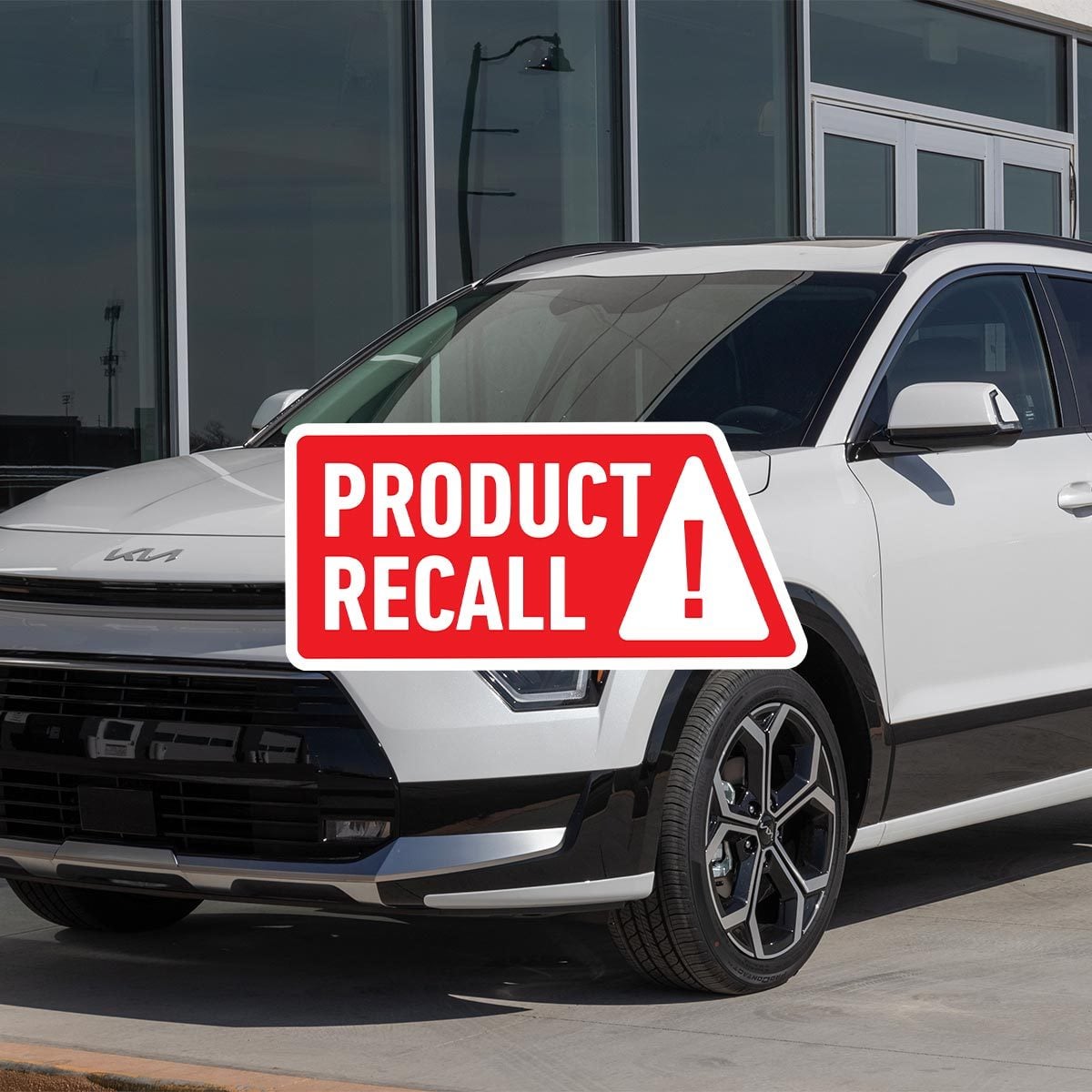
A car seat is supposed to slide forward and backward. It is not supposed to moonlight as a wire stripper. Yet that unlikely interaction sits at the center of a major Kia safety recall involving 80,255 Niro crossovers in the United States.
The campaign covers certain 2023–2025 Kia Niro Hybrid, Niro Plug-in Hybrid, and Niro EV vehicles equipped with a manually adjustable front passenger seat. According to federal recall documents, repeated seat movement can damage wiring beneath the passenger seat. Because that wiring communicates with important restraint systems, the damage could interfere with airbag deployment, seatbelt pretensioners, and passenger-airbag suppression.
The recall is identified as National Highway Traffic Safety Administration campaign 25V-024 and Kia campaign SC332. Here is what owners, shoppers, and anyone currently staring suspiciously at a passenger seat should know.
Sources:
What the Kia Niro Recall Covers
Kia’s federal filing lists 80,255 potentially affected vehicles. That total includes 49,535 Niro Hybrids, 21,909 Niro EVs, and 8,811 Niro Plug-in Hybrids. The affected SUVs were built during different production windows between June 2022 and December 2024, but they were marketed as 2023, 2024, or 2025 model-year vehicles.
Federal documents estimate that approximately 1% of the recalled population may contain the defect. That does not make the recall optional. Manufacturers commonly recall the broader population that may have been built with a hazardous condition when the affected vehicles cannot be identified reliably through mileage, appearance, or model year alone.
Most importantly, the campaign concerns affected Niros equipped with a manual front passenger seat. Kia’s investigation found no reports of the same condition in Niros fitted with power passenger seats, which use a different wiring length and routing arrangement. Owners should still check their exact vehicle identification number rather than assuming that a trim name settles the question.
Sources:
Affected Models, Production Dates, and Vehicle Counts
| Model | Model Years | Production Dates | Potentially Affected |
|---|---|---|---|
| Kia Niro Hybrid | 2023–2025 | June 21, 2022–December 17, 2024 | 49,535 |
| Kia Niro EV | 2023–2025 | August 10, 2022–December 13, 2024 | 21,909 |
| Kia Niro Plug-in Hybrid | 2023–2025 | July 11, 2022–December 16, 2024 | 8,811 |
The recalled vehicles were not produced in a sequential VIN range. In practical terms, two nearly identical Niros parked beside each other may have different recall status. The VIN lookup is the referee here, not parking-lot detective work.
Sources:
How a Moving Passenger Seat Can Affect Airbags
Under the front passenger seat is a floor wiring assembly that carries signals for several occupant-restraint functions. Kia determined that variation in the way the harness was routed could place it close enough to a metal bracket that repeated movement of the manual seat may cause rubbing.
Over time, that contact can wear through the harness’s protective cloth and damage the insulation around individual wires. Service instructions issued to dealers show examples ranging from minor surface rubbing to exposed and damaged internal wiring.
It may sound like a small packaging problem, but modern restraint systems depend on sensors, modules, electrical connections, and split-second communication. One compromised circuit can produce several distinct safety risks.
Sources:
Airbags May Not Deploy When Needed
If damaged wiring interrupts the supplemental restraint system, one or more airbags may fail to deploy in a collision that would normally trigger them. An airbag is not a polite suggestion from the dashboard; it is part of a coordinated system intended to help reduce the severity of crash injuries.
Seatbelt Pretensioners May Not Activate
Pretensioners rapidly tighten a seatbelt at the beginning of certain crashes, helping position the occupant before the strongest forces arrive. Wiring damage could prevent a pretensioner from operating correctly. The belt may still buckle and retract normally during everyday use, so the driver may receive no obvious warning that this crash-time function has been compromised.
Passenger-Airbag Suppression Could Be Disrupted
The vehicle is designed to suppress the front passenger airbag in certain situations involving a child or small occupant. Kia’s filing says the wiring condition could prevent that suppression. The defect is therefore more complicated than an airbag simply failing to inflate: the system could make the wrong deployment decision in either direction.
A Side Airbag Could Deploy Unintentionally
The damaged floor harness may also cause an unintended deployment of the passenger-side airbag. An unexpected airbag deployment can create an injury risk and may startle the driver. The core concern is whether the restraint system responds correctly, for the correct occupant, at the correct moment.
Sources:
The Warning Sign Owners Should Not Ignore
Kia says an illuminated airbag warning light may alert an owner to the wiring condition. That light is not decorative mood lighting and should not be covered with tape, strategically hidden behind a coffee cup, or assigned to the category of “things future me will handle.”
Kia’s owner notification instructs drivers who see the airbag warning light to pull over in a safe location, stop driving, and contact Kia Roadside Assistance to have the vehicle towed to an authorized dealership.
A vehicle may also be included in the recall without displaying a warning light. The absence of a dashboard alert does not cancel an open recall because the campaign is intended both to prevent future wiring damage and to repair harnesses that have already been harmed.
Sources:
How Kia Discovered the Wiring Problem
Kia’s safety chronology says its North American safety office received information in November 2024 about a 2023 Niro EV with an illuminated airbag warning light and damaged floor wiring beneath the front passenger seat.
An engineer inspected the vehicle and found that the wiring assembly had contacted a bracket under the seat. A second damaged harness from a 2024 Niro EV was collected at a dealership and sent for further evaluation. Kia then reviewed field information, warranty records, and technical-assistance cases.
By January 9–10, 2025, Kia had confirmed four warranty claims and two technical-line cases involving four unique VINs. The reports identified damaged floor wiring harnesses and warning lights received between December 2022 and November 2024.
Kia decided on January 10, 2025, to recall certain Niro EV, Hybrid, and Plug-in Hybrid vehicles with manual passenger seats. At the time of that decision, the company reported no crashes, injuries, fatalities, or fires associated with the condition.
That is reassuring, but it does not make the problem trivial. A successful safety recall interrupts the path from early evidence to serious injury instead of waiting for the worst possible proof.
Sources:
What Kia Dealers Will Do
The repair begins with an inspection of the floor wiring harness beneath the front passenger seat. A technician loosens and repositions the seat to reach the harness, then checks the protective material and wiring for rubbing, exposed insulation, or internal damage.
If the wiring remains serviceable, the dealer reroutes the harness and installs additional protective coverings. Kia’s technical instructions show protective components placed around the wiring and along the edge of the nearby bracket to prevent future contact.
If the inspection reveals substantial insulation or internal wire damage, the floor wiring assembly must be replaced before the new routing and protective components are installed.
Kia’s owner letter says the recall repair is free and generally requires approximately one to two hours. The vehicle may remain at the dealership longer depending on inspection results, necessary parts, technician availability, and the shop’s schedule.
Owners who previously paid to diagnose or repair the same condition may be eligible to request reimbursement. Kia asks those owners to provide repair orders, receipts, proof of payment, and related documentation for review.
Sources:
How the Production Fix Differs
Kia introduced a production correction in December 2024. Later-built vehicles received a properly routed floor wiring harness with additional protective coverings.
The change began with Niro EVs produced on December 14, 2024, Niro Plug-in Hybrids produced on December 17, 2024, and Niro Hybrids produced on December 18, 2024. Earlier production dates are not enough by themselves to prove that a vehicle is recalled, but these dates explain how Kia separated potentially affected production from later vehicles containing the updated arrangement.
Sources:
What Kia Niro Owners Should Do Now
Check the VIN
Owners can search for open recalls using the NHTSA recall lookup, Kia’s recall resources, or an authorized Kia dealership. Because the affected vehicles were not built in VIN order, checking the exact 17-character VIN is more reliable than relying on a general model-year list.
Schedule the Free Repair Promptly
A recall letter is not a limited-edition collectible. Even when the Niro drives normally, the defect concerns safety systems that may reveal their importance only during a crash.
Take the Airbag Warning Light Seriously
If the airbag warning light illuminates, follow Kia’s direction to stop driving safely and arrange towing to an authorized dealer. Do not assume that restarting the vehicle or clearing the light has corrected physical damage to the harness.
Save Repair Records and Receipts
Anyone who previously paid for diagnosis or repair of related under-seat wiring should retain invoices, technician notes, proof of payment, and service records for a possible reimbursement claim.
Update Ownership Information
Used-car buyers, sellers, and lessees should make sure Kia has the current owner’s contact information. Recall obligations follow the vehicle, not the original owner’s mailbox.
Sources:
Why This Recall Matters Even When the SUV Feels Normal
Some vehicle problems announce themselves with smoke, a fluid puddle, grinding noises, or a sound best described as “wallet emptying.” This defect can be much quieter. The Niro may start, accelerate, steer, brake, charge, and commute normally while a restraint-system circuit beneath the passenger seat remains vulnerable to repeated movement.
The repair is not merely a warning-light reset. Dealers change the physical routing and protection of the harness so the seat can move without repeatedly rubbing a safety-critical bundle of wires.
The campaign also illustrates why small packaging details matter in modern vehicles. A few inches of harness length, the position of a bracket, or variation in assembly routing can determine whether nearby components coexist peacefully or slowly damage one another.
Common Questions About Kia Recall SC332
Can an Affected Kia Niro Still Be Driven?
Kia did not issue a blanket do-not-drive instruction for every vehicle included in SC332. Owners should schedule the recall repair promptly. However, if the airbag warning light illuminates, Kia specifically advises pulling over safely, not driving the vehicle, and arranging a tow to a Kia dealership.
Are All 2023–2025 Kia Niros Recalled?
No. The population is limited to certain vehicles, particularly Niros equipped with a manual front passenger seat and built within specified production periods. Not every vehicle manufactured within those dates is affected, so owners must verify the VIN.
Does the Recall Affect the Battery or Propulsion System?
The defect described in campaign SC332 concerns the floor wiring assembly and occupant-restraint functions. It is not identified as a defect in the high-voltage battery, electric motor, gasoline engine, or charging equipment.
Will Owners Pay for the Repair?
No. Inspection, necessary wiring replacement, rerouting, and protective-cover installation are provided free of charge under the recall. Eligibility for the safety-recall repair is not limited to the vehicle’s original purchaser.
What Happens If the Niro Was Purchased Used?
An open safety-recall remedy remains attached to the vehicle. A used-car owner can check the VIN and arrange the free repair through an authorized Kia dealer, even if the vehicle was purchased from a private seller or independent dealership.
Sources:
Owner Experiences: What the Recall Process May Feel Like
The following examples are practical composite scenarios based on Kia’s official repair instructions and owner guidance. They are not quotes or reports attributed to specific owners.
The Quick Inspection and Protective-Cover Visit
An owner receives a recall letter, confirms the VIN, and books a weekday-morning appointment. At check-in, the service adviser verifies campaign SC332 and explains that the passenger seat must be loosened so the technician can inspect the harness underneath it. The vehicle has no airbag warning light and no noticeable symptoms.
The harness shows little or no wear, so the technician reroutes it and installs the specified protective coverings. The hands-on repair may be relatively brief, but the complete dealership visit can take longer because of vehicle intake, shop queues, paperwork, and final safety checks.
The owner leaves with the recall listed as completed on the repair order and, ideally, one fewer reason to stare anxiously at the dashboard during every commute.
The “Airbag Light Came On” Experience
Another driver sees the airbag warning light illuminate after the passenger seat has been adjusted repeatedly for different family members. The Niro still feels normal, creating a temptation to drive home and investigate the issue later.
The safer response is to follow Kia’s owner notice: pull over in a safe location, stop driving, and arrange a tow. At the dealership, inspection may reveal serious rubbing or damaged insulation. This visit can take longer because the floor wiring harness may require replacement instead of only rerouting and protective covers.
Parts availability, dealership workload, and the extent of the damage may affect the timeline. The important lesson is that a normal-feeling vehicle does not prove that the airbags and pretensioners remain ready for a crash.
The Used-Car Buyer Who Finds an Open Recall
A shopper considers a 2024 Niro Hybrid at an independent used-car lot. The seller says the SUV “should be fine,” which is pleasant but not a substitute for a VIN database. The buyer checks the vehicle and discovers that campaign SC332 remains open.
This does not automatically make the Niro a bad purchase, but it changes the discussion. The buyer can ask the seller to have the recall completed before delivery, obtain written documentation, and verify completion afterward.
If the vehicle is purchased first, the new owner can still schedule the free remedy through Kia. The practical habit is simple: check for open recalls before money and keys perform their ceremonial exchange.
The Family With a Frequently Adjusted Passenger Seat
In many households, the passenger seat moves constantly. One adult wants maximum legroom, another sits closer to the dashboard, and a teenager changes everything while denying all involvement.
Because repeated manual adjustment contributes to the defect mechanism, an owner in this situation may feel especially uneasy. There is no reliable home inspection that replaces the dealer procedure. Pulling on visible wires, disconnecting restraint-system connectors, or removing the seat without proper training can create additional problems.
The sensible approach is less dramatic: avoid unnecessary seat adjustment, verify the VIN, schedule the appointment, and allow a trained technician to inspect the harness.
The Owner Who Already Paid for Wiring Work
A final scenario involves an owner who previously paid to diagnose an airbag light and repair damaged wiring beneath the passenger seat. That person should gather the service order, technician notes, itemized invoice, and proof of payment.
Kia’s reimbursement process allows qualifying prior expenses to be reviewed, although reimbursement is not automatic and supporting documentation matters. A tidy folder may not feel heroic, but in recall administration it is practically a cape.
Sources:
Conclusion
Kia’s recall of 80,255 Niro SUVs demonstrates how a small wiring-routing problem can affect some of a vehicle’s most important safety systems. Certain 2023–2025 Niro Hybrid, Plug-in Hybrid, and EV models with manual front passenger seats may contain a harness that rubs against a bracket as the seat moves.
The possible consequences include nondeployment of airbags or seatbelt pretensioners, incorrect passenger-airbag suppression, or unintended deployment of the passenger-side airbag.
The response for owners is straightforward: verify the VIN, schedule the no-cost inspection and protective repair, and treat an illuminated airbag warning light as an urgent safety message. A vehicle does not need to feel broken for a recall to deserve attention. Safety equipment earns its keep on the worst day, so it is worth ensuring that the wiring is ready before that day arrives.
Sources: