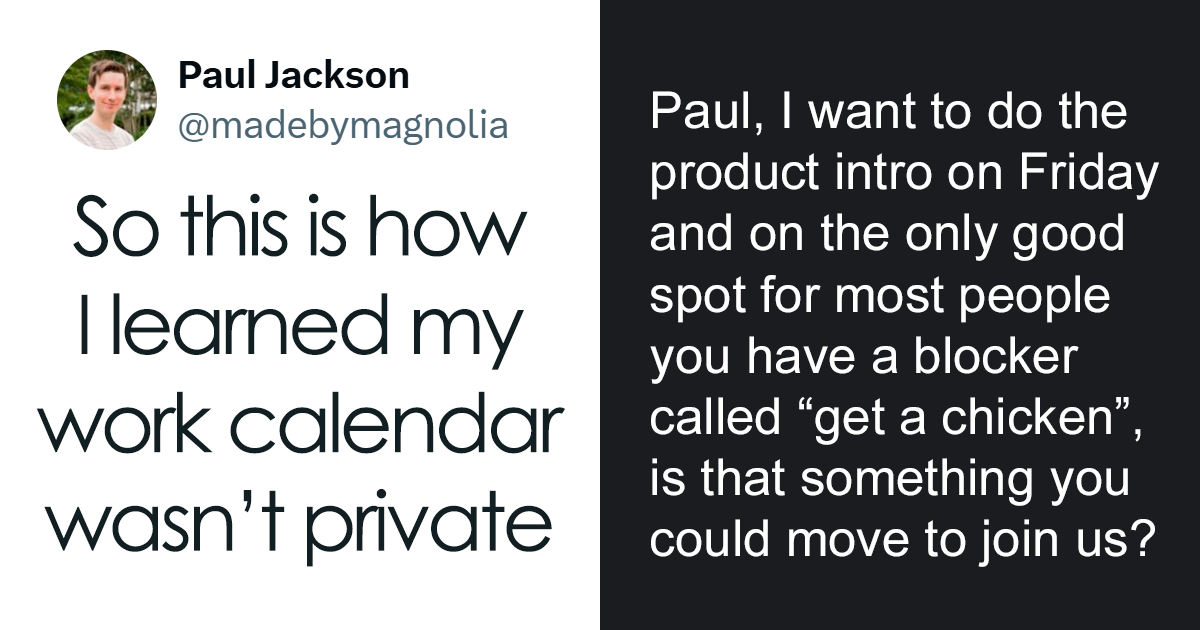
If you’ve ever typed “is it normal that…” into a search bar at 11:47 p.m. while thinking about tomorrow’s meeting,
congratulations: you’re exactly the kind of person who finds antiwork posts painfully funny.
Not because everyone secretly hates effort (most people don’t), but because a whole lot of workers are tired of
being treated like effort is the only thing that matters.
The modern workplace can be a weird little carnival: “We’re a family!” (until layoffs),
“Unlimited PTO!” (that you’re quietly discouraged from using),
“Open door policy!” (but please schedule the door in Outlook first).
Antiwork posts go viral because they name the things many people are already livinglow pay, stalled growth,
disrespect, burnout, surveillance, and rules that change the second you get good at following them.
Why antiwork stories feel so familiar right now
The internet didn’t invent workplace frustration; it just gave it better lighting and a comments section.
During the churn of the Great Resignation era, quitting spiked and the “why” became impossible to ignore:
surveys found that low pay, no opportunities to advance, and feeling disrespected
were among the top reasons people walked away.
Meanwhile, engagement data has looked… not great. Gallup has repeatedly reported that only about
31% of U.S. employees are engaged, with many workers emotionally detached and doing the minimum.
(Cue the internet turning “not engaged” into a thousand memes.)
And while the quit rate isn’t at its peak anymore, people are still leavingBLS reported a quits rate of
2.0% (and 3.2 million quits) for November 2025.
Add a dash of “return-to-office whiplash,” a sprinkle of “do more with less,” and the cherry on top:
workplace monitoring is increasingly commonone U.S. survey-based report found that more than two-thirds
of workers reported some form of electronic monitoring.
Suddenly, it’s not just “work is hard.” It’s “work is hard, and my mouse has performance anxiety.”
50 antiwork post themes that might hit way too close to home
-
“My raise was… a coupon?”
You crushed your goals, inflation crushed your wallet, and your merit increase arrived like a polite shrug in spreadsheet form.
-
The “we’re a family” plot twist
Families don’t usually ask you to “circle back” at 9 p.m.and they definitely don’t call layoffs “rightsizing.”
-
“Unlimited PTO” that’s mysteriously… limited
Technically unlimited. Practically, you need a dissertation defense to take a Thursday off.
-
When “competitive pay” competes with… 2009
The salary range is “competitive,” meaning it competes aggressively against your ability to afford groceries.
-
The promotion that’s actually two jobs in a trench coat
Congratulations! Your title leveled up. Your workload evolved into a boss fight. Your paycheck stayed in tutorial mode.
-
“We value feedback” (but not that feedback)
They asked for honesty, then reacted like honesty was a personal attack with a PowerPoint.
-
Manager math: “Just one more quick thing…”
“Quick” means it only takes your entire evening and half your will to live.
-
The “always on” calendar trap
Meetings stacked like pancakes, and somehow you’re supposed to do actual work in the syrupy gaps.
-
“We’re short-staffed” as a business model
When understaffing isn’t a temporary problemit’s the strategy, the vibe, and the reason you know everyone’s job.
-
Quiet quitting? More like “loudly setting boundaries”
You stopped donating free labor, and the workplace acts like you’ve joined a rebellion.
-
The unpaid “learning opportunity”
They call it “exposure.” Your landlord calls it “rent.” Funny how only one of those accepts “experience.”
-
Job descriptions written by a fantasy novelist
“Entry-level” role, 7 years’ experience required, must be an expert in tools invented last Tuesday.
-
The performance review surprise attack
No feedback all year, then suddenly a list of issues appears like a magician’s scarfendless and colorful.
-
“We don’t have the budget” (until you resign)
Miraculously, funding appears the moment your two-week notice does. Capitalism loves a dramatic finale.
-
Mandatory fun (with optional joy)
Nothing says “culture” like forced bowling with coworkers you only know as tiny squares on Zoom.
-
The email sent at 2:06 a.m.
The worst part isn’t the messageit’s realizing the sender expects you to be impressed, not concerned.
-
“We’re pivoting” (again)
Your team has pivoted so many times you’re basically a figure skater, except the rink is on fire.
-
When “urgency” is just poor planning wearing cologne
A deadline becomes “critical” because someone remembered it existed five minutes ago.
-
Employee monitoring: the mouse jiggle era
You’re paid for outcomes, but evaluated by keystrokes. More than two-thirds of workers report some monitoring.
-
“We care about mental health” (please ignore workload)
The wellness webinar is lovely. The 60-hour week is less lovely. OSHA notes workplace stress can harm health.
-
Return-to-office whiplash
You built a life around flexibility. Now you’re commuting to sit on Zoom… in a different building.
-
“Culture fit” as code for “please be quiet”
If fitting in means never asking questions, that’s not cultureit’s choreography.
-
The “training” that is actually vibes and panic
Day one: here’s your login. Day two: why haven’t you solved the company’s biggest problem yet?
-
Customer abuse treated as “part of the job”
A customer yells at you, management shrugs, and suddenly you understand why people don’t stay.
-
“Flexible schedule” (as long as it’s ours)
You can flex your hours… by working earlier and later. Double the flexibility, double the exhaustion.
-
The “urgent” Slack that could have been… nothing
The message is “?” and somehow you’re the one apologizing for not decoding it fast enough.
-
Meetings that should’ve been a sentence
Thirty minutes to decide what you already decided yesterday, plus five minutes to schedule the next one.
-
When “lean” means “fragile”
The org chart is so thin that one sick day turns into a corporate reenactment of a disaster movie.
-
The “we can’t find talent” mystery
The talent is out there. The wages are not. Pew found low pay is a top quitting reason.
-
“We promote from within” (but not you)
Internal postings appear, disappear, and somehow a stranger’s cousin’s roommate gets the role.
-
Benefits that vanish like a magic trick
The company “re-evaluated” benefits, which is corporate for “we kept the savings and gave you a sticker.”
-
The “discipline” that’s really retaliation
You speak up, then your schedule gets worse. EEOC notes retaliation often follows perceived unfairness and weak channels.
-
Burnout dressed up as ambition
Working through lunch isn’t “grindset.” It’s your body sending a certified letter. NIOSH flags stress symptoms like sleep trouble and low morale.
-
Team “bonding” that ignores basic respect
The happy hour is mandatory, but basic civility is optional. That’s… an interesting HR choice.
-
The boss who confuses fear with leadership
They don’t manage; they threaten. The team doesn’t collaborate; it survives.
-
“You’re lucky to have a job” as a management philosophy
Lucky? Sure. And they’re lucky you haven’t updated your résumé during the weekly “alignment” meeting.
-
“We’re listening” (with headphones unplugged)
Suggest improvements and you’re labeled “negative.” Accept chaos and you’re labeled “a team player.”
-
The toxic workplace bingo card
Favoritism, gossip, public shaming, “jokes” that aren’t jokesAPA notes toxic workplaces can make employees sick and scared.
-
Workload inflation (the sneaky kind)
You finish your tasks early once, and now that’s the baseline forever. Congratulations on inventing your own punishment.
-
The “temporary” responsibility that becomes permanent
“Can you cover this for a bit?” becomes “Why are you asking about your job title like it matters?”
-
Being scheduled like a robot, paid like a human
The system assigns shifts with zero empathy, and you’re told to “be flexible” about childcare, school, and life.
-
Rules that only apply downward
Clock in precisely or get written up. Executives arrive whenever the universe feels right.
-
When “growth mindset” means “accept unpaid work”
They want you to stretchright up until you ask the company to stretch its budget.
-
The “we don’t micromanage” micromanagement
Daily standups, hourly check-ins, and a spreadsheet tracking your spreadsheet tracking. Freedom!
-
Schedules made for maximum inconvenience
Two closing shifts, then an opening shift, then a “can you cover?” text. Your circadian rhythm has filed a complaint.
-
“Please do more with less” hits its final form
Less headcount, less time, less paymore KPIs. At some point it stops being a strategy and becomes a dare.
-
The resignation letter that reads like therapy
Not petty. Not dramatic. Just someone calmly choosing dignity over chaos after months of trying to “make it work.”
-
Exit interviews as a performance art piece
“What could we have done better?” You answer. They nod. Nothing changes. A classic tragedy in one act.
-
HR as “the company’s feelings department”
You report a problem. The solution is a training module and a reminder to “assume positive intent.”
-
Work that follows you home like a stray cat (but mean)
It’s not cute, it’s not cuddly, and it keeps showing up in your inbox with “quick question” energy.
-
When staying feels like surrender
A positive culture can help people stay; poor culture pushes people to look elsewhere. SHRM reports big differences in intent to leave by culture quality.
-
The “my job could be an email” moment
You realize the role exists mostly to translate decisions between meetings. You could automate it, but then you’d be asked to automate yourself.
-
When the paycheck clears but your soul doesn’t
You’re not lazy. You’re drained. And you’re starting to suspect the workplace has mistaken exhaustion for excellence.
-
The “I quit” text message heard ‘round the group chat
Short, sweet, and honestbecause sometimes the only “professionalism” left is protecting your peace.
-
That one post that’s just a screenshot of policy hypocrisy
The handbook says one thing. The manager says another. Reality says “good luck,” then closes the door softly.
-
The “I love my work, I hate my workplace” confession
Many people don’t want to stop contributingthey want sane expectations, fair pay, and basic respect. It’s not radical. It’s human.
What these posts are actually revealing
Strip away the sarcasm and you’ll find a pretty consistent set of signals:
people want fairness, predictability, respect, and a job that doesn’t demand
their entire identity as collateral. When those basics disappear, workers cope in predictable ways:
they disengage, they job-hop, they set firmer boundaries, or they leave the workforce for a stretch.
Research on the Great Resignation suggests the quit-rate spike wasn’t just one simple storyit included
moves to other employers and also quits to nonemployment.
Antiwork posts also highlight how “soft” factors become “hard” outcomes. Toxic cultures drive turnover,
not because people are fragile, but because toxicity is expensiveemotionally, physically, and financially.
The American Psychological Association points to evidence linking toxic workplaces to serious harm, and
notes research finding toxic culture is a major driver of attrition.
If you’re nodding along, here are a few grounded moves
1) Name the problem clearly (to yourself first)
“I’m tired” is real, but vague. Is it workload? Disrespect? Unfair pay? Unpredictable scheduling?
Monitoring that makes you feel distrusted? Getting specific turns a swirl of stress into something you can actually address.
2) Document what matters
Not as a paranoia hobbyjust as basic self-defense. Keep notes on shifting expectations, workload changes, and major incidents.
If retaliation is in the air, remember: fear of retaliation is a known reason people stay quiet, and organizations ignore that at their peril.
3) Set boundaries that you can actually keep
Start small: a cutoff time for checking email, a “no meeting” block, or one day a week you protect for deep work.
Boundaries don’t fix a toxic system, but they can reduce how much the system borrows from your future.
4) If the culture is the issue, don’t try to outwork it
Culture isn’t solved by individual heroics. SHRM’s research highlights how much culture influences whether people want to stay.
If leadership rewards chaos, your best strategy may be planning your exit with intention rather than waiting for a breaking point.
500+ words of “this is so real” experiences people recognize
Imagine a Monday that starts with a calendar alert titled “Quick Sync :)” and ends with you wondering whether you have a job
or a subscription to ongoing stress. That’s the emotional terrain a lot of antiwork posts come fromnot a hatred of doing things,
but a fatigue with workplaces that treat humans like endlessly rechargeable batteries.
One common experience: the raise that isn’t a raise. You walk into a performance review with receiptsprojects shipped,
customers saved, fires put out with nothing but coffee and grit. Then you get a 2% bump (or less) and a speech about “tight budgets.”
Your stomach drops because you’re not asking for applause; you’re asking to not fall behind. When people quit, research shows pay is
frequently part of the story, but it’s rarely the only partlack of advancement and disrespect often ride along in the passenger seat.
Another experience: the promotion that quietly doubles your job. The title changes, the expectations explode, and the support stays flat.
Suddenly you’re training new hires, running reports for leadership, and covering gaps because the team is “lean.” The praise comes in emojis.
The compensation comes in… vibes. Over time, that’s how engaged workers become “not engaged” workersdoing what’s required, no more,
because “no more” is the only part that still belongs to them.
Then there’s monitoring culture. Maybe it’s a dashboard, maybe it’s productivity tracking, maybe it’s a feeling that you’re always being watched.
A national survey summarized by the Washington Center for Equitable Growth found that more than two-thirds of workers reported some form of
electronic monitoring, with meaningful shares reporting productivity, camera, or location monitoring.
Even when you’re doing good work, surveillance can create a constant low-grade tension: you’re not trusted by default, so you’re always proving
you deserve trust. That pressure doesn’t show up in a timesheet, but it shows up in your bodysleep issues, irritability, and that “Sunday scaries”
sensation that arrives right on schedule. NIOSH and OSHA have long warned that workplace stress can affect health and wellbeing.
And of course: the return-to-office reversal. You built routines around hybrid lifeschool drop-offs, medical appointments, focused work at home.
Then the policy changes. The new “collaboration” requirement means commuting to spend your day on video calls because half the team is still remote.
The resentment isn’t about the office itself; it’s about the broken promise and the lack of control. People can accept tough tradeoffs when they feel respected.
They struggle when decisions happen to them, not with them.
Finally, there’s the experience that antiwork posts capture best: the moment you stop internalizing the problem.
You realize you’re not failing because you can’t outwork an understaffed department, or because you don’t “want it enough” to answer messages at midnight.
You’re responding normally to an abnormal system. And that shiftfrom “what’s wrong with me?” to “what’s wrong with this setup?”is often the first step
toward something better: boundaries, a smarter job search, a workplace with healthier norms, or simply the confidence to demand basic dignity.
Conclusion
Antiwork posts are funny because they’re trueand they’re popular because the truth is shared.
They reveal a simple theme: most people don’t want a work-free life as much as they want a life that work doesn’t consume.
If these posts hit close to home, take it as information, not shame. You’re not “bad at work.”
You might just be living inside a system that asks for too much and gives too little back.