
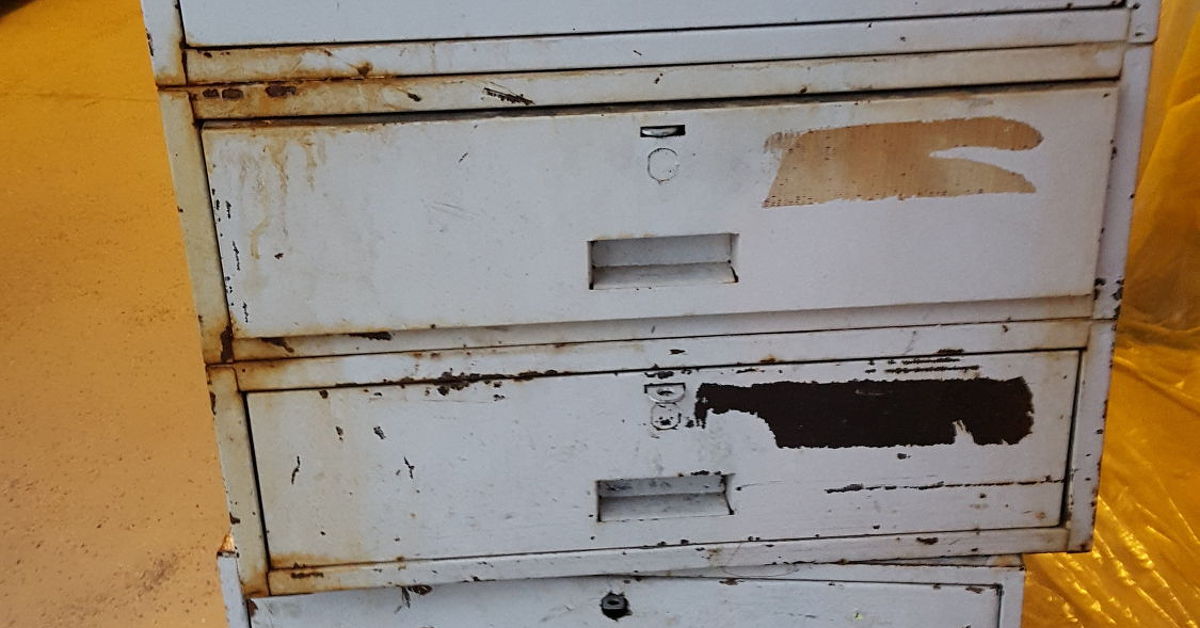
Old metal drawers are not known for subtlety. They clang, they weigh approximately as much as a compact moon, and they often arrive wearing three generations of paint. Yet beneath the rust, labels, scratches, and mysterious workshop grime, these industrial leftovers can become some of the most useful storage and display pieces in a home.
Repurposed heavy metal drawers work especially well in industrial, farmhouse, vintage, and eclectic interiors. Former filing-cabinet drawers, mechanic’s tool drawers, library card-catalog bins, factory parts trays, and steel locker compartments can all be transformed into shelves, planters, rolling storage, side tables, or handsome organizers. The key is to preserve their rugged personality while making them clean, stable, and safe enough for everyday use.
Why Repurpose Old Heavy Metal Drawers?
A steel drawer has already survived slamming, overloading, grease, dust, and at least one person who believed labels were optional. That durability makes it an excellent candidate for upcycling. Unlike lightweight decorative containers, industrial drawers can often handle tools, books, craft supplies, shoes, garden equipment, or other substantial items.
Repurposing also gives an existing object a new function rather than immediately replacing it with a newly manufactured product. The result is useful storage with genuine patina and a story that cannot be replicated by printing the word “VINTAGE” on a plastic bin.
Common Types Worth Saving
- Steel filing-cabinet drawers
- Mechanic’s tool-chest drawers
- Industrial parts bins and factory drawers
- Metal library or office card-catalog drawers
- Locker compartments and military surplus drawers
- Appliance, workbench, and shop-cabinet drawers
Choose drawers that are structurally sound, even when the finish is rough. Surface rust is usually manageable. Deep corrosion, cracked welds, sharp torn metal, or badly distorted sides may make a drawer unsuitable for furniture unless it can be professionally repaired.
Inspect Before You Start Swinging a Paintbrush
Check the Structure
Place the drawer on a flat surface and inspect every corner. Look for loose seams, broken welds, jagged edges, damaged handles, and holes caused by corrosion. Push gently on the bottom to determine whether it flexes excessively. A drawer intended to hold books or tools needs considerably more strength than one holding scarves.
Test the original handle rather than trusting its heroic appearance. Old hardware may be attached by tiny screws, bent tabs, or optimism. Replace questionable fasteners with bolts, washers, and locking nuts where the construction allows.
Investigate the Existing Finish
Very old painted pieces deserve caution. If the age or composition of the coating is unknown, avoid aggressively dry-sanding it until you have considered whether lead or another hazardous material could be present. The U.S. Environmental Protection Agency recommends lead-safe practices when older painted surfaces are disturbed, including controlling dust, protecting the work area, and cleaning carefully.
Grease, wax, silicone, and oil can also interfere with primer adhesion. A drawer that looks clean may still carry decades of workshop residue, so washing is not a ceremonial gesture. It is the difference between a durable finish and paint that peels off when someone looks at it sternly.
Tools and Materials
- Work gloves, safety glasses, and suitable respiratory protection
- Degreasing cleaner and clean rags
- Wire brush, abrasive pad, or sandpaper
- Rust remover or rust converter when needed
- Metal primer compatible with the chosen topcoat
- Brush-on or spray paint formulated for metal
- Clear protective coating, if appropriate
- Drill, metal-rated bits, screws, bolts, and washers
- Wood for shelves, bases, dividers, or tops
- Casters, legs, wall anchors, or mounting brackets
- Drawer liner, felt pads, cork, or thin plywood
Follow the directions and safety warnings for every cleaner, coating, and rust-treatment product. Spray coatings should be used with appropriate ventilation and protective equipment. “I opened a window somewhere in the house” is not a ventilation strategy.
How to Restore and Repurpose Heavy Metal Drawers
Step 1: Remove Loose Parts
Take off handles, label frames, drawer slides, rubber stops, and removable hardware. Photograph the original arrangement before disassembly. Small parts have a remarkable ability to become archaeological artifacts the moment a project lasts longer than an afternoon.
Place hardware in a labeled container. If the drawer has rails or slides that will no longer be used, removing them can reduce weight and make the finished piece easier to mount.
Step 2: Degrease and Wash
Vacuum or brush out loose debris. Wash the drawer with a degreaser appropriate for the surface, paying special attention to corners, seams, and the area around the handle. Rinse away cleaner residue when required and dry the metal immediately and thoroughly.
Do not paint over oil. Coatings need direct contact with a properly prepared surface, not a thin historical documentary about somebody’s garage.
Step 3: Remove Flaking Paint and Unstable Rust
Use a wire brush, abrasive pad, scraper, or sandpaper to remove loose paint and rust. The goal is not always to grind the drawer into perfectly bare, mirror-smooth steel. Stable existing paint can sometimes remain if it is cleaned, scuffed, and compatible with the new coating.
Feather rough paint edges so they do not remain visible beneath the finish. Treat stubborn corrosion with an appropriate rust remover or converter. Wipe away dust before priming.
Step 4: Make Repairs
Flatten minor bends carefully with pliers, a rubber mallet, or a hammer and wood block. File sharp burrs until the edges are smooth. Tighten loose seams and repair damaged hardware before painting.
Any drawer that will be mounted overhead or used as furniture must have dependable attachment points. Thin sheet metal alone may not safely support mounting screws. Add an internal wooden cleat, metal bracket, or backing plate to distribute the load.
Step 5: Prime the Metal
Apply a primer designed for the metal’s condition. Bare or lightly oxidized metal may call for a clean-metal or bonding primer, while rusted surfaces may require a rust-inhibiting primer. Some nonferrous or especially smooth metals need a specialized bonding or self-etching product.
Several light coats generally produce a cleaner finish than one heavy coat. Let each layer dry according to the manufacturer’s instructions. Do not rush recoating simply because the surface feels dry; curing and recoating times are not always the same.
Step 6: Paint or Preserve the Patina
For a refined finish, use thin, even coats of metal-compatible enamel or another durable coating. Satin black, deep navy, warm white, olive green, and muted gray complement industrial shapes without making them look like office equipment abandoned during a fire drill.
A hammered finish can visually soften pits and minor surface imperfections. Clear coating may be an option when you want to preserve aged paint or exposed metal, but test compatibility first. Clear finishes do not magically stop active corrosion trapped beneath them.
Step 7: Add the New Function
Install dividers, a wooden top, shelf brackets, casters, legs, hooks, or mounting cleats according to the design. Use washers with bolts passing through sheet metal so the fasteners do not pull through under load.
For wall-mounted drawers, choose anchors appropriate for the wall construction and expected weight. Whenever possible, fasten heavy installations directly to studs or solid masonry. A drawer full of hardback books should not be entrusted to two decorative picture hooks and positive thinking.
Creative Repurposed Metal Drawer Ideas
1. Industrial Wall Shelves
Turn the drawer on its side with the open face pointing outward. Add a wood panel inside as a shelf or decorative back. A group of shallow drawers can form a modular display for books, framed photographs, small plants, or collections.
Arrange drawers asymmetrically for a relaxed look or align them in a grid to imitate a vintage factory storage system. Preserve original label holders and insert handwritten category cards, family names, or playful descriptions.
2. Rolling Under-Bed Storage
A broad metal drawer can become exceptionally durable under-bed storage. Attach low-profile casters to a reinforced wood base and line the interior with felt, cork, or washable drawer liner. Use it for shoes, exercise gear, wrapping supplies, or seasonal accessories.
Measure the bed clearance before adding wheels. Few DIY moments are more humbling than building beautiful storage that is three-quarters of an inch too tall.
3. Entryway Shoe and Gear Bin
Deep drawers make useful landing zones for boots, reusable bags, dog-walking gear, or sports equipment. Add rubber feet to protect the floor and a removable tray to catch dirt. A slatted wooden insert can keep footwear slightly elevated above moisture.
4. Workshop Parts Organizer
Returning a metal drawer to workshop duty is less a transformation than a promotion. Add removable dividers for drill bits, fasteners, electrical components, blades, and measuring tools. Label every section clearly so the elusive 10-millimeter socket has fewer places to hide.
5. Coffee Table or Side Table
Attach two matching drawers to a reinforced frame, add legs or locking casters, and finish the top with sealed wood or safety glass. The drawers provide hidden storage while the metal fronts add industrial character.
Confirm that the frame is square and stable before installing the top. Smooth every exposed edge, especially in homes with children or pets.
6. Craft and Sewing Storage
Shallow drawers are ideal for thread, fabric scraps, stamps, brushes, paper, and cutting tools. Fit the interior with small boxes or custom wood dividers. Mount a row beneath a workbench or stack them in a newly built cabinet.
7. Decorative Planter Boxes
A metal drawer can serve as an outer decorative container for potted plants. Keeping plants in removable nursery pots is often easier than filling the drawer directly with soil because it allows better drainage and protects the metal from constant moisture.
If direct planting is appropriate, provide drainage, isolate the soil from questionable old coatings, and select a finish suitable for outdoor exposure. Do not grow edible plants in a container with an unknown coating or contamination history.
8. Vintage Bathroom Storage
Mount small drawers as cubbies for rolled towels or place a deep drawer on a shelf to organize extra toiletries. Seal the finish appropriately for a humid room and avoid placing untreated steel where it will be repeatedly splashed.
Design Details That Make the Project Look Intentional
Contrast is often what makes a repurposed metal drawer attractive. Pair cool steel with warm oak, walnut, leather pulls, cork liners, or woven baskets. New brass hardware can create a polished vintage look, while black bolts and reclaimed wood emphasize an industrial style.
Retain authentic details when possible. Old inventory numbers, label frames, welded corners, dents, and worn handles provide visual history. Patina is appealing when it is stable and clean; it is less charming when it leaves orange rust powder on every white towel in the house.
Repeat at least one material or finish elsewhere in the room. A drawer shelf with an oak insert will feel more integrated when nearby furniture includes a similar wood tone. This simple repetition turns “I found this behind a warehouse” into “Yes, it is part of the design.”
Mistakes to Avoid
- Painting over grease: Clean and degrease before sanding, priming, or coating.
- Ignoring active rust: Loose corrosion will continue undermining the finish.
- Using incompatible products: Confirm that primer, paint, and clear coat are designed to work together.
- Applying heavy spray coats: Thick coats are more likely to run, wrinkle, or cure poorly.
- Underestimating the weight: Reinforce mounting points and use appropriate anchors.
- Leaving sharp edges: File, cover, or fold exposed sheet-metal edges.
- Assuming every old finish is harmless: Use extra care when disturbing unidentified coatings.
- Using decorative casters without checking ratings: Wheels must support the combined weight of the drawer, frame, and contents.
A Composite Workshop Experience: What the Project Teaches You
The most realistic way to describe a heavy metal drawer makeover is this: the project appears simple until the drawer begins revealing opinions. A typical candidate may look like an ordinary steel box at the salvage shop, but once it reaches the workbench, it presents a sticky bottom, two bent corners, one frozen screw, and a smell that suggests it once stored both machine parts and regret.
The first important lesson is that cleaning takes longer than expected. One wash rarely removes old shop grease. The drawer may need vacuuming, scraping, degreasing, rinsing, and a second inspection under brighter light. This stage is not glamorous, but it determines how everything else performs. When the surface is truly clean, sanding becomes more effective and the primer has a fair chance of staying attached.
The second lesson is that perfection is not always the best goal. A few shallow dents and scratches can give the finished piece character. Grinding away every mark may erase the history that made the drawer worth saving. The better approach is to remove what is dangerous or unstable while keeping selected signs of age. A worn label holder or faded number can become the centerpiece rather than a defect.
Hardware creates another decision point. The original handle may look fantastic but feel loose. Replacing hidden fasteners while retaining the visible handle preserves the vintage appearance without sacrificing function. Small washers inside the drawer distribute pressure and help prevent bolts from deforming thin metal. This is a minor detail until someone pulls a fully loaded drawer and the handle remains in their hand like an unfortunate trophy.
Painting teaches patience. The first coat often looks disappointingly thin, which tempts the maker to apply more. Resisting that urge usually produces a smoother result. Light passes, proper drying time, and careful coverage around seams create a finish that looks deliberate rather than hurried. A satin or hammered coating is forgiving on imperfect industrial steel, while a glossy finish tends to announce every dent with the enthusiasm of a spotlight operator.
The final assembly is where the object’s new identity becomes clear. Adding a warm wooden insert can instantly soften the cold metal. Casters make a deep drawer mobile, while a sturdy cleat turns a shallow drawer into a wall cubby. After the transformation, the finished piece rarely looks like something rescued merely to save money. It looks custom because its dimensions, wear patterns, and hardware are genuinely unique.
The broader lesson is that successful upcycling depends less on dramatic decoration than on thoughtful preparation. The most satisfying projects balance three things: the original character of the object, the practical demands of its new job, and the safety of the people using it. When those elements work together, an abandoned steel drawer becomes more than storage. It becomes useful evidence that old industrial objects can still have another loud, durable, and surprisingly stylish encore.
Conclusion
Repurposed heavy metal drawers offer durable storage, industrial personality, and nearly endless creative possibilities. With careful inspection, proper rust treatment, compatible coatings, secure fasteners, and a practical design, a battered drawer can become a shelf, table, planter cover, rolling bin, or workshop organizer built to serve for years.
The metal may be heavy, but the project does not require a guitar soloonly patience, sensible safety practices, and enough imagination to see a useful object hiding beneath the grime.













