
Note: This article is written for informational and editorial purposes. It discusses family boundaries, sensory needs, and inclusive parenting based on public reporting and child-development guidance, but it is not medical advice.
Every family gathering has a flash point. Sometimes it is politics at the dinner table. Sometimes it is who brought the dry turkey and why it has the texture of printer paper. And sometimes, unexpectedly, it is a small tent in the living room that nobody is allowed to enter.
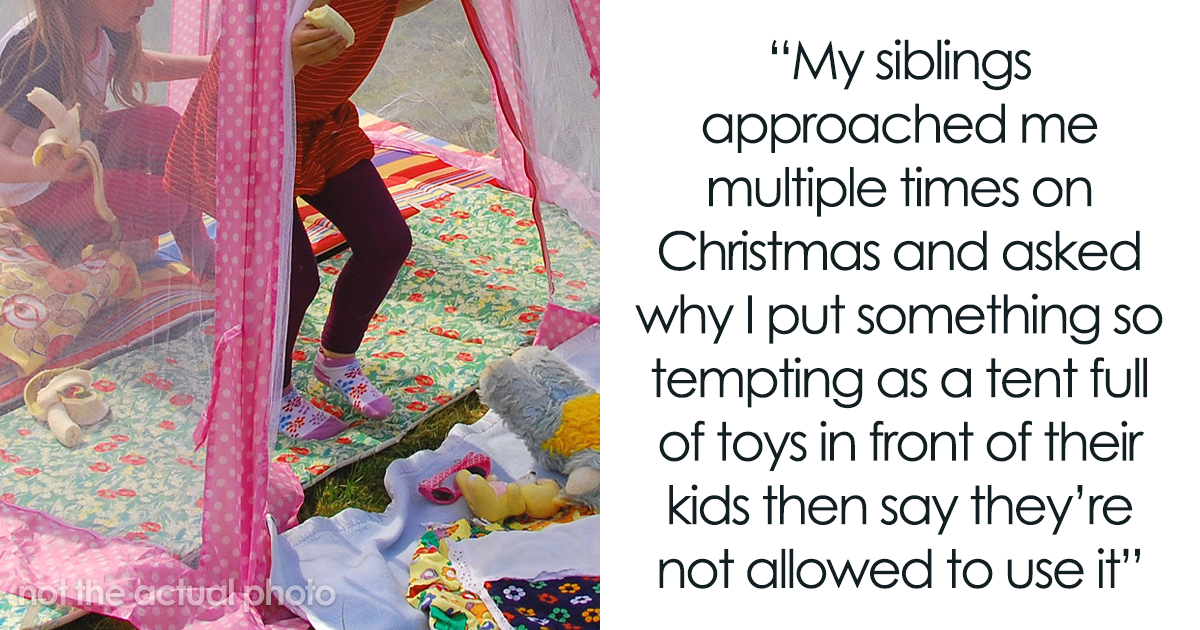
In this widely discussed family story, foster parents created a tent full of toys and books for their 6-year-old foster daughter, Emily, who has special needs and becomes overwhelmed easily. The tent was not a decorative Pinterest moment. It was her safe space: a predictable, child-sized retreat where she could calm herself, stay visible to her caregivers, and avoid disappearing into harder-to-monitor corners when the house became loud.
The conflict began when relatives visited with their own children. The children wanted to play in the tent. Emily did not want anyone inside it. The parents explained that the tent belonged to Emily and was off-limits. Some guests felt the tent should not have been placed in the living room if other kids could not use it. In other words: “Why put the cookie jar on the table if nobody can eat the cookies?”
But when a child has sensory sensitivities, developmental differences, trauma history, anxiety, autism, ADHD, or another support need, a safe space is not a luxury item. It can be part of the child’s emotional regulation plan. The real question is not whether the tent looked tempting. The real question is whether adults should prioritize a vulnerable child’s need for safety over guests’ temporary disappointment. Spoiler alert: yes, they should. Preferably without turning the living room into a courtroom drama with throw pillows.
Why a Safe Space Matters for a Child With Special Needs
A safe space for a child with special needs is a consistent, calming area where the child can retreat when the environment becomes too much. For some kids, “too much” means loud voices, bright lights, new smells, unfamiliar people, sudden transitions, scratchy clothing, crowded rooms, or several excited cousins moving like tiny caffeinated tornadoes.
Sensory processing differences affect how the brain receives and responds to information from the senses. Most people think of the five classic senses: sight, sound, touch, taste, and smell. But sensory processing also includes body awareness, balance, movement, and internal body signals. When these systems are overloaded, a child may not simply feel “annoyed.” They may feel unsafe, disoriented, panicked, or unable to communicate clearly.
That is why a tent can be more than a tent. It can be a visual boundary, a cozy enclosure, a low-stimulation zone, and a signal to the child: “This place is yours. You can pause here.” For children who struggle with transitions or become overwhelmed at gatherings, that kind of predictability can be deeply reassuring.
The Living Room Problem: Rude Placement or Smart Parenting?
The guests’ argument was simple: if other children cannot use the tent, why place it in a shared area? At first glance, that sounds reasonable. Nobody wants a toddler staring at a forbidden toy fortress all afternoon like it is the last cupcake on Earth.
But parenting decisions for children with support needs are often based on safety, supervision, and what actually worksnot what looks most convenient to relatives. In this case, the tent was placed in the living room because the caregivers needed Emily within sight. If she became overwhelmed and hid somewhere else, it might be harder to find her and help her. A living-room tent solved two problems at once: Emily had a retreat, and her parents could monitor her without hovering like anxious helicopters.
Common spaces are not automatically public property. A wheelchair in a hallway is not an invitation to ride it. A medical device on a table is not a toy. A child’s sensory tent in a living room is still that child’s space. The location does not cancel the boundary.
Guests Were Upset, but Boundaries Are Not Bad Manners
Some adults confuse hospitality with total access. They believe that if guests are in the home, everything visible should be shareable. That may work for a bowl of chips. It does not work for a child’s regulation tools.
A boundary is not an insult. It is information. “This tent is Emily’s safe space” tells visitors what is needed for the home to function peacefully. The boundary does not say, “Your kids are bad.” It says, “This item is not available.” Children can handle that message when adults present it calmly and consistently.
In fact, this situation was a valuable teaching moment for the visiting children. They could learn that not everything belongs to everyone, that different people have different needs, and that kindness sometimes means leaving something alone. These are not advanced graduate-level empathy skills. Even young children can begin learning them when adults model the lesson instead of making disappointment the host’s emergency.
Special Needs, Sensory Overload, and the Difference Between Fair and Equal
One reason these conflicts become heated is that adults often mix up “fair” and “equal.” Equal means everyone gets the exact same thing. Fair means everyone gets what they need to participate safely and comfortably.
If one child needs glasses, fairness is not making every child wear glasses. If one child needs a quiet break, fairness is not forcing every child to sit alone in a tent. If one child needs a protected space to prevent overwhelm, fairness is protecting that space even when other kids are curious.
For children with sensory processing challenges, autism, ADHD, developmental delays, anxiety, or trauma-related needs, meltdowns are not always “bad behavior.” They may be signs that the child’s nervous system has hit capacity. A child may cry, hide, refuse to speak, cover their ears, run away, cling to a caregiver, or become unusually still. To outsiders, these reactions may look dramatic. To the child, they can feel like survival mode.
The tent helped Emily regulate before things became too big. That is proactive parenting. Waiting until a child is fully overwhelmed and then blaming the child for struggling is not discipline; it is poor planning wearing a stern face.
Why the Toys Inside the Tent Complicated Everything
Let’s be honest: a tent full of toys and books is basically a child magnet. If you put a cozy tent in the living room and fill it with interesting objects, visiting kids will notice. They are children, not monks on a silent retreat.
That does not mean the parents were wrong. It does mean the adults could reduce friction with preparation. Before guests arrive, hosts can explain the rule: “Emily has a calm-down tent in the living room. It is only for her. We’ll have other toys, games, or activities for the visiting kids.” This gives children a clear alternative instead of just a closed door.
Guests also have responsibilities. Parents visiting another home should prepare their own children for house rules. A simple script works well: “That tent is Emily’s special quiet place. We are not going inside. You can play with these blocks instead.” Delivered calmly, this teaches respect without making Emily seem like the villain of the living room.
What the Adults Could Have Done Better
The foster parents were right to protect the tent. Still, every family conflict has room for strategy. A little planning can prevent a small boundary from becoming the emotional centerpiece of Christmas dinner.
1. Explain the Boundary Before the Visit
Families can send a quick message before the gathering: “Just a heads-up: Emily has a tent in the living room that she uses as a safe space. It is not for sharing, but we’ll have other toys and activities available.” This removes surprise and gives other parents time to prepare their children.
2. Offer an Alternative Play Area
Kids are more likely to accept “no” when there is a “yes” nearby. A basket of shared toys, coloring pages, board games, or a small blanket fort in another corner can redirect curiosity. The goal is not to make every child equally enchanted; it is to keep the gathering from turning into a tiny real estate dispute.
3. Use Clear, Neutral Language
Instead of saying, “You can’t go in because Emily doesn’t share,” adults can say, “That tent helps Emily feel calm. Everyone has things that belong just to them. This is one of Emily’s.” The wording matters because it frames the tent as a support tool, not a selfish treasure cave.
4. Back Up the Boundary Every Time
Children test rules. That is practically in the job description. Adults should respond consistently: “I know you want to go in. The answer is still no. Let’s choose something else.” The calmer the adults stay, the less dramatic the boundary feels.
What Guests Should Understand About Inclusive Homes
An inclusive home is not a home where nobody is ever disappointed. It is a home where people’s needs are respected, especially when those needs are not identical.
When visiting a household with a child who has special needs, guests should not assume that ordinary social rules apply in ordinary ways. A child may need a quiet room, a specific cup, a familiar blanket, a strict bedtime, limited hugs, noise-canceling headphones, a visual schedule, or permission to leave the table. None of these accommodations are personal attacks on visitors. They are tools that help the child stay regulated.
Adults can teach children to be curious without being intrusive. A visiting child might ask, “Why can’t I go in?” A helpful answer is: “Because it helps Emily feel safe. We all respect each other’s bodies and spaces.” That answer is short, kind, and does not turn Emily’s needs into family gossip.
The Bigger Lesson: Children Learn Empathy by Watching Adults
The most important audience in this story may not be Emily. It may be the other children watching how adults respond to her needs. If adults grumble, roll their eyes, or say the tent is “unfair,” kids learn that accommodations are annoying. If adults say, “That is Emily’s safe place, and we respect it,” kids learn that differences are normal.
Empathy is not built by giving children everything they want. It is built by helping them notice that other people have feelings, boundaries, and needs. A child who learns not to enter a cousin’s safe space today may become a classmate who respects headphones, a friend who understands anxiety, or an adult who does not treat accessibility like an inconvenience.
Practical Tips for Creating a Safe Space at Home
A safe space does not have to be expensive or Instagram-ready. It does not need a neon sign reading “Regulation Station,” though admittedly that would be adorable. The best safe space is the one that fits the child’s actual needs.
- Choose a visible but protected area: For young children, caregivers may need line-of-sight supervision.
- Keep sensory input gentle: Soft lighting, familiar textures, and lower noise can help.
- Include calming items: Books, stuffed animals, fidgets, weighted lap pads, or headphones may help depending on the child.
- Create a clear rule: The space belongs to the child who needs it. Others must ask or stay out.
- Use visual cues: A small sign, picture card, or color-coded marker can help children understand when the space is closed.
- Consult professionals when needed: Occupational therapists, pediatricians, and behavioral specialists can help customize strategies.
One key reminder: not every calming tool works for every child. Some kids love cozy pressure; others hate it. Some need darkness; others feel safer with soft light. Some want to be alone; others need a trusted adult nearby. The child’s response should guide the setup.
Why Foster Care Context Makes the Boundary Even More Important
The story identifies Emily as a foster child. That detail matters. Children in foster care may have experienced instability, separation, loss, trauma, or repeated changes in routines and caregivers. Not every foster child has the same history, and no one should assume private details. But in general, stability, predictability, and responsive caregiving are especially important for children who have faced disruption.
A safe space can help communicate consistency: “This is yours. We will protect it. We will not let other people take it away because they are louder.” For a child learning to trust adults, that message can be powerful.
When relatives object to such a boundary, they may unintentionally send the opposite message: that the child’s needs are negotiable whenever guests are uncomfortable. The foster parents’ decision to hold the line was not just about a tent. It was about trust.
Was the Mom Wrong?
Based on the details of the story, the foster mom was not wrong for keeping the tent in the living room or for refusing to let other children enter it. Could she have prepared guests more thoroughly? Possibly. Could she have offered more alternative toys? Sure. Most family gatherings can be improved by snacks, backup activities, and a group text sent before chaos rings the doorbell.
But the core decision was sound: Emily’s safe space needed to remain safe. A boundary that collapses the moment someone complains is not a boundary; it is a suggestion wearing a paper hat.
The guests’ frustration is understandable at the level of inconvenience. It is not persuasive at the level of caregiving. Children can survive being told no. A vulnerable child may not cope as easily with losing the one place that helps her feel secure.
Experiences Related to the Topic: What Families Often Learn the Hard Way
Families who care for children with special needs often discover that the hardest part is not always the diagnosis, the therapy appointments, or the daily routines. Sometimes the hardest part is explaining the same boundary to adults who think love should look more “normal.” They may say, “Just let the kids play,” or “She has to learn to share,” or “You are making everyone uncomfortable.” These comments may sound practical, but they often miss the point: support needs do not disappear because company came over.
Many parents describe safe spaces as emotional seatbelts. You hope you do not need them every moment, but you are very glad they are there when the ride gets bumpy. A child may use a tent, a bedroom corner, a beanbag chair, a closet reading nook, or a quiet bathroom with the fan on. The exact place matters less than the reliability of it. When the child knows where to go, and knows adults will protect that space, the whole household may become calmer.
One common experience is that visitors underestimate how quickly overwhelm builds. A family gathering may seem cheerful to adults: laughter, music, food, cousins, clinking dishes, everyone talking over everyone else. For a sensory-sensitive child, that same scene can feel like standing inside a blender set to “holiday mode.” The child may start by withdrawing, then become irritable, then cry or hide. By the time adults notice, the child may already be past the point where reasoning helps.
Another experience is the guilt parents feel. They may worry they are being rude hosts. They may worry other relatives think they are spoiling the child. They may feel embarrassed when accommodations are visible. A tent in the living room is visible. Headphones at the dinner table are visible. A child eating a separate meal is visible. But visibility is not the problem. The problem is when people treat accommodations as evidence that the child is being favored instead of supported.
Families also learn that children without special needs can adapt surprisingly well when adults stop overexplaining and start modeling. A visiting child may protest once: “But I want to go in the tent!” The parent can reply, “I know. It looks fun. That one is Emily’s calm place, so we will play over here.” After a few minutes, most kids move on, especially if there is another activity. The drama usually grows when adults feed it.
Some families create “guest scripts” to make visits smoother. Before relatives arrive, they explain rules in simple language: “The tent is private. The blue basket is for everyone. If Emily goes to her tent, we give her space.” This prevents the child with special needs from being forced to defend their own boundary. It also gives guests a roadmap, which is helpful because nobody does their best parenting while eight children are asking for juice.
Over time, these experiences teach a powerful lesson: accommodations are not about making one child the center of the universe. They are about making participation possible. A safe-space tent in the living room may look unusual to guests, but for the child who needs it, it can be the difference between joining the family gathering and being swallowed by it. That is worth protecting, even if a few adults need to sit with their feelings next to the mashed potatoes.
Conclusion
The story of a 6-year-old with special needs and her protected living-room tent is not really about toys. It is about whether adults understand that some children need accommodations to feel safe. A sensory-friendly safe space can help a child regulate emotions, reduce overwhelm, and remain close enough for caregivers to supervise. Guests may feel disappointed when their children cannot enter, but disappointment is not harm. Losing a trusted safe space can be.
Families can make these situations smoother with advance communication, alternative activities, and calm explanations. But the heart of the matter remains simple: a child’s need for safety should come before an adult’s desire for everything to look socially convenient. Sometimes love looks like a tent in the living room. Sometimes it looks like telling everyone else, kindly but firmly, “No, this space is not for you.”














