
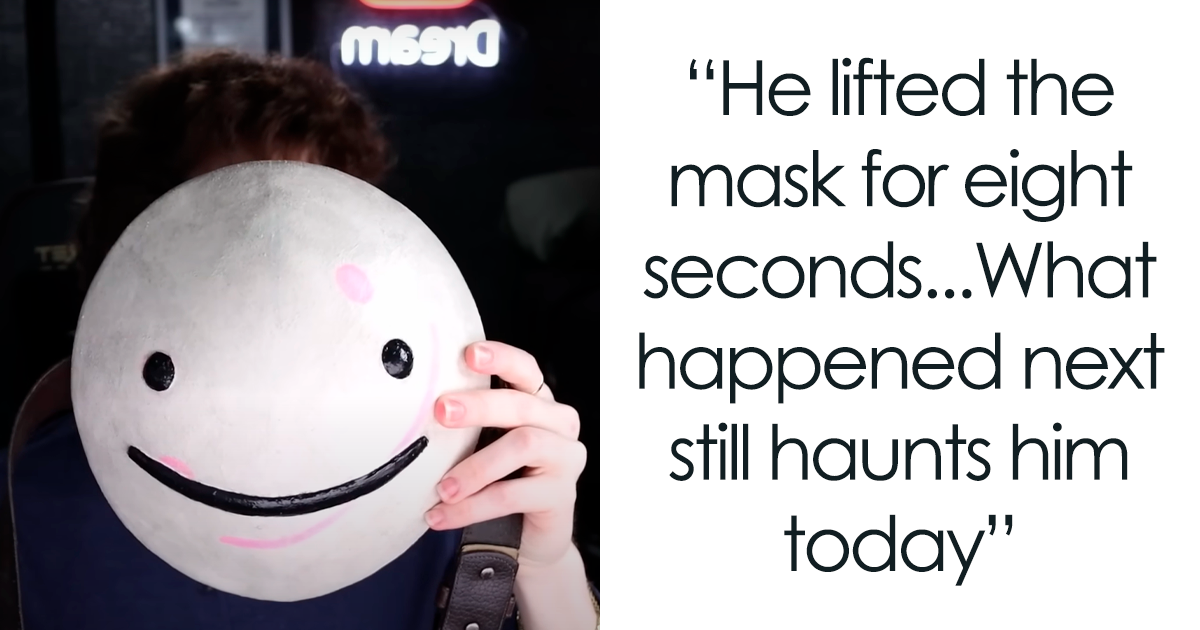
For years, Dream was not simply a Minecraft creator. He was a voice, a green hoodie, a white smiley-face mask, and enough internet mystery to keep millions of fans guessing. Then, on October 2, 2022, he removed the mask.
The result was one of the biggest creator events of the yearand one of the strangest. Millions celebrated finally meeting the person behind the Minecraft Manhunt videos. Others reacted with disappointment, ridicule, memes, and the brutally direct hashtag “Put the Mask Back On.” It was as if the internet had opened a long-awaited present and immediately started arguing about the wrapping paper.
Dream’s face reveal divided fans because it was never really just about his face. It was about expectation, anonymity, parasocial attachment, creator branding, and the internet’s uncomfortable habit of treating a human being like a product review.
Who Is Dream, and Why Was His Face Such a Big Deal?
Dream, whose first name is Clay, became one of YouTube’s largest gaming personalities through fast-paced Minecraft videos, elaborate challenges, speedruns, and collaborations. His Minecraft Manhunt seriesin which he tried to complete the game while other players hunted himhelped turn him into an online superstar.
By the time of the reveal, his main YouTube channel had more than 30 million subscribers. He was also closely associated with the Dream SMP, a private Minecraft server where creators built an improvised story involving wars, elections, betrayals, alliances, and enough dramatic speeches to make a daytime soap opera feel underwritten.
Unlike most major influencers, Dream became famous without showing his face. His recognizable identity consisted of a simple white mask marked with a black smile. The mystery was not originally an elaborate marketing plan, according to Dream. However, as his popularity exploded, the mask became inseparable from his public image. Fan art, animations, merchandise, profile pictures, and countless theories transformed it into a cultural symbol.
Anonymity Gave Fans Space to Imagine
When viewers cannot see a creator, they naturally fill in the missing information. Some imagine a face based on the person’s voice. Others rely on fan art, jokes, edited photographs, or descriptions from friends. Over time, those guesses can become surprisingly specific.
Dream was therefore not competing with another real person when he revealed himself. He was competing with millions of imaginary Dreams, each customized inside a viewer’s mind. That is not exactly a fair beauty contest.
How the Dream Face Reveal Happened
Dream announced in September 2022 that his next major upload would finally show his face. Before publishing it, he privately video-called friends and other creators so they could react. Clips and posts from those calls turned the reveal into a rolling online event rather than a single YouTube upload.
The official video, titled “hi, I’m Dream,” deliberately stretched out the suspense. Dream appeared in a dark room, repeatedly shifted the camera, hid behind his mask, and joked about his awkward positioning before finally turning toward the lens.
The video attracted more than one million views within its first hour and tens of millions shortly afterward. The face reveal dominated YouTube and social media, while Dream’s first public selfie collected enormous engagement. It was less like uploading a gaming video and more like launching a blockbusterexcept the special effect was simply a 23-year-old man turning his head.
Why Dream Chose That Moment
Dream explained that he wanted to participate more freely in the real world. He planned to meet fans, attend events, collaborate in person, and spend time publicly with fellow creators.
A particularly important reason involved GeorgeNotFound, his longtime friend and collaborator. George had received permission to move from the United Kingdom to the United States, allowing the core Dream TeamDream, GeorgeNotFound, and Sapnapto spend more time together in person.
Continuing to hide his identity would have made ordinary activities increasingly difficult. Every airport visit, restaurant trip, or convention appearance carried the possibility of an uncontrolled leak. Revealing himself offered a chance to choose when and how the public first saw him.
Why Some Fans Loved the Reveal
A large part of Dream’s audience responded positively. Loyal viewers congratulated him, praised his courage, and expressed excitement about the new creative possibilities available to him.
Fans Finally Connected the Voice to a Person
Dream had spoken directly to viewers for years, but the mask created a permanent visual barrier. Seeing his expressions made him feel more human to supporters. His nervous laughter, stiff posture, and uncertain camera angle were not signs of a polished celebrity unveiling. They looked like someone doing a very uncomfortable thing in front of an audience the size of a country.
The Reveal Promised a New Chapter
Supporters also understood the practical benefits. Without total anonymity, Dream could attend conventions, appear in interviews, make live-action content, travel with friends, and collaborate without turning every public outing into a secret mission.
The reveal represented personal freedom. He was no longer required to plan his life around avoiding cameras or curious strangers. For fans who cared more about his happiness than the mystery, removing the mask seemed healthy and overdue.
Many Viewers Rejected the Cruelty
As insulting posts spread, fans and fellow creators defended Dream. They argued that he looked like an ordinary young man and that no realistic appearance could have satisfied years of exaggerated expectations. Some also noted the bizarre contradiction in mocking him for looking “too normal.” Apparently, the internet had expected a Minecraft player to emerge looking like a genetically engineered superhero with studio lighting permanently attached to his cheekbones.
Why Other Viewers Reacted So Negatively
The harsh side of the reaction cannot be explained by one factor. It was produced by a collision of unrealistic expectations, meme culture, existing dislike of Dream, and social platforms designed to reward dramatic responses.
Fan Art Had Created an Impossible Standard
Before the reveal, Dream was frequently illustrated as a stylized character: sharp jawline, dramatic hair, glowing eyes, mysterious smile, and proportions that suggested he spent his free time modeling enchanted armor.
Real people do not resemble idealized fan art. They have ordinary lighting, ordinary skin, asymmetrical features, and camera angles that occasionally betray them. When Dream appeared as a recognizable human rather than a fantasy character, some viewers experienced a gap between expectation and reality.
The problem was not necessarily Dream’s appearance. It was that fans had spent years designing a person he had never promised to be.
The Mask Was More Powerful Than the Face Behind It
Dream’s mask functioned like a logo. It was simple, instantly recognizable, easy to reproduce, and flexible enough for viewers to project emotions onto it. Removing it changed the way audiences processed his brand.
A mask can appear mysterious, confident, funny, or threatening depending on the context. A real face is more specific. Once Dream became visually identifiable, some of the character-like quality surrounding him disappeared.
This helps explain why even viewers who did not insult him sometimes felt that something had changed. They were not only meeting Dream; they were losing the version of Dream that existed in their imagination.
Anti-Fans Joined the Conversation
Not everyone posting about the Dream face reveal was a disappointed supporter. Dream was already a polarizing creator who had faced controversies involving his fandom, online arguments, and Minecraft speedrunning.
Because the reveal became a major trending topic, people who disliked Dream saw an opportunity to mock him. The discussion rapidly expanded beyond his actual fan base. This made the negative reaction appear more representative of his audience than it necessarily was.
Social Media Rewards the Meanest Joke
A supportive message such as “He looks fine, and I hope he is happy” is reasonable. Unfortunately, reasonableness rarely wins the internet’s talent show.
Extreme reactions attract replies, reposts, screenshots, and outrage. A cruel comparison can travel farther than a thoughtful observation because it produces a stronger emotional response. Once several insulting memes became popular, thousands of users repeated them to participate in the moment.
The face reveal became raw material for online performance. Many users were not carefully evaluating Dream’s appearance; they were competing to make the most shareable joke. Reports at the time documented both supportive reactions and widespread appearance-based ridicule, with negative phrases trending alongside the main face-reveal discussion.
The Parasocial Side of the Dream Face Reveal
A parasocial relationship is a one-sided emotional connection in which an audience member feels close to a public figure who does not personally know them. These connections are common and are not automatically harmful. They can create community, comfort, inspiration, and genuine enjoyment.
Trouble begins when viewers feel ownership over a creator. Some fans had followed Dream for years, analyzed his voice, defended him in arguments, bought merchandise, and imagined his personality. The face reveal challenged their internal version of him.
That may explain why certain reactions sounded oddly personal. Some users behaved as if Dream had failed to deliver a product matching its advertisement. Yet he had never advertised a particular face. He had simply left an empty space, and the audience decorated it.
Was Dream Obligated to Reveal His Face?
No creator owes viewers access to every part of their identity. Audiences may be curious, but curiosity is not a contract. Dream made the decision voluntarily because remaining anonymous limited his life and future projects.
The reaction demonstrated why anonymous creators often hesitate to reveal themselves. Once an image becomes public, it can be copied, edited, ranked, mocked, and circulated indefinitely. Privacy is not easily restored after millions of people have taken screenshots.
Why Dream Put the Mask Back On
In June 2023, Dream uploaded “bye, from Dream,” announcing that he was returning to his mask and, at that time, removing the original face-reveal video. He said that revealing himself had brought attention and hatred that he regretted.
The announcement combined sincerity with Dream’s usual theatrical presentation. He introduced a redesigned mask and framed the decision as a return to the identity audiences already recognized.
His retreat did not erase his face from the internetan impossible assignment once an image has reached millionsbut it showed how exhausting the reaction had become. The event that was supposed to give him greater personal freedom had created a new category of scrutiny.
Was Returning to the Mask a Defeat?
Not necessarily. Creators regularly adjust their presentation when an experiment does not work as expected. The mask remained Dream’s strongest visual symbol, and returning to it restored part of the mystery that had helped define his channel.
It was also a reminder that authenticity does not require complete visual access. Dream’s voice, humor, editing, friendships, and Minecraft skills had built his audience long before viewers knew his face. Wearing a mask did not automatically make those qualities less real.
What the Dream Face Reveal Revealed About Internet Culture
Online Fame Turns Ordinary Features Into Public Property
Most people can take an unflattering photograph and delete it. Famous creators do not receive that luxury. A single frame can become a reaction image, comparison meme, or permanent search result.
Dream’s experience showed that the internet often discusses appearance without remembering that the subject can read the discussion. Distance makes cruelty feel abstract, even when it reaches a very real person.
Mystery Can Be More Valuable Than Access
Influencer culture usually assumes that audiences want greater intimacy: more photographs, more personal stories, more behind-the-scenes footage, and more access. Dream’s reveal demonstrated the opposite possibility. Sometimes the absence of information is part of the attraction.
Once the mystery was solved, the public could not experience it in the same way again. A successful reveal generated enormous traffic, but it also permanently changed the relationship between creator and audience.
A Face Cannot Satisfy a Collective Fantasy
Dream’s viewers were not waiting for one answer. They were waiting for millions of different answers. Some expected him to look intimidating, others cute, conventionally handsome, older, younger, or similar to particular fan illustrations.
No human face could fulfill all those predictions. The division was therefore built into the event before Dream even turned toward the camera.
Experience Analysis: What Watching a Major Face Reveal Feels Like
For a viewer, a highly anticipated face reveal usually begins with curiosity rather than judgment. Years of anonymity create a mental puzzle. The audience knows the voice, humor, friendships, and habits of the creator, yet one ordinary piece of information remains unavailable. That missing piece grows more important simply because it is missing.
As the reveal approaches, curiosity becomes collective excitement. Countdown posts appear. Reaction videos are prepared before there is anything to react to. Friends exchange predictions. Even people who rarely watch the creator may join because they do not want to miss an important internet moment. The event becomes socially valuable: viewers participate not only to see the face but also to understand tomorrow’s memes.
The First Reaction Is Usually Comparison
The instant the mask comes off, viewers compare the real face with the one they imagined. This happens almost automatically. A person who formed no strong expectation may simply think, “Oh, that is Dream.” A viewer influenced by years of fan art may experience greater surprise.
Surprise is not the same as disappointment, but social media compresses complex reactions into short, exaggerated posts. “He looks different from what I pictured” becomes “That cannot be him.” Minutes later, it becomes a meme with arrows, dramatic music, and a thumbnail featuring three shocked emojis.
The Timeline Quickly Splits Into Teams
Once negative jokes begin circulating, supporters respond defensively. The conversation stops being about Dream’s decision and becomes a contest between opposing groups. One side claims the reveal was disappointing. The other argues that any criticism is cruel. Neutral viewers are pushed toward a team because platforms reward conflict more than nuance.
This stage can feel strangely disconnected from the original video. Dream’s nervousness, explanation, and plans for the future receive less attention than screenshots of his jawline. The human story is reduced to visual evidence in an online debate no one needed to hold.
Empathy Often Arrives After the Entertainment
After the initial excitement fades, some viewers reconsider the experience from the creator’s perspective. Imagine revealing yourself to millions of people and watching strangers examine individual features as though judging a character-customization screen. Even positive attention can become overwhelming when it arrives at that scale.
The most useful lesson from the Dream face reveal is therefore not that creators should remain anonymous or that audiences should avoid curiosity. It is that curiosity should stop short of entitlement. Viewers can enjoy the mystery, celebrate the reveal, or even prefer the masked persona without treating the person underneath as a failed design choice.
For creators considering a similar reveal, Dream’s experience suggests the need for realistic expectations. A face reveal can expand collaboration opportunities and reduce the fear of accidental exposure. It can also remove a powerful part of the brand and invite intense appearance-based scrutiny. The decision should serve the creator’s life, not merely satisfy an audience’s countdown clock.
Conclusion: The Face Was Never the Real Source of Division
Dream’s face reveal became divisive because his anonymity had grown into something larger than privacy. The mask was a logo, a character, a mystery, and a blank canvas for fan imagination. Removing it replaced a flexible symbol with a specific human being.
Supporters saw courage, freedom, and a creator beginning a more open chapter. Critics saw a mismatch between reality and years of expectation. Meme accounts saw material. Anti-fans saw an opportunity. Social algorithms saw engagement and happily poured gasoline on the entire discussion.
In the end, Dream looked neither shocking nor mythical. He looked like a normal person who had become exceptionally famous while playing a block-building game. The internet’s inability to accept that normality says far more about online celebrity culture than it does about his face.














