
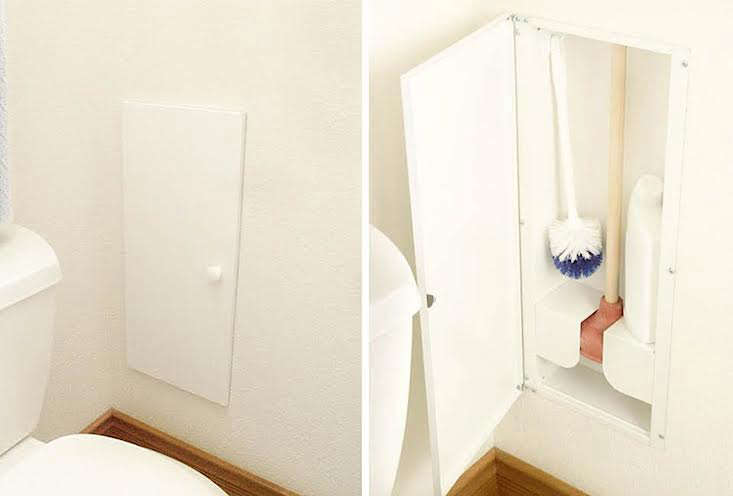
A toilet plunger is one of those household heroes nobody wants to display. It waits patiently for disaster, saves the day in under five minutes, and is immediately treated like a distant relative who has overstayed a holiday visit. The Hy-dit Toilet Plunger Storage Kit tackles that awkward relationship with a clever idea: instead of leaving the plunger and toilet brush on the floor, it places them inside a recessed wall cabinet.
This is not merely a decorative sleeve or plastic caddy. The Hy-dit is an in-wall storage unit with space for a plunger, bowl brush, drip tray, and small cleaning supplies. Once installed, only the cabinet door remains visible, leaving the floor clearer and reducing the chance of kicking a wet plunger at 2 a.m.
Product details synthesized from Hy-Dit, Remodelista, AmeraProducts, Walmart, and Bed Bath & Beyond.
What Is the Hy-dit Toilet Plunger Storage Kit?
The Hy-dit Toilet Plunger Storage Kit, commonly identified as the Hy-dit 200, is a narrow recessed cabinet for the least photogenic tools in the bathroom. It installs in a standard 2-by-4 stud wall and sits nearly flush with the finished surface. Its raised-panel, wood-grain-textured door can be painted or stained to coordinate with a vanity or trim.
Manufacturer and retailer descriptions list a cabinet size of roughly 4 inches deep, 12 inches wide, and 26 inches high, with a rough wall opening of approximately 9.25 by 25.25 inches. Because old and current listings do not always present measurements in the same way, buyers should confirm the latest installation sheet before cutting drywall. Drywall is remarkably unforgiving about “close enough.”
What the Kit Typically Includes
Product listings for the Hy-dit 200 describe a package that includes a six-inch force-cup plunger, toilet bowl brush, removable reservoir or drip tray, shelf, magnetic door catch, installation fasteners, wall template, and mounting instructions. The interior also incorporates a molded hook for the brush, while the shelf can hold a compact bottle of bowl cleaner or deodorizer.
The door can be configured to open from either the left or right, which matters in a tight bathroom where a toilet, vanity, towel bar, or door swing may limit access. The cabinet body is described as water- and corrosion-resistant, and the enclosure is ventilated so residual moisture can evaporate rather than becoming a tiny indoor swamp.
Why Concealed Plunger Storage Makes Sense
Bathroom organization is not just about making a room look like a hotel brochure. It is also about controlling drips, separating dirty tools from clean surfaces, and keeping emergency equipment easy to reach. A plunger hidden in the garage may look tidy, but it becomes considerably less charming when the toilet water starts climbing.
It Frees Valuable Floor Space
Small bathrooms punish every unnecessary object. A floor caddy takes up only a few inches, but those inches can interfere with a toilet mat, wastebasket, robot vacuum, mop, or the feet of anyone attempting to clean behind the toilet. By using the empty space between wall studs, the Hy-dit creates storage without adding another object to the floor.
It Keeps Cleaning Tools Accessible but Discreet
Cleaning professionals often recommend keeping a plunger in or very near the bathroom so guests can handle a clog privately. The ideal storage location is easy to find but not visually dominant. A recessed toilet plunger cabinet meets both goals: the tool is available in seconds, yet nobody has to admire its rubber cup while washing their hands.
It Helps Manage Moisture
A wet plunger placed directly on tile can trap moisture under its cup, leading to unpleasant odors and a grimy ring on the floor. The Hy-dit system addresses this with a removable drip tray and ventilation. Those features do not eliminate the need to rinse and dry the tools, but they provide a more sensible place for residual drops than your grout lines.
Storage and ventilation guidance synthesized from The Spruce, Good Housekeeping, Better Homes & Gardens, and Clorox.
Design and Practical Features
Recessed, Built-In Appearance
The main attraction is visual simplicity. Once the unit is installed and the door finish matches the room, the cabinet can resemble a narrow built-in panel rather than a janitorial supply closet. This is especially appealing in powder rooms, guest bathrooms, and minimalist spaces where visible cleaning equipment quickly creates clutter.
Paintable or Stainable Door
The faux wood-grain door can be customized instead of forcing the homeowner to accept a single factory color. Painting it the same color as the wall helps the cabinet visually disappear. Matching it to a wood vanity makes it read as intentional cabinetry. A contrasting color can also work, although giving the toilet plunger its own accent wall may be more design confidence than most homes require.
Reversible Door Swing
Before installation, the homeowner can choose the hinge side that provides the clearest access. This helps prevent the door from colliding with a vanity, entry door, or the person retrieving the plunger during a rapidly developing situation.
Removable Drip Tray
The reservoir below the plunger catches residual moisture and can be removed for washing. This is one of the most important maintenance features because a permanently enclosed base would be difficult to sanitize. The tray should still be emptied, cleaned, and dried regularly; “removable” is a feature, not a self-cleaning spell.
Hy-dit Installation: What to Know Before Cutting the Wall
The Hy-dit is more involved than buying a freestanding plunger holder and setting it beside the toilet. Recessed installation requires a suitable wall cavity, careful measurement, and confidence with drywall cutting. The manufacturer promotes installation in a standard 2-by-4 studded wall, but the selected location must be clear of plumbing pipes, drain vents, electrical wiring, and structural obstacles.
Inspect the Wall Cavity First
Use a stud finder to map the framing, then make a small inspection opening in the planned cutout area. A flashlight or inspection camera can reveal wires, supply lines, or vent pipes. Bathroom walls are especially likely to contain plumbing, so guessing is a poor strategy. If the cavity contains a large pipe, load-bearing framing, or wiring that cannot be safely moved, choose another location or hire a qualified professional.
Check the Rough Opening and Door Clearance
Compare the current product template with the available stud bay before cutting the full opening. Confirm that the finished door will clear the toilet tank, vanity, baseboard, towel hardware, and bathroom door. It should also sit at a comfortable height so the plunger can be removed without kneeling on the floor or performing a yoga pose known as “desperate homeowner.”
Keep the Cabinet Level and Secure
A recessed cabinet should be installed level, plumb, and firmly anchored according to the supplied instructions. If additional blocking is needed, it must be attached securely to the surrounding framing. A crooked cabinet may cause the door to swing poorly, weaken the finished appearance, or prevent the tools from sitting correctly inside.
Know When to Call a Professional
A capable DIYer may be comfortable with the project when the wall cavity is open and obstacle-free. Professional help is wiser when installation requires moving pipes or wires, modifying framing, cutting tile, or determining whether a wall is load-bearing. The cabinet is meant to solve a bathroom problem, not create a surprise renovation.
Recessed-cabinet installation guidance synthesized from This Old House, Lowe’s, and Houzz.
How to Clean and Maintain the Hy-dit Kit
Concealed storage works best when the tools are clean before the door closes. Ventilation helps with drying, but it cannot compensate for a plunger that is returned dripping wet and covered in residue.
After Using the Plunger
- Once the clog is cleared, flush clean water through the bowl if it is safe to do so.
- Rinse the plunger thoroughly and remove visible residue.
- Clean or disinfect it with a product suitable for the material, following the label directions and required contact time.
- Allow the plunger to air-dry as fully as practical before placing it back in the cabinet.
- Check the drip tray and wash it if water or residue has collected.
Cleaning the Brush and Cabinet
Rinse the toilet brush after use and let it drain before storage. Periodically wash the removable tray and wipe the cabinet interior with mild soap and water or a compatible bathroom cleaner. Avoid abrasive pads that may scratch plastic surfaces. If the unit develops an odor, empty it completely, clean all components, and leave the door open until every part is dry.
Use Disinfectants Safely
Cleaning and disinfecting are not identical: soap and scrubbing remove dirt, while disinfectants are used to kill remaining germs. Follow the product label, ventilate the room, and wear protective equipment when directed. Never mix bleach with ammonia, vinegar, toilet bowl cleaner, or other cleaners, because dangerous fumes can form. When in doubt, use one product at a time and rinse as directed.
Safety guidance synthesized from CDC and EPA resources.
Advantages and Limitations
Advantages
- Excellent concealment: The plunger and brush disappear behind a cabinet door.
- Floor-space savings: Recessed storage is useful in compact bathrooms.
- Moisture control: Ventilation and a removable drip tray help manage residual water.
- Custom appearance: The door can be painted or stained to suit the room.
- Organized cleaning station: The plunger, brush, and a small cleaner can stay together.
- Guest-friendly access: Emergency tools remain nearby without being prominently displayed.
Limitations
- Installation is permanent: The project requires cutting the wall.
- Not every cavity works: Plumbing, wiring, vents, tile, and framing can block the desired location.
- Tool size is constrained: Oversized replacement plungers may not fit or allow the door to close.
- Maintenance is still required: Ventilation does not replace rinsing, drying, and tray cleaning.
- Availability may vary: Some legacy retailer pages list the model as discontinued, while the manufacturer continues to promote the product, so buyers should confirm current stock and included parts.
Who Should Consider the Hy-dit Toilet Plunger Storage Kit?
The Hy-dit is best suited to homeowners who care about visual order, have a compatible wall cavity, and prefer built-in storage over a freestanding caddy. It is particularly useful in powder rooms and guest baths, where a visible plunger looks awkward but removing it entirely could leave a visitor in an even more awkward position.
It also makes sense during a remodel, when walls are already open and the cabinet can be positioned around plumbing. Renters and homeowners with tile-covered or plumbing-packed walls may be better served by a ventilated floor caddy. Sometimes the smartest storage product is the one that does not require a drywall saw.
Practical Ownership Experience: What Daily Life With the Hy-dit Is Like
The first noticeable change after installing a recessed plunger cabinet is not dramatic. The bathroom simply looks calmer. The narrow space beside the toilet is no longer occupied by two damp tools leaning in opposite directions like they have had an argument. Cleaning the floor becomes easier because there is no caddy to lift, slide, or wipe around. In a small powder room, that modest improvement can make the entire space feel less crowded.
The second benefit appears when guests visit. A closed panel blends into the room, but the tools are still close enough to find. This is a better compromise than hiding the plunger in a basement utility closet, where it is aesthetically invisible and functionally useless. The cabinet provides privacy without turning a simple clog into a household scavenger hunt.
Using the kit also creates a useful maintenance routine. After a clog, the plunger is rinsed, treated with an appropriate cleaner, allowed to drain, and returned to its shaped position. The removable tray catches the final drops. During the next bathroom cleaning, the tray comes out for a quick wash. This routine takes more discipline than dropping a wet plunger behind the toilet, but it prevents the sticky floor ring and stale odor that poorly designed storage can create.
The experience is less convenient when someone rushes the final step. If the plunger is inserted at the wrong angle, the door may not close. If the tray is ignored for weeks, the cabinet can smell despite its ventilation. If an owner replaces the original tool with an oversized beehive or accordion plunger, the interior may become an unsuccessful game of bathroom Tetris. The system rewards using correctly sized tools and putting them back where they belong.
Installation quality shapes the long-term experience as much as the product itself. A level unit with a smoothly swinging door feels like original cabinetry. A poorly placed unit can bump the toilet tank, conflict with trim, or be annoying to reach. Before installation, it is worth holding a full-size paper template on the wall, opening an imaginary door, and practicing the retrieval motion. This looks ridiculous for thirty seconds and can prevent years of irritation.
Finishing the door is another moment when the product either disappears elegantly or announces itself. Painting it the wall color gives the most subtle result. Matching the vanity creates a traditional cabinet look. The embossed grain can accept stain, but test the finish on an inconspicuous area and follow the product instructions so the synthetic door does not end up resembling a park bench after a thunderstorm.
Overall, the real-world appeal is convenience through order. The Hy-dit does not make toilet clogs fun, glamorous, or suitable for social media. It simply keeps the necessary tools sanitary, reachable, and out of the visual conversation. For the right bathroom and the right homeowner, that is a surprisingly satisfying upgrade.
Final Verdict
The Hy-dit Toilet Plunger Storage Kit is a specialized but intelligent bathroom organization product. Its recessed design saves floor space, its drip tray and ventilation support cleaner storage, and its customizable door helps it blend into the room. It is most compelling during a remodel or in a small guest bathroom with a clear 2-by-4 wall cavity.
The main question is not whether hidden plunger storage is appealing; it obviously is. The question is whether the benefit justifies cutting into the wall. For homeowners who value a built-in finish and plan to stay in place, the answer may be yes. For renters or anyone with complicated plumbing behind the toilet, a ventilated floor caddy is the more practical choice.














