
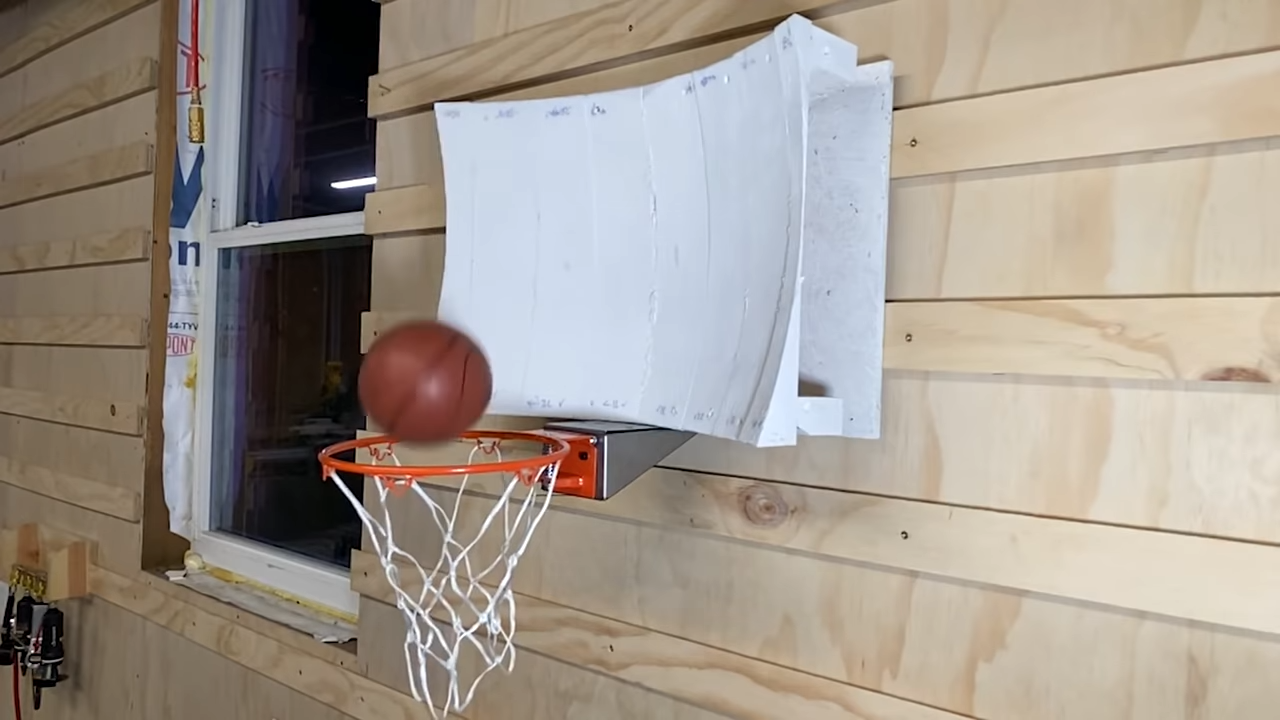
Every basketball player knows the sound. Not the soft, angelic whisper of a perfect swish. Not the satisfying smack of a bank shot kissing glass like it went to finishing school. We are talking about the clank. The rim-rattling, confidence-stealing, group-chat-worthy brick that makes the ball bounce away like it just remembered an urgent appointment.
Now imagine a basketball hoop that refuses to let that happen. A hoop that sees your shot, calculates its path, moves at the right moment, and turns your tragic air-adjacent attempt into a bucket. It sounds like a backyard fantasy cooked up by someone who just lost HORSE to a twelve-year-old. But thanks to robotics, sensors, computer vision, smart training tools, and a surprising amount of math, the idea of a basketball hoop that never lets you brick is no longer pure science fiction.
This article explores the technology, physics, training potential, and wonderfully ridiculous charm behind a never-miss basketball hoop. Is it cheating? Absolutely, if you bring it to league night. Is it brilliant? Also absolutely. And could it change how players think about practice, confidence, and shooting feedback? That is where things get interesting.
What Is a Never-Miss Basketball Hoop?
A never-miss basketball hoop is exactly what it sounds like: a hoop or backboard system designed to help the ball go in even when the shooter does not deliver a perfect shot. In its most entertaining form, it uses motors, tracking, and a movable backboard or rim to redirect the ball into the basket. The player shoots, the system reacts, and suddenly everyone looks like they borrowed Stephen Curry’s Wi-Fi password.
The most famous version comes from the world of maker engineering, where creators build outrageous machines to solve everyday frustrations. In this case, the frustration was simple: missing shots. Instead of practicing free throws until the sun gave up, the solution was to make the hoop smarter than the shooter.
The Basic Idea
Traditional basketball makes one thing very clear: the hoop does not care about your feelings. The rim is 10 feet high, the ball has to travel through an 18-inch ring, and physics is not known for offering refunds. A never-miss hoop changes the relationship. Instead of requiring the shooter to perfectly adjust to the basket, the basket adjusts to the shot.
Depending on the design, the system may use a camera or sensor to detect the ball’s location, software to predict where the ball will arrive, and mechanical parts to shift the target area. In other words, the hoop becomes part coach, part robot, part overly supportive parent yelling, “Great shot!” when it clearly was not.
How a Basketball Hoop That Never Lets You Brick Works
The magic is not magic. It is engineering wearing sneakers. A never-miss hoop usually depends on four major ingredients: tracking, prediction, motion, and timing.
1. Ball Tracking
First, the system has to know where the ball is. This can be done with cameras, motion sensors, infrared tracking, or other detection tools. Modern basketball technology already uses artificial intelligence and sensors to track makes, misses, shot location, arc, release speed, spin, and shooting patterns. Apps and smart basketball systems can record performance without turning every driveway into NASA Mission Control.
For a moving hoop, tracking must happen fast. The system cannot politely analyze the footage tomorrow. It needs to detect the ball in real time, because a basketball does not pause midair to let the computer finish thinking.
2. Trajectory Prediction
Once the ball is detected, software estimates where it is going. This is where physics enters the chat. The system considers position, speed, angle, and timing. A basketball shot is essentially a flying math problem with leather texture. Gravity pulls it down, backspin affects its bounce, and arc changes the size of the target the ball “sees” on the way in.
A higher, softer shot often gives the ball a better chance to enter the rim cleanly. Backspin can also help by making rim and backboard contact less violent. That is why good shooters care about arc, touch, and rotation. The never-miss hoop does not replace those fundamentals; it simply cheats on the final exam.
3. Mechanical Movement
After predicting the ball’s path, the hoop must move. In some builds, the backboard shifts left, right, up, or down to meet the ball at the correct spot. In others, the rim or target structure may adjust. Motors, rails, belts, and control systems all work together to create the illusion that the basket is magnetically attracted to bad decisions.
The challenge is precision. Move too early and the ball misses. Move too late and the ball hits the original target area, which may be nowhere near the basket. Move too aggressively and the machine starts looking less like sports equipment and more like a carnival game with trust issues.
4. Timing and Calibration
Timing is everything. The best version of a never-miss hoop is not just fast; it is calibrated. It understands the distance between shooter and basket, the expected flight time, the physical limits of the moving parts, and the angle needed to guide the ball downward. A system like this does not merely “catch” a shot. It choreographs the ending.
Why This Idea Became So Popular
The internet loves inventions that are both absurd and technically impressive. A basketball hoop that never lets you brick checks both boxes. It solves a real problem in the most over-engineered way possible. That is its charm.
Missing shots is universal. Beginners miss. Weekend warriors miss. Great players miss. Even professionals, who spend years developing mechanics, rhythm, footwork, and touch, still miss plenty of shots. So when someone builds a hoop that flips the script, it feels like revenge against the rim itself.
It also taps into a bigger trend: sports technology is getting smarter. Basketball training no longer means only a ball, a hoop, and someone yelling “bend your knees” from a lawn chair. Players now use shot-tracking apps, smart balls, wearable data, video analysis, automatic rebound machines, and digital leaderboards. The never-miss hoop sits at the funny extreme of that movement.
Smart Hoops vs. Never-Miss Hoops
It is important to separate two ideas: a smart basketball hoop and a never-miss basketball hoop. They overlap, but they are not the same thing.
Smart Basketball Hoops
Smart hoops and training systems are designed to improve real skills. They may track shot percentage, record where shots are taken, display stats, offer training games, or let players compete remotely. Some products turn a backboard into a screen, while others use sensors or apps to measure shooting performance. The goal is feedback.
These tools can help players understand patterns. Maybe you shoot well from the right wing but turn into a confused mailbox from the left corner. Maybe your midrange game is solid, but your three-pointer needs emotional counseling. Data makes those weaknesses visible.
Never-Miss Hoops
A never-miss hoop is less about improving the shot and more about transforming the result. It is not asking, “How can we help the player become more accurate?” It is asking, “What if the basket simply moved to wherever the ball is going?”
That makes it hilarious, but also educational. By watching how the system corrects misses, players can see how small differences in angle, speed, and aim affect the outcome. The machine becomes a live demonstration of shooting physics.
The Physics Behind Bricking a Shot
To appreciate a hoop that never lets you brick, you need to understand why bricks happen in the first place. A missed shot is not random. It usually comes from a combination of poor alignment, bad force control, low arc, inconsistent release, weak follow-through, or rushed footwork.
Arc Matters
A basketball entering the rim at a flatter angle has less room for error. A higher arc can make the effective opening larger from the ball’s point of view. That does not mean every shot should go into orbit, but it does mean a soft, controlled arc can be friendlier than a laser beam launched from the elbow.
Backspin Helps
Backspin is one reason good shooters look so smooth. When the ball has clean backward rotation, it tends to react more softly if it contacts the rim or backboard. Without good spin, the ball may hit hard and launch away like it has been personally offended.
Consistency Wins
The best shooters repeat their mechanics. Balance, eyes, elbow position, release, and follow-through all matter. The ball does not care whether your form looks cool on video. It cares whether the motion sends it on a repeatable path. A never-miss hoop can rescue bad mechanics, but real basketball rewards repeatability.
Could a Never-Miss Hoop Help Players Train?
At first, a hoop that never lets you miss sounds like the opposite of training. After all, if everything goes in, how do you learn? That is a fair question. If used poorly, the system could create false confidence. A player might start believing every shot is a masterpiece while the machinery quietly does all the homework.
But used creatively, a never-miss hoop could become a powerful teaching tool. For example, it could show the difference between a shot that needed a tiny correction and one that required the backboard to sprint across the garage. It could grade the quality of a shot even if the final result is made. In that version, the system says, “Yes, it went in, but do not get cocky. I saved you.”
Possible Training Modes
A smart never-miss hoop could offer several practice settings. In beginner mode, it could help young players experience the joy of making shots, building confidence and excitement. In feedback mode, it could allow the ball to go in but display how far the original trajectory was from a true make. In advanced mode, it could stop helping and simply track performance.
That combination would make the hoop more than a gimmick. It would become a bridge between fun and skill development.
Where This Technology Could Go Next
The future of basketball equipment is likely to blend physical play with digital intelligence. We already see AI-powered shot tracking, smart basketballs, interactive training platforms, and data-rich coaching tools. A never-miss hoop may not become standard equipment at the local gym, but its ideas could influence future products.
Better Youth Training
For kids, early success matters. A younger player using a lower hoop often learns faster because the basket fits their strength and coordination. A responsive hoop could make practice more encouraging by helping players connect effort with reward while still teaching proper form.
Rehabilitation and Accessibility
Adaptive sports equipment could benefit from similar technology. A hoop that adjusts to a player’s shot path might help people with limited mobility enjoy basketball in a new way. Instead of forcing every player to meet one rigid standard, the equipment could meet the player halfway.
Entertainment and Events
Let us be honest: a never-miss hoop belongs at parties, halftime shows, arcades, science museums, and corporate events where someone named Brad insists he “could have played college ball.” It is fun, visual, and instantly understandable. People do not need a manual. They shoot, it goes in, everyone laughs, and Brad updates his LinkedIn headline to “elite shot creator.”
The Big Question: Is It Still Basketball?
Technically? Not really. Basketball is built on the challenge of putting the ball through a fixed hoop. If the hoop moves to reward every attempt, the sport changes. The drama of basketball comes from uncertainty: the open corner three, the free throw under pressure, the last-second heave that either becomes legend or lands in the popcorn row.
But not every basketball-related invention has to preserve the purity of the game. Some inventions teach. Some entertain. Some make people curious about engineering. A never-miss hoop is not meant to replace regulation basketball. It is meant to make people ask, “How did that work?” And that question can lead to physics, coding, design, robotics, and maybe even better shooting practice.
Real-World Example: The Engineered Never-Miss Backboard
The best-known version of this idea used a moving backboard instead of a magical rim. The creator had to solve a surprisingly difficult problem: how to move a large physical object quickly enough to redirect a basketball that was already in flight. That required simulation, testing, custom parts, and enough patience to make a normal person walk outside and simply practice layups.
The project became popular because it was both clever and relatable. Everyone understands missing a shot. Not everyone understands trajectory modeling, motion control, and fabrication. By combining the two, the build made engineering feel playful. It was a reminder that science is not just lab coats and serious eyebrows. Sometimes science is a backboard hustling sideways to save your reputation.
Buying a Hoop That Makes You Better: What to Look For
You probably cannot buy a true full-size robotic never-miss hoop for your driveway at a normal sporting goods store. However, you can buy basketball technology that helps you shoot better. If your goal is improvement rather than instant fake greatness, look for features that support real development.
Shot Tracking
A useful system should track makes and misses reliably. Even better, it should show where you shoot from, how often you practice, and which areas need work.
Real-Time Feedback
Feedback works best when it arrives quickly. If you can see your stats during a workout, you can adjust your routine immediately instead of discovering two weeks later that your left-corner three has been filing a complaint.
Durability
Basketball equipment takes abuse. Balls hit the rim, players hang around the hoop, weather happens, and someone will eventually try a dunk they have no business attempting. Smart equipment must be tough, not just flashy.
Skill Transfer
The best training tools help your real game. A gadget is only useful if it builds habits that survive when the screen turns off and the defender shows up.
Experience Section: Living With the Dream of a Hoop That Never Lets You Brick
The first time you imagine using a basketball hoop that never lets you brick, your brain goes straight to glory. You picture yourself walking into the driveway, casually launching a shot from somewhere near the mailbox, and watching it drop cleanly through the net. The neighbors gasp. A dog stops barking out of respect. Somewhere, dramatic music begins.
But the real experience would probably be even funnier. At first, you would test it politely. A free throw. A corner jumper. Maybe a gentle bank shot. Then curiosity would take over. You would start shooting from weird angles. Behind the backboard. Sitting down. One-handed. Eyes closed. Eventually, someone would attempt a shot from the garage while holding a sandwich. This is the natural life cycle of backyard technology.
The most addictive part would be the feeling of instant success. Basketball can be brutally honest. On a normal hoop, a bad shot gives immediate feedback: clang, bounce, chase the ball into a bush. A never-miss hoop changes that emotional loop. It gives players the reward first. For beginners, that could be motivating. A child who normally misses ten shots in a row might suddenly feel the excitement of making baskets and want to keep playing.
For experienced players, the experience would be different. They would know the machine is helping. The fun would come from trying to “beat” the system with shots so strange that even the robot has to file a formal complaint. It becomes less like practice and more like a challenge: How bad can a shot be before technology gives up?
There is also something surprisingly educational about seeing misses corrected. If the hoop displays how much it moved, you would quickly learn which shots were close and which ones were rescued from basketball jail. A shot that only needed a tiny adjustment might feel encouraging. A shot that required the backboard to lunge three feet left would be a gentle reminder that confidence and accuracy are not the same thing.
In a family setting, a never-miss hoop would be pure chaos in the best way. Parents could play with kids without constantly rebounding missed shots. Friends could create trick-shot games. Beginners could enjoy basketball without feeling embarrassed. And serious players could use the system as a warm-up toy before switching to real training mode.
Still, the novelty would eventually raise an important question: Do you want the machine to make you look good, or do you want the machine to make you better? The best experience would combine both. Let the hoop reward players enough to keep them excited, then gradually reduce assistance. Show the data. Reveal the truth. Turn the magical bucket into a lesson.
That is the sweet spot. A basketball hoop that never lets you brick should not replace effort. It should make effort more fun. It should invite people into the game, spark curiosity, and maybe convince a few future engineers that math is cooler when it helps you dunk on your uncle.
Because in the end, the dream is not really about never missing. Missing is part of basketball. The dream is about turning frustration into invention. It is about looking at a brick, hearing that ugly clank, and thinking, “Fine. I will build a smarter hoop.” That attitude is bigger than basketball. It is creativity with a jump shot.
Conclusion
A basketball hoop that never lets you brick is funny, futuristic, and secretly educational. It combines robotics, physics, smart sensors, and basketball culture into one irresistible idea: what if the basket helped you win? While a true never-miss hoop is more engineering showcase than regulation training tool, the technology behind it points toward a smarter future for sports equipment.
For players, the lesson is clear. Technology can track, guide, entertain, and even rescue a bad shot. But real improvement still comes from practice, consistency, mechanics, and repetition. The perfect hoop may save your ego, but the perfect shot still belongs to the player.














