Reviving The Naked Gun meant inheriting Leslie Nielsen’s glorious deadpan, Police Squad’s industrial-strength incompetence, and enough visual gags to make pausing the movie feel like detective work. It also meant confronting a far more serious part of the franchise’s history: O.J. Simpson.
Simpson played Detective Fred Nordberg throughout the original film trilogy. Following the killings of Nicole Brown Simpson and Ronald Goldman, his criminal acquittal, and the subsequent civil verdict finding him liable for their wrongful deaths, those performances became impossible to view as ordinary celebrity cameos. Director and co-writer Akiva Schaffer therefore faced a delicate question: How could the 2025 Naked Gun acknowledge Nordberg without turning real tragedy into a recurring punchline?
The filmmakers’ answer was remarkably restrained for a comedy in which restraint usually means stopping after the third exploding vehicle.
Why O.J. Simpson Was the Reboot’s Unavoidable Question
When Schaffer began discussing a new Naked Gun, friends repeatedly asked what he planned to do about O.J. Simpson. Their concern was understandable. Simpson was not a background extra who could be quietly misplaced behind a large potted plant. Nordberg was Frank Drebin’s loyal partner and one of the original trilogy’s most memorable supporting characters.
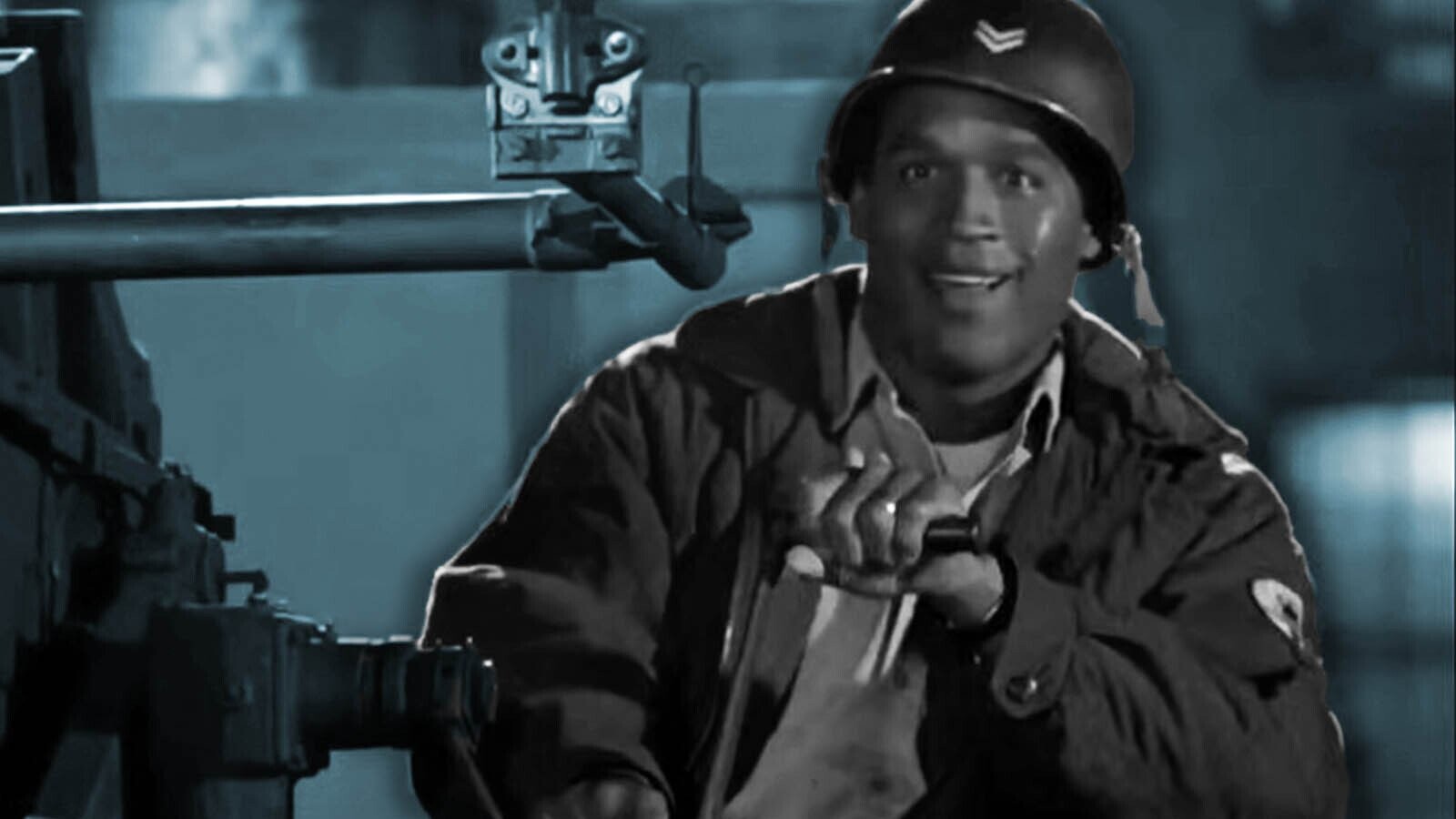
In 1988’s The Naked Gun: From the Files of Police Squad!, Nordberg opens the movie by uncovering a drug operation before enduring an increasingly absurd chain of injuries. He is shot, burns his hand, bumps his head, falls from a window and eventually tumbles down stadium steps in a wheelchair. The sequence established him as the franchise’s human crash-test dummy.
Simpson returned in The Naked Gun 2½: The Smell of Fear in 1991 and Naked Gun 33⅓: The Final Insult in 1994. Only months after the third film’s release, Simpson was charged with the murders of his former wife, Nicole Brown Simpson, and her friend Ronald Goldman.
A criminal jury acquitted Simpson in 1995. In 1997, however, a civil jury found him liable for the wrongful deaths and awarded the victims’ families $33.5 million in damages. Simpson was later convicted in an unrelated Nevada armed-robbery case and served approximately nine years in prison. He died from cancer in April 2024 at age 76.
That history transformed Nordberg’s scenes. What once looked like uncomplicated slapstick now carries an unsettling layer of real-world knowledge. Any continuation of the franchise had to recognize that audiences would bring that knowledge into the theater with them.
The Hall of Legends Gag Solved Several Problems at Once
Schaffer, working on the screenplay with Dan Gregor and Doug Mand, addressed the issue through a brief sequence called the Hall of Legends. The scene also explains the reboot’s central idea: the new characters are descendants of the original Police Squad team rather than replacements pretending that the earlier movies never existed.
Liam Neeson’s Frank Drebin Jr. looks proudly at a portrait of his father, the late Frank Drebin played by Leslie Nielsen. Paul Walter Hauser’s Ed Hocken Jr. similarly honors the character originally portrayed by George Kennedy. Then the scene reaches Nordberg’s photograph.
The character identified in the credits as “Not Nordberg Jr.,” played by Moses Jones, does not offer a sentimental tribute. He looks at Simpson’s portrait, shakes his head in disapproval and turns toward the audience. No speech explains the reaction. None is necessary. The expression essentially says, “Yes, we know. You know. Let us all move along before this police-station hallway becomes a six-part documentary.”
Acknowledgment Without Celebration
The joke works because it distinguishes the fictional Nordberg from the actor who portrayed him while refusing to celebrate Simpson. It acknowledges that Simpson remains visible in the franchise’s history, but the younger character’s reaction prevents the moment from functioning as a warm nostalgic salute.
Schaffer has said the filmmakers did not take pleasure in tackling the subject. Their intention was to recognize the uncomfortable history without exploiting anyone’s suffering. That distinction matters. The deaths of Brown Simpson and Goldman were not treated as comic material; the humor came from the reboot’s awkward obligation to confront a notorious casting legacy.
Why the Movie Uses Only One O.J. Simpson Joke
The Hall of Legends bit reportedly received a particularly strong response during an early test screening. Schaffer later observed that he might have written additional references had he known how loudly it would land. Yet he also suggested that more jokes may not have been the right choice.
One gag gives the audience recognition and release. Five gags would risk making Simpson a running attraction, shifting attention away from the new cast and toward a tragedy that the movie could never responsibly unpack. A goofy action spoof is not the place to retry a historic legal case between jokes about coffee, snowmen and malfunctioning technology.
The decision also demonstrates an important comedy principle: a subject does not become funnier simply because the script keeps circling it with a marker. Once the audience understands the point, repetition can start to feel less like satire and more like a studio squeezing the final drops from a controversy.
The Target of the Joke Matters
Comedy involving painful history is often judged by where it directs the audience’s laughter. In this case, the joke does not ask viewers to laugh at the victims, the murders or the families’ loss. It targets the uncomfortable collision between a beloved comedy franchise and the subsequent notoriety of one cast member.
Nordberg Jr.’s disapproving look makes the moral position clear without turning the movie into a lecture. It is concise, readable and consistent with The Naked Gun tradition of allowing visual information to deliver the punchline. The film acknowledges the problem, rejects a sentimental interpretation and resumes its main mission: placing serious actors in profoundly unserious situations.
How the Reboot Honors the Original Without Becoming Trapped by It
The O.J. Simpson dilemma was part of a broader creative challenge. Schaffer needed to revive a comedy style associated with Zucker, Abrahams and Zuckerthe team of David Zucker, Jim Abrahams and Jerry Zuckerwithout merely photocopying the original trilogy and adding smartphones.
The franchise began with the short-lived 1982 television series Police Squad!. Its humor depended on straight-faced performances, background jokes, literal misunderstandings, wordplay and visual chaos presented with the seriousness of a conventional police procedural. The 1988 movie expanded that formula into a box-office success, followed by sequels in 1991 and 1994.
Leslie Nielsen was essential because he never appeared to know that he was in a comedy. Frank Drebin could demolish a room and continue speaking as if he had merely adjusted a lampshade. Trying to reproduce Nielsen’s exact performance would have invited an unfavorable comparison every few seconds.
The new film instead casts Neeson as Frank Drebin Jr. Neeson arrives with decades of dramatic and action-movie authority, including the intimidating screen presence that made his later thrillers so recognizable. His particular brand of gravity gives the reboot its own comic engine. He is not doing an impression of Nielsen; he is allowing the audience’s expectations of Liam Neeson to collide with ludicrous behavior.
A Legacy Sequel That Admits It Is a Legacy Sequel
Making the leads the children of earlier characters gives the movie room to honor the past while openly joking about Hollywood’s obsession with inherited intellectual property. Frank Jr. wants to continue his father’s legacy, but the film also announces that he will be different. That is both character motivation and a clever disclaimer from the creative team.
The Hall of Legends scene carries much of this exposition in a compact visual package. It identifies the family connections, pays tribute to Nielsen and Kennedy, addresses Simpson, and establishes the reboot’s self-aware tone. For a sequence placed near the beginning, it performs more jobs than Drebin’s entire police department.
The New Creative Team’s Approach to Absurd Comedy
Schaffer’s work with The Lonely Island made him a logical choice for a revival built on escalating absurdity. With Gregor and Mand, he developed a script packed with sight gags, puns, physical comedy, genre parody and elaborate detours that behave as if narrative efficiency has been placed under arrest.
Producer Seth MacFarlane and producer Erica Huggins helped bring the project to the screen after years of attempted revivals. Earlier versions of a new Naked Gun had circulated for more than a decade, including a project associated with Ed Helms. The eventual film was greenlit with Neeson and Schaffer, filmed in Atlanta in 2024, and released by Paramount Pictures in the United States on August 1, 2025.
Pamela Anderson co-stars as Beth Davenport, with Hauser, CCH Pounder, Danny Huston, Kevin Durand, Liza Koshy and Eddie Yu among the supporting ensemble. The movie’s style combines old-fashioned rapid-fire spoofing with the polished appearance of a modern action thriller. That visual seriousness helps the nonsense hit harder. A joke wearing an expensive suit can still slip on a banana peel.
The filmmakers also showed a willingness to test bold material and defend unusual sequences. Some bits divided readers during development but became favorites at test screenings. The O.J. Simpson reference followed a different path: it was immediately effective, yet the team resisted expanding it. Creative confidence sometimes means protecting a strange idea; at other times, it means recognizing that one precise joke is enough.
What the O.J. Simpson Decision Says About Modern Reboots
Franchise revivals often treat continuity as a buffet: recognizable heroes are carefully displayed, while inconvenient history is left beneath a silver lid. That strategy would not have worked here. Simpson’s association with The Naked Gun is too prominent, and audiences are too familiar with what followed his movie career.
Erasing Nordberg could have appeared evasive. Offering an affectionate tribute would have been deeply uncomfortable. Building a major subplot around him would have overwhelmed the movie. The brief Hall of Legends reaction found a narrow path between those choices.
It also illustrates why context is crucial when revisiting older entertainment. A film remains the same collection of images, but viewers do not remain the same. New information changes how performances are understood. A responsible reboot cannot alter the past, but it can decide how much of that past to carry forward and what attitude to take toward it.
In this instance, the creators chose acknowledgment, disapproval and brevity. The joke closes an open question rather than inviting an extended celebration of Simpson’s place in the series.
Related Experiences: Watching the Joke With Different Generations
The Hall of Legends sequence creates noticeably different viewing experiences depending on what a person knows about the franchise. A longtime fan may first recognize the structure of the tribute: Drebin, Hocken and Nordberg, reunited through photographs and their fictional children. That warmth is interrupted when the camera reaches Simpson. The interruption is the point. Nostalgia arrives carrying a suitcase, opens it and discovers that history packed something deeply uncomfortable.
A younger viewer may know Simpson primarily through documentaries, dramatizations or discussions of the televised criminal trial. For that audience, the surprise may work in reverse. Instead of thinking, “Nordberg later became notorious,” the viewer may think, “O.J. Simpson was in these comedies?” The disbelieving reaction from Nordberg’s supposed son becomes a guide, confirming that the film understands how bizarre the connection now appears.
Someone unfamiliar with Simpson’s history may simply notice an obvious note of disapproval. The gag does not explain the legal record, and it should not be treated as a history lesson. Its construction assumes cultural knowledge. That can send curious viewers toward responsible reporting about Brown Simpson, Goldman, the criminal acquittal, the civil verdict and the broader media spectacle.
The Experience of Revisiting the Original Trilogy
Returning to the earlier movies after learning the full history can produce a complicated mix of reactions. The craft of the scenes remains visible: precise timing, escalating slapstick and Nielsen’s unwavering seriousness. Yet Simpson’s presence can create discomfort that was not part of the filmmakers’ original intention.
Viewers handle that conflict in different ways. Some separate the work from the performer and continue enjoying the ensemble comedy. Others skip Nordberg’s scenes or avoid the movies entirely. Many occupy an uneasy middle ground, appreciating the films while recognizing that entertainment does not exist inside a vacuum-sealed evidence bag.
The reboot does not tell the audience which response is correct. Its single joke merely signals that the creators share the discomfort and will not pretend nothing happened. That small acknowledgment can make the viewing experience feel more honest.
A Practical Lesson for Writers Handling Troubled Legacies
Writers facing similar material can learn from the sequence’s economy. First, identify the question the audience will ask before the story begins. Second, determine whether silence would distract viewers more than a direct acknowledgment. Third, locate the ethical target of the humor. Finally, leave the subject once the point has been made.
The approach will not fit every controversy. Some histories require serious examination rather than a visual aside, while others should not be used for comedy at all. Here, however, the movie was not attempting to tell Simpson’s story. It needed to explain its relationship to a character he once played. A silent head shake accomplished that limited task.
The experience also reminds creators that test-screening laughter is information, not an automatic instruction to manufacture sequels to a joke. The strong response showed that audiences wanted the issue acknowledged. It did not necessarily mean they wanted ten more references. Knowing when to stop may be the most sophisticated move in a film proudly devoted to sophisticated people doing extremely stupid things.
Conclusion: One Look Was Enough
The 2025 Naked Gun could not responsibly celebrate its history without confronting O.J. Simpson’s place in the original trilogy. Schaffer, Gregor and Mand handled that problem with a short, unmistakable reaction in the Hall of Legends. The moment recognizes Nordberg, rejects easy nostalgia surrounding Simpson and avoids turning the suffering of real people into a comic running gag.
That balance is why the scene works. It respects the audience’s knowledge, keeps the joke aimed at the franchise’s awkward predicament and then moves forward with Frank Drebin Jr.’s story. In a movie built to fire punchlines like a malfunctioning machine gun, the creators discovered that their most delicate target required only one carefully placed shot.