
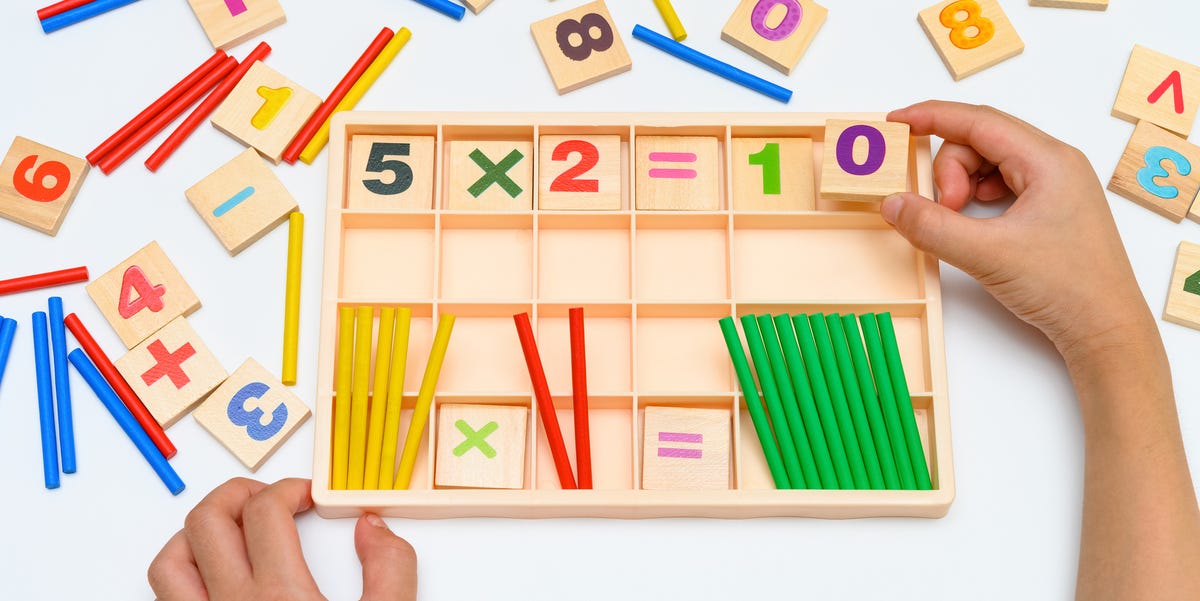
Some kids light up when they see a stack of books. Others hear music and immediately begin their Grammy acceptance speech in the living room. And then there are the rare little creatures who look at a grocery receipt and whisper, “Interesting.” If you want to raise a kid who loves math, the good news is this: you do not need to turn your home into a mini calculus boot camp, hang multiplication charts over the cereal boxes, or become the kind of parent who says, “Let’s do fractions for fun!” on a Saturday morning.
What you do need is a smarter, gentler approach. Kids learn to enjoy math when it feels meaningful, safe, playful, and doable. They are much more likely to lean in when math is something they explore instead of something that chases them down the hallway with timed tests and panic. The goal is not to raise a human calculator. The goal is to raise a child who sees math as a useful, interesting way to understand the world.
That starts much earlier than most parents realize. Long before school worksheets enter the chat, children are already building math habits through play, conversation, patterns, comparison, measurement, movement, and problem-solving. In other words, math is not just a subject. It is a language for making sense of everyday life. Once you treat it that way, everything changes.
Start With the Right Idea of What Math Really Is
One of the biggest mistakes adults make is reducing math to speed and right answers. That narrow view can make children believe math is only for “naturally smart” people who can blurt out answers faster than everyone else. That is not how strong mathematical thinkers are built.
Real math is about noticing patterns, asking questions, trying strategies, explaining thinking, and sticking with a problem long enough to see what happens. A kid who says, “Wait, if we cut the sandwich into four pieces, is that the same as two bigger pieces?” is doing math. A child sorting blocks by size, comparing which cup holds more juice, or arguing that three short steps are not the same as one giant leap is already practicing mathematical thinking.
When you present math as exploration instead of performance, you remove the “I either get it instantly or I’m doomed” drama. That alone makes math more lovable.
Make Math Part of Daily Life, Not a Special Punishment Event
If math only appears during homework meltdowns, children start to associate it with stress, correction, and sighing. Lots of sighing. To raise a kid who enjoys math, bring it into normal family life in ways that feel natural and useful.
Use everyday math moments
Cooking is a gold mine. Measuring ingredients introduces fractions, volume, counting, and estimation. Shopping builds number sense, comparison, budgeting, and mental math. Setting the table involves one-to-one correspondence. Laundry invites sorting, matching, and pattern recognition. Even packing for a trip can turn into a logic puzzle: “We have three days, two pairs of shoes, and one very ambitious weather forecast. What do we need?”
These small moments matter because they show children that math is not trapped inside a textbook. It helps them solve real problems and make decisions. That gives math purpose, and purpose is magnetic.
Talk math out loud
Children benefit from hearing adults think through numbers casually. You do not need a speech. Just narrate simple ideas: “We need six apples and already have four, so we need two more,” or “This container looks taller, but is it actually holding more?” That kind of language builds comfort and familiarity.
It also helps kids see that math is something people do, not something people survive.
Protect Your Child From Math Anxiety Before It Moves In
Math anxiety is real, and it can start earlier than many adults expect. Sometimes it grows from pressure, embarrassment, repeated failure, or the belief that being slow means being bad. Sometimes it is quietly passed down by loving adults who say things like, “I was never a math person either,” thinking they are being relatable. Unfortunately, children often hear that as a family curse.
If you want a child to love math, watch your language carefully. Avoid labels like “genius,” “gifted,” or “not a numbers kid.” Those labels turn learning into identity drama. Instead, praise effort, strategies, persistence, curiosity, and flexibility. Say things like:
- “That was a clever way to figure it out.”
- “I like how you tried another strategy.”
- “You stuck with a tricky problem longer than last time.”
- “You do not know it yet, but you are learning.”
This kind of language teaches children that math ability grows with experience. It also lowers the fear that mistakes mean something terrible about who they are.
Do not worship speed
Fast answers can look impressive, but speed is not the same thing as understanding. Some children think deeply and still need more time. If speed becomes the main standard, thoughtful kids can feel defeated even when they are learning well.
Fluency matters, of course, but confidence grows best when kids are first allowed to understand why ideas work. A child who can explain a solution with confidence is on a much healthier path than a child who can answer instantly but panics whenever a problem looks unfamiliar.
Turn Play Into a Math Superpower
If your child loves games, good news: math has been hiding inside them all along like a nerdy little ninja.
Play board games and card games
Simple board games help young children practice counting, comparing, and number order. Dice games build quick quantity recognition and addition. Card games encourage strategy, probability, and flexible thinking. Dominoes, tangrams, pattern blocks, and logic puzzles all strengthen math foundations without announcing themselves like a substitute teacher with a clipboard.
When games are part of family life, math stops feeling like a test and starts feeling like a tool for winning, planning, predicting, and laughing when someone loses to a second grader.
Use puzzles and brain teasers
Logic puzzles are especially powerful because they teach children that math is not just computation. It is reasoning. It is pattern-hunting. It is trying an idea, ruling something out, and adjusting. That kind of problem-solving builds confidence far beyond arithmetic.
Best of all, puzzles give children a delicious experience: the moment when confusion turns into clarity. That moment is addictive in the best possible way.
Help Kids See Mistakes as Part of the Process
Children are more likely to enjoy math when they do not feel humiliated by getting something wrong. That means your home should be a place where mistakes are discussed calmly, not treated like evidence in a courtroom.
When your child makes an error, resist the urge to jump in with the correct answer too quickly. Ask questions instead:
- “Can you show me how you were thinking?”
- “Where do you think it got tricky?”
- “What else could we try?”
- “Does that answer make sense in the real world?”
These questions teach reflection, not shame. They help children understand that mathematical thinking is something you build and revise. Over time, kids who are not terrified of mistakes become more willing to take intellectual risks. And those are often the kids who end up loving math most.
Match Math to Your Child’s Interests
Not every child will fall in love with math through worksheets or flash cards. Some need to see it through dinosaurs, soccer, baking, Lego builds, music, dance, coding, art, or collecting trading cards like tiny financial analysts in sneakers.
If your child loves sports, talk statistics, score differences, and probability. If they love art, explore symmetry, geometry, scale, and pattern. If they love cooking, dive into fractions and ratios. If they love building things, measurement and spatial reasoning are already right there on the floor, probably under the couch.
When math connects to a child’s existing interests, motivation rises. Instead of asking, “Why do I need this?” they start asking better questions, like “Wait, can we figure that out?” That is when math becomes personal.
Create a Home Culture That Respects Thinking
Kids are more likely to love math when they feel their thinking matters. That means listening to their ideas, even when those ideas are messy, incomplete, or very confidently wrong.
Invite explanation
If your child solves a problem, ask how they did it. If they get stuck, ask what they notice. If they invent a weird but workable method, celebrate it before showing another approach. Children build ownership when they realize math is not just about copying the teacher’s steps. It is also about making sense of ideas.
Let struggle be productive, not miserable
A little challenge is healthy. Confusion is not the enemy. The trick is keeping struggle in the productive zone, where the child feels stretched but not crushed. Offer hints, break problems into parts, use objects or drawings, and give time. Do not swoop in too soon, but do not leave them stranded in frustration either.
Think of yourself as a trail guide, not a rescue helicopter.
Work With Teachers, Not Against Them
If your child is in school, your partnership with teachers matters. Ask not only about grades, but about confidence, participation, persistence, and problem-solving habits. A child can earn decent scores and still feel miserable about math. That is worth noticing early.
If your child seems anxious, confused, or shut down, share what you see at home. Teachers may notice patterns you do not, and you may notice patterns they cannot. Together, you can often find practical solutions: more visual supports, extra time, alternative explanations, less pressure around speed, or more opportunities for discussion and hands-on learning.
This also matters for children who struggle for reasons beyond confidence. If math remains unusually hard despite practice and support, it may be worth exploring whether a learning difference such as dyscalculia or working-memory challenges is involved. The goal is never to label a child as “bad at math.” The goal is to understand what support helps them learn best.
What to Avoid if You Want Your Child to Love Math
Sometimes raising a kid who loves math is less about adding fancy new strategies and more about removing the habits that quietly poison the relationship.
- Do not say, “I was never good at math.”
- Do not treat wrong answers like disasters.
- Do not use math only for homework battles.
- Do not compare siblings or classmates.
- Do not confuse speed with intelligence.
- Do not force endless drills without meaning or variety.
- Do not assume resistance always means laziness. Sometimes it means anxiety, confusion, or overload.
Children absorb emotional tone faster than content. If math feels tense, performative, or humiliating, they will remember that long after they forget how to borrow across place values.
What Success Really Looks Like
A child who loves math is not necessarily the one doing algebra at age six while the rest of the family just wants pancakes. More often, it is the child who is willing to try, willing to think, willing to ask questions, and willing to stay with a problem without immediately deciding, “I’m just not a math person.”
That child might enjoy patterns, puzzles, estimating totals, inventing shortcuts, or noticing shapes in architecture. They might still find some lessons boring. They might still have hard days. Loving math does not mean floating through every assignment in a cloud of numerical bliss. It means having a healthy relationship with challenge and a sense that math is something worth engaging with.
And that is a far more realistic, useful goal than raising a tiny spreadsheet in sneakers.
Experiences That Help a Child Fall in Love With Math
In real life, children rarely become math lovers because of one magical lesson. It usually happens through repeated experiences that change how they feel about the subject. A five-year-old who helps count strawberries into a bowl may begin to notice that numbers are useful. A seven-year-old who plays a dice game and realizes she can predict moves faster each week starts to feel competent. A nine-year-old who figures out how to split pizza fairly among friends discovers that fractions are not just school stuff; they are social survival.
One common turning point happens when a child is allowed to explain their own thinking without being interrupted. For example, a parent may ask, “How did you get that answer?” and the child says, “I knew 8 plus 8 is 16, so 8 plus 9 must be 17.” That moment matters because the child experiences math as reasoning, not guessing. They feel smart for understanding a relationship, not just for memorizing a fact.
Another powerful experience is seeing adults use math calmly in ordinary life. When a child watches a parent compare prices at the store, double a recipe, estimate travel time, or measure a wall before buying furniture, math starts to look practical instead of scary. It loses its “school-only” costume and becomes part of how grown-ups solve problems.
Positive group experiences help too. Family game nights, school math nights, card games, tangram races, and even building projects can make math feel social and enjoyable. Children often become braver when math is linked to play and conversation rather than silent pressure. They laugh more, talk more, and notice strategies from other people. That kind of shared experience builds both skill and belonging.
Some of the most important experiences are the quiet ones after a mistake. A child gets a problem wrong, braces for embarrassment, and instead hears, “Let’s look at it together.” That response can completely change the story in the child’s head. Instead of “Mistakes mean I’m bad at math,” the message becomes “Mistakes help me learn.” Over time, that emotional safety creates resilience.
Children also grow to love math when they feel success in small, visible steps. Maybe they could not subitize dot patterns last month and now they can. Maybe word problems used to bring instant tears, and now they can solve one with a drawing. Those little wins stack up. Confidence does not arrive all at once. It builds through evidence.
In many families, the best math experiences are surprisingly simple: counting stairs, folding paper into equal parts, comparing snack sizes, building towers, spotting patterns on a walk, or asking, “How do you know?” often enough that a child begins to trust their own mind. That is how affection for math grows. Not from pressure, but from repeated moments of curiosity, competence, connection, and joy.
Conclusion
If you want to raise a kid who loves math, think less about acceleration and more about atmosphere. Build a home where numbers are useful, questions are welcome, mistakes are safe, games are common, and thinking is respected. Make math feel like a meaningful part of life instead of a performance reviewed by invisible judges.
Children do not need constant pressure to become strong in math. They need confidence, language, practice, play, and the freedom to notice that the world is full of patterns waiting to be understood. Give them that, and math has a much better chance of becoming something they enjoy instead of something they endure.











