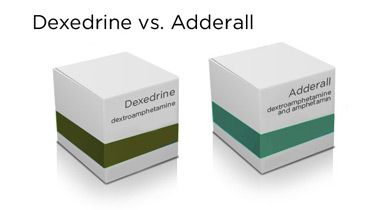
Choosing between Dexedrine and Adderall can feel like comparing two nearly identical keys while standing in front of a very impatient lock. Both medications belong to the amphetamine family, both may improve attention and impulse control, and both carry important safety warnings. Yet their ingredients, formulations, duration, and individual effects are not exactly the same.
The most useful question is not simply, “Which medication is stronger?” A better question is, “Which option provides useful symptom control, at the right times, with side effects that remain manageable?” That answer depends on a person’s health history, daily schedule, response to medication, and treatment goals.
Dexedrine vs. Adderall at a Glance
| Feature | Dexedrine | Adderall |
|---|---|---|
| Active stimulant | Dextroamphetamine | A mixture of dextroamphetamine and levoamphetamine salts |
| Medication class | Amphetamine central nervous system stimulant | Amphetamine central nervous system stimulant |
| Common forms | Immediate-release generic tablets and extended-release capsules, depending on availability | Immediate-release tablets and Adderall XR extended-release capsules |
| Typical treatment goal | Reduce ADHD symptoms such as inattention, impulsivity, and hyperactivity | Reduce ADHD symptoms such as inattention, impulsivity, and hyperactivity |
| Controlled-substance status | Schedule II | Schedule II |
| Common concerns | Appetite loss, sleep difficulty, increased heart rate, irritability, and misuse risk | Appetite loss, sleep difficulty, increased heart rate, irritability, and misuse risk |
FDA labeling identifies Dexedrine as dextroamphetamine sulfate. Adderall contains four amphetamine salts that produce a mixture weighted toward dextroamphetamine, with a smaller levoamphetamine component. They are closely related, but they are not interchangeable milligram for milligram.
What Is Dexedrine?
Dexedrine is a brand name for dextroamphetamine, the dextro isomer of amphetamine. In plain English, it contains one of the two mirror-image forms of the amphetamine molecule. Chemistry loves mirror images almost as much as bathroom designers do, but in medication, molecular orientation can influence how a drug behaves.
Dextroamphetamine stimulates the central nervous system and is used to manage ADHD symptoms. Depending on what is available and prescribed, patients may encounter immediate-release dextroamphetamine tablets or an extended-release capsule such as Dexedrine Spansule. The sustained-release capsule releases part of the medication promptly and the remainder gradually.
Potential advantages of Dexedrine
Some patients and clinicians may prefer dextroamphetamine when a simpler single-isomer formulation provides effective symptom relief. An immediate-release version may also allow more precise timing for people who need coverage during a particular portion of the day rather than from sunrise until the dishwasher’s final cycle.
That flexibility has a trade-off: shorter-acting medication may require additional doses, creating more opportunities for missed doses, uneven coverage, or late-day rebound symptoms.
What Is Adderall?
Adderall is a mixed amphetamine-salt medication containing both dextroamphetamine and levoamphetamine. FDA labeling describes the mixture as approximately three parts dextroamphetamine to one part levoamphetamine. Adderall immediate-release tablets and Adderall XR capsules use the same general amphetamine mixture but release it on different schedules.
Adderall XR contains immediate-release and delayed-release beads. This design extends medication delivery and may reduce the need for a second dose during school or work. It does not, unfortunately, extend the day itself, so unfinished laundry remains beyond pharmaceutical jurisdiction.
Potential advantages of Adderall
Adderall is available in several strengths and in both immediate- and extended-release forms. That range can help clinicians match medication coverage to morning routines, school hours, work shifts, evening responsibilities, and sleep schedules.
The levoamphetamine component may contribute to a somewhat different response than dextroamphetamine alone. Some people describe one formulation as smoother, more activating, or more physically noticeable than another. Those descriptions are highly individual, however, and cannot predict how a new patient will respond.
How Do Dexedrine and Adderall Work?
Both medications affect chemical signaling involving dopamine and norepinephrine. Amphetamines increase the release of these neurotransmitters and reduce their reuptake into presynaptic neurons. The complete therapeutic mechanism in ADHD is not fully understood, but the result can be improved attention, reduced impulsivity, and better control of hyperactive behavior.
A stimulant does not work by simply making a person “more energetic.” In someone with ADHD, appropriate treatment may make attention easier to direct and sustain. The ideal outcome is not feeling supercharged. It is being able to start a task, remain with it, and remember why the laptop was opened before mysteriously reorganizing an entire sock drawer.
Medication can reduce symptoms, but it does not automatically teach planning, emotional regulation, study methods, or workplace systems. NIMH and CDC guidance describe ADHD treatment as potentially including medication alongside behavioral interventions, psychotherapy, parent training, educational support, and practical skills development.
Which Medication Is More Effective?
Neither Dexedrine nor Adderall is universally more effective. Amphetamine medications have demonstrated short-term effectiveness for ADHD symptoms, but studies do not provide a simple ranking that predicts the best choice for every individual. Treatment response and tolerability vary considerably.
One person may experience clear focus and steady functioning with dextroamphetamine but feel tense or overly stimulated on mixed amphetamine salts. Another person may find Adderall more consistent and consider Dexedrine too brief or too abrupt. A third may not tolerate either and may do better with methylphenidate or a nonstimulant medication.
Clinicians commonly begin with a low dose and adjust gradually while tracking benefits and adverse effects. The goal is maximum useful improvement with tolerable side effectsnot the highest number printed on the prescription bottle. American Academy of Pediatrics guidance emphasizes careful titration rather than assuming that a larger dose will automatically produce a better outcome.
Immediate-Release vs. Extended-Release Formulations
Immediate-release medication
Immediate-release stimulants generally begin working sooner and provide a shorter window of symptom coverage. They may be useful when a person needs support for specific hours, has difficulty tolerating an all-day formulation, or requires schedule flexibility.
The disadvantages may include medication wearing off before the day is over, remembering additional doses, and experiencing a noticeable return of symptoms as the effect fades. Taking a dose too late may also interfere with sleep.
Extended-release medication
Extended-release options are designed to provide longer coverage from one morning dose. Adderall XR uses two types of beads to create an initial release followed by a delayed release. Dexedrine Spansule likewise releases medication gradually over a prolonged period.
Actual duration varies with metabolism, food, other medications, formulation, and the individual patient. “Extended release” does not guarantee a perfectly flat effect from breakfast through bedtime. Human metabolism did not receive the memo about standardized office hours.
Common Side Effects
Because Dexedrine and Adderall are closely related amphetamine stimulants, their side-effect profiles overlap. Common effects may include:
- Reduced appetite
- Weight loss
- Difficulty falling asleep
- Dry mouth
- Headache
- Stomach discomfort or nausea
- Jitteriness or restlessness
- Irritability or mood changes
- Increased heart rate
- Increased blood pressure
Appetite and sleep problems are among the most frequently discussed stimulant side effects in children. Growth, weight, eating patterns, and sleep should therefore be monitored during treatment rather than left to the highly scientific method of asking, “You seem taller, right?”
A side effect is not automatically a reason to abandon treatment. Timing changes, formulation changes, dose adjustments, meal planning, or a different medication may help. Those changes should be made with the prescriber, not through home experimentation.
Serious Risks and Warning Signs
Dexedrine and Adderall carry boxed warnings regarding abuse, misuse, addiction, overdose, and death. Both are Schedule II controlled substances and should be stored securely, taken only as prescribed, and never shared. The FDA strengthened class-wide stimulant warnings to improve awareness of these risks.
Patients should obtain urgent medical help for symptoms such as chest pain, fainting, severe shortness of breath, seizures, hallucinations, extreme agitation, a severe allergic reaction, or signs of dangerously high body temperature. New psychotic or manic symptoms also require prompt clinical attention.
Stimulants can modestly raise average heart rate and blood pressure, while some patients experience larger changes. A clinician may review personal and family cardiac history and monitor pulse and blood pressure during treatment. People with serious structural heart disease, cardiomyopathy, significant rhythm problems, or coronary artery disease require especially careful evaluation.
Who Needs Extra Caution?
Before prescribing either medication, a healthcare professional should know about cardiovascular disease, high blood pressure, seizures, glaucoma, circulation problems, thyroid disease, substance-use history, pregnancy, breastfeeding, and mental health conditions.
Particular attention may be needed for people with bipolar disorder, psychotic disorders, severe anxiety, eating disorders, or a history of stimulant misuse. Stimulants may worsen existing psychosis or trigger manic or psychotic symptoms in susceptible individuals. This does not mean everyone with another mental health condition is automatically excluded; it means the risk-benefit discussion must be individualized.
For children younger than six, behavior-based parent training is generally recommended before medication. FDA labeling for Adderall XR currently limits its ADHD indication to adults and pediatric patients aged six and older and does not recommend it for younger children because of higher exposure and greater weight-loss concerns.
Drug and Supplement Interactions
Both medications are contraindicated during treatment with a monoamine oxidase inhibitor, or within 14 days after stopping one, because of the risk of a hypertensive crisis. Examples of relevant MAOI-type exposures can include certain antidepressants, linezolid, and intravenous methylene blue.
Other medicines may increase amphetamine levels or raise the risk of serotonin syndrome. Patients should tell the prescriber about antidepressants, migraine drugs, seizure medicines, blood-pressure treatments, decongestants, antacids, supplements, and recreational substances. Products that change urinary acidity can also alter amphetamine elimination and blood levels.
Caffeine and energy products deserve a mention as well. Combining several stimulating products may worsen jitteriness, anxiety, palpitations, or insomnia. “But it was an artisanal triple espresso” is not a recognized pharmacological exemption.
How Clinicians Choose Between Dexedrine and Adderall
A prescriber may consider several practical factors:
- Symptom coverage: Does the patient need support for a few hours or most of the day?
- Previous response: Has the patient responded well or poorly to another amphetamine medication?
- Side effects: Are appetite, sleep, mood, heart rate, or blood pressure becoming problematic?
- Daily routine: Can the patient reliably take a second dose when needed?
- Coexisting conditions: Are anxiety, bipolar disorder, tics, substance-use concerns, or heart problems present?
- Formulation access: Is the prescribed brand, generic, or release type consistently available and affordable?
Patients may need to try more than one treatment before finding a good fit. NIMH notes that effective ADHD treatment often combines several elements and that some people must try multiple approaches. A medication change is not a personal failure. It is data collection with a pharmacy receipt.
Can You Switch From Adderall to Dexedrine?
A clinician may switch a patient from one amphetamine formulation to another because of inadequate coverage, side effects, availability, or personal response. However, the medications should not be converted milligram for milligram without professional guidance. Their compositions and release systems differ.
A prescriber may reduce, stop, or replace a medication and then retitrate based on response. Patients should not take leftover doses from an old prescription, combine the two medications, double a missed dose, or improvise a conversion using information from an online forum.
Abrupt discontinuation after prolonged use can produce fatigue, low mood, sleep changes, increased appetite, or other withdrawal symptoms. Any planned reduction should be discussed with the prescribing clinician, particularly after long-term or high-dose treatment.
Questions to Ask at an ADHD Medication Appointment
- Which symptoms should improve if this medication is working?
- How long should each dose provide useful coverage?
- What should I track during the first few weeks?
- Which side effects require a routine call, and which require urgent care?
- How often should blood pressure, heart rate, weight, or growth be checked?
- Could another medicine, supplement, or caffeine product interact with it?
- What is the plan if the medication wears off too early or disrupts sleep?
- How should the medication be stored and disposed of safely?
Tracking concrete outcomes is more useful than reporting that a medication feels “good” or “bad.” Useful measures might include completed assignments, missed deadlines, driving attention, emotional impulsivity, meal intake, sleep onset, and the time symptoms return.
Dexedrine vs. Adderall: The Bottom Line
Dexedrine contains dextroamphetamine, while Adderall combines dextroamphetamine with a smaller proportion of levoamphetamine. Both can reduce ADHD symptoms, both are available in longer-acting forms, and both carry similar risks involving appetite, sleep, cardiovascular effects, psychiatric reactions, and misuse.
There is no universally superior option. The better medication is the one that produces meaningful functional improvement, lasts for the required portion of the day, and remains tolerable under appropriate medical monitoring. Medication should also be viewed as one part of a broader treatment plan that may include behavioral strategies, therapy, education, environmental changes, and organizational support.
Experience-Based Perspectives: What Treatment Can Look Like in Daily Life
The following scenarios are fictional composites designed to illustrate common treatment considerations. They are not testimonials, predictions, or substitutes for medical advice.
Scenario 1: Good focus, inconvenient timing
An adult office worker starts an immediate-release dextroamphetamine medication. Morning meetings become easier to follow, email replies stop disappearing into the drafts folder, and administrative work no longer feels like wrestling an octopus made of spreadsheets. By midafternoon, however, the benefit fades just as a second wave of tasks begins.
The medication is helping, but its schedule does not match the patient’s schedule. The clinician might discuss changing timing, adding carefully planned coverage, or trying an extended-release formulation. The important lesson is that a medication can be effective and still be operationally inconvenient.
Scenario 2: All-day coverage with a disappearing lunch
A teenager begins an extended-release mixed amphetamine-salt medication. Teachers report better task completion, fewer impulsive interruptions, and improved follow-through. At home, the family notices that lunch returns from school almost untouched and bedtime has drifted later.
Rather than assuming the medication is entirely right or entirely wrong, the family tracks eating and sleep for several days. The prescriber reviews the dose, administration time, duration, growth pattern, and meal routine. A lower dose, another formulation, a different medication, or a more deliberate breakfast and evening meal strategy may be considered.
This scenario highlights why symptom improvement alone is not enough. A successful treatment plan must also remain nutritionally, emotionally, and physically sustainable.
Scenario 3: A smoother response after switching
An adult finds that Adderall improves concentration but also produces uncomfortable physical tension and a racing sensation. Under medical supervision, the patient transitions to a dextroamphetamine-only formulation. Focus remains improved, while the unwanted physical sensation becomes less noticeable.
Another patient could experience the exact opposite. The mixed formulation might feel more balanced, while dextroamphetamine alone may seem abrupt or insufficient. These variations are why online declarations that one medication is always “cleaner,” “stronger,” or “smoother” should be treated with caution. Individual nervous systems rarely read product reviews.
Scenario 4: The medication worked, but the system did not
A college student reports that medication improves attention but grades remain inconsistent. A closer look reveals that assignments are still recorded in three different apps, sleep varies by four hours from night to night, and major projects begin approximately twelve minutes before panic becomes visible from space.
Treatment expands to include a single calendar system, weekly planning, academic accommodations, regular sleep, and cognitive behavioral strategies. Medication makes it easier to use those tools, but the tools still have to exist.
Scenario 5: Monitoring catches a problem early
A patient feels productive after starting a stimulant and assumes everything is perfect. At a follow-up visit, routine measurements show a meaningful rise in blood pressure. Because the change is identified early, the clinician can reassess the dose, medication choice, other stimulants, and cardiovascular risk.
The experience illustrates the value of follow-up appointments. Productivity is not the only outcome worth measuring. Appetite, sleep, mood, pulse, blood pressure, weight, growth, and safe use all belong on the scoreboard.
Across these scenarios, the recurring theme is that ADHD medication is a process rather than a one-question quiz. Patients and clinicians often learn from timing patterns, side effects, family observations, school feedback, work performance, and follow-up measurements. The first prescription may be an excellent fit, a partial fit, or simply the first useful clue.