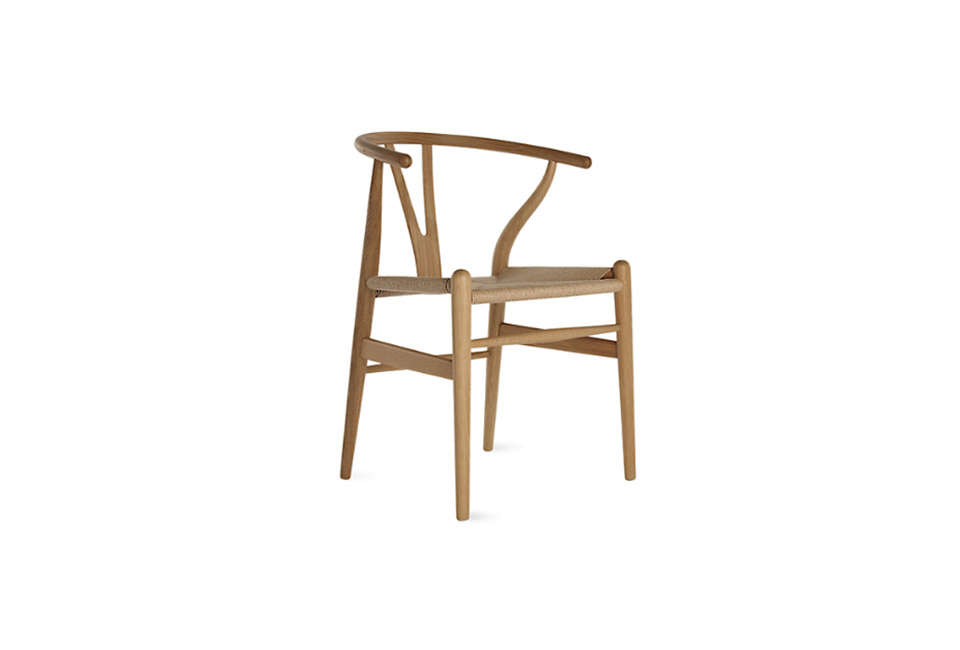
Some furniture pieces are so recognizable that they practically have their own social calendar. Hans Wegner’s Wishbone Chair is one of them. You may know it as the elegant wooden chair with the woven seat and the unmistakable Y-shaped back. You may have spotted it in a sunlit dining room, a carefully styled café, or an interior photo where every lemon has been strategically placed in a ceramic bowl.
Officially called the CH24, the Wishbone Chair is far more than a pretty Scandinavian silhouette. Designed by Danish furniture master Hans J. Wegner in 1949 and introduced into production in 1950, it represents a rare balance of sculpture, craftsmanship, comfort, and everyday usefulness. More than seven decades later, it remains one of the clearest examples of Danish modern design done right: warm instead of cold, simple instead of boring, and refined without acting like it needs a velvet rope.
This guide explores the history, construction, comfort, styling potential, and lasting appeal of Hans Wegner’s Wishbone Chair. It also explains what makes the original CH24 different from a generic look-alike and why this seemingly modest dining chair continues to earn a starring role in homes around the world.
What Is Hans Wegner’s Wishbone Chair?
The Wishbone Chair is a dining chair designed by Hans J. Wegner, one of the most influential figures in twentieth-century Danish furniture design. Its official model number is CH24, although it is also commonly called the Y Chair because of the Y-shaped support that rises from the seat to meet the curved upper rail.
At first glance, the chair appears almost effortless: four tapered legs, a woven seat, a gently bent top rail, and a graceful wooden frame. That visual ease is deceptive. The design solves several difficult problems at once. It needs to support a person comfortably, provide armrests without becoming bulky, remain visually light, and hold together through years of meals, conversations, homework sessions, dramatic family announcements, and the occasional “I only sat here for five minutes” work-from-home marathon.
The result is a chair that feels both practical and artistic. It works as dining seating, an occasional chair, a desk chair, or a single accent piece in a bedroom or entryway. It can look traditional beside a farmhouse table, sleek beside marble, soft beside linen, or surprisingly cool beside industrial concrete.
Note: “Wishbone Chair” is the popular name. CH24 is the original model designation used for Wegner’s design.
The Story Behind the CH24 Wishbone Chair
A Danish Designer Looking Toward China
The Wishbone Chair grew out of Wegner’s fascination with Chinese furniture, particularly the clean, curved forms associated with chairs from the Ming tradition. Wegner studied images of Danish merchants seated in Chinese-style chairs and became interested in the way those historic forms combined structure, comfort, and visual calm.
Rather than copying a Chinese chair, Wegner distilled the idea. He simplified the silhouette, softened the geometry, and adapted it for modern life. The rounded rail that forms the chair’s back and arms echoes the continuous curve found in traditional Chinese seating. The open structure, however, is pure Wegner: less decoration, more clarity, and no unnecessary fuss.
That approach was central to his work. Wegner was trained as a cabinetmaker before becoming a designer, so he understood wood not as a fashionable surface but as a working material with grain, strength, movement, and personality. His furniture often feels quiet because it lets the material do some of the talking.
From New Design to Enduring Icon
Wegner designed the CH24 in 1949 for Carl Hansen & Søn. It became the first model he created exclusively for the Danish furniture maker. Production began in 1950, and the chair has remained in continuous production ever since.
That longevity matters. Plenty of chairs look exciting for a season, then begin to resemble a questionable decision from an old apartment listing. The Wishbone Chair has avoided that fate because its appeal does not depend on a trend. Its form is minimal, but it is not sterile. Its materials are natural, but it is not rustic. Its shape is recognizable, but it does not overpower the room.
Over time, the chair became a defining symbol of Danish modern furniture. It also helped demonstrate that mass production did not have to mean anonymous production. A chair could be made in series while still requiring skilled hands, thoughtful materials, and careful attention to proportions.
Why the Wishbone Chair Looks So Different
The Signature Y-Shaped Back
The most recognizable feature of the Wishbone Chair is the Y-shaped back support. This piece is not merely decorative. It strengthens the steam-bent top rail while supporting the sitter’s back. In other words, it is doing structural work while looking exceptionally photogenic.
The Y creates a visual center for the chair, making the silhouette easy to identify even from across a room. It also reduces visual heaviness. Instead of using a wide solid backrest, Wegner left the center open, allowing light and air to pass through the chair.
A Single Flowing Arm and Back Rail
The Wishbone Chair’s upper rail forms both the backrest and the armrests. This continuous, curved element is one of the design’s most impressive features. It makes the chair feel welcoming because the arms appear to reach outward rather than block the sitter in.
That curve also gives the chair its sculptural quality. Even when no one is sitting in it, the CH24 has presence. It reads almost like a drawing made in the air: a few lines, carefully placed, accomplishing more than a pile of extra decoration ever could.
Paper Cord That Does Not Feel Like Paper
The woven seat is made from paper cord, a material that surprises many first-time viewers. The word “paper” can sound suspiciously delicate, especially to anyone who has watched a takeout menu dissolve in the rain. But tightly woven paper cord is durable, supportive, and comfortable when properly made and cared for.
The cord gives the chair texture and warmth. It also introduces a subtle flexibility that helps the seat feel less rigid than a solid wood panel. Natural paper cord creates a soft contrast against oak, beech, ash, walnut, or painted finishes, while black cord creates a more graphic and contemporary look.
How a Wishbone Chair Is Made
The original CH24 is admired partly because it looks simple and partly because making that simplicity is anything but simple. More than 100 production steps are involved in creating a Wishbone Chair, and much of the work is carried out by hand.
The curved upper rail is steam-bent, a process that allows wood to be shaped while maintaining its strength. The frame components must be precisely formed and joined so the chair remains stable without losing its light visual character. A tiny error in proportion can make a chair feel awkward, which is why Wegner’s designs depend so heavily on exact craftsmanship.
The seat weaving is especially labor-intensive. A skilled craftsperson hand-weaves approximately 120 meters, or nearly 400 feet, of paper cord into the seat. The process takes about an hour for each chair. That is a lot of cord for a place where people mostly sit while saying, “No, I’m fine with whatever you want for dinner.”
Original Wishbone Chairs are available in various woods and finishes, including natural wood options, painted versions, oiled surfaces, lacquered surfaces, and special editions. The choices allow the same design to feel different from one room to the next without changing its essential character.
Is the Wishbone Chair Comfortable?
For a chair that looks almost too elegant to touch, the Wishbone Chair is surprisingly comfortable. The curved rail offers natural arm support, while the woven seat provides a little give. The open back also makes it feel less confining than many upholstered dining chairs.
Comfort is subjective, of course. Someone who prefers a deep, cushioned seat may find the CH24 firmer than expected. It is a dining chair, not a recliner disguised as a small sofa. Still, its ergonomics are thoughtful. The seat is broad enough for everyday use, the arms are useful without being oversized, and the low visual weight helps a dining room feel more spacious.
The design is especially effective for long dinners and social spaces because it encourages an upright but relaxed posture. It feels polished enough for a formal table setting and casual enough for coffee, laptop time, or a late-night snack that was definitely not supposed to become a second dinner.
How to Style Hans Wegner’s Wishbone Chair
At a Dining Table
The most classic use for Wishbone Chairs is around a dining table. A set of four, six, or eight creates a cohesive look without making the room feel crowded. Natural oak chairs pair beautifully with white oak, walnut, stone, plaster, linen, and warm neutral walls.
For contrast, use black or dark-painted Wishbone Chairs around a pale wood table. The dark frame outlines the chair’s shape and gives the dining area more graphic energy. For a softer look, use natural paper cord with light wood and pair it with a linen pendant shade or woven rug.
As an Accent Chair
A single CH24 can work well in an entryway, bedroom corner, or home office. Place one beside a small pedestal table, under a wall-mounted coat rack, or near a window with a simple throw draped over the rail. Because the chair has arms, it feels more substantial than a typical side chair, even when used alone.
Mixing It With Other Chairs
The Wishbone Chair does not require a room full of Scandinavian furniture. It can sit beside an upholstered bench, a vintage French table, modern pendant lighting, or even more traditional cabinetry. The trick is to let its natural materials echo elsewhere in the room through wood, woven fibers, leather, clay, or linen.
For an intentionally collected look, place Wishbone Chairs at the heads of a table and use simpler side chairs along the length. This gives the room hierarchy without making it look like the furniture is competing for an award.
Original Wishbone Chair vs. Look-Alike Versions
Because the Wishbone Chair is widely admired, it is also widely copied. Many versions borrow the curved arms, Y-shaped back, and woven seat. Some are inexpensive and useful for a temporary space. Others may look convincing in a product photo but reveal weaker proportions, rougher joins, less durable cord, or lighter construction in person.
The original CH24 stands apart because of its construction, consistency, materials, and craftsmanship. Its proportions are refined through decades of production, and the chair’s details are designed to work together. The curve of the back, angle of the legs, height of the arms, and tension of the woven seat are not random styling choices.
When shopping for an original, buy through an authorized dealer or a reputable vintage seller. Review the maker information, examine the condition of the paper cord, inspect joints for stability, and ask about repairs or reweaving for older chairs. A vintage chair with a professionally restored seat can still be an excellent purchase.
If you choose a Wishbone-style chair instead, be honest about what you are buying. It may offer the general look, but it is not the same design object, construction standard, or long-term collectible piece as an original Hans Wegner CH24.
How to Care for a Paper Cord Wishbone Chair
Paper cord seats are durable, but they appreciate sensible care. Dust the chair regularly with a soft brush or a vacuum attachment set to gentle suction. Avoid soaking the cord, using harsh cleaners, or treating the seat like a tray for coffee mugs, art supplies, and mystery liquids.
For the wood frame, follow the care guidance appropriate to its finish. Oiled wood may need occasional refreshing, while lacquered or painted finishes typically require gentler surface cleaning. Keep the chair away from extreme heat, prolonged direct sunlight, and dramatic swings in humidity when possible.
Over many years, the seat can show wear. That is not necessarily a failure; it is often part of the chair’s lived-in character. Professional reweaving can restore a worn paper-cord seat and extend the life of a well-made chair.
Why Hans Wegner’s Wishbone Chair Still Matters
The Wishbone Chair matters because it proves that utility and beauty do not have to occupy separate rooms. It is strong without looking heavy, comfortable without looking padded, and refined without becoming precious.
It also shows why craftsmanship still has value in a world filled with disposable furniture. The CH24 is designed to be used, maintained, repaired, and appreciated over time. Its appeal is not built on novelty. It is built on proportion, material honesty, and the rare pleasure of seeing a practical object executed with real care.
In a home full of objects shouting for attention, the Wishbone Chair does something more difficult: it earns attention by whispering.
Living With Hans Wegner’s Wishbone Chair: Everyday Experiences
Living with a Wishbone Chair is different from merely admiring one in a showroom. In a showroom, the CH24 appears almost too perfect. The wood is spotless, the paper cord is evenly woven, and nothing nearby is asking whether you remembered to pay the electricity bill. In a real home, the chair becomes more interesting because it has to do actual work.
At a dining table, the first thing many people notice is how open the chairs feel. A set of upholstered dining chairs can visually dominate a room, especially in an apartment or smaller dining area. Wishbone Chairs keep the eye moving. Their open backs allow light through, and their curved rails soften the hard edges of a table. Even when six chairs are gathered around a table, the room can still feel breathable.
The paper cord seat is often the main conversation starter. Guests may ask whether it is comfortable, whether it is really made from paper, and whether it can survive a dinner party involving children, red wine, or someone who gestures enthusiastically with pasta sauce. The answer is that the seat is sturdier than it looks, but it deserves normal human respect. It is furniture, not camping equipment.
One of the best experiences with a Wishbone Chair is discovering how it changes as the day changes. In the morning, natural light catches the woven seat and highlights the grain of the wood. At night, under a pendant lamp, the curved rail creates a softer outline. The chair can look pale and airy in daylight, then warm and sculptural after sunset.
The chair also rewards touch. The upper rail is smooth in the hand, and the woven seat has a subtle texture that feels more alive than a flat upholstered cushion. This tactile quality is easy to overlook in online photos. It becomes obvious when someone casually rests an arm on the rail or slides a chair away from the table before sitting down.
Families often discover that the Wishbone Chair is not a “special occasion only” object. It works for breakfast, homework, video calls, board games, and long conversations after everyone has finished eating but no one has quite stood up yet. The chair’s shape is elegant enough for guests but relaxed enough for daily routines.
It can also become a favorite extra seat outside the dining room. A single chair in a bedroom may hold a sweater, a book, or a stack of laundry that was supposed to be folded yesterday. In an entryway, it can act as a practical place to sit while putting on shoes. In a home office, it can provide a visually lighter alternative to a large desk chair for short tasks or meetings.
Over time, the original wood and paper cord can develop a softer, more personal appearance. The chair may gain tiny marks, gentle changes in color, or signs of use around the arms and seat. Rather than making it look tired, this aging can make the piece feel more connected to the home. It becomes less like a product and more like part of the household’s visual memory.
That may be the real reason the Wishbone Chair has lasted so long. It does not demand that life stay immaculate. It simply looks good while life happens around it.
Conclusion
Hans Wegner’s Wishbone Chair remains a landmark of Danish furniture design because it makes complexity look easy. The CH24 combines a steam-bent wooden rail, a structural Y-shaped back, a hand-woven paper-cord seat, and carefully considered proportions in one remarkably balanced form.
Whether you are furnishing a full dining room, investing in a design classic, or choosing one accent chair with real character, the Wishbone Chair offers more than a familiar silhouette. It offers craftsmanship, comfort, history, and a lesson worth remembering: the best design rarely needs to shout.
{

  "meta_title": "Hans Wegner’s Wishbone Chair: The CH24 Story",

  "meta_description": "Discover the history, craftsmanship, comfort, and enduring appeal of Hans Wegner’s iconic Wishbone Chair, also known as the CH24.",

  "sapo": "Hans Wegner’s Wishbone Chair is one of the most recognizable symbols of Danish modern design. Known officially as the CH24, this elegant chair combines a steam-bent wooden rail, signature Y-shaped back, and hand-woven paper-cord seat. Explore its 1949 origins, Chinese design influence, craftsmanship, comfort, styling ideas, authenticity tips, and the everyday experiences that make the Wishbone Chair a lasting favorite in homes worldwide.",

  "keywords": [

    "Hans Wegner Wishbone Chair",

    "CH24 chair",

    "Danish modern furniture",

    "Wishbone Chair history",

    "paper cord dining chair",

    "Scandinavian chair design",

    "Carl Hansen and Son CH24"

  ]

}/pre>