
Note: This article is written in standard American English and synthesizes real, commonly documented observations about U.S. travel, food culture, transportation, hospitality, shopping, tipping, and everyday public life.
Introduction: Welcome to the Land of Refill Cups, Road Trips, and “How Y’all Doing?”
Every country has its charming oddities. In Japan, vending machines can feel like helpful little robots. In Italy, coffee is an art form best enjoyed standing at a bar. In the United States, a visitor might order a medium coffee and receive what appears to be a portable swimming pool with a straw. That is where the phrase “a bucket of coffee” begins to make perfect sense.
For many first-time visitors, American culture is not just seen in monuments, museums, or famous skylines. It shows up in the everyday details: giant highways, free soda refills, cheerful small talk from strangers, supermarkets the size of airports, and restaurant menus that require the concentration of a graduate exam. These extremely American things can be funny, confusing, impressive, and sometimes a little overwhelming.
This guide explores 30 extremely American experiences visitors often notice in the U.S. Some are practical, some are cultural, and some are so specific they feel like they were designed by someone holding a cheeseburger in one hand and a loyalty rewards app in the other. Let’s take the grand tour.
30 Extremely American Things Visitors Notice in the United States
1. Coffee Cups That Look Like Construction Equipment
American coffee culture is big, fast, and mobile. Visitors are often surprised by the sheer size of coffee cups, especially iced coffee cups that can look like they belong on a picnic table rather than in a cup holder. Coffee is not just a drink in the U.S.; it is a commuting companion, office tool, study partner, and personality trait.
2. Free Refills That Feel Like a Magic Trick
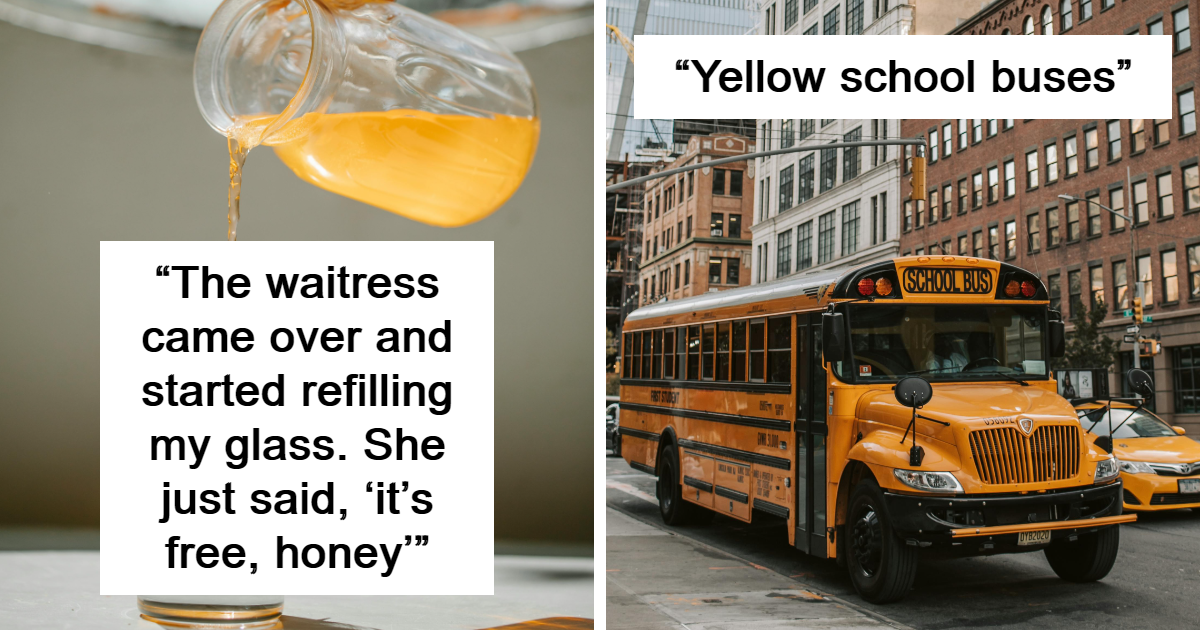
In many American diners, fast-food restaurants, and casual chains, soft drinks and drip coffee may come with free refills. For visitors from countries where every beverage is priced individually, this can feel like discovering a secret cheat code. The server appears, tops off your drink, and disappears before you can ask whether you now owe a small fortune.
3. Restaurant Portions Big Enough for a Sequel
Large portions are one of the most famous American dining surprises. A sandwich may arrive with fries, coleslaw, pickles, sauces, and enough emotional support to get you through the afternoon. Visitors quickly learn the meaning of “to-go box,” a phrase that turns dinner into tomorrow’s lunch.
4. Tipping Culture Everywhere
Tipping in the U.S. can confuse even experienced travelers. It is common in restaurants, bars, salons, rideshare services, delivery apps, and many hospitality settings. The awkward little tablet swivel asking for 18%, 20%, or 25% has become a modern American rite of passage. Visitors may wonder whether they are buying a muffin or funding a scholarship.
5. Sales Tax Appearing at Checkout Like a Plot Twist
In many U.S. states, the price on the shelf is not the final price at checkout because sales tax is added later. A visitor sees a snack marked $4.99, prepares a five-dollar bill, and then meets the mysterious extra cents. It is not a scam; it is just American retail math doing jazz improvisation.
6. Cars, Cars, and More Cars
American life is deeply shaped by driving. Outside a few dense cities, many places are designed around cars: wide roads, big parking lots, drive-through restaurants, suburban neighborhoods, and gas stations that sell everything from coffee to sunglasses. Visitors from walkable cities may be stunned to discover that “just down the road” can mean a 20-minute drive.
7. Drive-Through Everything
Drive-through restaurants are expected. Drive-through coffee is normal. Drive-through pharmacies are common. In some places, you can find drive-through banks, car washes, and even wedding chapels. The American drive-through says, “Why leave the car when the car can become your living room?”
8. Supermarkets the Size of Small Villages
American grocery stores can be enormous. Visitors may enter looking for bread and find 47 kinds, including potato bread, sourdough, cinnamon swirl, brioche, keto bread, gluten-free bread, and bread that seems to have gone through a personal branding workshop. The cereal aisle alone can feel like a colorful national monument.
9. Pharmacies That Sell Almost Everything
In many countries, a pharmacy is where you buy medicine. In the U.S., pharmacy chains often sell medicine, snacks, greeting cards, cosmetics, toys, seasonal decorations, batteries, milk, headphones, and sometimes an inflatable flamingo. Visitors expecting a medical errand may leave with cough drops, toothpaste, and a bag of Halloween candy in April.
10. Ice in Every Drink
Americans love ice. Water arrives cold. Soda arrives colder. Iced coffee may contain enough ice to preserve a museum artifact. Visitors from countries where room-temperature drinks are more common often find the American glass full of cubes shocking, refreshing, or both.
11. Air Conditioning Set to “Arctic Research Station”
Walk into a store, restaurant, hotel, or movie theater in summer, and the air conditioning may feel like a weather event. Many visitors learn to carry a light sweater even when it is 95 degrees outside. In America, summer fashion sometimes means shorts outdoors and survival fleece indoors.
12. Friendly Small Talk From Strangers
Cashiers may ask how your day is going. Someone in an elevator may comment on the weather. A person in line may casually tell you about their dog’s dental surgery. American small talk can feel unusually open to visitors, but it often functions as social oil: brief, warm, and not necessarily an invitation to exchange life histories.
13. The “How Are You?” That Is Not Always a Real Question
One of the great American language puzzles is “How are you?” In many casual situations, it is less a medical inquiry and more a verbal handshake. The expected answer is usually “Good, how are you?” even if your suitcase broke, your flight was delayed, and you have emotionally become a carry-on bag.
14. Flags Everywhere
The American flag appears on homes, schools, government buildings, car dealerships, sports arenas, clothing, bumper stickers, and holiday decorations. For visitors, the visibility of national symbols can be striking. Patriotism in the U.S. is often displayed in public and commercial spaces as much as in official ceremonies.
15. Yellow School Buses
The bright yellow school bus is one of the most recognizable American sights. Visitors often know it from movies before they ever see one in person. On real streets, it feels like a rolling piece of pop culture: practical, nostalgic, and unmistakably American.
16. College Sports That Feel Like Professional Sports
In many countries, university sports are relatively modest. In the U.S., college football and basketball can fill massive stadiums, attract national TV audiences, and inspire lifelong loyalty. Tailgating before games adds another layer: parking lots become outdoor kitchens, social clubs, and team-colored festivals.
17. High School Life That Looks Like a Movie Set
Lockers, cafeterias, football games, cheerleaders, marching bands, pep rallies, prom, and yearbooks can feel strangely familiar to international visitors because American schools have been exported through decades of movies and TV shows. Seeing those details in real life can feel like stepping into a teen drama, minus the dramatic hallway slow-motion.
18. Diners With Menus as Thick as Novels
The American diner is a cultural classic: booths, bottomless coffee, pancakes at odd hours, burgers, omelets, pie, and a menu that seems to include every meal invented since 1947. Diners are not just places to eat; they are democratic food theaters where breakfast can happen at midnight and pie is always a reasonable idea.
19. The Road Trip as a National Ritual
Because the U.S. is vast and varied, road trips hold a special place in American culture. Visitors may drive through deserts, forests, mountains, small towns, national parks, and roadside attractions in a single journey. The road trip combines freedom, snacks, playlists, questionable gas station coffee, and the ancient question: “Are we there yet?”
20. National Parks That Feel Cinematic
American national parks often surprise visitors with their scale and drama. The Grand Canyon, Yellowstone, Yosemite, Zion, Great Smoky Mountains, and other parks offer landscapes that can make a phone camera feel underqualified. The parks also reveal a major American idea: wilderness as both protected treasure and travel destination.
21. Signs, Rules, and Warnings for Everything
The U.S. has signs for wet floors, hot coffee, private property, parking limits, wildlife warnings, speed limits, security cameras, restroom instructions, and doors that are definitely not entrances. Visitors may find this excessive, funny, or reassuring. America likes labels, disclaimers, and making sure everyone knows the coffee is hot.
22. Huge Pickup Trucks
Pickup trucks are not just work vehicles in the U.S.; they can be lifestyle symbols. In many states, visitors see lifted trucks, shiny trucks, muddy trucks, family trucks, and trucks that look ready to tow a moon. They reflect the country’s mix of rural identity, outdoor hobbies, construction work, and personal expression.
23. The Convenience Store Gas Station Combo
American gas stations often double as convenience stores, snack kingdoms, restrooms, coffee counters, and emergency lunch stops. Some regional chains have cult followings. Visitors may stop for fuel and discover hot dogs, burritos, giant fountain drinks, local souvenirs, lottery tickets, and a wall of beef jerky.
24. Peanut Butter as a National Food Group
Peanut butter appears in sandwiches, candy, cookies, smoothies, cereals, sauces, and lunchboxes. For many Americans, peanut butter and jelly is childhood comfort food. For some visitors, the combination seems odd at first, then strangely convincing, like a diplomatic agreement between sweet and salty.
25. Ranch Dressing on Almost Everything
Ranch dressing is a dip, sauce, salad dressing, pizza companion, wing partner, vegetable negotiator, and emotional support condiment. Visitors may be surprised by how often ranch appears on menus. In parts of the U.S., refusing ranch can feel like declining a handshake.
26. Halloween as a Full-Scale Production
Halloween in the U.S. can be enormous. Homes transform into haunted theaters, stores sell mountains of candy, children go trick-or-treating, adults attend costume parties, and pumpkins become temporary celebrities. For visitors, the scale of decorations and enthusiasm can be both delightful and mildly terrifying.
27. Black Friday Shopping Madness
Black Friday has become one of the most famous American retail events, though much of it has moved online or stretched into weeks of deals. Visitors may be fascinated by the idea that a national holiday of gratitude is followed by a shopping event powerful enough to make people discuss televisions like military objectives.
28. Public Restrooms With Big Door Gaps
This one comes up again and again. Many visitors notice the gaps around restroom stall doors in the U.S. The design is common, but it can feel startling if you are used to more private stalls. It is one of those tiny everyday details that becomes a major cultural talking point.
29. Regional Accents and Local Identities
The U.S. is not one uniform culture. A visitor may hear Southern drawls, New York speed, Midwestern friendliness, Boston vowels, California slang, Texas confidence, and Louisiana musicality. Food, manners, politics, weather, architecture, and humor can change dramatically from one region to another.
30. The Belief That Anything Can Be Customized
American consumer culture loves options. Coffee can be ordered with oat milk, almond milk, half-caf, extra ice, no foam, two pumps, light whip, and a name spelled creatively on the cup. Burgers, salads, sandwiches, phone plans, gym memberships, cars, and streaming subscriptions all seem designed around choice. Visitors may find this freedom exciting until they just want a normal coffee and are asked twelve follow-up questions.
Why These “Extremely American” Things Stand Out
What makes these experiences memorable is not that they are strange in isolation. It is the combination. The U.S. can feel casual and commercial, friendly and rule-heavy, efficient and excessive, familiar from movies yet surprising in person. A visitor might recognize a yellow school bus from television, then be shocked by the size of a grocery store, the coldness of the air conditioning, or the fact that a stranger at a checkout line is suddenly discussing weekend plans.
Many American habits come from practical realities. Large portions connect to restaurant competition, food abundance, and expectations of value. Car culture reflects geography, suburban development, interstate highways, and the distance between homes, stores, schools, and workplaces. Free refills and big cups connect to casual dining traditions and the idea that more is better, or at least more feels like a better deal.
Other details are cultural. Small talk reflects a public friendliness that values approachability. Tipping reflects the service economy and wage customs. Customization reflects a consumer mindset that treats personal preference as important. Even giant coffee cups make sense when you consider the American rhythm of long commutes, early workdays, busy schedules, and a national talent for turning beverages into accessories.
The Funniest Visitor Reactions to Everyday American Life
Visitors often describe their first U.S. trip as a series of tiny surprises. One person may be amazed that hotel breakfast includes a waffle machine. Another may wonder why restaurant servers check on the table so many times. Someone else may discover that “mild salsa” still has opinions. The humor comes from expectation meeting reality with a loud clatter of ice cubes.
The famous “bucket of coffee” reaction captures this perfectly. In some countries, coffee is small, strong, and consumed slowly. In the U.S., coffee may be large, sweet, iced, flavored, portable, and designed to last through traffic, errands, and possibly a minor family emergency. Neither style is wrong. They simply reflect different daily rhythms.
Food especially creates memorable culture shock. A visitor orders pancakes and receives a stack that looks structurally engineered. A side salad arrives big enough to require a committee. A “small” soda appears suspiciously medium. A dessert is delivered with multiple spoons because the restaurant knows no single person should have to face it alone.
Shopping brings another layer. American stores often offer generous return policies, endless product choices, and cheerful seasonal displays months in advance. You may see Halloween candy in late summer, Christmas decorations before Thanksgiving, and patio furniture while snow is still on the ground. Retail time in the U.S. does not move like regular time. It gallops toward the next holiday wearing a discount sticker.
How Visitors Can Enjoy These American Experiences Without Feeling Overwhelmed
Know the Local Norms
Before eating out, learn the basics of tipping, taxes, and portion sizes. In sit-down restaurants, tipping is commonly expected. Prices may not include tax. Portions may be larger than expected, so sharing or taking leftovers is normal.
Embrace the Road Trip Mindset
If you plan to travel outside major cities, expect to drive or use rideshares. Distances can be much greater than they appear on a map. A “nearby” attraction may still be an hour away, and public transportation varies widely by city and region.
Try Regional Food
American food is far more than burgers and fries. Try barbecue in Texas or the Carolinas, bagels in New York, seafood in New England, tacos in Southern California, gumbo in Louisiana, green chile in New Mexico, deep-dish pizza in Chicago, and diner pie wherever pie is available. Pie is rarely a bad travel decision.
Enjoy the Contradictions
The U.S. is full of contrasts. A tiny town may have a giant flag. A gas station may serve surprisingly good food. A national park may be silent and majestic, while the nearest gift shop sells bear-shaped bottle openers. That mix is part of the experience.
Extra Travel Experiences: What “A Bucket Of Coffee” Really Means in the American Imagination
The phrase “a bucket of coffee” is funny because it points to something deeper than cup size. It captures the American habit of scaling things up until they become both practical and theatrical. A large coffee is not just caffeine; it is a travel object. It sits in the car cup holder during a long commute, follows someone through a grocery store, appears at a desk beside a laptop, and survives long enough to become lukewarm evidence of productivity.
For visitors, this can feel like a symbol of American momentum. The country often moves quickly: breakfast to go, coffee to go, drive-through lunch, mobile ordering, highway exits, airport connections, loyalty points, and calendar reminders. Even relaxation can become scheduled. A weekend road trip might include a national park hike, a diner breakfast, outlet shopping, a baseball game, and a scenic overlook, all fueled by one enormous iced coffee sweating quietly in the cup holder.
But there is also a softer side to these experiences. The same diner that serves an oversized mug of coffee may also provide a warm conversation with a server who calls everyone “hon.” The same gas station that sells neon sports drinks may be the place where a traveler gets directions from a local. The same supermarket that overwhelms with cereal choices may reveal the diversity of American neighborhoods through tortillas, kimchi, matzo, plantains, hot sauce, and regional barbecue rubs all sharing shelf space.
Visitors who spend time in the U.S. often discover that “extremely American” does not mean one thing. It might mean convenience, friendliness, abundance, speed, optimism, individual choice, or a spectacular inability to make a small beverage. It can also mean contradictions: people who love independence but gather in huge crowds for sports; cities with world-class transit and suburbs where walking to the store feels like an expedition; health-conscious shoppers buying organic kale next to a freezer case of rainbow ice cream sandwiches.
One of the best ways to understand the U.S. is to treat these details as cultural clues rather than punchlines. The big coffee says something about work habits and mobility. The free refill says something about value and hospitality. The road trip says something about space and freedom. The grocery store says something about choice. The small talk says something about public friendliness. The tipping screen says something about the service economy, and possibly about everyone’s collective anxiety.
So yes, visitors may laugh at the bucket of coffee. Americans may laugh too, while ordering another one. But that oversized cup, rattling with ice and ambition, is part of the everyday theater of American life. It is practical, excessive, customizable, portable, and oddly cheerful. In other words, it is not just coffee. It is a tiny national portrait with a plastic lid.
Conclusion: America Is Best Understood One Giant Cup at a Time
The United States can be surprising because it turns ordinary activities into big experiences. Eating breakfast, buying toothpaste, filling a gas tank, watching college football, ordering coffee, or walking through a supermarket can all become cultural discoveries. Visitors come for famous cities and natural wonders, but they often remember the everyday details: the refills, the friendliness, the huge roads, the giant portions, the flags, the ice, the school buses, and yes, the coffee large enough to need its own ZIP code.
These 30 extremely American things are not just stereotypes. They are snapshots of how people live, shop, eat, travel, celebrate, and connect across a large and diverse country. Some will make visitors laugh. Some will require explanation. Some may even become favorite memories. After all, travel is not only about seeing new places. It is about noticing the small things that make a place feel wonderfully, unmistakably itself.











