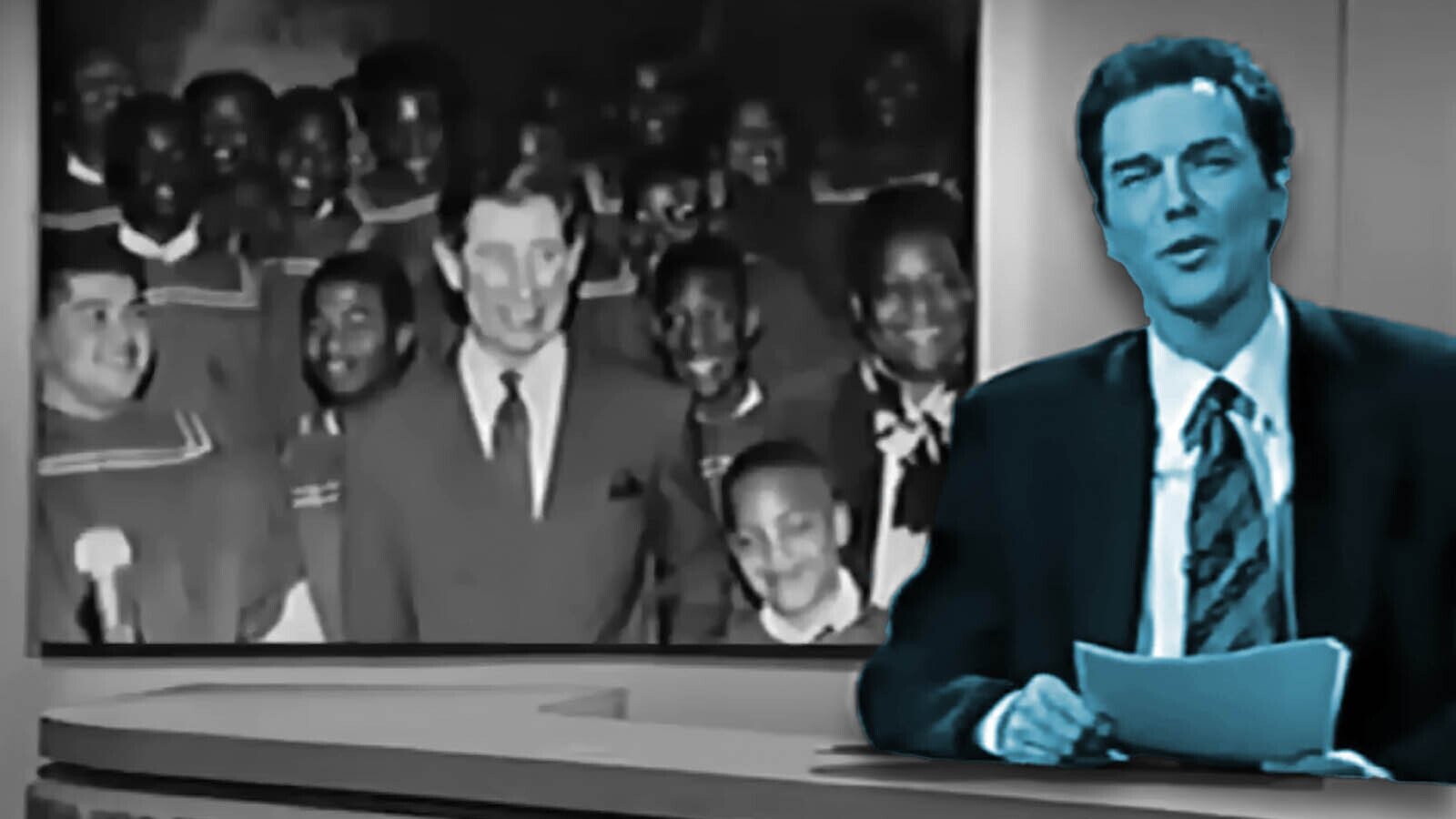
In television history, some executive decisions age like fine wine. Others age like milk left under the studio lights during a 90-minute live broadcast. The firing of Norm Macdonald from Saturday Night Live belongs firmly in the second category. At the time, NBC executive Don Ohlmeyer’s move to remove Macdonald from the “Weekend Update” desk was framed as a business decision about ratings and quality. But the story quickly became something much stickier: a collision between comedy, corporate power, celebrity friendship, and one comedian who refused to sand the edges off his punchlines.
Norm Macdonald was never the safest person to put behind a fake news desk. That was precisely the point. His version of “Weekend Update” was not warm, polished, or eager to please. It was dry, deadpan, sometimes icy, and often funnier because it seemed determined not to beg for laughs. When the audience groaned, Norm did not panic. He stared into the camera like a man patiently waiting for the rest of America to catch up. That made him beloved by comedy nerds and, apparently, a migraine in a suit for certain network executives.
The firing of Norm Macdonald from SNL came back to haunt Don Ohlmeyer because it did the one thing a powerful executive never wants a firing to do: it made the fired guy look cooler. Macdonald became a folk hero, Ohlmeyer became the villain in a comedy-world morality tale, and the controversy followed both men long after the desk had been handed to someone else.
Who Was Don Ohlmeyer, and Why Did He Matter at NBC?
Don Ohlmeyer was not some random network manager wandering the halls with a clipboard and a suspiciously large coffee. He was a major television executive with a serious résumé. Before becoming president of NBC’s West Coast division, he built a reputation in sports television, including work connected to Monday Night Football. During NBC’s powerful 1990s run, he was associated with the network’s “Must See TV” era, when shows like Friends, ER, Frasier, and Seinfeld made Thursday nights feel less like a programming block and more like a national appointment.
In other words, Ohlmeyer had clout. He understood television as a business, a machine, and a battlefield. But Saturday Night Live has always been an odd machine inside the larger network machine. It is corporate television pretending to be anti-corporate television. It needs sponsors, ratings, and executives, but its mythology depends on danger, rebellion, and the occasional joke that makes the legal department reach for antacids.
That tension is where the Norm Macdonald controversy lives. Ohlmeyer had power over NBC’s late-night universe, while Macdonald had a desk, a stack of jokes, and the facial expression of a man who had just heard the funniest thing in the world but refused to explain it to you. Their conflict was not merely about one performer. It was about who gets to decide when comedy has gone too far.
Norm Macdonald’s “Weekend Update” Was Built to Annoy the Right People
Norm Macdonald joined Saturday Night Live in 1993 and became “Weekend Update” anchor during one of the most scrutinized news cycles of the decade. His approach was different from the slicker, faster, applause-friendly style often associated with TV satire. Macdonald’s jokes could feel like fake wire-service copy delivered by a man who did not care if you invited him to the after-party.
That was his magic. He did not chase the room. He let silence become part of the joke. He delivered punchlines with the patience of a fisherman who knew the fish was already doomed. His comedy was not designed to flatter viewers for being clever. Sometimes it dared viewers to be uncomfortable, then sat there smirking while they decided what to do with that feeling.
During the O.J. Simpson murder trial and after Simpson’s 1995 acquittal, Macdonald repeatedly joked about Simpson on “Weekend Update.” The humor was blunt, relentless, and unmistakably judgmental. While other comedians also covered the trial, Macdonald made Simpson a recurring target. The jokes became part of his identity on the show.
That mattered because Ohlmeyer was widely reported to have been friends with Simpson. He was not merely an executive evaluating a comedy segment from a distance. He was a powerful NBC figure with a personal connection to the subject of the jokes. The official explanation for Macdonald’s removal involved ratings and quality. But the comedy world largely came to believe that the Simpson material was the real spark.
The Official Reason Never Beat the Unofficial Story
When Macdonald was removed from “Weekend Update” in early 1998, the network explanation was tidy: ratings were down, the segment needed improvement, and change was necessary. That kind of explanation is common in television. It is also the kind of explanation that sounds as if it was assembled in a conference room by people using the phrase “brand alignment” without irony.
The unofficial story was far more durable. It said Macdonald had angered Ohlmeyer by continuing to hammer Simpson. It said the firing was less about Nielsen numbers and more about a comedian refusing to obey invisible boundaries. It said a network executive used his power to protect a friend from jokes.
Whether one accepts every detail of that version or not, the perception became the reality. Comedy fans did not remember spreadsheets. They remembered Norm staring down the camera and making jokes that felt too sharp for corporate comfort. They remembered that Macdonald’s longtime “Weekend Update” collaborator Jim Downey also left the segment during the fallout. They remembered that the person most embarrassed by the firing did not seem to be Norm.
Why the Firing Backfired
The firing backfired because it gave Macdonald a better story than any publicist could have written. Before the controversy, he was a cultishly admired SNL performer. After it, he became the guy who supposedly lost a dream job because he would not stop telling the jokes he believed were funny. That is a powerful myth, especially in comedy, where integrity is often measured by how willing a performer is to bomb, offend, or get escorted away from a buffet by security.
Ohlmeyer may have won the immediate workplace dispute. Macdonald lost the desk. Colin Quinn took over “Weekend Update.” The show moved on, because SNL always moves on. But history did not move on in Ohlmeyer’s favor. The firing became one of the most frequently retold stories in modern Saturday Night Live history. It was attached to Ohlmeyer’s name in obituaries, retrospectives, podcasts, interviews, and fan discussions. That is a rough legacy footnote for a man whose career included major achievements in sports and prime-time television.
Norm’s 1999 Return to ‘SNL’ Turned the Knife With a Smile
The most delicious twist came in October 1999, when Macdonald returned to host Saturday Night Live. This was not a quiet reconciliation. It was a live televised awkward family dinner, except the family was NBC and the dinner guest had brought a flamethrower disguised as a monologue.
Macdonald used his opening remarks to point out the absurdity of being fired because he supposedly was not funny enough, only to be invited back as host a year and a half later. Rather than present himself as newly improved, he suggested the show itself must have declined enough to make him look good again. It was a perfect Norm move: self-deprecating on the surface, savage underneath, and delivered with the cheerfulness of a man returning a defective toaster.
That monologue helped cement the firing as a comedy legend. It allowed Macdonald to frame the story on his own terms. Network executives can issue statements, but comedians get the last laugh when the audience remembers the joke instead of the memo. Don Ohlmeyer’s decision had removed Norm from the desk, but it also handed him material that would outlive the controversy itself.
Conan O’Brien and the Second Haunting
The story did not end with SNL. Years later, Conan O’Brien recalled that Ohlmeyer had tried to stop him from booking Macdonald on his NBC late-night show. That detail gave the controversy a second life because it suggested the feud was not limited to one desk or one program. According to O’Brien’s account, the pressure came from the top, but he pushed back and continued booking Macdonald.
This matters because Macdonald became one of the greatest late-night guests of his generation. His appearances with Conan are still passed around by comedy fans like sacred texts written on cue cards. He could turn a couch interview into a slow-motion train wreck of brilliance. He mocked movies, derailed conversations, told intentionally overlong jokes, and somehow made awkwardness feel like choreography.
If Ohlmeyer really wanted Macdonald kept away from NBC late night, that attempt failed spectacularly. Conan’s studio became one of the places where Macdonald’s legend grew. The supposed blacklist became another example of Norm surviving executive disapproval by being too funny to ignore. In the long run, that is not a great outcome for the executive in the story. It is like trying to bury a seed and accidentally growing a statue.
Why Norm Macdonald Became a Comedy Folk Hero
Norm Macdonald’s appeal was never only about individual jokes. It was about his relationship to the whole business of comedy. He seemed allergic to pandering. He disliked obvious applause lines. He loved jokes that circled the airport for 12 minutes before landing in a field no one knew existed. He could appear careless, but his best work was built on precision. The joke might look like it wandered into the room wearing slippers, but it knew exactly where it was going.
That is why the SNL firing became such a defining part of his mythology. It confirmed what fans already believed: Norm would rather be funny in his own strange way than become a smoother, safer version of himself. Many comics talk about bravery. Macdonald’s career often demonstrated a quieter version of it. He did not always shout. Sometimes he simply refused to move.
After leaving SNL, Macdonald starred in Dirty Work, led the sitcom The Norm Show, performed stand-up, appeared in films, voiced animated characters, wrote a book, hosted podcasts and talk shows, and continued making late-night appearances that comedians studied like game footage. His career was not a straight climb. It was more like a crooked hallway with a trapdoor, a cigar-smoke cloud, and a punchline waiting behind a fake wall. But the loyalty of his audience only deepened.
What Don Ohlmeyer Lost in the Court of Comedy Opinion
Don Ohlmeyer had a larger and more successful career than the Macdonald controversy alone suggests. Reducing him only to the man who fired Norm from SNL is too simple. He helped shape major television programming, produced important sports broadcasts, and played a role in one of NBC’s strongest eras. That record deserves acknowledgment.
But public memory is not always fair, and comedy memory is especially ruthless. In comedy circles, Ohlmeyer became a symbol of executive interference. He represented the person upstairs who thinks a dangerous joke is a business problem instead of the reason people watch. He became the suit in the story, and the suit almost never gets the best lines.
The haunting was not supernatural. It was reputational. Every time fans revisited Macdonald’s “Weekend Update” clips, every time someone shared his 1999 monologue, every time Conan told a story about fighting to keep Norm as a guest, Ohlmeyer’s decision returned from the grave wearing a bad disguise. The more beloved Norm became, the worse the firing looked.
Comedy, Power, and the Problem With Trying to Control a Punchline
The deeper lesson is that comedy is difficult to control once the audience believes the comedian has been punished for telling the truth as he sees it. A network can control a time slot. It can change an anchor. It can rewrite a press release. But it cannot easily control the meaning that fans attach to a controversy.
Macdonald’s firing became bigger than an HR decision because it touched a nerve: should comedy protect the powerful or irritate them? Should a comedian stop making a joke because an executive has a personal connection to the target? Is “not funny enough” a credible explanation when the performer’s most controversial jokes are the ones everyone still remembers decades later?
These questions explain why the story keeps resurfacing. It is not just nostalgia for old SNL. It is a clean, almost too-perfect example of the conflict between art and management. Norm Macdonald sat at a desk and made jokes. Don Ohlmeyer had the authority to remove him. But the audience had the final authority to decide which man looked ridiculous in hindsight.
Why the Story Still Works Today
The firing of Norm Macdonald from SNL still fascinates people because it has everything: a fearless comedian, a powerful executive, a celebrity trial, backstage tension, a disputed official explanation, a triumphant return, and a late-night afterlife. It is not merely an entertainment anecdote. It is a parable with better timing than most parables and significantly more cigar smoke.
In today’s media environment, where clips live forever and audiences constantly reassess old controversies, the story feels even more relevant. A decision made inside a network hierarchy in 1998 can be re-litigated endlessly on YouTube, podcasts, social media, entertainment sites, and anniversary retrospectives. The internet did not create Norm’s legend, but it gave that legend a very comfortable recliner.
For NBC, the controversy became part of the complicated mythology of Saturday Night Live. The show sells itself as a home for rebellious comedy, but it exists inside a corporate structure. Sometimes that contradiction produces great television. Sometimes it produces a firing that looks worse every time someone presses replay.
Related Experiences and Lessons From the Norm Macdonald Firing
The experience of watching this controversy age over time offers useful lessons for comedians, writers, editors, producers, and anyone who works in a creative business where power and taste collide. The first lesson is that short-term control can create long-term embarrassment. Removing a difficult voice may solve an immediate internal problem, but if the audience senses that the removal was unfair, the decision can become more famous than the problem it was meant to fix.
For writers, Macdonald’s story is a reminder that voice matters. A distinctive voice will not please everyone. In fact, if it is truly distinctive, it almost certainly will annoy someone important. Norm’s “Weekend Update” style was not built for universal comfort. It was narrow, dry, and stubborn. That narrowness made it memorable. Many creators weaken their work by trying to become acceptable to every possible stakeholder. Norm’s career suggests the opposite: the sharper the voice, the more durable the impression.
For editors and managers, the lesson is more uncomfortable. Creative people often need boundaries, but they also need protection from panic. If every complaint from a powerful person becomes a command, the work gets dull fast. The audience may not know the internal politics, but it can feel when a show has traded danger for neatness. Comedy especially depends on the sense that something might go wrong. Remove that risk entirely, and you are left with jokes that arrive pre-apologized.
For performers, Macdonald’s experience shows the value of owning the narrative. He did not simply complain about being fired. He turned the firing into material. His 1999 SNL monologue worked because it addressed the obvious awkwardness instead of pretending everything was normal. That is a useful public communication lesson: when everyone knows there is tension, ignoring it usually makes the tension louder. Naming it, with wit, can transform weakness into authority.
For audiences, the story explains why comedy legends are not always built from clean victories. Sometimes they are built from strange defeats. Macdonald lost a prestigious job, but the way he lost it reinforced the qualities people admired in him: independence, nerve, and a refusal to chase approval. In the end, the firing became part of his brand without ever feeling like a branding exercise. That is rare. Most branding exercises smell like a conference room. Norm’s smelled like cigarette smoke, old jokes, and a man quietly enjoying the fact that the room had gone silent.
The final experience is about legacy. Don Ohlmeyer had power in the moment. Norm Macdonald had the joke that lasted. Television executives can decide who sits behind the desk, but they cannot decide who gets remembered fondly by the people still laughing years later. That is why firing Norm Macdonald from SNL came back to haunt Don Ohlmeyer. The decision may have ended one chapter of Norm’s career, but it also wrote the beginning of his legend.
Conclusion
Firing Norm Macdonald from Saturday Night Live was supposed to be a programming decision. Instead, it became one of the most memorable controversies in the show’s long history. Don Ohlmeyer had the authority to remove Macdonald from “Weekend Update,” but he could not control how the comedy world interpreted the move. The official explanation faded. The legend grew.
Macdonald’s refusal to soften his style, his return to host SNL, and his later late-night appearances transformed a professional setback into a defining piece of comedy folklore. Ohlmeyer’s career included major accomplishments, but the Norm firing followed him because it symbolized something larger than one personnel change. It became a story about what happens when corporate power tries to discipline a joke and the joke wins on appeal.