
Every DIYer eventually learns a humbling truth: wires do not care how confident you feel. They only care whether the connection is tight, clean, and made with the right tool. That is where the IWISS Kit-0535 ratcheting crimping tool enters the garage like a compact orange-and-gray referee, ready to stop questionable electrical connections before they become tiny metal regrets.
This Iwiss crimping tool review looks at what makes the tool popular, where it shines, where it stumbles, and whether it deserves a spot in a home toolbox. The short answer: yes, for the right user. The longer answer is more useful, especially if you work with stranded wire, automotive wiring, electronics projects, trailer repairs, low-voltage systems, battery accessories, or general workshop fixes.
What Is the IWISS Kit-0535 Ratcheting Crimping Tool?
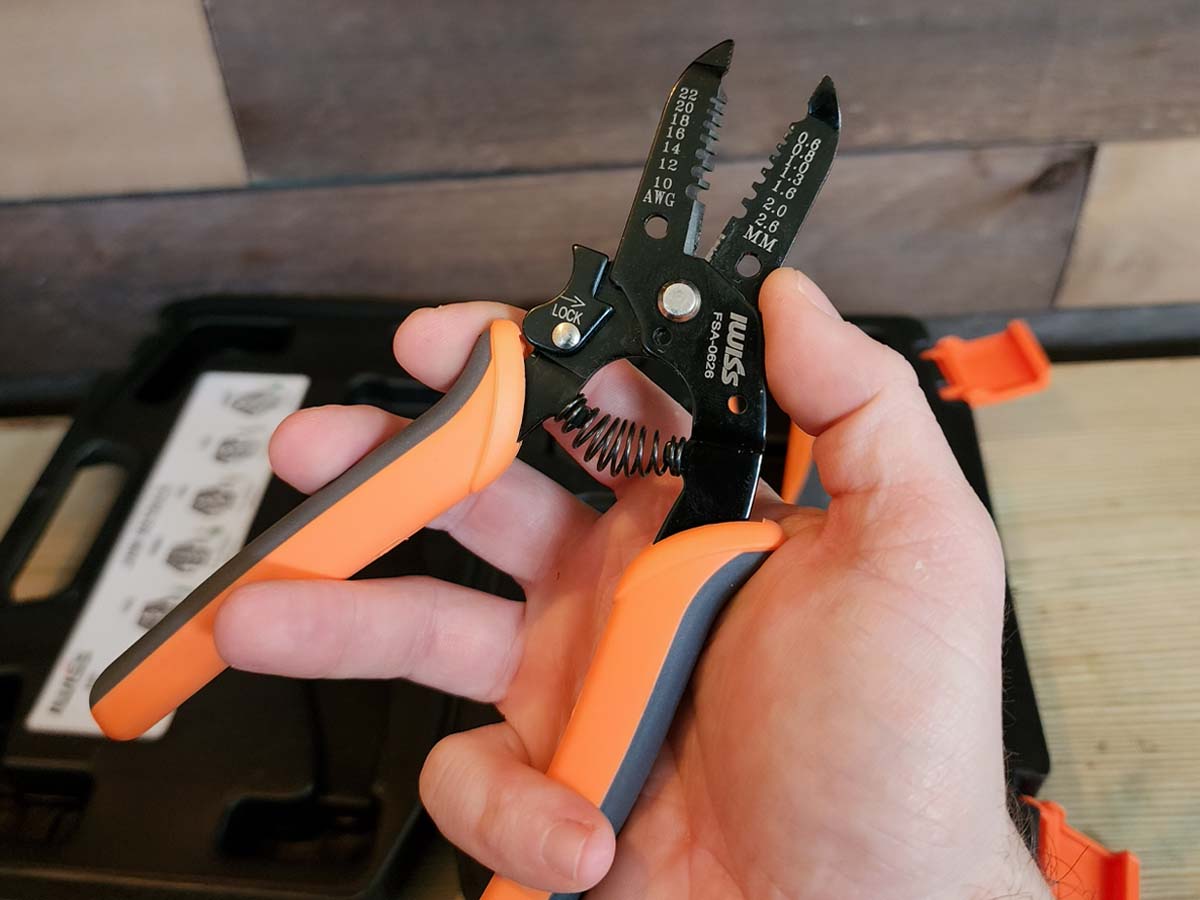
The IWISS Kit-0535 is a ratcheting wire crimper set designed for installing terminals onto stranded wire. The kit typically includes the ratcheting crimper frame, six interchangeable die sets, and a wire stripper/cutter, all packed in a hard storage case. Instead of forcing one jaw shape to do every job badly, the interchangeable jaws let the user match the crimp profile to the connector type.
That matters because crimping is not just squeezing metal until it looks “probably fine.” A proper crimp compresses a terminal barrel around the conductor so the wire is held firmly and consistently. The right die shape helps avoid loose terminals, crushed insulation, weak pull strength, and that delightful little mystery where a circuit works on Tuesday and gives up emotionally by Friday.
Key Features at a Glance
- Tool type: Ratcheting wire crimper kit
- Best for: Stranded wire terminals, ferrules, heat-shrink terminals, insulated and non-insulated connectors, and selected lug-style terminals
- Wire range: Broad coverage, commonly listed around small-gauge wiring up to larger cable sizes depending on die selection
- Included accessories: Six die sets, wire stripper/cutter, hard case
- Grip style: Rubberized, non-slip handles
- Standout feature: Quick-change jaws and full-cycle ratcheting action
How the Ratcheting Mechanism Helps
The biggest advantage of the IWISS crimper is the ratchet. A full-cycle ratcheting crimper keeps pressure controlled through the crimping stroke. Once the handles begin closing, the tool continues through a set motion until the crimp is completed and the jaws release. This helps reduce partial crimps, which are one of the most common causes of weak electrical connections.
With cheap plier-style crimpers, the result depends heavily on hand strength, angle, and experience. One person may squeeze too lightly, another may flatten the connector like a pancake at a diner with emotional issues. A ratcheting tool adds consistency. It does not magically replace good technique, but it gives the user a much better chance of producing repeatable results.
Build Quality: Better Than the Price Suggests
The IWISS Kit-0535 does not feel like a disposable bargain-bin tool. The crimper body is steel, the handles are comfortable enough for repeated use, and the dies feel more substantial than thin stacked-plate jaws found on some budget tools. The one-piece die design is a meaningful advantage because it provides a stronger, more uniform bite on the terminal.
For a DIY tool, this is impressive. For a professional production environment making hundreds of critical crimps per day, a certified manufacturer-specific crimper may still be the better choice. But for automotive repairs, hobby electronics, trailer wiring, workshop projects, and low-voltage connections, the IWISS offers a strong balance of price and performance.
Changing Dies Is Surprisingly Easy
One of the kit’s best features is the quick-change jaw system. To switch dies, the user opens the jaws, presses the spring-loaded release button, slides out the current die, and slides in the correct replacement. No tiny screws, no Allen wrench scavenger hunt, and no moment where the garage floor eats a small fastener forever.
This matters because crimping different terminal styles requires different jaw geometry. Insulated terminals, open-barrel connectors, non-insulated terminals, wire ferrules, and heat-shrink connectors do not all want the same squeeze pattern. The Iwiss system encourages users to choose the correct die instead of improvising with the wrong one.
Performance: Does the IWISS Crimping Tool Work?
Yes, the IWISS crimping tool works very well when matched with the right terminal, wire size, and die. The ratcheting mechanism delivers steady pressure, the jaws close evenly, and the finished crimps feel secure. A good crimp should resist a firm pull test, and this tool is capable of making connections that stay put under normal handling and vibration.
This is especially helpful in automotive and equipment wiring, where vibration is the villain wearing a tiny cape. A loose terminal in a stationary desk project is annoying. A loose terminal in a vehicle, trailer, mower, boat accessory, or battery-powered setup can become a recurring headache. The IWISS makes those connections feel more dependable than quick squeezes from basic stamped crimpers.
Comfort and Ease of Use
The handles are comfortable enough for multiple crimps in a session. They are not luxury sofa cushions for your palms, but they do the job without feeling punishing. The ratcheting action also helps because the user does not need to crush the handles in one heroic squeeze. Instead, the tool allows controlled pressure until the release point.
For small and medium terminals, most users should find the IWISS easy to operate. Larger terminals and heavier wire may require more hand strength. That is normal for manual crimpers. Physics is still on the payroll, unfortunately.
Where the IWISS Kit-0535 Falls Short
The biggest complaint is the storage case. It is protective and organized, but it is not compact. If your toolbox is already packed like a suitcase before a family vacation, the IWISS case may feel bulky. A slimmer case or roll-up pouch would make the kit easier to carry for mobile work.
Another limitation is that this is not the ideal tool for every electrical job. It is made for stranded wire terminals, not standard residential solid-core wiring. If you are installing outlets, switches, or household branch-circuit wiring, this is not the tool you reach for. In those situations, use appropriate code-compliant methods and consult a qualified electrician when needed.
Who Should Buy the IWISS Crimping Tool?
DIYers Working With Stranded Wire
If you repair small engines, vehicles, trailers, LED lighting, audio equipment, solar accessories, RC projects, or shop gadgets, the IWISS crimper is a practical upgrade. It helps create cleaner, stronger terminations than basic plier crimpers.
Automotive and Garage Users
Car wiring often involves ring terminals, spade terminals, butt connectors, and heat-shrink terminals. Because vehicles vibrate constantly, connection strength matters. A ratcheting crimper gives better repeatability and reduces the odds of a wire shaking loose later.
Hobby Electronics Builders
For makers, robotics builders, and low-voltage tinkerers, interchangeable dies are a major benefit. One project may need ferrules; another may need open-barrel terminals. Instead of buying several dedicated tools immediately, this kit covers a useful range.
Light Professional Use
For electricians, mechanics, maintenance techs, and equipment installers, the IWISS can be a handy backup or field-service tool. However, for regulated, mission-critical, or manufacturer-specified terminations, always use the crimper required by the connector manufacturer.
Who Should Skip It?
Skip the IWISS Kit-0535 if you only do household outlet and switch work, because standard residential wiring commonly uses solid conductors and different connection methods. Also skip it if your work requires certified, calibrated, connector-specific tooling. In aerospace, industrial controls, high-current battery systems, or safety-critical equipment, “close enough” is not a quality-control strategy; it is a tiny disaster wearing a fake mustache.
How to Get the Best Results
The tool performs best when the wire, terminal, and die all match. Start by checking the connector type and wire gauge. Choose the die that matches both. Strip only enough insulation for the conductor to seat fully in the terminal barrel. Avoid nicking or cutting strands, because damaged strands reduce strength and conductivity.
After crimping, inspect the connection. The terminal should not be cracked, badly distorted, or loose. The wire should not pull out during a firm tug. The insulation should be supported where appropriate, but the conductor should be the part making the electrical connection. A tidy crimp is not just prettier; it is usually more reliable.
IWISS vs. Cheap Crimpers
Compared with ultra-cheap stamped crimpers, the IWISS is a clear upgrade. Budget crimpers can work in a pinch, but they rely heavily on user judgment and often produce inconsistent compression. The IWISS ratchet helps maintain a complete crimp cycle, and the interchangeable dies offer better connector matching.
That does not mean every cheap crimper belongs in a museum of bad decisions. For occasional emergency work, basic tools have their place. But if you are making more than a few electrical terminals, the IWISS quickly becomes easier to justify.
IWISS vs. Premium Brand Crimpers
Premium tools from brands such as Klein, Molex, TE Connectivity, Rennsteig, and other professional tooling makers often offer tighter engineering, certified compatibility, calibration options, and connector-specific locators. Those features matter in professional environments.
The IWISS does not fully replace specialized professional crimp systems, but it does not pretend to. Its appeal is versatility and value. For many home users and general repair tasks, it provides a lot of capability for a modest price.
Real-World Examples
Imagine replacing a corroded trailer light connector. With a weak crimp, the lights may work during testing and fail halfway through a rainy drive. With the IWISS, a properly matched heat-shrink butt connector can be crimped firmly and sealed for better durability.
Or picture adding ring terminals to a small battery-powered accessory. A loose ring terminal can cause intermittent power loss, heat, or flickering. A clean ratcheted crimp gives the connection a stronger mechanical grip. The wire stays where it belongs, which is generally preferable to playing hide-and-seek with electricity.
Verdict: Is the IWISS Crimping Tool Worth It?
The IWISS Kit-0535 ratcheting crimper is worth buying for DIYers and light-duty professionals who frequently work with stranded wire terminals. It is versatile, comfortable, easy to adjust, and capable of making secure crimps when used correctly. The quick-change jaws make it more flexible than single-purpose crimpers, and the ratcheting mechanism improves consistency compared with basic hand crimpers.
The downsides are manageable. The case is bulky, larger wire takes effort, and the tool is not a substitute for manufacturer-certified crimping systems in critical applications. Still, for general use, it earns its reputation as a surprisingly capable crimping kit.
Extra Field Experience: What Using a Crimping Tool Teaches You
Spending time with a ratcheting crimping tool like the IWISS teaches a lesson that applies to almost every workshop project: the boring little details are usually the details that save you later. A crimped terminal may not look exciting. Nobody walks into the garage and says, “Wow, what a beautiful butt splice.” If they do, congratulations, you have very specific friends. But a clean crimp can be the difference between a repair that lasts and one that sends you crawling back under a dashboard with a flashlight in your mouth.
The first experience many people have with crimping is not glamorous. Maybe a trailer light goes out. Maybe a car stereo loses power. Maybe an LED strip works only when the wire is bent at exactly the angle of a wizard’s eyebrow. The temptation is to twist wires together, wrap them with electrical tape, and declare victory. That may work for five minutes, but vibration, moisture, heat, and movement eventually expose lazy connections.
Using the IWISS encourages a better rhythm. Select the correct terminal. Match the die. Strip the wire cleanly. Insert the conductor fully. Squeeze until the ratchet releases. Tug-test the connection. Add heat shrink or strain relief when needed. The process feels slow at first, but after a few crimps it becomes fast and repeatable. More importantly, it becomes calm. You are no longer guessing whether you squeezed hard enough. The tool gives you a defined endpoint.
One practical experience is that terminal quality matters almost as much as tool quality. A good crimper cannot rescue a flimsy connector made from thin metal and mystery plastic. Pairing the IWISS with decent terminals produces noticeably better results. Cheap terminals often deform strangely, split, or fail a pull test. Better terminals crimp evenly and grip the conductor without looking like they lost a wrestling match.
Another lesson is organization. Interchangeable dies are useful only if you can find the correct die when you need it. The IWISS case may be bulky, but it helps keep the jaws together. For home users, that matters. A missing die turns a versatile kit into an oddly shaped paperweight with handles.
Finally, the IWISS crimper builds confidence. Not reckless confidence, but the useful kind that comes from understanding the connection you just made. Once you see how a proper crimp feels, weak crimps become easier to spot. The wire should not wiggle in the barrel. The insulation should not be shredded. The terminal should not slide off with a casual pull. When everything is matched correctly, the finished connection feels solid, almost boringly solidand in wiring, boring is beautiful.
Conclusion
The IWISS Kit-0535 ratcheting crimping tool works, and it works better than its modest price might suggest. It is not the perfect tool for every electrical task, but for stranded wire terminals, automotive wiring, workshop repairs, hobby electronics, and low-voltage projects, it is a smart buy. The ratchet improves consistency, the interchangeable dies increase versatility, and the overall build quality feels dependable.
For anyone still using bargain pliers and hope as a crimping strategy, the IWISS is a meaningful upgrade. Hope is nice. A secure mechanical connection is better.











