
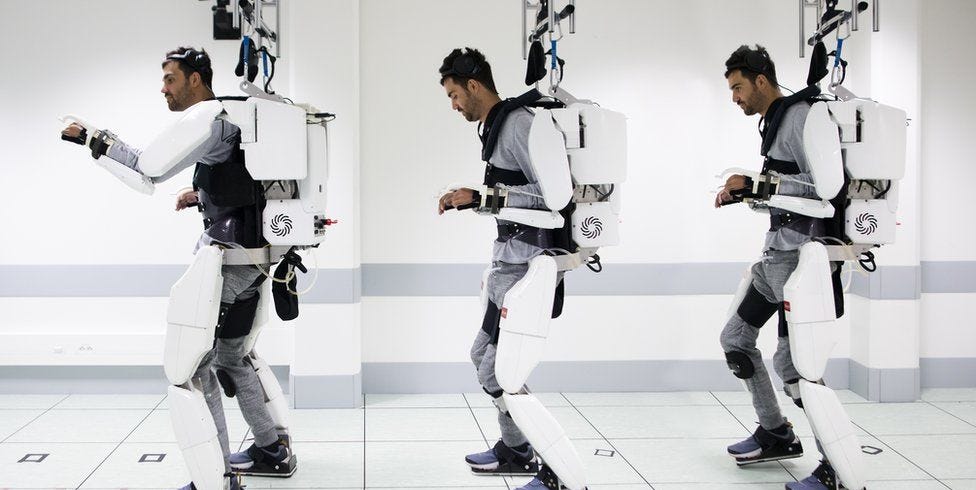
“Paralyzed man walks” sounds like the kind of headline that makes people rub their eyes, refresh the page, and wonder whether science just skipped straight to the movie ending. But the real story is both better and more complicated. When a person with paralysis stands up and takes steps again, it usually is not a magic moment delivered by one gadget, one surgery, or one dramatic montage with inspirational violin music. It is more often the result of years of research, painstaking rehabilitation, smart technology, and a level of patience that deserves its own trophy case.
That is what makes this topic so powerful. These stories are not fairy tales. They are real examples of how medicine, neurotechnology, and rehabilitation are changing what recovery can look like after spinal cord injury. At the same time, they need context. “Walking again” can mean different things for different people. For one person, it may mean a few assisted steps with a walker. For another, it may mean climbing stairs with advanced implants. For many others, the biggest wins are not walking independently at all, but standing longer, transferring more safely, improving balance, reducing spasms, or regaining a little more control than they had before.
So yes, the headline is exciting. But the deeper story is even more interesting: how the nervous system works, why walking is so difficult to restore, and why modern recovery often looks less like a miracle and more like a marathon in very expensive sneakers.
Why the Headline Gets Attention
There is a reason “paralyzed man walks” stops people in their tracks. Walking is one of those abilities most people do not think about until it becomes difficult or impossible. It looks simple from the outside. You stand up, move one leg, move the other, and congratulations, you are mobile. In reality, walking is a high-speed coordination act involving the brain, spinal cord, nerves, muscles, joints, balance systems, and sensory feedback. It is less like flipping a light switch and more like conducting an orchestra while riding a bicycle over uneven pavement.
That complexity is exactly why paralysis is so life-changing. A spinal cord injury can interrupt the signals traveling between the brain and the body. Depending on where the injury is and how severe it is, a person may lose movement, sensation, or both. Some injuries are considered complete, meaning there is no voluntary movement below the injury level. Others are incomplete, meaning some messages still get through. That distinction matters because recovery potential, treatment plans, and rehabilitation goals can vary widely.
It also matters because headlines rarely explain those details. They usually do not mention whether the person was using a walker, whether stimulation was turned on, whether therapists were assisting, or how many months of training led to that moment. The public sees the finish line. The real story includes the whole obstacle course.
What Happens When the Spinal Cord Is Injured?
The Body’s Communication Highway
The spinal cord is the main communication route between the brain and the rest of the body. When it is damaged, messages can be slowed, scrambled, or blocked altogether. That can affect movement, sensation, bladder and bowel function, breathing, sexual function, blood pressure regulation, and more. In other words, a spinal cord injury does not just change how someone walks. It can change how someone lives from sunrise to bedtime.
Why Walking Is Especially Hard to Restore
Walking is not powered by muscle strength alone. It depends on rhythm, posture, weight shifting, reflexes, joint control, sensation from the feet and legs, trunk stability, and timing so precise that the body usually performs it without conscious thought. After spinal cord injury, that whole system can be disrupted. Even if some pathways remain intact, they may not communicate efficiently enough for steady overground walking.
That is why recovery often focuses on more than “make the legs stronger.” Therapists may work on standing tolerance, trunk control, gait patterning, endurance, cardiovascular fitness, range of motion, pressure relief, and safe transfers before true walking practice becomes the main event. It is a layered process, not a one-click upgrade.
How Some Paralyzed People Have Walked Again
1. Intensive Rehabilitation and Locomotor Training
One of the biggest lessons from spinal cord injury research is that repetition matters. A lot. Locomotor training uses repetitive stepping practice, weight support systems, treadmills, overground walking, and task-specific movement training to help retrain the nervous system. Think of it as teaching the body to rehearse walking over and over until the remaining neural networks learn to work more effectively.
It may look simple from a distance, but it is demanding, highly structured work. Some patients train with body-weight support harnesses. Others use parallel bars, walkers, aquatic therapy, or robotic systems. The goal is not only to move the legs, but to encourage coordinated, meaningful walking patterns. The body needs thousands of chances to practice. Apparently, the nervous system is a little like the rest of us: it learns best through repetition and stubborn persistence.
2. Epidural Electrical Stimulation
In some high-profile cases, implanted stimulators have helped people with paralysis stand and walk with assistance. This approach, often called epidural electrical stimulation, involves placing electrodes over the lower spinal cord to help activate the circuits involved in movement. The key point is that the stimulation does not simply “move the legs” like a puppet show. Instead, it can make spinal networks more responsive to movement commands and sensory input, especially when combined with extensive rehabilitation.
That combination has produced some of the most talked-about recovery stories in recent years. A famous 2018 case involved a man who had been paralyzed for years after a spinal cord injury. With spinal cord stimulation turned on and after extensive therapy, he was able to stand and walk with assistance using a front-wheeled walker. That result was extraordinary, not because it meant the injury had vanished, but because it showed dormant or disconnected spinal networks could still be engaged in a meaningful way.
3. Targeted Spinal Stimulation
Researchers have also refined spinal stimulation to better match the timing and mechanics of walking. Instead of delivering a generic electrical buzz and hoping for the best, newer methods target specific spinal regions and movement phases more precisely. That matters because walking is all about timing. If the signal arrives at the wrong moment, the result is less graceful human motion and more “shopping cart with a broken wheel.”
Studies have shown that carefully timed stimulation paired with rehabilitation can help some people with chronic spinal cord injuries regain stepping ability, stand longer, and improve overground mobility. These outcomes are still not typical for everyone, and they are not available everywhere, but they show that the field is moving from broad experimentation toward more refined and personalized neuromodulation.
4. Brain-Spine Interfaces
If epidural stimulation sounds futuristic, brain-spine interfaces sound like they were smuggled in from next decade. Yet they are already real. In one of the most widely reported breakthroughs, researchers used implanted devices in the brain and spine that communicated wirelessly. The system helped a man with paralysis stand, walk more naturally, and climb stairs by translating brain signals into stimulation patterns that activated the spinal cord.
That is a major shift in how recovery technology is imagined. Rather than relying only on pre-programmed stimulation, brain-spine systems aim to reconnect intention with movement. In plain English: the person thinks about walking, and the system helps carry that message to the circuits that can make walking happen. It is not science fiction anymore, though it is still early-stage, specialized, and far from routine medical care.
5. Exoskeletons and Assistive Technology
Robotic exoskeletons have also become part of the conversation. These wearable devices support upright mobility and stepping practice in some rehabilitation settings. For some users, exoskeletons improve training intensity, cardiovascular conditioning, and confidence with upright movement. For others, they are helpful for exercise or therapy rather than everyday practical walking. That difference matters.
Exoskeletons are not a universal answer. They can be costly, require supervision, and may not fit every person’s needs or injury pattern. Still, they have expanded the toolbox. And in rehabilitation, having more tools is a very good thing. Nobody ever fixed a complicated neurologic problem with fewer options.
The Real Story Behind “Paralyzed Man Walks”
When the public sees a headline about a man with paralysis walking again, the natural reaction is amazement. But the most important part of the story is often what happened before the cameras showed up: months or years of therapy, careful selection for a research program, specialized equipment, medical monitoring, setbacks, recalibration, fatigue, and repeated practice.
These stories are exciting because they prove something important: paralysis does not always mean the nervous system is beyond influence. Some spinal circuits may still be capable of generating or supporting movement under the right conditions. That insight has reshaped spinal cord injury research. Scientists are no longer asking only whether movement can return. They are asking how to restore function more reliably, for more people, with safer and more accessible technology.
That said, honesty is essential. These breakthroughs do not mean every paralyzed person will walk again. They do not erase the need for wheelchairs, caregiving, home modifications, or long-term support. And they absolutely do not justify miracle-language marketing from people trying to sell false hope in a shiny package. Real recovery science is powerful enough without the nonsense.
What Recovery Actually Looks Like Day to Day
Small Gains Can Be Huge Gains
In rehabilitation, progress may look tiny from the outside and enormous from the inside. Standing for an extra minute. Shifting weight without losing balance. Getting through a transfer with less help. Feeling a muscle activate on command for the first time in months. These are not minor details. They are proof that the body can still change.
Plateaus Are Normal
Recovery is rarely a straight line. Some weeks bring visible gains. Other weeks feel like the universe misplaced the user manual. Plateaus happen. Fatigue happens. Spasticity, pain, skin issues, infections, equipment problems, transportation barriers, and insurance headaches happen too. Rehabilitation is science, but it is also logistics, emotions, economics, and endurance.
Walking Is Not the Only Meaningful Goal
Many people with spinal cord injuries prioritize independence, comfort, upper-body function, bowel and bladder management, pain reduction, and quality of life just as much as walking. That perspective matters. Walking is important, but it should not be treated as the only outcome that counts. Recovery is not a popularity contest where standing gets all the applause and every other function sits quietly in the corner.
Why These Stories Matter So Much
Stories of people walking after paralysis matter because they expand what medicine considers possible. They inspire more research, more funding, and better rehabilitation technology. They also challenge outdated assumptions. For years, many believed certain chronic spinal cord injuries offered little room for meaningful motor recovery. New evidence has not erased the difficulty, but it has complicated that old narrative in a hopeful way.
These stories also matter because they remind the public that disability and recovery are not simple categories. A person can be profoundly injured and still improve. A person can walk in therapy and still rely on a wheelchair in daily life. A person can celebrate progress while still grieving what was lost. Human recovery is messy, layered, and deeply personal. Which, frankly, is a lot more interesting than a lazy headline.
Experiences Related to “Paralyzed Man Walks”
To understand this topic fully, it helps to think beyond the research lab and into the lived experience of recovery. For many people with paralysis, the first attempt to stand again is not glamorous. It is awkward, exhausting, and emotional. The room may be full of therapists, machines, straps, bars, and cautious instructions. There is often a strange mix of fear and excitement. Fear of falling. Fear of disappointment. Fear that the body will not respond. And then, sometimes, there is a tiny movement, a shifting of weight, a muscle firing where silence used to be. It can feel like the body is sending a postcard from a place everyone thought was gone.
There is also grief in these experiences. People do not just lose movement after a severe injury. They can lose routines, jobs, privacy, spontaneity, confidence, and parts of their identity. Walking again, even partially or with assistance, can carry emotional weight that is difficult to describe. It is not merely physical motion. It can feel like reconnecting with a former self while also meeting a new self at the same time.
Families experience this too. Loved ones often become part of the rehab rhythm, learning transfer techniques, skin checks, equipment schedules, transportation routines, and the emotional art of encouraging someone without turning into an accidental motivational poster. They celebrate tiny wins that nobody else notices. A stronger sit-to-stand. A better night’s sleep. Less pain after therapy. A few more steps than last week. They also learn that progress does not cancel frustration. Hope and exhaustion can share the same chair.
People who go through long-term rehab often describe a change in how they think about success. Before injury, success may have meant doing something quickly, independently, and without a second thought. After injury, success can become more deliberate. It may mean doing something safely, with the right support, and with enough consistency to build on it tomorrow. That shift is not defeat. It is adaptation. And adaptation is one of the most underrated forms of strength in the human catalog.
There is often humor too, because there has to be. Rehab can be frustrating, repetitive, and weirdly intimate. Bodies make surprises. Machines beep at the wrong moment. Socks refuse to cooperate. Therapists become part coach, part engineer, part detective, and part cheer squad. Many survivors develop a dark, practical sense of humor because laughter makes hard days more survivable. It turns out resilience is not always solemn. Sometimes it wears a gait belt and cracks jokes between sets.
Most of all, the experience of “paralyzed man walks” is usually not one dramatic breakthrough frozen in time. It is a collection of moments: the first upright posture after months in a chair, the first step with assistance, the first time the legs respond more smoothly, the first successful transfer at home, the first trip outside without panic, the first time progress feels real instead of theoretical. Those moments add up. And whether the final outcome is independent walking, assisted walking, or improved function without full walking, the journey remains significant. It is proof that recovery is not always about returning to the exact life that existed before. Sometimes it is about building a new life with more ability, more control, and more possibility than anyone dared predict at the start.
Conclusion
The phrase “Paralyzed Man Walks” will always draw attention, and honestly, it should. It captures something people desperately want to believe: that severe injury does not always get the final word. But the truth behind the headline is even more compelling than the headline itself. Walking after paralysis is not usually the result of magic. It is the result of neuroscience, rehabilitation, engineering, persistence, and human beings refusing to quit when quitting would have been understandable.
As research continues, the future may bring better stimulation systems, smarter rehabilitation programs, more effective exoskeletons, and broader access to technologies that are currently limited to specialized centers. That future cannot come fast enough. Until then, the most important takeaway is this: recovery after paralysis is real, meaningful, and worth taking seriously, even when it looks different from one person to the next. Sometimes the miracle is not that a man walks. Sometimes the miracle is that science, therapy, and determination helped make even one more step possible.













