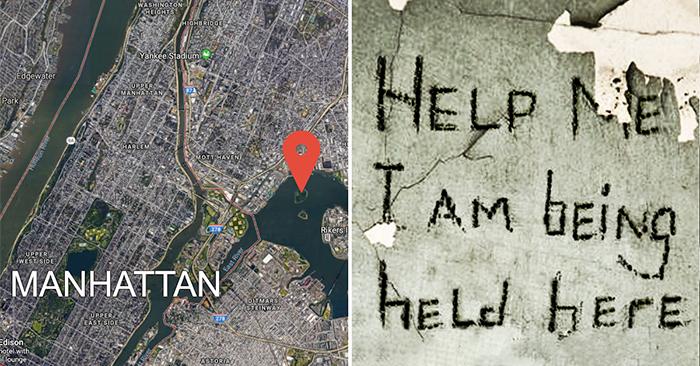
New York City is very good at hiding strange things in plain sight. Behind the honking taxis, glittering bridges, packed subway cars, and coffee cups moving at dangerous speeds, there is a lonely island in the East River where trees grow through old hospital walls and silence feels almost louder than traffic. Its name is North Brother Island, and although it sits between the Bronx and Rikers Island, it feels like a place the city forgot on purpose.
North Brother Island is not haunted in the cartoon sense. No one is selling tickets to a fog machine and a plastic skeleton named Gary. The island is chilling because its real history is already eerie enough. It was once home to a quarantine hospital, infectious disease patients, Typhoid Mary, a deadly maritime disaster, war veterans, and a troubled drug rehabilitation center. Today, its buildings are abandoned, its paths are swallowed by vines, and its reputation has become one of the creepiest hidden stories in New York City.
If you love abandoned places, forgotten history, urban legends, or the kind of true story that makes you glance over your shoulder for no logical reason, North Brother Island deserves your attention. Just do not pack a picnic basket yet. The island is off-limits to the public, protected as a bird sanctuary, and not exactly the kind of place where you want to wander around wearing cute shoes.
Where Is North Brother Island?
North Brother Island is a small, roughly 20-acre island in New York City’s East River. It is located near the Bronx, close to the dangerous waters of Hell Gate, an area whose name sounds like it was created by a dramatic novelist but is very real. The island is part of the Bronx and belongs to New York City, yet most residents have never stepped foot on it. Many have never even heard of it.
That is part of its strange power. North Brother Island sits within sight of one of the busiest cities in the world, yet it remains inaccessible, overgrown, and quiet. While Manhattan builds higher and the Bronx keeps moving, the island simply decays. It is close enough to be seen, but far enough away to feel unreachable.
A Quarantine Island Built for Fear
North Brother Island’s unsettling story began in the late 19th century, when New York City was struggling with infectious diseases such as smallpox, typhoid fever, tuberculosis, and other illnesses that terrified crowded urban neighborhoods. In 1885, Riverside Hospital moved to North Brother Island from Blackwell’s Island, now known as Roosevelt Island. The new location was chosen for one major reason: isolation.
Before antibiotics and modern infection control, quarantine was one of the few tools public health officials had. If someone had a disease that could spread quickly, the safest option was often to remove that person from the crowded city. That meant the island became a place where people were sent away, sometimes for treatment, sometimes for containment, and sometimes for reasons that still raise uncomfortable ethical questions today.
Why Isolation Made Sense at the Time
In the 1800s and early 1900s, New York City was densely packed, sanitation was uneven, and medical knowledge was still developing. A disease outbreak could move through tenements, schools, hospitals, and workplaces with brutal speed. North Brother Island offered distance. It created a physical barrier between contagious patients and the city’s growing population.
On paper, that sounds practical. In reality, imagine being ferried away from your home to an island hospital, not knowing whenor ifyou would return. The East River was not just water. It was a psychological wall.
Typhoid Mary: The Island’s Most Infamous Resident
No story about North Brother Island is complete without Mary Mallon, better known as Typhoid Mary. Her name has become shorthand for someone who spreads illness, but the real woman behind the nickname was more complicated than the legend.
Mary Mallon was an Irish-born cook who worked for wealthy families in the New York area. In the early 1900s, investigators linked her to typhoid fever outbreaks. The frightening part was that she did not appear sick. She was what doctors would now call an asymptomatic carrier, meaning she could spread the bacteria without showing obvious symptoms herself.
Public health officials detained Mallon and sent her to North Brother Island in 1907. She was released in 1910 after agreeing not to work as a cook again. However, she later returned to cooking under an assumed name, and another outbreak followed. In 1915, she was sent back to North Brother Island, where she remained for more than two decades. She died there in 1938.
The Human Side of a Famous Nickname
It is easy to turn Typhoid Mary into a spooky character in a haunted island story, but that would be too simple. Mallon’s case sits at the intersection of disease control, personal freedom, class, gender, immigration, and public fear. She insisted she was healthy and believed she was being treated unfairly. Officials believed she posed a danger to others. Both sides were locked in a terrifying conflict shaped by limited medical understanding and very real public health risks.
That tension is one reason North Brother Island still feels so haunting. The ghosts here are not only imagined spirits. They are unanswered questions. How much freedom can society take from one person to protect many? Who gets blamed during a health crisis? Who gets remembered as a monster, and who gets remembered as a victim?
The General Slocum Disaster: A Tragedy on the Shore
If North Brother Island had only been a quarantine site, its history would already be dark. But on June 15, 1904, it became connected to one of New York City’s deadliest disasters: the burning of the steamship General Slocum.
The General Slocum was carrying more than a thousand passengers, many of them women and children from a German-American church community on Manhattan’s Lower East Side. What began as a joyful excursion turned into horror when the boat caught fire in the East River. Life preservers failed, panic spread, and the vessel eventually ran aground near North Brother Island.
More than 1,000 people died. For the city’s German-American community, the loss was devastating. Families were shattered. Neighborhoods mourned. The disaster remained one of the worst in New York history, later overshadowed in public memory by other tragedies but never erased from the island’s story.
Why the Disaster Still Feels So Chilling
The General Slocum tragedy is especially haunting because it happened in daylight, in view of the city, during what was supposed to be a celebration. It was not a remote shipwreck in the middle of the Atlantic. It happened close to home, close to help, close to land. North Brother Island became part of the rescue and recovery effort, but also a witness to unimaginable grief.
That is the thing about this island: it seems to collect moments when New York’s confidence cracked. Disease, disaster, isolation, decayNorth Brother Island has seen them all, and it keeps them quietly under layers of ivy.
From Hospital to Housing to Rehab Center
North Brother Island did not remain only a quarantine hospital. Its purpose changed several times as New York City’s needs changed. During World War II and the postwar years, the island housed veterans and their families, including students attending local colleges. For a short period, it was almost a small residential community, complete with buildings, walkways, and daily routines.
But island life was inconvenient. Ferries were necessary. Supplies had to be transported. The mainland was close, yet daily life depended on crossing water. Eventually, the veterans’ housing program ended.
In the 1950s, North Brother Island took on another role as a treatment center for young people struggling with drug addiction. The facility was intended to offer rehabilitation and education, but accounts of the program describe harsh conditions and confinement. By the early 1960s, the center closed, and North Brother Island was abandoned.
The End of Human Occupation
After the drug treatment center shut down in 1963, the island’s buildings were left behind. Nature moved in with the confidence of a landlord who had been waiting patiently outside with a clipboard. Trees split concrete. Vines climbed brick walls. Roofs sagged. Windows broke. Hallways filled with leaves. The once-busy island slowly became a ruin.
Today, the remains include hospital buildings, dormitories, service structures, and other decaying facilities. They are dangerous, unstable, and not open for casual exploration. That has not stopped the public imagination, of course. Abandoned buildings plus quarantine history plus Typhoid Mary is basically the haunted-place algorithm doing jumping jacks.
Is North Brother Island Really Haunted?
There is no official proof that North Brother Island is haunted. No ghost has filed paperwork with the city, and as far as anyone knows, no specter has applied for a ferry permit. Still, the island has all the ingredients of a legendary haunted location: isolation, death, disease, ruined buildings, restricted access, and a tragic past.
People call it haunted because it feels haunted. The word describes the emotional weight of the place. North Brother Island is haunted by memory, by abandonment, by stories of patients who were separated from the city, by Mary Mallon’s long confinement, and by the victims of the General Slocum disaster. It is the kind of place where history does not feel finished.
The Difference Between Ghost Stories and Historical Haunting
A ghost story usually asks, “Did something supernatural happen here?” A historically haunted place asks a deeper question: “Why does this place still disturb us?” North Brother Island belongs to the second category. Its power comes from real events, not jump scares.
That makes it more unsettling. Fictional monsters are polite enough to stay fictional. Real history follows you home.
Why the Island Is Closed to the Public
Many curious visitors dream of exploring North Brother Island, but access is heavily restricted. The island is managed by New York City and is protected largely because of safety concerns and its ecological importance. The abandoned buildings are unstable, and the overgrown landscape can be hazardous.
North Brother Island is also an important habitat for birds, including herons and other nesting species. Human traffic could damage the fragile environment. In a city where every square foot seems to be argued over, developed, rented, sold, or turned into a coffee shop with exposed brick, North Brother Island has become a rare wild space.
Can You See It Without Visiting?
While you cannot legally wander the island on your own, it can sometimes be viewed from the water on approved boat tours or from nearby areas. Photographers, historians, and city agencies have documented the island, giving the public glimpses of its strange beauty. The best way to experience it is through responsible history, photography, documentaries, and legitimate tours that respect the island’s restrictions.
In other words: admire the creepy island, but do not become the person who needs rescuing from a collapsing tuberculosis pavilion. That is not “urban exploration.” That is paperwork with a pulse.
Nature Has Taken Back the Island
One of the most fascinating parts of North Brother Island is how quickly nature reclaimed it. In old photographs, the island looks orderly, with paths, lawns, buildings, and institutional landscaping. Today, it looks like a preview of what might happen if humans stepped away from the city and let the trees negotiate directly with the architecture.
Plants grow through windows. Roots disturb pavement. Birds nest where patients once slept. Vines cover walls that once held medical equipment. The island is both creepy and beautiful, a place where decay and renewal happen at the same time.
A Living Time Capsule
North Brother Island is not preserved like a museum. It is preserved by neglect, which sounds careless but has created something powerful. The buildings are falling apart, but the island also tells a story about time, nature, and the limits of human control. New York built it, used it, abandoned it, and then watched as the natural world quietly took it back.
That is why North Brother Island fascinates historians, photographers, urban explorers, and anyone with a soft spot for eerie places. It is not just an abandoned hospital island. It is a living time capsule of public health, tragedy, social policy, and urban wilderness.
What North Brother Island Teaches Us About New York City
New York City is often described as a place that never sleeps, but North Brother Island suggests that some parts of the city do sleepdeeply, strangely, and under a blanket of vines. The island reminds us that progress always leaves behind leftovers. Hospitals close. Policies change. Disasters fade from headlines. Communities move on. Buildings remain.
It also reveals how cities handle fear. In times of disease, New York used islands as buffers. People who were sick, poor, contagious, elderly, incarcerated, or otherwise considered difficult to manage were often sent away from the city’s visible center. North Brother Island is part of that larger history of urban separation.
That does not make the story simple. Quarantine saved lives. Isolation also caused suffering. Public health required action, but action sometimes came with injustice. The island forces us to hold those truths together, even when they make us uncomfortable.
Experiences Related to North Brother Island: How to Feel the Story Without Trespassing
Because North Brother Island is closed to the public, the best experiences related to this haunted New York City island are indirect, thoughtful, and legal. Fortunately, you do not need to sneak through poison ivy with a flashlight to appreciate its story. In fact, please do not. The ghosts may be fictional, but the fines, injuries, and embarrassment would be extremely real.
Take a Responsible East River or Abandoned Islands Boat Tour
Some New York City boat tours focus on hidden waterways, abandoned islands, and unusual urban history. When available, these tours may pass near North Brother Island, giving visitors a rare view of its shoreline, ruined structures, and dense vegetation from the water. Seeing the island from a boat helps you understand why it was chosen for quarantine. It is close to the city, but separated just enough to feel like another world.
From the water, the experience is atmospheric. You may see brick buildings peeking through trees, birds circling overhead, and the city skyline nearby. The contrast is unforgettable: one side is roaring modern New York; the other is a silent island of medical history and decay. Bring binoculars if you want a better look, and bring respect for the fact that this is not an amusement park. It is a fragile historic and ecological site.
Visit Related Historic Places in New York City
To understand North Brother Island, explore other places connected to New York’s history of public health, immigration, and quarantine. Roosevelt Island, formerly Blackwell’s Island, has its own medical and institutional history. The Tenement Museum on the Lower East Side offers context about crowded living conditions, immigrant communities, and the public health challenges that shaped the city. Maritime history sites and museum exhibits can also deepen your understanding of the General Slocum disaster.
These related experiences help transform North Brother Island from a spooky headline into a fuller story. You begin to see it not just as a creepy abandoned place, but as part of a larger urban system. New York used islands to solve problems it did not want in the center of town. Some solutions were necessary. Some were cruel. Many were both.
Explore Photography and Books About the Island
Photographic projects about North Brother Island are among the safest and most powerful ways to experience it. Images of the island show classrooms with peeling walls, hospital corridors overtaken by plants, and medical buildings dissolving into forest. These photographs capture what makes the island so fascinating: not just ruin, but transformation.
Looking at these images can feel oddly personal. You are not only seeing abandoned architecture; you are seeing the aftermath of human absence. A room built for care becomes a shelter for birds. A hallway designed for order becomes a tunnel of leaves. A place once associated with illness becomes a sanctuary for wildlife. That reversal is eerie, poetic, and slightly rude to our sense of human importance.
Use the Island as a Dark History Writing Prompt
Writers, bloggers, and storytellers can use North Brother Island as inspiration for essays, fiction, travel writing, or historical analysis. The island offers many angles: haunted New York, forgotten public health history, Typhoid Mary, abandoned hospitals, maritime tragedy, urban nature, and ethical debates about quarantine. It is a rare topic that can attract readers who love history, mystery, architecture, medicine, and creepy places.
For a personal experience, try writing a short reflection based on one question: What does a city choose to remember, and what does it allow to disappear? North Brother Island sits right in that question. Its ruins are visible, but its stories require effort. That makes the island a powerful subject for anyone interested in hidden histories.
Plan a Themed New York “Haunted History” Day
If you are building a spooky but educational New York itinerary, pair North Brother Island viewing with other eerie historic locations. Consider stops connected to old hospitals, cemeteries, maritime disasters, or immigrant history. The goal is not to turn tragedy into entertainment, but to experience the city through its forgotten layers. New York is not only skyscrapers and Broadway lights. It is also quarantine islands, lost communities, and buildings that remember more than they say.
A good haunted history day should balance chills with context. Read before you go. Learn the names, dates, and human stories. Take photos where allowed. Support museums and tours that treat the past responsibly. The result is far more satisfying than a cheap scare. North Brother Island is creepy, yes, but it is also meaningful. That is why its story lasts.
Conclusion: The Island That New York Could Not Completely Bury
North Brother Island is one of New York City’s most haunting places because it does not need exaggeration. Its real history is already powerful: a quarantine hospital, Typhoid Mary’s long confinement, the General Slocum disaster, postwar housing, drug rehabilitation, abandonment, and nature’s slow takeover. The island is not merely scary because it is empty. It is scary because it was once full of people, policies, suffering, hope, fear, and unanswered questions.
Today, North Brother Island remains closed, quiet, and overgrown. It stands as a reminder that even the busiest city in America has forgotten corners where history still breathes. Maybe that is what makes the island feel haunted. Not because something supernatural is waiting in the ruins, but because the past is still there, wrapped in vines, staring back across the East River.
Note: This article is based on documented historical information about North Brother Island, Riverside Hospital, Mary Mallon, the General Slocum disaster, and the island’s later use as housing and a rehabilitation facility. It is written for web publication in original, reader-friendly language.