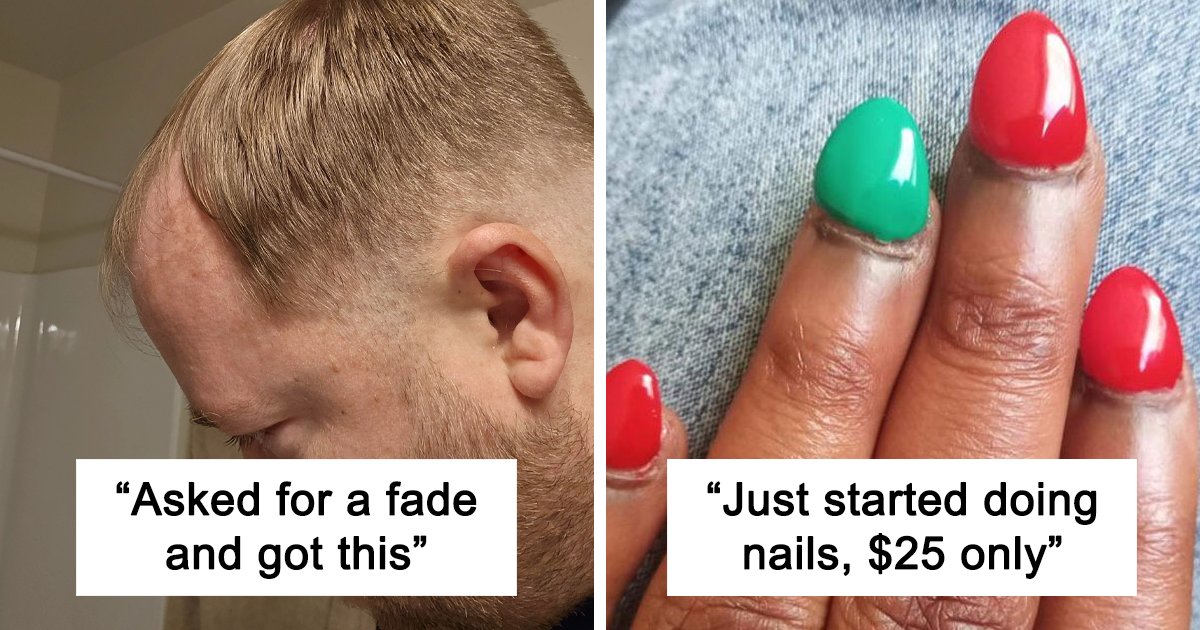
There is a very special kind of silence that happens when a stylist spins the chair around, hands you a mirror, and your reflection says, “We have entered a new legal era.” A beauty salon visit is supposed to feel like a tiny vacation with better lighting: fresh hair, polished nails, glowing skin, maybe a complimentary cup of coffee that tastes like confidence. But as countless people have shared online, sometimes the “after” photo belongs in a warning label, not a portfolio.
The worst beauty salon services are not always dramatic at first. Sometimes they begin with a stylist saying, “Trust the process.” Sometimes it is a nail technician dipping every client’s fingers into the same powder like it is a communal soup. Sometimes it is a “quick trim” that removes enough hair to donate to three wigs and a small throw pillow. From botched balayage to painful waxes, crooked acrylics, burned scalps, patchy spray tans, allergic reactions, and mysterious surprise fees, salon fails have become their own internet genreand unfortunately, many of them are more than funny. They can be expensive, embarrassing, uncomfortable, and occasionally risky to your health.
This article takes a closer look at 50 common beauty salon horror stories people have shared, why they happen, how to spot red flags before sitting in the chair, and what to do if your appointment goes from “self-care” to “send help.”
Why Bad Beauty Salon Services Go Viral
Beauty salon disasters spread online because they hit a nerve. Hair, nails, lashes, brows, and skin are personal. They affect how we walk into a room, how we show up in photos, and how much time we spend negotiating with a hat. When a salon gets it right, customers become loyal fans. When a salon gets it wrong, people become unpaid investigative journalists with ring lights.
There is also the expectation gap. A client shows a soft caramel balayage from Pinterest, but leaves with orange zebra stripes. Someone asks for “natural brows” and gets two surprised commas. A bride books makeup for her wedding day and discovers the foundation match was selected by someone who has never met human undertones. The comedy is obvious, but the frustration is real: beauty services require skill, sanitation, communication, product knowledge, and honesty.
50 Worst Beauty Salon Services People Have Shared
These examples are written as realistic, original summaries based on common public complaint patterns, salon safety guidance, and the types of beauty fails people often describe online. They are not copied from any single post, but they reflect the kinds of experiences consumers repeatedly report.
Hair Color, Bleach, and Dye Disasters
- The “ash blonde” that turned green: A client asked for cool blonde and left with hair that looked like it had strong opinions about swimming pools.
- The patchy balayage: Instead of soft dimension, the final result had chunky stripes, harsh lines, and one suspiciously untouched section in the back.
- The orange root glow: The stylist lifted the roots too fast, leaving the scalp area pumpkin-orange while the ends stayed muddy brown.
- The toner betrayal: A beautiful blonde was over-toned into gray-purple, giving “fashion editorial” in the least intentional way possible.
- The box-dye blame game: Even when the client disclosed past color history, the stylist continued with bleach and later blamed the client when the hair snapped.
- The black dye surprise: A customer asked for rich brunette and got flat black hair so dark it absorbed indoor lighting.
- The uneven fantasy color: Bright pink, blue, or purple looked amazing in the salon chair, then faded into patchy regret after two washes.
- The fried money piece: Face-framing highlights were processed until they became crispy noodles with emotional damage.
- The scalp burn: Bleach or relaxer was left on too long, causing burning, tenderness, flaking, or sores.
- The “color correction” that made things worse: After one bad service, the correction turned into round two of chemical chaos.
Haircut Horrors
- The trim that became a chop: The client asked for one inch off and watched five inches disappear like a magician with scissors.
- The uneven bob: One side touched the jawline; the other side seemed to be exploring its own creative direction.
- The mystery bangs: Nobody requested bangs, yet somehow they arrived.
- The “textured” haircut: Over-thinning left the hair stringy, frizzy, and impossible to style.
- The curly hair crime scene: A stylist cut curls wet, stretched, and straight down, then looked surprised when they bounced into uneven steps.
- The mullet by accident: Layers were cut so dramatically that the client left with business in front, lawsuit in back.
- The rushed appointment: A stylist squeezed in too many clients, resulting in crooked lines and a blow-dry that looked like a weather event.
- The ignored reference photo: The stylist nodded at the inspiration picture and then performed an entirely unrelated haircut.
- The razor mistake: Razor cutting on the wrong hair texture created frizz, split ends, and a long-term styling battle.
- The “I can fix it” spiral: Every attempt to even out the haircut made it shorter, until the client had no choice but to call it a pixie.
Nail Salon Nightmares
- The lumpy acrylic set: Nails came out thick, uneven, and shaped like tiny ski slopes.
- The bleeding cuticle appointment: Aggressive trimming turned a manicure into a first-aid situation.
- The reused tools: A customer noticed clippers, files, or buffers moving from client to client without proper cleaning.
- The crooked French tips: Each nail had a different smile line, and none of them were happy.
- The painful dip powder: Product touched the skin, hardened around the nail, and caused itching or swelling later.
- The fungus fear: Moisture trapped under lifting enhancements created discoloration and panic.
- The rushed gel removal: Instead of soaking carefully, the technician pried polish off, peeling layers of natural nail with it.
- The surprise upcharge: The advertised $45 set somehow became $92 after shape, length, design, “repair,” and breathing fees.
- The bubble polish: Gel cured with wrinkles or bubbles, then peeled within days.
- The painful pedicure: Over-filing calluses, cutting too deeply, or scraping aggressively left feet sore instead of smooth.
Waxing, Brows, Lashes, and Skin Fails
- The eyebrow vanishing act: A brow wax removed too much hair and left the client with two thin question marks.
- The uneven brow tint: One brow looked soft and natural; the other looked like it had joined a motorcycle club.
- The wax burn: Wax was too hot or the skin was pulled incorrectly, causing redness, tenderness, or peeling.
- The lash extension clumps: Extensions were glued together, heavy, itchy, and impossible to brush through.
- The lash glue reaction: Redness, swelling, or watering eyes appeared after an appointment with poorly explained products.
- The chemical peel surprise: A “gentle facial” turned into stinging, peeling, and days of hiding from windows.
- The orange spray tan: The color developed into a shade best described as “traffic cone at sunset.”
- The patchy tan hands: Palms, knuckles, and elbows absorbed color unevenly, creating evidence that no amount of scrubbing could fully erase.
- The dirty facial tools: Steamers, extractors, brushes, or towels looked questionable enough to make a client reconsider the entire wellness industry.
- The breakout aftermath: Heavy oils, contaminated tools, or harsh products triggered breakouts after a supposedly clarifying treatment.
Customer Service and Salon Policy Fails
- The double-booked stylist: The stylist bounced between three clients, leaving one person processing under foils far too long.
- The no-consultation appointment: The service began before the client’s hair history, allergies, budget, or desired outcome were discussed.
- The blame-the-client routine: When the result looked wrong, the salon blamed lighting, hair texture, hormones, shampoo, Mercury retrogradeanything but the service.
- The refusal to fix obvious errors: A salon denied responsibility for a visibly uneven cut or failed color while still offering to “fix it” for another full price.
- The influencer bait-and-switch: A salon showcased expert-level work online, but the appointment was handled by someone with very different experience.
- The hidden trainee service: A client thought they booked a senior stylist but unknowingly became practice material.
- The pressure upsell: The stylist repeatedly pushed treatments, glosses, masks, or packages until the client felt trapped.
- The appointment that started an hour late: No apology, no update, just a waiting room full of people silently aging.
- The sanitation red flags: Dusty stations, stained towels, cluttered sinks, and questionable foot baths made the client wish they had stayed home.
- The review intimidation: After a bad service, the business pressured the customer not to post an honest review, which only made the story more shareable.
What These Salon Fails Have in Common
Most terrible beauty salon services are not caused by one tiny mistake. They usually come from a stack of problems: poor communication, unrealistic expectations, weak training, rushed timing, unsafe sanitation, unclear pricing, or a salon culture that values quick turnover over careful work.
A good stylist or technician will ask questions before touching your hair, skin, nails, or lashes. They will explain what is possible, what is risky, what it will cost, and how long it should last. They will also be honest when your inspiration photo is not realistic for your current hair condition, natural texture, budget, or maintenance habits. That honesty may not feel glamorous, but it is much better than leaving with hair that feels like toasted coconut.
Health and Safety Risks Behind Beauty Salon Disasters
Some salon fails are funny only after enough time has passed. Others involve real safety concerns. Hair smoothing products can release irritating fumes when heated. Nail salon products may contain chemicals that affect workers and clients through vapors, dust, skin contact, or eye exposure. Cosmetic ingredients can also trigger allergies, especially fragrances, preservatives, dyes, metals, and latex. Nail enhancements and dip powders may cause reactions such as swelling, itching, fluid-filled bumps, discoloration, or nail lifting.
Pedicure safety is another major issue. Cleanliness matters because tools, tubs, and foot baths come into contact with skin that may have tiny cuts or irritation. A clean, licensed salon should sterilize instruments after each use, use proper disinfection procedures, and avoid risky shortcuts. If the station looks dirty, the tools look reused, or the technician dismisses your concerns, your best beauty move may be walking out with unfinished nails and fully intact standards.
How to Avoid a Bad Salon Experience
1. Research Beyond the Star Rating
A five-star average can hide a lot. Read the actual reviews, especially the recent ones. Look for repeated complaints about damaged hair, poor sanitation, rude service, surprise pricing, or results that do not match the portfolio. One angry review may be a fluke. Ten similar stories are a chorus.
2. Ask for a Consultation First
For color corrections, major haircuts, extensions, chemical straightening, lash extensions, facials, or permanent makeup, consultation is not a luxuryit is the seatbelt. Ask what the process involves, what products will be used, what could go wrong, how much it will cost, and what maintenance is required.
3. Be Honest About Hair and Skin History
Tell your provider about previous dye, bleach, relaxers, henna, medications that may affect skin sensitivity, allergies, recent exfoliation, acne treatments, and past reactions. Beauty professionals cannot make safe choices with mystery data.
4. Watch the Sanitation Habits
Fresh towels, clean tools, disinfected surfaces, single-use items when appropriate, and visible licenses are all good signs. Dirty stations, cloudy foot baths, reused files, or open powder jars shared between clients deserve a polite exit.
5. Confirm the Price Before the Service Starts
Ask for a full estimate, including toner, treatments, length charges, design fees, removal, styling, and correction costs. Beauty math should not feel like reading a phone bill from 2007.
What to Do If a Salon Ruins Your Hair, Nails, Skin, or Day
First, document everything. Take photos in natural light, save receipts, write down the date, service, products mentioned, and names of the people involved. If you are experiencing pain, burns, swelling, rash, breathing symptoms, or signs of infection, contact a medical professional. Health comes before refunds, reviews, or trying to “wait and see.”
Next, contact the salon calmly and quickly. Explain what went wrong and what resolution you want: correction by a senior provider, a refund, partial refund, or written product details for your doctor. If the business refuses to help, you can consider a written complaint, your state cosmetology board, a payment dispute when appropriate, or an honest online review. Keep the review factual. “My nails lifted in three days and the salon declined a refund” is stronger than a 900-word emotional courtroom drama starring your cuticles.
500-Word Experience Section: What These Beauty Salon Horror Stories Teach Us
After reading enough bad beauty salon stories, one lesson becomes painfully clear: the appointment begins before the appointment. The disaster often starts when a customer books based only on a viral video, a discount, or a friend saying, “They’re amazing,” without checking whether the provider is amazing at the specific service needed. A stylist who cuts sharp bobs beautifully may not be the best person for curly layers. A nail technician who creates flawless short gel manicures may not specialize in long sculpted acrylics. A facialist who gives relaxing spa treatments may not be qualified for aggressive peels or extractions. Beauty is not one skill; it is a toolbox.
The second lesson is that clients sometimes ignore their gut because they do not want to seem rude. They notice the towel is stained, the station is messy, the stylist seems distracted, or the technician skips questions about allergies. But instead of speaking up, they stay frozen in the chair while their inner voice whispers, “This is how documentaries begin.” A salon visit is a paid professional service. You are allowed to ask questions. You are allowed to pause the service. You are allowed to say, “I’m not comfortable continuing.” Politeness should not cost you your hairline.
The third lesson is that communication must be painfully specific. “Make it lighter” can mean soft caramel to one person and platinum lightning strike to another. “Just a trim” can mean dusting the ends or cutting off everything that has ever experienced sadness. Bring photos, but also explain what you like about the photos: the tone, the length, the shape, the softness, the maintenance level. Just as important, explain what you do not want. A good professional will translate inspiration into reality instead of pretending every head of hair is a blank canvas with unlimited bleach tolerance.
The fourth lesson is that cheap can become expensive. A bargain service is not automatically bad, and a luxury salon is not automatically safe. But when a price seems too good to cover time, training, quality products, sanitation, and careful technique, ask questions. Corrective color, nail repair, dermatology visits, or growing out a bad cut can cost far more than choosing a qualified provider in the first place.
Finally, the best salon experiences are partnerships. The professional brings training, tools, and judgment. The client brings honesty, expectations, and boundaries. When both sides communicate clearly, beauty services can be joyful. When they do not, the result may become one of those unforgettable stories people share online with the caption, “I paid actual money for this.” And if that ever happens to you, take photos, breathe, protect your health, ask for a fair resolution, and remember: hair grows, nails grow, brows growslowly, dramatically, and with a grudge, but they grow.
Conclusion
The worst beauty salon services are memorable because they combine hope, money, trust, and a mirror. People book appointments expecting confidence and convenience, not chemical burns, crooked nails, orange roots, missing brows, or a final bill that requires a chair of its own. Yet these stories also offer useful lessons. Research the salon, ask questions, confirm pricing, pay attention to hygiene, and do not let embarrassment stop you from speaking up.
Most beauty professionals work hard, train seriously, and care deeply about their clients. The problem is not the beauty industry as a whole; it is the dangerous mix of poor technique, rushed service, weak sanitation, and bad communication. A great salon listens before it acts. A great provider explains risks before they become regrets. And a great customer knows that “trust the process” should still include a clean cape, a clear price, and hair that does not crunch when touched.
If you have ever survived a salon fail, you are not alone. Somewhere out there, another person is staring at uneven bangs, whispering, “It will grow,” while adding hats to an online shopping cart.