Ask a simple question about the Titanic and the ocean answers with a lawyer, a historian, a museum curator, and probably a very tired judge. “Who owns the Titanic?” sounds like it should have a clean answer: someone built it, someone bought it, someone insured it, someone lost it, and now someone must own what remains. Easy, right? Not quite. The RMS Titanic is not a used car sitting in a parking lot with a title in the glove box. It is a broken ocean liner resting about two and a half miles below the North Atlantic, split into sections, surrounded by a vast debris field, and treated by many as a grave site, archaeological treasure, and cultural icon all at once.
The short answer is this: no single private person or company simply “owns” the Titanic wreck in the ordinary sense. RMS Titanic Inc. is the court-recognized salvor-in-possession, meaning it has exclusive salvage rights recognized by U.S. federal courts. It can recover, conserve, and exhibit certain artifacts under strict legal and ethical controls. But that is not the same thing as owning the ship itself. The wreck lies in international waters, and its protection involves U.S. courts, U.S. federal law, the United Kingdom, international agreements, preservation rules, and a large public interest in treating the site with respect.
In other words, the Titanic belongs legally to a complicated web of maritime law, and emotionally to almost everyone who has ever stared at a photograph of its bow and felt the room get quiet.
The Titanic Was Once a Commercial Ship Owned by a Company
Before the Titanic became a legend, it was a business asset. RMS Titanic was operated by the White Star Line, a British shipping company that competed in the glamorous and brutally competitive transatlantic passenger trade. Built by Harland and Wolff in Belfast, the ship was designed to carry wealthy travelers, immigrants, mail, cargo, and the hopes of an age that believed technology could outwit the sea.
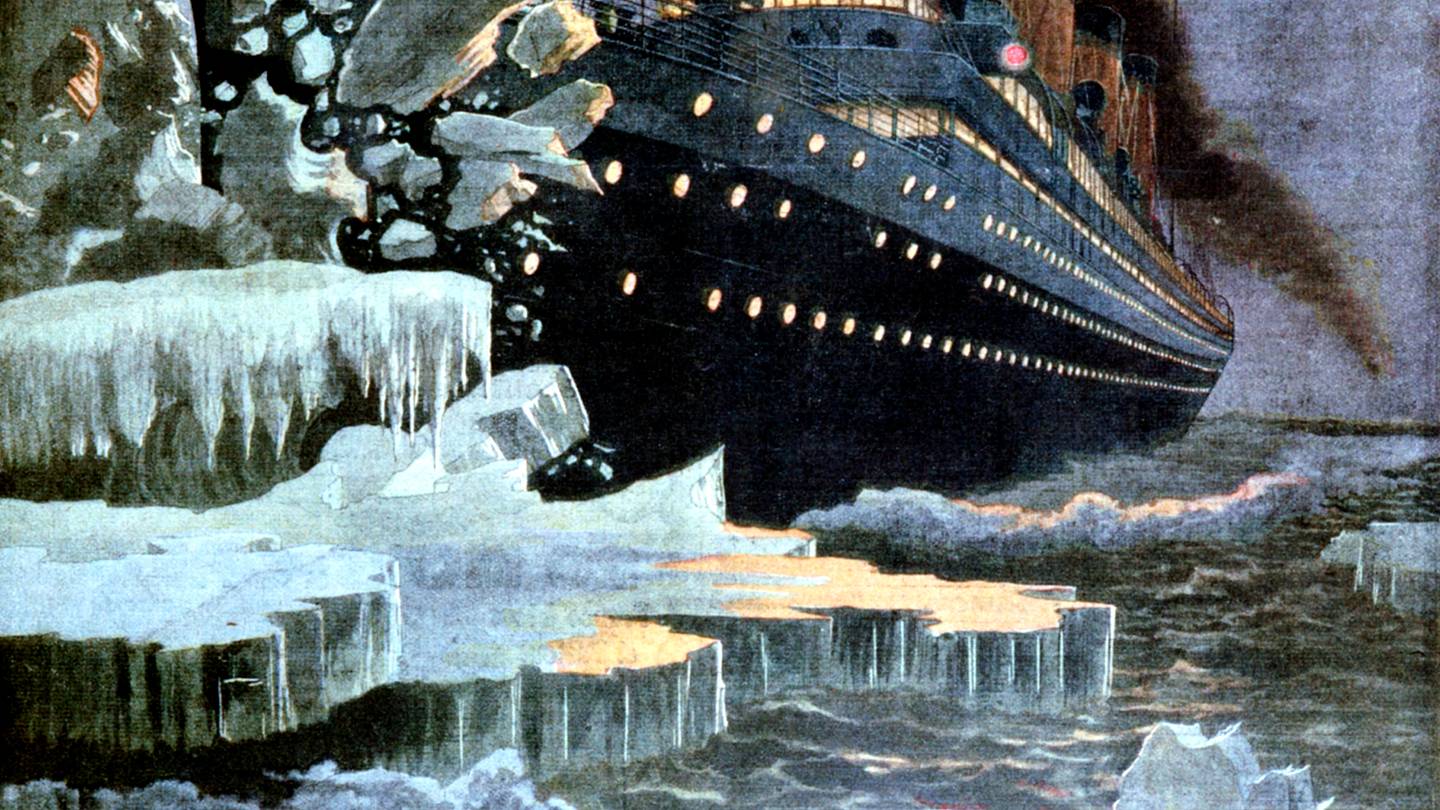
When Titanic sailed from Southampton in April 1912, ownership was much easier to explain than it is today. The vessel belonged to the corporate world of White Star Line and its parent business interests. It had passengers, crew, tickets, insurance, mail contracts, and a destination: New York. Then the ship struck an iceberg, sank on April 15, 1912, and became something no balance sheet could fully describe.
After the sinking, insurance claims, legal settlements, and corporate changes followed. White Star Line itself later merged with Cunard. Over time, the original commercial ownership became less important than the status of the wreck. Once Titanic disappeared beneath the Atlantic, it was no longer a functioning ship. It became a lost wreck in deep international waters, and that changed the legal conversation dramatically.
Why the Wreck Is Not Simply “Owned” Like Normal Property
Property law works best when the property can be located, controlled, moved, inspected, and handed over. Titanic checks almost none of those boxes. The wreck sits far from shore, in international waters, at a depth that requires specialized equipment to reach. For decades after 1912, nobody even knew its exact location. The ship was not discovered until 1985, when a joint American-French expedition led by Robert Ballard of Woods Hole Oceanographic Institution and Jean-Louis Michel of IFREMER located the wreck.
Once discovered, Titanic triggered a very old legal question: what happens when valuable property is found at sea? Maritime law has two major ideas that often come up in shipwreck disputes: the law of finds and the law of salvage. The law of finds can, in some cases, reward a finder with ownership of abandoned property. The law of salvage is different. It rewards someone for rescuing or recovering maritime property, but it does not automatically make that person the owner.
Titanic has largely been treated through salvage law, not as a free-for-all treasure hunt. That matters. A salvor may receive rights, protections, and compensation, but the salvor is not automatically crowned “King of the Rusticles.” The courts have repeatedly emphasized that Titanic is historically significant and that recovered artifacts should be preserved for public benefit rather than scattered like souvenirs from the world’s saddest gift shop.
What Does RMS Titanic Inc. Actually Own?
RMS Titanic Inc. is the central private entity in the modern Titanic ownership story. Since the 1990s, U.S. federal courts have recognized the company as salvor-in-possession of the Titanic wreck. This status gives RMS Titanic Inc. exclusive rights to recover artifacts from the wreck site, especially from the debris field surrounding the ship, while preventing rival salvors from interfering.
But here is the key distinction: salvage rights are not the same as total ownership of the wreck. RMS Titanic Inc. itself has publicly stated that it does not own Titanic, the ship, the wreck site, or the ocean area where the wreck rests. Instead, the company describes itself as a steward with responsibilities to conserve and display artifacts. That is an important difference. Owning a spoon recovered from the debris field under court-approved conditions is one thing. Owning the entire Titanic as if it were a yacht with a “For Sale” sign is another.
The company has recovered thousands of artifacts, including dishes, tools, personal items, and sections associated with the ship. These objects have been conserved and displayed in exhibitions. Some artifacts have complicated ownership histories, especially those recovered during early expeditions involving French authorities. U.S. courts have also placed restrictions on how collections may be handled, often emphasizing that artifacts should remain together and be used for public education.
So, when people say RMS Titanic Inc. “owns the Titanic,” they are usually using shorthand. A more accurate statement is: RMS Titanic Inc. has court-recognized salvage rights and controls a major collection of recovered Titanic artifacts, but it does not own the wreck as a whole.
The Role of U.S. Courts in Titanic Salvage Rights
Much of the modern Titanic legal story runs through U.S. federal admiralty court in Virginia. In 1994, RMS Titanic Inc. was recognized as the exclusive salvor-in-possession. That gave the company a legal shield against competitors and allowed court supervision of salvage activity. The courts did not treat Titanic as an ordinary commercial wreck. They repeatedly acknowledged the ship’s extraordinary historical, cultural, and memorial value.
In later litigation, RMS Titanic Inc. sought broader title claims over artifacts. Courts resisted turning salvage rights into unrestricted ownership. One major appellate ruling explained the tension clearly: a salvor cannot enjoy the court’s protection as an exclusive salvor and simultaneously claim the freedom of a finder who owns everything outright. In everyday language, the court basically said, “Pick a lane.” Maritime law, unlike a buffet, does not always allow you to pile every doctrine onto one plate.
The court-supervised model has shaped how Titanic artifacts are recovered, conserved, displayed, and restricted from piecemeal sale. The legal goal has generally been to preserve the collection’s integrity and keep the public interest in view. That approach reflects a broader truth: Titanic is valuable not just because objects from it can sell for large sums, but because those objects tell connected stories about people, class, technology, migration, bravery, failure, and memory.
Does Any Government Own the Titanic?
No government owns the Titanic in a simple, complete sense either. The wreck lies in international waters, outside the normal territorial ownership of any one nation. However, governments do play a major role in protecting the site.
The United States passed the RMS Titanic Maritime Memorial Act of 1986 after the wreck was discovered. The Act recognized the site’s cultural, historical, educational, and memorial significance. It encouraged international cooperation and expressed the view that Titanic should not be physically altered, disturbed, or salvaged without careful guidelines. This law did not make the U.S. the owner of Titanic, but it made clear that the United States had a preservation interest.
The United States and the United Kingdom later became parties to an international agreement concerning the Titanic wreck. That agreement, which entered into force for the United States in 2019, strengthens protection of the site. It supports permit systems for entering the wreck, disturbing it, or removing artifacts. The agreement treats Titanic as an underwater cultural heritage site and a memorial to the more than 1,500 people who died.
Therefore, governments act less like owners and more like guardians, regulators, and referees. They help decide what kinds of expeditions may happen, what activities are too intrusive, and how the wreck should be respected. Think of the Titanic as a historic cemetery, museum, archaeological site, and shipwreck rolled into one. Nobody gets to show up with a claw machine and call it research.
What About the Artifacts?
Titanic artifacts are where the question becomes especially tricky. Some items were recovered from the debris field, not from inside the ship. Others may have personal, historical, or estate-related significance. Many recovered artifacts have been conserved and exhibited as part of a collection. Their legal status depends on when, where, and how they were recovered, and what court orders or administrative decisions apply.
RMS Titanic Inc. has been associated with the recovery and conservation of more than 5,000 artifacts. These items help the public understand the disaster in a way that photographs alone cannot. A plate, a shoe, a perfume vial, or a section of hull can collapse the distance between 1912 and now. They remind us that Titanic was not merely a ship; it was a floating city of individual lives.
Still, artifact recovery remains controversial. Preservationists argue that the wreck should be left undisturbed as a grave site. Salvors argue that some objects in the debris field may deteriorate beyond recovery if left on the ocean floor. Museums and educators argue that carefully conserved artifacts can teach future generations. The disagreement is not just legal. It is moral. Is recovery rescue, or is it disturbance? The answer often depends on the object, the method, and the motive.
Can Anyone Visit the Titanic Wreck?
Visiting the Titanic wreck is not like booking a whale-watching tour and hoping for decent weather. The site is remote, deep, dangerous, expensive, and subject to legal restrictions. Modern expeditions require advanced deep-sea technology, expert planning, and compliance with applicable law. U.S. and U.K. rules can affect vessels, nationals, and activities under their jurisdiction.
Recent legal disputes have centered on whether expeditions may enter the hull, disturb the wreck, or recover additional objects. U.S. authorities have argued that intrusive activity can violate federal law and international agreements. RMS Titanic Inc. has adjusted expedition plans in response to legal and practical concerns. The debate continues because the ship is deteriorating, and time adds pressure to every decision.
The ocean is not waiting politely for humans to finish arguing. Titanic is slowly being consumed by corrosion, bacteria, pressure, and time. The famous bow is still recognizable, but the wreck is fragile. This creates a preservation paradox: touching the site can damage it, but doing nothing also means losing parts of it forever. That is why modern Titanic policy tends to favor documentation, mapping, non-invasive research, and extremely cautious recovery when justified.
Why the Titanic Ownership Question Still Matters
The question “Who owns the Titanic?” matters because it forces us to decide what kind of thing Titanic is. Is it property? Evidence? A grave? A museum collection? A movie-fueled cultural symbol? A scientific site? The honest answer is yes, all of the above.
If Titanic were treated only as property, the discussion would focus on profit, title, and possession. If treated only as a grave, no artifact might ever be touched. If treated only as science, human emotion might be pushed aside. If treated only as entertainment, the site could become a backdrop for spectacle. The current legal framework tries, imperfectly but seriously, to balance all of these identities.
That is why the ownership answer is layered. RMS Titanic Inc. has salvage rights and controls recovered artifacts under court oversight. Governments regulate and protect the wreck through law and treaty. Courts supervise competing claims. Historians, archaeologists, descendants, museums, and the public all have moral stakes. The Titanic itself remains where it fell, outside ordinary ownership, still powerful enough to make lawyers poetic and poets oddly legalistic.
Common Myths About Titanic Ownership
Myth 1: RMS Titanic Inc. Owns the Entire Ship
Not exactly. RMS Titanic Inc. is the recognized salvor-in-possession and has important rights involving recovered artifacts, but it does not own the wreck site or the ship itself in the simple way people usually mean when they say “own.”
Myth 2: Since the Wreck Is in International Waters, Anyone Can Take Things
Absolutely not. International waters do not mean “legal yard sale.” Court orders, federal law, international agreements, and preservation rules restrict who may disturb or recover objects from the wreck.
Myth 3: The Titanic Could Be Raised If Someone Paid Enough
Practically speaking, no. The wreck is too deep, too fragile, and too deteriorated. Raising it would likely destroy much of what remains. The better modern approach is careful documentation, conservation of recovered artifacts, and respectful preservation.
Myth 4: Artifacts Are Just Collectibles
Titanic artifacts are not ordinary collectibles. Many are connected to passengers, crew, and a mass-casualty disaster. Their value is historical and emotional, not merely financial. A recovered dish or suitcase may look simple, but it carries the weight of a human story.
A Practical Answer: So, Who Owns the Titanic?
The most accurate answer is: no one owns the Titanic wreck outright. RMS Titanic Inc. has exclusive salvage rights recognized by U.S. courts and manages a major artifact collection. Some recovered artifacts have specific legal ownership histories. The United States and United Kingdom help regulate and protect the wreck through law and international agreement. The site itself, resting in international waters, is treated as an underwater cultural heritage site and memorial rather than ordinary private property.
If you want the cocktail-party version, say this: “Nobody owns the Titanic like a normal object. RMS Titanic Inc. has salvage rights and artifacts, while governments and courts control protection and access.” Then take a sip of your drink and enjoy watching everyone at the party suddenly become a maritime lawyer.
Experience Section: What the Titanic Ownership Debate Teaches Us
Spending time with the question “Who owns the Titanic?” can feel surprisingly personal. At first, it looks like a legal puzzle. You expect documents, court rulings, corporate names, and perhaps a few stern paragraphs about admiralty jurisdiction. But the deeper you go, the more the topic stops feeling like a property dispute and starts feeling like a lesson in how people handle memory.
Imagine standing in a Titanic exhibition and looking at a recovered object behind glass. It might be a plate, a shoe, a perfume bottle, or a piece of the ship’s machinery. Your first reaction may be curiosity: How did this survive? Who used it? How was it recovered from such an impossible depth? Then another feeling arrives, quieter but heavier. This was not just an object. It belonged to a world that ended suddenly. The glass case becomes less like a display and more like a pause button pressed on history.
That experience helps explain why ownership is so difficult. If a company conserves an artifact and shows it to millions of visitors, it performs a public service. Without recovery, some objects might be lost forever to corrosion and sediment. A carefully preserved artifact can teach more powerfully than a paragraph in a textbook. It can make a child ask questions, make an adult reconsider class divisions on the ship, or make a family think about migration and risk. In that sense, salvage can rescue stories.
But the opposite feeling is just as real. Titanic is also a grave site. More than 1,500 people died in the disaster. Even when no visible human remains are present, the site carries the dignity of a final resting place. To many people, disturbing it feels invasive. The idea of selling artifacts individually can feel especially uncomfortable, as if pieces of a shared tragedy are being turned into luxury décor. Nobody wants history reduced to a price tag, especially when the history involves terror, cold water, and families torn apart.
The most meaningful experience, then, is learning to hold both truths at once. Preservation matters. Public education matters. Respect matters. Legal clarity matters. The Titanic ownership debate is not a simple fight between heroes and villains. It is a continuing negotiation between access and restraint, science and sentiment, law and memory.
For writers, students, museum visitors, and history lovers, the Titanic offers a powerful reminder: not everything valuable should be treated like merchandise, and not everything sacred must be hidden forever. The best stewardship sits somewhere in the careful middle. It asks whether an action helps the public understand the past without exploiting it. It asks whether recovery is necessary, whether conservation is responsible, and whether the people connected to the tragedy are being honored rather than used as decoration.
That is why the question “Who owns the Titanic?” stays alive. We are not only asking who can claim legal rights over steel, china, and leather. We are asking who gets to speak for the past, who must protect it, and how the rest of us should behave when history is fragile enough to fit in a display case.
Conclusion
The Titanic is not owned in the simple way a house, car, or painting is owned. Its legal reality is a careful arrangement of salvage rights, court supervision, artifact custody, federal law, and international preservation. RMS Titanic Inc. remains the key salvor connected to recovered artifacts, but the company does not own the wreck itself. Governments do not own it outright either; instead, they help regulate and protect it as a historic memorial in international waters.
The best way to understand Titanic ownership is to separate possession from responsibility. Possessing artifacts is not the same as owning the tragedy. Having salvage rights is not the same as owning the ship. Regulating access is not the same as possessing the wreck. The Titanic belongs, in the deepest cultural sense, to history. Legally, it is guarded by a patchwork of maritime law. Emotionally, it remains a shared human inheritance resting in the dark, still asking us to be careful with what we remember.