So, who is the Lion in Wicked? The short answer: he is the young lion cub Elphaba and Fiyero rescue at Shiz University, and he later becomes the Cowardly Lion from The Wizard of Oz. Yes, that nervous, lovable, courage-seeking lion who eventually joins Dorothy on the Yellow Brick Road gets a surprisingly emotional origin story in Wicked. And like almost everything in Oz, the answer is not as simple as “cute cub grows up, sings about courage, end credits.”
In Wicked, the Lion is part of the larger story about Animals in Oz losing their rights, their voices, and their place in society. His brief appearance may look like a small side plot, but it actually reveals a lot about Elphaba’s character, the Wizard’s cruelty, Fiyero’s hidden decency, and the way Wicked rewrites familiar Wizard of Oz mythology from a sharper, more political angle. Basically, the Lion may not get many lines, but he walks in with a whole symbolic suitcase.
The Lion in Wicked Is the Future Cowardly Lion
The Lion in Wicked is best understood as the origin-story version of the Cowardly Lion, one of Dorothy Gale’s famous companions in The Wizard of Oz. In L. Frank Baum’s original story, the Cowardly Lion wants courage. He believes he is a failure because lions are supposed to be brave, fierce, and kingly. Instead, he is anxious, emotional, and easily frightened. That contradiction is what makes him funny, memorable, and surprisingly human.
Wicked takes that familiar character and asks a darker question: what if the Lion did not simply “lack courage”? What if he grew up frightened because Oz itself taught him fear? In the musical and the film adaptation, we meet him before he becomes Dorothy’s companion. He is just a cub, trapped in a cage and used as a classroom demonstration. That image changes everything. Suddenly, the Cowardly Lion is not just a comic figure with shaky knees. He is a survivor of a society that tried to silence him before he could even grow into himself.
Where Does the Lion Appear in Wicked?
The Lion appears during Elphaba’s time at Shiz University, after the removal of Doctor Dillamond, a talking Goat and one of Elphaba’s most important teachers. Doctor Dillamond is not just a quirky professor with hooves and excellent classroom posture. He represents the talking Animals of Oz, who are being pushed out of public life under the Wizard’s rule.
After Doctor Dillamond is forced out, a new human professor introduces a terrified lion cub in a cage. The cage is not just a cage in the ordinary “please do not bite the students” sense. It represents a system designed to stop Animals from learning, speaking, and developing fully. The lesson is horrifying: Oz is not only discriminating against Animals who already speak; it is trying to prevent younger Animals from ever finding their voice.
Elphaba, who has already experienced rejection because of her green skin, instantly recognizes the injustice. She refuses to sit politely while cruelty is dressed up as education. In the film version, she uses poppies to put the classroom to sleep, allowing her and Fiyero to escape with the cub. In the stage musical, the scene similarly becomes a turning point for Elphaba and Fiyero, showing that both characters are more compassionate than the world around them expects.
Why Does Elphaba Rescue the Lion Cub?
Elphaba rescues the Lion because she cannot ignore suffering when it is happening right in front of her. That may sound obvious, but in Wicked, doing the obvious moral thing is often treated as rebellion. Oz is a place where people smile, sing, wear fabulous hats, and look away when injustice becomes inconvenient. Elphaba does not look away.
The Lion cub is helpless. He has no political power, no public platform, and no ability to defend himself inside the system that has trapped him. Elphaba’s rescue of him is an early example of the activism that later makes her an enemy of the Wizard. She is not “wicked” because she wants chaos. She is labeled wicked because she interrupts the comfortable lies Oz tells itself.
This scene also matters because it shows Elphaba’s connection to the Animals is not theoretical. She is not merely upset about policy. She is emotionally invested. Doctor Dillamond’s removal hurts her, but the caged cub forces her to act. The Lion becomes proof that the Wizard’s regime is not just politically corrupt; it is cruel at the most personal level.
What Role Does Fiyero Play in the Lion’s Rescue?
Fiyero’s involvement in the Lion cub rescue is one of the first major signs that he is more than a charming prince with excellent hair and a suspiciously relaxed attitude toward responsibility. Up to this point, Fiyero often presents himself as shallow, careless, and allergic to serious thought. His motto is basically “dance first, reflect never.” Honestly, it is a strong brand.
But when the Lion cub is in danger, Fiyero helps Elphaba. He does not just stand there looking handsome while morality happens nearby. He chooses action. This moment allows Elphaba to see past his polished surface and recognize a person capable of empathy. It also creates emotional tension between them, because their shared rescue mission reveals a connection deeper than flirtation.
In both the musical and the film, the Lion scene helps move Fiyero from carefree outsider to someone who begins questioning Oz’s official story. It also strengthens one of Wicked’s central ideas: people are often more complicated than their public labels. Elphaba is not wicked. Glinda is not merely good. Fiyero is not just a party boy with a horse. And the Cowardly Lion is not simply a coward.
Why Is the Lion Called Cowardly?
The phrase “Cowardly Lion” comes from The Wizard of Oz, where the Lion believes he lacks courage. In Wicked, however, his cowardice is given a more complicated backstory. The implication is that the trauma of being caged, silenced, and “rescued” as a cub may have shaped the fearful adult he becomes.
In the stage musical, the Lion later becomes one of the figures used against Elphaba. The public narrative twists her act of rescue into something negative. Instead of seeing that she saved him from abuse, people suggest that her interference made him weak. This is classic Oz propaganda: take a compassionate act, flip it upside down, add a dramatic mob, and suddenly the rescuer is the villain.
That twisted interpretation is important. Wicked is deeply interested in how stories are told and who gets to control them. Elphaba saves the Lion, but the official version can still blame her for what he becomes. That is the tragedy of her reputation. She does the right thing, but Oz edits the headline.
Is the Lion in Wicked the Same Lion from The Wizard of Oz?
Yes, the Lion in Wicked is intended to be the same character who later appears as the Cowardly Lion in The Wizard of Oz. Wicked functions as a revisionist prequel, meaning it retells the world of Oz from a new perspective and fills in backstories for characters audiences already know.
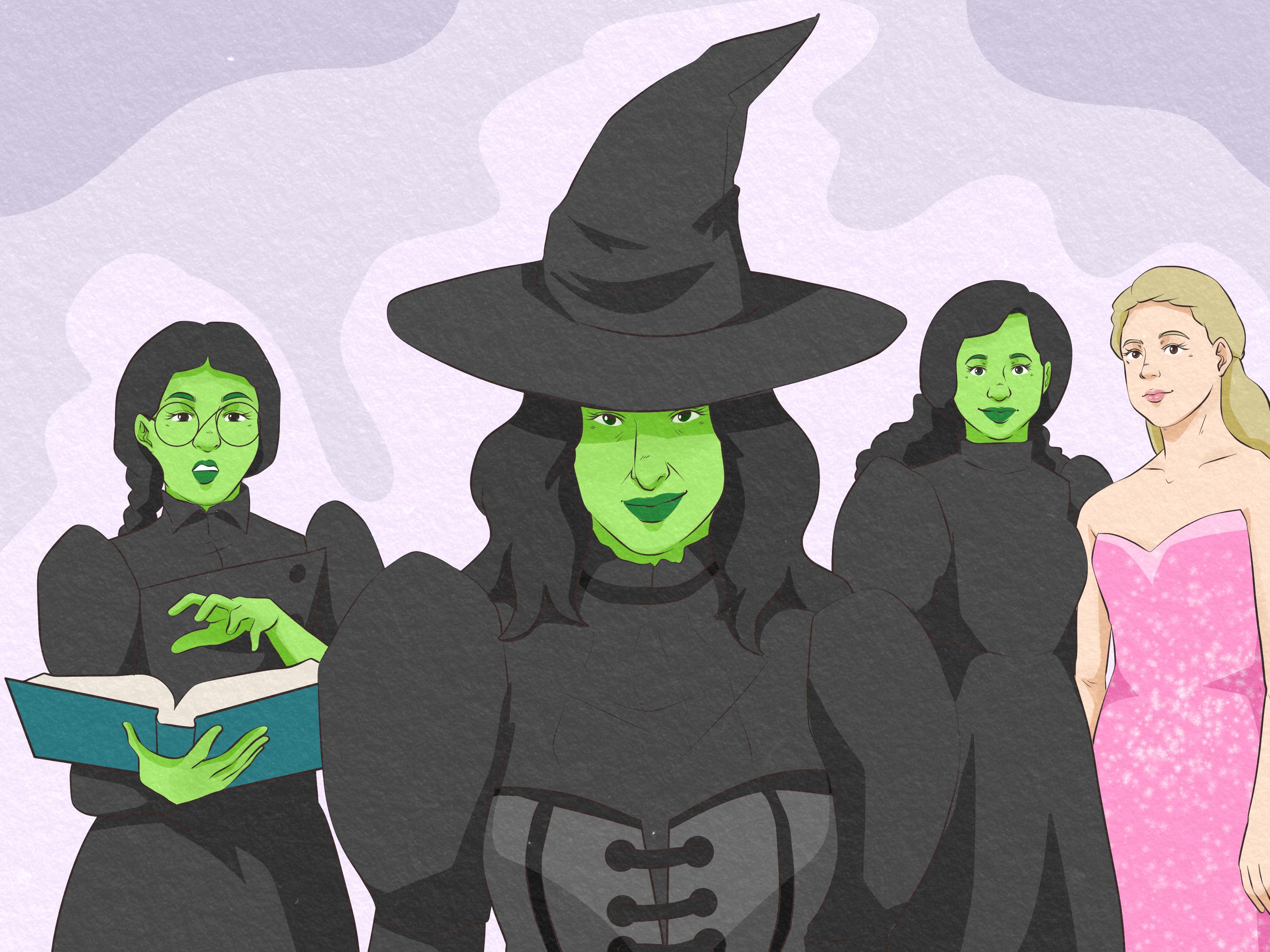
The connection is especially satisfying because Wicked does this with several iconic Oz characters. The Wicked Witch of the West becomes Elphaba, a misunderstood and politically aware young woman. Glinda becomes a more complicated figure who grows from popularity-obsessed student to public symbol of goodness. Boq’s story connects to the Tin Man. Fiyero’s fate connects to the Scarecrow. And the Lion cub connects to the Cowardly Lion.
These connections are part of the fun of Wicked. The story turns familiar characters into puzzle pieces. If The Wizard of Oz is the bright postcard version of Oz, Wicked is the behind-the-scenes documentary where everyone is stressed, morally conflicted, and possibly singing through a crisis.
The Lion in the Wicked Movie
In the 2024 Wicked movie, the Lion cub scene becomes visually striking and emotionally direct. The cub appears in a classroom after Doctor Dillamond is removed, making the link between Animal oppression and institutional control very clear. The scene emphasizes how young and frightened the Lion is, which makes Elphaba’s reaction feel immediate and justified.
The film also gives the rescue a cinematic sense of urgency. Elphaba’s use of poppies echoes famous imagery from The Wizard of Oz, while the escape with Fiyero adds movement, tension, and romantic subtext. It is a small scene in terms of screen time, but it does a lot of narrative work. It explains the Lion’s origin, deepens Elphaba’s activism, develops Fiyero’s character, and expands the movie’s central theme: silence is one of the Wizard’s most dangerous weapons.
In Wicked: For Good, the grown Cowardly Lion appears as part of the story’s overlap with Dorothy’s journey. Colman Domingo voices the character in the film sequel, giving the adult Lion a presence that connects the rescued cub to the classic Oz companion. That casting also underlines how much emotional weight the character carries, even when he is not the main focus.
The Lion in Gregory Maguire’s Wicked Books
The book version of Wicked, written by Gregory Maguire, is darker and more adult than the Broadway musical or the movie adaptation. In Maguire’s wider Wicked Years series, the Cowardly Lion is known as Brrr. He becomes a much more developed character, especially in the novel A Lion Among Men, where his perspective helps explore memory, guilt, politics, and survival in Oz.
Brrr is not merely a joke about fear. He is a character shaped by abandonment, social pressure, and the violent instability of Oz. The novels lean harder into moral ambiguity than the musical does. If the Broadway version gives the Lion a sharp symbolic role, the books give him psychological depth and a longer personal history.
This difference matters because fans sometimes mix the versions together. The musical Lion, the movie Lion, Baum’s original Cowardly Lion, and Maguire’s Brrr are connected, but they are not identical in tone. Baum’s Lion is a children’s-literature figure who discovers he already has courage. The musical’s Lion is part of Elphaba’s misunderstood legacy. The movie’s Lion is a visual reminder of Animal oppression. Maguire’s Lion is a darker literary character carrying the scars of Oz’s political world.
What Does the Lion Symbolize in Wicked?
The Lion symbolizes silencing, fear, propaganda, and the long-term damage caused by oppression. He is introduced as a cub who might never learn to speak if Oz’s authorities get their way. That detail is crucial. In Wicked, speech is power. Doctor Dillamond’s ability to teach, think, and speak makes him dangerous to the Wizard’s regime. A young Animal learning to speak represents a future the Wizard wants to prevent.
The Lion also symbolizes how trauma can be misread as weakness. When he grows into the Cowardly Lion, his fear is easy to mock. But Wicked encourages audiences to ask where that fear came from. Was he born cowardly, or was he taught that the world was unsafe? Was he lacking courage, or was he carrying memories no one else wanted to understand?
Finally, the Lion symbolizes the way good deeds can be distorted. Elphaba saves him, but later Oz can still use his story against her. That is one of the cruelest patterns in Wicked: truth does not automatically win. Sometimes the loudest story wins, especially when Madame Morrible is nearby with a public announcement and absolutely no chill.
How the Lion Connects to the Animal Rights Theme
The Animal rights theme is one of the most important parts of Wicked. In Oz, Animals with a capital “A” are sentient beings who can speak, teach, organize, and participate in society. Under the Wizard, they are gradually stripped of their rights. They lose jobs, social standing, and eventually their voices.
The Lion cub scene makes that political theme painfully concrete. It is one thing to hear that Animals are being pushed out of classrooms. It is another thing to see a baby Animal locked in a cage and treated like an experiment. The cub turns an abstract injustice into something the audience can feel immediately.
Elphaba’s defense of Animals also explains why she becomes such a threat. She sees the connection between private cruelty and public policy. The Wizard’s power depends on controlling who gets to speak and who gets blamed. By protecting the Lion, Elphaba challenges both forms of control.
Why Fans Care So Much About the Lion
Fans care about the Lion because he is a small character with a huge emotional footprint. His story connects childhood vulnerability, classic Oz nostalgia, Elphaba’s heroism, Fiyero’s awakening, and the tragedy of being misunderstood. That is a lot of work for one little cub. Someone get him a snack and a therapist.
The Lion also gives fans one of those delicious “aha!” moments that prequels are built for. Viewers who know The Wizard of Oz suddenly realize they are watching the origin of Dorothy’s future companion. But unlike many franchise callbacks, this one has thematic weight. It is not just there so audiences can point at the screen. It helps explain what kind of world Oz has become before Dorothy ever lands there.
For longtime Wicked fans, the Lion is also part of the musical’s larger moral puzzle. Was Elphaba wrong to interfere? Did saving him change his life for better or worse? Can an act be good even if its consequences are complicated? Wicked does not offer easy answers, which is why people are still debating it years later.
Common Questions About the Lion in Wicked
Does Elphaba create the Cowardly Lion?
No, Elphaba does not create the Lion. She rescues him. However, Oz later twists the story to suggest that her actions contributed to his cowardice. This is part of the propaganda used to turn public opinion against her.
Does Fiyero become the Lion?
No. Fiyero does not become the Lion. Fiyero’s story connects to the Scarecrow, while the rescued cub becomes the Cowardly Lion. This is an easy mix-up because Wicked gives several Oz characters origin stories, and the emotional traffic can get busier than the Yellow Brick Road on a holiday weekend.
Is the Lion important in the stage musical?
Yes, but his role is brief. The Lion cub appears during the Shiz University section, and his later identity as the Cowardly Lion is referenced in the second act. He is not a main character, but his scene is essential to Elphaba’s development and the musical’s political themes.
Who voices the Cowardly Lion in Wicked: For Good?
In the film sequel Wicked: For Good, the adult Cowardly Lion is voiced by Colman Domingo. His role connects the rescued cub from the first film to the familiar Lion who appears alongside Dorothy, the Scarecrow, and the Tin Man.
Is the Lion named Brrr in Wicked?
In Gregory Maguire’s novels, the Cowardly Lion is known as Brrr. The stage musical and film adaptations do not focus on that name in the same way, but book readers often use it when discussing the literary version of the character.
Experience: Watching the Lion’s Story Changes How Wicked Feels
One of the most interesting experiences of watching Wicked is realizing that the Lion’s scene may look small at first, but it quietly changes the emotional temperature of the whole story. Many viewers arrive expecting big songs, green magic, Glinda’s comic sparkle, and Elphaba’s glorious “I have had enough of everyone” energy. Then the Lion cub appears in a cage, and suddenly the glittering world of Oz feels colder.
That moment often lands differently depending on how familiar you are with The Wizard of Oz. If you grew up with the Cowardly Lion as comic relief, seeing him as a frightened cub can feel surprisingly sad. It is like finding out the class clown had a very rough childhood. The adult Lion’s fear stops being just a personality trait and starts looking like a wound. That is where Wicked is clever: it does not destroy the original story, but it changes the way you look at it.
For many fans, the Lion rescue is also the moment when Fiyero becomes genuinely interesting. Before that, he can seem like a charming rich kid whose main talent is entering rooms as if lighting designers personally owe him favors. But when he helps Elphaba, he reveals a conscience. He may not fully understand the political crisis in Oz yet, but he understands that the cub is suffering. That instinct matters. It shows that compassion can begin before someone has all the right language for justice.
The scene can also make viewers think about real-world situations where people are silenced before they are understood. The Lion cub is not only trapped physically; he is trapped in a story other people are writing for him. Authorities decide what he is, what he will become, and what rights he deserves. Elphaba’s rescue pushes back against that. She treats him as someone with a future, not as an object lesson.
There is also a personal reason this scene sticks with people: everyone knows what it feels like to be afraid and then judged for being afraid. The Cowardly Lion’s journey speaks to anyone who has ever been told to “just be brave” when what they really needed was safety, patience, or someone willing to stand beside them. Wicked suggests that courage is not the absence of fear. Sometimes courage is escaping the cage. Sometimes it is helping someone else escape first.
That is why the Lion matters. He is not the loudest character in Wicked, and he certainly does not get the biggest solo. But his story adds tenderness and tragedy to the world of Oz. He reminds us that villains are often manufactured, heroes are often mislabeled, and fear usually has a history. By the time Dorothy meets the Cowardly Lion, we understand something she does not: this Lion has already survived more than anyone gives him credit for.
Conclusion
The Lion in Wicked is the future Cowardly Lion from The Wizard of Oz, but his role is much deeper than a simple Easter egg. As a cub, he is rescued by Elphaba and Fiyero from a cruel classroom demonstration designed to suppress the voices of Animals in Oz. That rescue reveals Elphaba’s moral courage, Fiyero’s hidden compassion, and the Wizard’s frightening system of control.
By giving the Cowardly Lion an origin story, Wicked transforms him from a funny, fearful companion into a symbol of trauma, silencing, and misunderstood bravery. His fear is not merely a joke; it is part of Oz’s larger history of oppression. And in true Wicked fashion, even an act of rescue can be twisted into evidence against the person brave enough to do it.
Note: This article is an original, publication-ready synthesis based on established Wicked, Wizard of Oz, Broadway, film, and Gregory Maguire literary canon. It contains no embedded source links, citation placeholders, or unnecessary publishing artifacts.