Perforated grilles may not be the loudest design feature in a room, but they are definitely doing more work than most people realize. They hide mechanical systems, move air, protect openings, add texture, improve ventilation, and still somehow manage to look clean, modern, and intentional. Not bad for a sheet of metal with holes in it.
At the simplest level, a perforated grille is a panel or framed insert made from material that has been punched, stamped, laser-cut, or otherwise formed with repeated openings. Those openings may be round, square, slotted, hexagonal, decorative, or fully custom. The result is a component that can allow airflow, heat transfer, sound diffusion, light filtration, screening, or visual separation while maintaining a finished architectural appearance.
Today, perforated grilles appear in HVAC systems, cabinet doors, radiator covers, building facades, ceiling panels, return-air openings, commercial interiors, industrial equipment, parking garages, retail displays, and luxury homes. In other words, if there is an opening that needs to breathe without looking like an afterthought, a perforated grille is probably nearby, quietly saving the day.
What Are Perforated Grilles?
Perforated grilles are functional panels made with a repeated pattern of openings. They are commonly fabricated from aluminum, stainless steel, galvanized steel, carbon steel, brass, bronze, or copper. Some are installed flat into walls or ceilings, while others are framed, hinged, removable, curved, powder coated, anodized, polished, or custom-finished to match a specific design style.
The word “grille” usually refers to a protective or decorative covering placed over an opening. In HVAC, it often means an air device without adjustable dampers. In interior design, it may refer to a decorative metal insert used in cabinetry, furniture, radiator enclosures, or wall panels. In architecture, it can mean a larger perforated screen or facade element used for shade, ventilation, security, or visual identity.
The beauty of perforated grilles is their balance of openness and structure. They are not solid panels, yet they are not flimsy screens either. They allow controlled passage of air, light, sound, or heat while preserving a crisp, durable surface.
Why Perforated Grilles Are So Popular
Designers, builders, architects, and homeowners choose perforated grilles because they solve several problems at once. A single grille can improve airflow, conceal mechanical components, protect an opening, and enhance the look of a room. That is the design equivalent of ordering one coffee and somehow getting breakfast too.
1. They Improve Airflow Without Looking Industrial
One of the most common uses for perforated grilles is ventilation. Return-air grilles, transfer grilles, cabinet inserts, radiator covers, and equipment screens all rely on openings that allow air to move. The percentage of open area matters because it affects airflow, pressure drop, and noise. A grille with too little open area may restrict air movement, while a grille with too much open area may look overly transparent or lose rigidity.
For HVAC applications, perforated return grilles are often engineered with high free area to reduce resistance and help maintain quiet air movement. This is especially useful in commercial offices, schools, healthcare environments, hospitality spaces, and modern homes where comfort matters but bulky vents are not exactly part of the design dream board.
2. They Add Texture and Depth
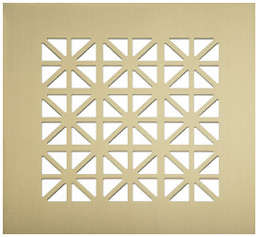
Perforated grilles bring rhythm to a surface. Round holes feel classic and technical. Square holes look crisp and architectural. Slots feel linear and contemporary. Hexagonal openings add a bold geometric personality. Decorative patterns can lean vintage, Art Deco, mid-century, industrial, or ultra-modern depending on the finish and scale.
Instead of a blank panel, a perforated grille creates shadow, depth, and movement. Under changing daylight or interior lighting, the pattern can shift subtly, giving walls, cabinets, ceilings, and screens a more layered appearance.
3. They Conceal What Needs Concealing
Let us be honest: mechanical systems are necessary, but they are not always glamorous. Perforated grilles allow designers to hide radiators, speakers, duct openings, filters, equipment, storage areas, and service spaces while still allowing function. A radiator cover, for example, needs openings so heat can escape. A cabinet holding electronics needs ventilation. A return-air opening needs enough free area for airflow. A perforated grille makes these practical needs look intentional.
4. They Are Durable and Low Maintenance
Metal perforated grilles are known for strength, long service life, and relatively simple maintenance. Aluminum resists corrosion and is lightweight. Stainless steel performs well in demanding environments, including kitchens, clean rooms, laboratories, and exterior applications. Carbon steel is strong and cost-effective when properly finished. Brass and bronze offer warmth and a premium decorative character.
Finishes such as powder coating, anodizing, brushing, polishing, patina, and plating can improve durability and tailor the look. In many cases, maintenance is as simple as dusting, vacuuming, or wiping the grille with a mild cleaner.
Common Types of Perforated Grilles
Perforated HVAC Grilles
HVAC perforated grilles are used for air return, air transfer, supply diffusion, filter access, and ceiling integration. They often feature consistent round-hole patterns, such as small circular perforations arranged on staggered centers. The goal is to maintain airflow while creating a clean appearance that coordinates with diffusers, ceiling systems, and wall finishes.
In high-capacity return applications, free area, face velocity, pressure drop, and noise are important selection factors. A grille may look simple from the room side, but behind that tidy face is a performance conversation involving air volume, duct size, acoustic comfort, and service access.
Decorative Cabinet Grilles
Cabinet grilles are popular in kitchens, pantries, laundry rooms, entertainment centers, and built-ins. They can replace solid door panels to allow airflow while adding a custom furniture feel. A perforated brass grille on a pantry door can feel classic and refined. A powder-coated black grille on a media console can look sleek and modern while helping electronics stay cooler.
Radiator Cover Grilles
Radiator covers need perforations because heat must move into the room. A solid cover would trap heat, which is not ideal unless your design goal is “beautiful but useless.” Perforated radiator grilles allow heat to escape while hiding the radiator itself. Traditional patterns work well in older homes, while simple round or slotted patterns suit contemporary interiors.
Architectural Facade Grilles
On building exteriors, perforated metal grilles and panels can provide solar shading, privacy, ventilation, security, and visual branding. They are often used on parking structures, stair towers, equipment screens, balconies, and rainscreen systems. By adjusting hole size, spacing, and open area, architects can control how much light, air, and visibility pass through the surface.
Industrial and Equipment Grilles
Industrial perforated grilles protect machinery, fans, vents, filters, and equipment openings. These grilles may prioritize strength, safety, airflow, and cleanability over decorative detail, although many industrial designs still look sharp. Stainless steel and heavy-gauge steel are common choices where impact resistance, hygiene, or corrosion resistance matters.
Materials Used for Perforated Grilles
The right material depends on the location, function, budget, and desired appearance. There is no universal “best” metal, only the best metal for the job.
Aluminum
Aluminum is lightweight, corrosion-resistant, and easy to finish. It is a strong choice for architectural panels, ceiling grilles, decorative inserts, and exterior screens. It works especially well when weight matters, such as on large panels or suspended applications.
Stainless Steel
Stainless steel is durable, corrosion-resistant, hygienic, and visually clean. It is commonly used in commercial kitchens, laboratories, medical facilities, clean rooms, exterior grilles, and high-end interiors. It costs more than basic steel, but it performs beautifully in tough environments.
Carbon Steel and Galvanized Steel
Carbon steel offers strength and affordability. Galvanized steel adds corrosion protection through a zinc coating. These materials are common in HVAC grilles, industrial guards, equipment panels, and painted architectural components. Powder coating can add color, durability, and a polished finished look.
Brass, Bronze, and Copper
For decorative interiors, brass, bronze, and copper bring warmth and character. They are often used in cabinet grilles, hospitality spaces, historic restorations, luxury retail, and custom furniture. These metals can develop patina over time, which some people call aging and designers call “character.”
Understanding Open Area
Open area is one of the most important terms in perforated grille design. It refers to the percentage of the panel surface that is open space rather than solid material. For example, a grille with 50 percent open area has half of its face open to air, light, or visibility.
Open area affects airflow, transparency, weight, strength, light transmission, acoustic behavior, and appearance. A higher open area usually allows more air and light to pass through, but it may reduce stiffness or make the grille more visually transparent. A lower open area can provide more privacy, strength, and visual coverage, but it may restrict airflow.
This is why perforated grilles should not be selected by looks alone. A tiny-hole pattern may look elegant, but if it blocks too much air in an HVAC return, the system may become noisy or inefficient. On the other hand, a very open pattern may perform well for ventilation but reveal everything behind it. The best grille balances performance and appearance.
Popular Hole Patterns
- Round holes: The most common and versatile choice for HVAC, industrial, and architectural applications.
- Square holes: Clean, geometric, and modern, often used in design-forward interiors.
- Slotted holes: Excellent for directional lines, airflow, drainage, and contemporary styling.
- Hexagonal holes: Bold and graphic, often chosen for high-impact architectural statements.
- Decorative patterns: Ideal for historic homes, hospitality spaces, luxury cabinetry, and custom interiors.
- Custom perforations: Used for branding, artwork, privacy gradients, image-based facades, and specialty performance requirements.
Where Perforated Grilles Work Best
Residential Interiors
In homes, perforated grilles can be used for pantry doors, laundry cabinets, radiator covers, stair panels, entertainment centers, HVAC returns, speaker covers, and decorative wall panels. They are especially helpful when a designer wants airflow without visual clutter.
Commercial Spaces
Offices, hotels, restaurants, schools, and retail stores use perforated grilles for ceilings, walls, counters, ventilation, equipment screening, and decorative partitions. A restaurant may use perforated brass panels at the host stand. A hotel lobby may use large perforated metal screens to divide seating areas. A corporate office may use white perforated ceiling grilles to keep mechanical systems discreet.
Exterior Architecture
Exterior perforated grilles can shade windows, screen mechanical equipment, ventilate parking garages, protect stairwells, or create a signature facade. They allow designers to play with transparency during the day and lighting effects at night. A backlit perforated screen can turn a plain wall into a glowing architectural feature.
How to Choose the Right Perforated Grille
Choosing a perforated grille starts with one question: what does the grille need to do? If it is purely decorative, pattern and finish may lead the decision. If it supports HVAC performance, airflow and pressure drop should come first. If it is outdoors, corrosion resistance and finish durability matter. If it is in a public area, impact resistance and cleanability may become priorities.
Consider Function First
For air movement, confirm the required free area and make sure the grille does not choke the system. For radiator covers, choose a pattern that lets heat escape freely. For cabinet doors, consider whether the grille is ventilating food storage, electronics, linens, or decorative objects. For exterior screens, think about wind loads, weather exposure, drainage, and long-term finish performance.
Match the Pattern to the Style
A historic home may look best with a decorative brass or bronze pattern. A modern kitchen may call for simple round perforations in matte black or brushed stainless steel. A commercial lobby may benefit from large-format aluminum panels with custom perforations. Pattern scale is important too. Small perforations feel refined; larger perforations feel bold and graphic.
Do Not Forget Maintenance
Every grille collects dust eventually. For HVAC and radiator applications, choose designs that can be removed or cleaned easily. In kitchens or commercial settings, avoid overly complex patterns where grease and debris can build up. A beautiful grille that is impossible to clean will eventually become a very stylish dust museum.
Installation Tips for Better Results
Good installation makes a perforated grille look intentional rather than improvised. Measure the opening carefully. Confirm whether the grille should sit flush, overlap the opening, fit inside a frame, or attach with visible or concealed fasteners. For HVAC grilles, make sure installation does not reduce airflow or create rattling. For cabinet inserts, use a secure frame or retainer system so the panel does not flex or buzz when doors close.
On larger architectural panels, account for expansion, panel stiffness, fastening points, and substrate conditions. A thin panel with a high open area may need a frame or formed edges for rigidity. Outdoor installations should include drainage, corrosion-appropriate materials, and finishes suitable for UV exposure and weather.
Common Mistakes to Avoid
- Choosing only by appearance: A grille must perform as well as it looks.
- Ignoring open area: Too little free area can restrict airflow and increase noise.
- Using the wrong material outdoors: Interior-grade finishes may fail quickly outside.
- Forgetting access: Filters, ducts, radiators, and equipment may need service.
- Skipping edge details: Raw edges can look unfinished and may be unsafe.
- Overlooking scale: A pattern that looks great in a sample may feel too busy on a full wall.
Are Perforated Grilles Worth It?
Yes, especially when function and design both matter. Perforated grilles are not just decorative covers; they are problem-solving components. They can make mechanical systems quieter and more attractive, help air circulate, allow heat transfer, provide privacy, reduce visual clutter, and elevate ordinary openings into design features.
They are also highly customizable. Between material, thickness, hole pattern, open area, finish, frame style, and mounting method, a perforated grille can be tailored to almost any project. Whether the goal is a subtle white return grille in a minimalist ceiling or a dramatic bronze cabinet insert in a luxury kitchen, the design possibilities are wide open.
Real-World Experience With Perforated Grilles
Working with perforated grilles teaches one lesson very quickly: the small details decide whether the final result feels premium or merely “good enough.” On paper, a grille may look like a simple rectangle with holes. In real life, it affects airflow, shadow, sound, cleaning, installation, and the overall mood of a room. That is a lot of responsibility for something most guests will never compliment directly.
In residential projects, perforated grilles often make the biggest difference when replacing plain, builder-grade vents or solid cabinet panels. A standard return-air opening can look clunky on a carefully designed wall. Swap it for a properly sized perforated grille with a clean frame and matching finish, and suddenly the vent stops shouting for attention. It becomes part of the architecture. The same thing happens with radiator covers. A dated radiator can make a beautiful room feel unfinished, but a well-proportioned perforated grille allows heat to move while turning the radiator into a tailored feature.
Cabinetry is another area where perforated grilles shine. In media cabinets, they allow electronics to breathe while hiding cords, routers, receivers, and all the mysterious blinking boxes that seem to multiply in modern homes. In pantry or laundry cabinets, grilles add ventilation and texture. Brass or bronze patterns can soften painted cabinetry, while black steel or aluminum can create a crisp modern contrast.
Commercial projects bring different lessons. In offices and hospitality spaces, grilles must look good but also survive daily use. A decorative pattern that seems charming in a sample may be too delicate near luggage carts, cleaning equipment, or heavy traffic. For these environments, thicker material, reinforced frames, durable powder coating, and removable access panels are worth considering. The best commercial grilles are the ones nobody has to worry about after installation.
Exterior applications require even more planning. Sun, rain, wind, pollution, and temperature changes all test the material and finish. Aluminum is often attractive because it is light and corrosion-resistant, while stainless steel works well where durability is critical. For exterior screens and facades, the perforation pattern also changes the building’s personality. During the day, the grille may appear solid from certain angles. At night, interior lighting can make it glow. This day-to-night transformation is one reason perforated metal is so popular in modern architecture.
The most practical advice is to order samples whenever possible. A pattern can look very different online than it does in a real room. Hold it against the wall. Put it near the cabinet finish. Shine light behind it. Look at it from across the room. Check how much it reveals. Then ask the unglamorous but important questions: Can air pass through? Can it be cleaned? Can it be removed for service? Will the finish survive the location? If the answer is yes, the grille is probably on the right track.
Perforated grilles are successful when they disappear and impress at the same time. They should not feel like a patch over a problem. They should feel like the opening was designed that way from the beginning. That is the quiet magic of a good perforated grille: it makes practical things look polished.
Conclusion
Perforated grilles are one of the most useful details in architecture, interiors, HVAC design, and custom fabrication. They combine airflow, protection, durability, and visual appeal in a single component. From stainless steel return-air grilles to decorative brass cabinet inserts and large-scale perforated facade screens, these grilles offer a smart way to solve technical problems without sacrificing style.
The key is choosing the right material, pattern, open area, finish, and installation method for the job. A grille for a radiator cover has different needs than a grille for a parking garage facade. A decorative cabinet insert does not follow the same rules as a high-capacity HVAC return grille. When form and function are considered together, perforated grilles can make a space look cleaner, perform better, and feel more thoughtfully designed.