Some stores ask you to buy a mug and move along. Product Porch, the memorable retail experiment at the Museum of Contemporary Art San Diego, asked for something far more interesting: a little curiosity, a little design appetite, and maybe enough self-control not to redecorate your entire life before lunch.
Set inside MCASD’s downtown outpost during the museum’s ambitious Phenomenal: California Light, Space, Surface era, Product Porch was not your standard museum shop with a few catalogs, a branded pencil, and a postcard that somehow always folds in your bag. It was built as a six-month pop-up concept and pitched almost like a living argument for what museum retail could become: smarter, fresher, more design-forward, and much more fun to browse.
That is what makes Product Porch worth revisiting today. It was a place where retail acted less like a souvenir stand and more like an extension of contemporary culture. It gave museum visitors a way to bring home not a cheap reminder of art, but an object with its own point of view. In a city known for sunshine, surf, and good-looking patios, Product Porch quietly made the case that shopping could also be part of the intellectual and aesthetic experience of a museum visit.
What Product Porch Actually Was
Product Porch arrived at the Museum of Contemporary Art San Diego’s downtown location at 1001 Kettner Boulevard as a retail collaboration led by Brooks Hudson Thomas of Specific Merchandise in Los Angeles and Blaire Dessent of Vitrine in Paris. From the start, the concept was framed as a “laboratory” for rethinking the museum shop. That word matters. A laboratory is not a place for sleepy repetition; it is a place for testing ideas, adjusting formulas, and occasionally making people say, “Wait, can I really buy that?”
Instead of relying on the usual museum-store script, Product Porch featured design objects, furniture, accessories, and functional pieces by emerging and established artists and designers. Even better, the merchandise rotated. That meant the store was not just attached to the museum; it gave visitors a reason to return. In the best version of retail, the shelves behave like a conversation, not a warehouse. Product Porch understood that.
Its launch also aligned beautifully with MCASD’s presentation of Light and Space-related programming and the larger atmosphere of visual experimentation surrounding Phenomenal. This was not random shelf-styling. The store’s identity made sense inside a museum environment already concerned with perception, material, atmosphere, and the tension between object and experience.
Why It Felt Different From a Typical Museum Store
It replaced passive souvenir shopping with active looking
Most museum shops are built around memory. You see an exhibition, then buy something to prove you were paying attention. Product Porch flipped that formula. The objects in the store demanded attention on their own terms. A chair was not just a chair. A lamp was not just a lamp. A shelf was not just a shelf pretending it had not gone to art school. The merchandise asked shoppers to look closely, think materially, and respond emotionally, much the way contemporary art does.
That made Product Porch feel unusually alive. The store blurred the line between retail and exhibition without becoming precious about it. You could still buy something and carry it home. But before that happened, you had to notice shape, fabrication, wit, texture, and use. In other words, you had to participate.
It treated design as culture, not décor filler
One of the smartest things about Product Porch was that it did not treat design as an afterthought. Plenty of places will happily sell you a “design object” that is really just a bowl with a confidence problem. Product Porch seemed more selective. The mix signaled real engagement with emerging makers and contemporary studio culture.
That approach turned the shop into a destination for creative retail in San Diego. And that phrase matters because Product Porch was never meant to be convenient background shopping. It was a standalone attraction for people interested in what artists and designers were making right now.
The Setting Made the Shop Even Better
Location is everything in retail, and Product Porch had a strong one. MCASD’s downtown setting at 1001 Kettner had long been associated with bold contemporary installations and architectural experimentation. The museum’s downtown spaces were designed with input from Robert Irwin, Richard Fleischner, and architect David Raphael Singer, and that visual intelligence mattered. Product Porch was not dropped into a generic lobby beside a sad keychain rack. It lived in a museum context shaped by artists who cared deeply about how people move through space and perceive objects.
That context amplified the retail concept. When you walked through a building that already trained your eye to notice light, thresholds, openness, and material contrast, you were primed to shop differently. Suddenly a lamp felt less like a utility and more like a sculptural choice. A side table stopped behaving like furniture and started auditioning as a conversationalist.
San Diego itself also played a role. Product Porch belonged to a city where art, design, architecture, climate, and lifestyle often overlap. The idea of a museum shop stocked with artist-made home goods and design-forward objects felt especially appropriate in a region that values indoor-outdoor living, visual ease, and thoughtful objects that do not scream for attention.
What Shoppers Could Find at Product Porch
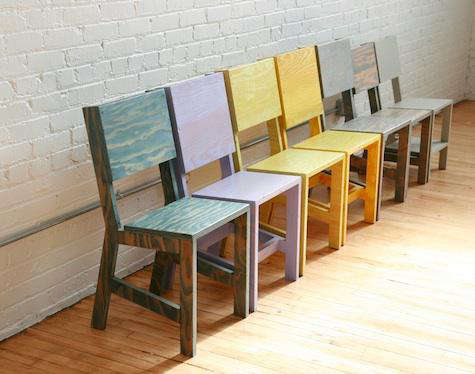
The joy of Product Porch was in the mix. Coverage from the time highlighted pink crocheted bookshelves by Adrian Clutario, birch plywood Stack Lamps by Dino Sanchez, and one-of-a-kind side tables handcrafted in Brooklyn from reclaimed American hardwood. Remodelista also pointed readers to Plywood A+ Chairs by Chad Petersen and Dakota Witzenburg of todosomething, while the broader designer list connected Product Porch to names such as Brendan Ravenhill, Workstead, Scout Regalia, Tanya Aguiñiga, Fern, Sarah Crowner, Kimmel Kids, Objeti, Smockshop, and more.
That roster tells you a lot. Product Porch was not chasing one narrow aesthetic lane. It embraced furniture, accessories, lighting, textiles, and objects that could tilt toward playful, minimal, handmade, architectural, or eccentric. The common denominator was not a style cliché. It was point of view.
This is where Product Porch became especially modern. It understood that shoppers do not always want categories. They want character. They want the thing that feels discovered, not mass-issued. They want the object that sparks the sentence, “Where did you get that?” ideally followed by a modestly theatrical pause before saying, “At the Museum of Contemporary Art in San Diego.”
The Store Worked Because It Was Programmed, Not Just Stocked
Another reason Product Porch stands out is that it was not only about merchandise. Reports from the launch period described interactive programs and events built around the concept, including the opening celebration during MCASD’s TNT: Emerge evening. Design, music, conversation, art-making activities, artist talks, and social energy were all part of the ecosystem.
That matters because the best museum retail is never just transactional. It is interpretive. It helps people connect objects to ideas, artists to audiences, and browsing to belonging. Product Porch seems to have understood this instinctively. Rather than letting retail sit quietly on the sidelines, it gave the store a public life.
Today that sounds obvious because museums everywhere are trying to create fuller visitor experiences. But Product Porch was doing this before “experiential retail” became a phrase everybody used with the confidence of a TED Talk and the clarity of fog.
Why Product Porch Still Feels Ahead of Its Time
In retrospect, Product Porch looks almost prophetic. Contemporary museum retail now often emphasizes artist collaborations, exclusive products, rotating collections, community-building, and objects tied to exhibitions, local identity, or broader design culture. Product Porch was already working from that playbook.
It also anticipated the way modern shoppers think about value. People do not only want souvenirs anymore. They want stories, craftsmanship, specificity, and a connection to a place or institution that means something. A well-chosen object from a museum shop can now compete with boutique retail, design stores, and online lifestyle brands. Product Porch recognized that museum shoppers were ready for more ambitious choices.
And perhaps most importantly, it proved that retail could reflect curatorial intelligence. The store was not separate from the museum’s mission; it echoed it. That is a much more compelling model than simply selling tote bags with famous paintings slapped on them like an afterthought.
From Product Porch to The Shop at MCASD Today
Product Porch may have been temporary, but its spirit is easy to spot in the current evolution of The Shop at MCASD. Today, MCASD’s retail presence continues to operate as more than a standard gift counter. The museum promotes The Shop both in person and online, and recent local coverage describes it as a curated space with new arrivals coming in regularly and an emphasis on objects that connect to exhibitions, artists, and the broader cultural life of the museum.
The present-day shop offers categories that stretch well beyond the classic museum-store trifecta of books, magnets, and mild temptation. It now encompasses books, apparel, accessories, jewelry, children’s items, food and drink, home goods, and décor. Local reporting also notes the shop’s effort to support local artists and exclusive collaborations, balancing established names with up-and-coming creatives.
That is why Product Porch matters historically. It was not just a quirky side project. It feels, in hindsight, like a prototype. The current MCASD experience in La Jolla now combines exhibitions, ocean views, seaside terraces, dining, and a thoughtfully developed shop. In that larger visitor experience, you can still see Product Porch’s core idea: a museum store can be part of the destination, not just the exit strategy.
What This Means for Design-Loving Travelers
If you are the kind of traveler who judges cities partly by their bookstores, museum shops, cafés, and beautifully unnecessary objects, Product Porch represents the sort of stop you remember long after the receipt disappears. It combined regional cool with international taste. It respected makers. It trusted shoppers to appreciate design without overexplaining it. And it positioned San Diego not merely as a place to consume culture, but as a place where culture and commerce could have a smart, stylish handshake.
That is what makes the title “Shopper’s Diary” so fitting. Product Porch was never just about buying. It was about noticing. It was about how a museum visit changes when the retail component is curated with the same seriousness as a gallery wall. Suddenly the store is not an afterthought. It is chapter two.
Extended Experience: A Longer Walk Through the Product Porch Idea
Imagine arriving in downtown San Diego with that familiar museum mood: part curiosity, part caffeine, part willingness to be surprised. You step into MCASD expecting contemporary art and perhaps a little atmospheric seriousness. Then Product Porch shifts the tone. It is still refined, still thoughtful, but it also has the energy of a great recommendation passed between friends. It says, in effect, “Yes, you came for the art, but stay for the objects that refuse to be boring.”
The first experience would likely be visual. Not loud, not chaotic, not the retail equivalent of a marching band in your face. More like a series of well-placed discoveries. A lamp with the right amount of geometry. A side table that looks as if it knows exactly where it wants to live. A shelf so unexpected it makes your current bookshelf situation feel emotionally underachieving. Product Porch seemed built around that delicious retail rhythm of surprise, recognition, temptation, and internal negotiation.
Then there is the museum effect. Shopping inside a contemporary art institution changes your posture. You do not just scan for price tags; you read forms, materials, and references. You consider why this object belongs here. You think about the maker. You think about the room it might inhabit back home. You may even imagine yourself becoming the sort of person who owns sculptural furniture and speaks casually about spatial balance. Museums can do that to a person.
The San Diego setting would have deepened the mood. This is not heavy, urban luxury in the New York sense, nor is it desert minimalism pretending to be relaxed while clearly judging your choices. San Diego design culture has a breezier intelligence. Product Porch appears to have matched that sensibility well. It offered pieces with enough rigor for serious design people and enough charm for visitors who simply knew what they liked when they saw it.
What makes the experience linger, though, is the sense that Product Porch respected both browsing and buying. You could wander, look, compare, and think without feeling pushed into a gift-shop script. The objects had room to breathe. So did you. That breathing room is often what distinguishes curated retail from cluttered retail. One asks you to consume. The other invites you to choose.
And perhaps that is the deepest pleasure tied to Product Porch. It made shopping feel like cultural participation. You were not picking up leftovers from the museum experience; you were extending it. The store became a place where art-adjacent living felt possible, where the gap between gallery inspiration and domestic reality narrowed just enough to make a purchase feel meaningful. Even now, years later, Product Porch reads less like a temporary pop-up and more like a lasting reminder that the right shop can sharpen the way we look at the world.
Conclusion
Product Porch at the Museum of Contemporary Art in San Diego deserves to be remembered not simply as a cool pop-up, but as a sharp cultural idea. It challenged the old museum-shop model, elevated design retail, and gave San Diego a temporary storefront with lasting influence. By treating objects as ideas with function, and shopping as part of the museum experience, Product Porch felt fresh then and remarkably current now.
For readers who love museum culture, creative retail, and the pleasure of finding something clever before everyone else does, Product Porch remains a fascinating case study. It was stylish without being smug, curated without being stiff, and commercial without feeling generic. In other words, it pulled off a rare trick: it made shopping feel like discovery.