
We love a clean legend. Give us a black turtleneck, a peace march, a perfect movie close-up, or a genius scribbling ideas on a napkin, and we will build a shrine before the coffee gets cold. But history has a habit of barging in like an unpaid intern with receipts. Some late celebrities and famous public figures were visionary, brave, influential, and genuinely important. They were also, in many cases, difficult, cruel, prejudiced, controlling, or exhausting to the people around them.
This does not mean every admired person belongs in the historical trash can. It means the “greatness equals goodness” equation is suspiciously convenient. Steve Jobs helped shape modern technology, but many colleagues and biographers described him as abrasive and ruthless. Gandhi helped transform the politics of nonviolence, yet his private experiments and early racial attitudes remain deeply debated. John Lennon sang about peace while openly admitting he had once been violent. Apparently, the halo department in history class was severely understaffed.
So let’s look at the uncomfortable middle ground: the place where talent, impact, ego, harm, mythmaking, and public memory all sit at the same overcrowded dinner table. This article is not a gossip bonfire. It is a reminder that complicated celebrity legacies should be handled with curiosity, evidence, and a little less hero worship.
Why Do We Praise Difficult Famous People?
Public memory is selective by design. A famous person becomes a logo: Gandhi means peace, Steve Jobs means innovation, Picasso means genius, Walt Disney means imagination. Once the logo is strong enough, messy details start looking like inconvenient footnotes. Fans may say, “Nobody’s perfect,” which is true. The problem begins when “nobody’s perfect” becomes “therefore nobody is accountable.”
There is also the achievement problem. If someone gives the world a masterpiece, a movement, a device, or a cultural revolution, we tend to assume their methods must have been necessary. Maybe Jobs had to be harsh to make Apple great. Maybe Hitchcock had to be controlling to make suspense iconic. Maybe Sinatra’s temper was simply part of the swagger. That logic is tempting, but it is also lazy. Brilliance can explain behavior; it does not automatically excuse it.
Steve Jobs, Gandhi, and the Myth of the Perfect Icon
Steve Jobs: The Visionary Who Could Be Brutal
Steve Jobs is often remembered as the sleek prophet of the iPhone era, a man who made technology feel personal, elegant, and almost magical. He also became famous for a leadership style that could be intensely demanding. Biographers and colleagues have described him as dismissive, cutting, and prone to emotional extremes. His defenders argue that his perfectionism pushed teams toward impossible breakthroughs. His critics point out that creating beautiful devices does not require humiliating people along the way.
The interesting lesson is not “Steve Jobs was bad.” The lesson is that innovation culture often romanticizes pressure until cruelty starts wearing a productivity badge. The black turtleneck was iconic. The management style? Let’s not put that on a motivational poster.
Mahatma Gandhi: Moral Giant, Human Contradictions
Mahatma Gandhi’s global influence is enormous. His philosophy of nonviolent resistance inspired civil rights movements far beyond India. Yet historians and critics have also examined his early views on Black Africans in South Africa, his defense of certain traditional social ideas, and his late-life celibacy tests involving young women. These subjects make many admirers uncomfortable, and they should. A person can be historically transformative and still morally complicated.
Gandhi’s legacy proves why mature historical thinking matters. Saints are easy to market. Humans are harder to understand. But the human version is usually more truthful.
53 Late Celebrities and Famous Figures With Complicated Reputations
Here is a compact look at 53 late celebrities, artists, leaders, writers, performers, and public figures who are widely praised for achievement but also remembered for behavior or beliefs that complicate the applause.
Inventors, Builders, and Business Icons
- Steve Jobs Admired for Apple and Pixar, criticized for harsh treatment of colleagues and family tensions.
- Henry Ford Revolutionized manufacturing while spreading antisemitic propaganda through his newspaper.
- Thomas Edison A giant of invention, but also a fierce businessman in the brutal “War of the Currents.”
- Walt Disney Built an entertainment empire, yet clashed bitterly with workers during the 1941 studio strike.
- Frank Lloyd Wright Changed architecture, but his personal life and ego often left emotional wreckage behind.
- Howard Hughes A visionary aviator and producer whose later control issues and erratic behavior became legendary.
- Andrew Carnegie Funded libraries and education, but his labor legacy includes the violent Homestead Strike era.
Peace Icons, Moral Leaders, and Public Saints
- Mahatma Gandhi A nonviolence icon with troubling personal and political controversies.
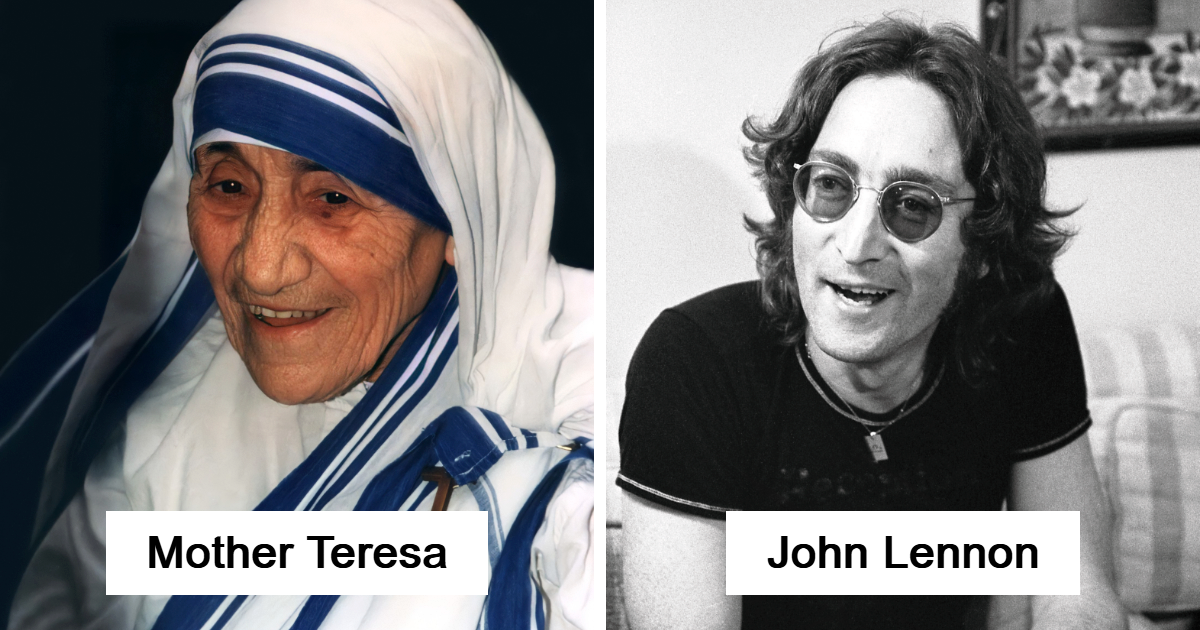
- Mother Teresa Revered for serving the poor, criticized over medical care standards and political associations.
- Martin Luther King Jr. A civil rights giant whose private life has been debated, though FBI surveillance must be treated with caution because it was politically motivated.
- John Lennon A peace symbol who admitted past violence and cruelty in relationships.
- Albert Schweitzer Humanitarian doctor and Nobel laureate, later criticized for paternalistic attitudes.
Artists, Directors, and Hollywood Legends
- Pablo Picasso A revolutionary artist whose treatment of women has become central to modern reassessments.
- Alfred Hitchcock Master of suspense, accused by Tippi Hedren of controlling and damaging behavior.
- John Wayne A Western icon whose public comments on race and politics aged terribly.
- Joan Crawford A Hollywood legend shadowed by her daughter Christina’s claims in Mommie Dearest, though others defended her.
- Bette Davis Brilliant on screen, famously combative off it.
- Orson Welles A creative genius whose ego and working methods often strained collaborators.
- Stanley Kubrick Admired for perfectionism, criticized for punishingly intense filmmaking demands.
- Gene Kelly Beloved dancer and director, remembered by some co-workers as a hard-driving perfectionist.
- Jerry Lewis Comedy legend with a long reputation for being difficult and dismissive.
- Charlie Chaplin Film pioneer whose relationships and scandals remain controversial.
- Marlon Brando Acting titan, but personally chaotic and professionally unpredictable.
- Lucille Ball Television trailblazer, also known as a tough boss with exacting standards.
- Bob Hope Entertainment institution whose private reputation was less wholesome than his public image.
- Bing Crosby Beloved crooner, criticized by family members for harsh parenting.
Musicians With Brilliant Art and Bruised Reputations
- Frank Sinatra A golden voice with a volcanic temper and long-discussed underworld associations.
- Elvis Presley The King of Rock and Roll, still debated for his relationship with Priscilla when she was very young.
- Miles Davis Jazz genius whose admitted violence toward women complicates his cool mystique.
- James Brown The Godfather of Soul, repeatedly associated with domestic violence cases.
- Buddy Rich One of history’s great drummers, infamous for explosive anger.
- Phil Spector Influential producer whose legacy is permanently darkened by his murder conviction.
- Jerry Lee Lewis Rock pioneer with a deeply controversial personal life.
- Chuck Berry Foundational rock figure with legal and personal controversies.
- Marvin Gaye A brilliant soul artist whose personal struggles affected those around him.
- Johnny Cash Beloved for redemption songs, but his addictions and absences hurt family relationships.
Writers, Thinkers, and Cultural Tastemakers
- Ernest Hemingway Literary giant, often described as macho, cruel, and destructive in relationships.
- Roald Dahl Children’s author whose antisemitic remarks and personal harshness remain part of his legacy.
- Charles Dickens Humanitarian novelist who treated his wife Catherine painfully during their separation.
- H.P. Lovecraft Horror pioneer whose racism is impossible to ignore.
- Ezra Pound Major poet, infamous for fascist and antisemitic broadcasts.
- T.S. Eliot Literary titan whose work and personal views have drawn criticism for antisemitic elements.
- Norman Mailer Celebrated writer with a violent personal history.
- Hunter S. Thompson Gonzo legend, often romanticized despite destructive behavior.
- Truman Capote Brilliant stylist whose betrayals of high-society friends became notorious.
Fashion, Politics, and Larger-Than-Life Public Figures
- Coco Chanel Fashion icon whose wartime Nazi associations remain a major stain.
- Winston Churchill Celebrated wartime leader with imperial views and policies that attract serious criticism.
- Charles Lindbergh Aviation hero whose isolationism and antisemitic comments damaged his image.
- J. Edgar Hoover Powerful FBI director praised by some for law enforcement, condemned for abuses of surveillance power.
- Aristotle Onassis Shipping magnate admired for wealth and glamour, often criticized for ruthless business instincts.
- Diego Rivera Great muralist, frequently difficult in love, politics, and collaboration.
- Salvador Dalí Surrealist genius whose ego, provocations, and politics remain controversial.
- Andy Warhol Pop art icon whose cool detachment could feel exploitative to people in his orbit.
What These Complicated Legacies Teach Us
The point of revisiting difficult celebrity behavior is not to cancel every museum, playlist, biography, or iPhone. It is to become more honest consumers of culture. A person’s work can be meaningful without turning that person into a moral superhero. We can admire Picasso’s artistic revolution while refusing to shrug at his treatment of women. We can recognize Ford’s industrial impact while condemning his antisemitism. We can appreciate Disney’s imagination without pretending the labor disputes were fairy dust.
This is especially important in the internet age, where public figures are flattened into either angels or monsters at lightning speed. Real history rarely fits inside a reaction button. The more useful question is not “Was this person good or bad?” but “What did they create, whom did they hurt, what systems protected them, and what should we learn?”
Experience Section: Learning to Admire Without Worshiping
Most people have had the awkward experience of learning something disappointing about a figure they admired. Maybe it was an artist whose songs helped you through a rough week. Maybe it was a founder whose quotes were plastered across productivity blogs. Maybe it was a historical leader presented in school as practically flawless. Then one day you read a biography, watch a documentary, or stumble into a well-sourced article, and suddenly the statue has cracks. Not tiny cracks either. Big “someone should call maintenance” cracks.
That moment can feel personal, even though the famous person never knew you existed. Their work may have shaped your taste, your ambition, or your sense of what greatness looks like. Finding out that they were cruel, prejudiced, manipulative, or hypocritical can feel like being tricked. But it can also be a useful turning point. It teaches us to separate inspiration from imitation.
For example, someone might admire Steve Jobs’ focus on design and still reject the idea that great leadership requires intimidation. A reader can respect Gandhi’s political influence while also asking harder questions about private ethics and social blind spots. A music fan can love the emotional power of John Lennon’s songs without pretending his peace image tells the whole story. This is not contradiction. It is adulthood with a library card.
The same applies to everyday life. We all know people who are brilliant at one thing and difficult at another. A teacher may be inspiring but impatient. A boss may be visionary but terrible at listening. A relative may be generous in public and impossible at home. Celebrity culture simply magnifies this pattern until the flaws become global news. The danger is not admiration itself; admiration can be healthy. The danger is outsourcing our judgment because someone is talented, famous, or dead long enough to be printed on a mug.
A better approach is layered appreciation. Enjoy the film, but learn about the production. Read the book, but study the author’s world. Use the invention, but understand the labor behind it. Quote the leader, but do not stop asking who was left out of the quote. When we do that, culture becomes richer, not poorer. We stop needing perfect heroes and start learning from imperfect humans.
In the end, the phrase “they weren’t that nice” is almost too small for the topic. Some figures were merely demanding. Some were deeply harmful. Some changed over time. Some never did. The honest reader does not have to flatten them into one category. The honest reader simply refuses to let applause drown out accountability.
Conclusion
From Steve Jobs to Gandhi, the public figures we praise most often come wrapped in contradiction. They built companies, movements, songs, films, books, and images that shaped the world. They also left behind stories of arrogance, prejudice, cruelty, manipulation, or private pain. The mature response is not to erase their achievements or excuse their failures. It is to hold both truths at once.
Complicated celebrity legacies remind us that greatness is not the same as goodness. A masterpiece can come from a flawed person. A moral movement can be led by someone with moral blind spots. A beloved entertainer can be difficult, selfish, or worse when the spotlight turns off. The more honestly we tell these stories, the less likely we are to confuse fame with virtue. And honestly, history could use fewer halos and more reading comprehension.
Note: This article uses the phrase “weren’t that nice” as a readable shorthand for documented criticism, disputed legacy, or widely reported difficult behavior. It does not claim that every person listed was equally harmful, nor does it treat rumor as fact.













