
Ask ten scientists what the world’s strongest magnetic field is, and you may get three correct answers before the coffee is even finished. That is not because physicists enjoy making simple questions wear a lab coat and run away. It is because “strongest magnetic field” depends on the setting: continuous laboratory magnets, pulsed magnets, destructive experiments, and the absolutely ridiculous magnetic monsters found in space.
In everyday life, magnets are humble little overachievers. They hold grocery lists to refrigerators, help electric motors spin, guide compass needles, and make MRI scans possible. But in high-field physics, magnetic fields become giant scientific flashlights. They reveal hidden behavior inside materials, test the limits of superconductors, and help researchers understand matter under conditions that would make a normal lab bench politely resign.
So, what is the strongest magnetic field in the world? The practical answer is this: the strongest steady laboratory magnetic fields are produced by specialized research magnets, the strongest reusable pulsed fields reach around 100 tesla, destructive or semi-destructive pulsed systems have reached far higher, and the strongest known natural magnetic fields belong to magnetars, a type of neutron star with fields so powerful they make Earth’s magnetism look like a sleepy refrigerator magnet.
First, What Is a Magnetic Field?
A magnetic field is the invisible region around a magnet, electric current, or moving charged particle where magnetic forces can act. We cannot see magnetic fields directly, but we can see what they do. They turn compass needles, curve charged-particle paths, influence electron behavior in materials, and, in extreme cases, reshape the way matter behaves.
Scientists usually measure magnetic field strength in tesla. Another older unit is the gauss, and one tesla equals 10,000 gauss. For comparison, Earth’s magnetic field at the surface is roughly 25 to 65 microteslas, depending on location. A typical refrigerator magnet is stronger than Earth’s field at very close range, while a hospital MRI scanner commonly uses fields around 1.5 to 3 tesla. A research magnet at 45 tesla is not simply “a stronger fridge magnet.” It is a precision instrument that eats electricity for breakfast and requires serious engineering to keep from overheating.
The Strongest Continuous Laboratory Magnetic Field
For many years, the gold standard for continuous high magnetic fields was the 45-tesla hybrid magnet at the National High Magnetic Field Laboratory, often called MagLab, in Tallahassee, Florida. This magnet combines superconducting and resistive magnet technologies. In plain English, it is part elegant frozen physics machine and part electricity-hungry beast.
A continuous magnet can sustain its field long enough for researchers to perform detailed experiments. That matters. A powerful magnetic pulse that lasts only a few microseconds is exciting, but it gives scientists very little time to measure what happens. A steady field lets them study materials carefully, rotate samples, change temperatures, and observe electronic behavior with far more control.
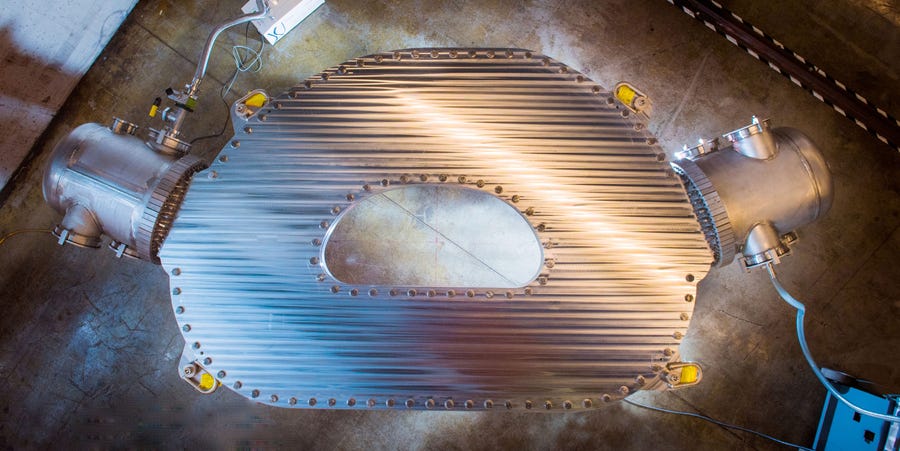
In 2025, MagLab announced a new direct-current magnetic-field record using a small experimental superconducting coil nicknamed the “Little Big Coil.” Placed inside an existing 31-tesla resistive magnet, the prototype added 17.6 tesla of its own field, producing a total of 48.7 tesla. That result surpassed the earlier 45.5-tesla record and showed how high-temperature superconducting materials such as REBCO could help create smaller, stronger magnets in the future.
Why the 48.7-Tesla Record Matters
The 48.7-tesla result is important not only because the number is bigger. Bigger is fun, of coursescience also enjoys a scoreboardbut the deeper story is engineering. Traditional superconductors can lose their superconducting state if they heat up or experience too much stress. High-temperature superconductors can carry large currents in intense magnetic fields, making them promising for next-generation magnet systems.
That could eventually influence technologies far beyond physics labs, including compact medical imaging, advanced electric motors, fusion-energy systems, and scientific instruments that fit into smaller spaces. The dream is not merely to build a magnet that wins trivia night. The goal is to make ultra-strong fields more practical, more reliable, and more useful.
The Strongest Non-Destructive Pulsed Magnetic Field
If continuous magnets are marathon runners, pulsed magnets are sprinters wearing rocket shoes. They generate extreme magnetic fields for a tiny fraction of a second. At MagLab’s Pulsed Field Facility at Los Alamos National Laboratory, researchers operate a 100-tesla pulsed magnet that produces the highest non-destructive magnetic field used for scientific research.
The word non-destructive is doing important work here. A 100-tesla field is so intense that the magnet experiences enormous mechanical forces. The system is designed so it can survive and be used again. Its peak field lasts about 15 milliseconds, which sounds absurdly short until you remember that modern instruments can collect meaningful data incredibly fast. For high-field physics, 15 milliseconds can be a beautifully generous window.
This kind of pulsed field lets researchers investigate quantum materials, exotic superconductors, electron behavior, and phase transitions that do not appear under ordinary conditions. It is like briefly turning up the universe’s “reveal hidden settings” knob.
The Strongest Controllable Magnetic Field Ever Generated in a Lab
In 2018, researchers at the University of Tokyo generated a 1,200-tesla magnetic field using electromagnetic flux compression. That record is often described as the strongest controllable magnetic field ever produced indoors. It lasted around 100 microseconds, which is extremely brief but long enough to open valuable experimental possibilities.
To put 1,200 tesla in perspective, it is tens of millions of times stronger than Earth’s magnetic field. At this level, magnetic fields can push electrons into unusual behavior and allow scientists to explore states of matter that are normally inaccessible. Researchers are especially interested in what such fields can teach us about electronic materials and fusion-related plasma confinement.
There have been even higher artificial magnetic fields, including explosive methods that reached thousands of tesla, but those experiments are not gentle. When an experiment destroys its own equipment, it is less like a reusable microscope and more like a science cannon with paperwork. Useful? Sometimes. Convenient? Not exactly.
The Strongest Magnetic Field in Nature: Magnetars
Now we leave the laboratory and enter the “space does not care about your engineering limits” section. The strongest known magnetic fields in nature belong to magnetars, a rare type of neutron star. Neutron stars are the collapsed cores of massive stars. They can pack more mass than the Sun into a sphere only about the size of a city. If that sounds unreasonable, congratulationsyou are paying attention.
Magnetars can have magnetic fields around 100 trillion to one quadrillion gauss. In tesla, that is roughly 10 billion to 100 billion tesla. Compared with Earth’s magnetic field, a magnetar’s field is so strong that ordinary comparisons begin to feel rude. NASA and X-ray astronomy resources describe magnetars as some of the most magnetic objects known in the universe, and their fields can power bursts of X-rays and gamma rays.
One famous magnetar, SGR 1806-20, has been estimated at hundreds of trillions of gauss. A magnetar is not a giant bar magnet floating in space with a “do not touch” label. It is an ultra-dense stellar remnant whose magnetic energy can twist, crack, and energize its outer layers. When that energy is released, the result can be an enormous flare detectable across vast cosmic distances.
Why Scientists Build Extremely Strong Magnets
Building the world’s strongest magnetic field is not just a scientific flex, although it is certainly a very shiny one. High magnetic fields are useful because they change how charged particles behave. Since electrons control much of chemistry, electricity, magnetism, and material properties, strong fields can expose hidden patterns in matter.
Studying Superconductors
Superconductors carry electricity without resistance under certain conditions. Strong magnetic fields help scientists test when superconductivity appears, disappears, or even reappears in unexpected ways. This research matters because better superconductors could transform power grids, medical imaging, transportation, and quantum technologies.
Exploring Quantum Materials
Quantum materials can behave in ways that seem almost mischievous. Their electrons may act collectively, form unusual states, or respond dramatically to magnetic fields. High-field magnets help researchers map these behaviors and search for materials that could improve electronics, sensors, and future computing systems.
Improving Medical and Industrial Technology
MRI machines rely on strong magnetic fields to produce detailed images of the body. Research magnets are much stronger than clinical MRI systems, but advances in magnet design can influence future imaging technology. Stronger or more compact magnets may one day support clearer scans, smaller systems, or new diagnostic methods.
Supporting Fusion Research
Fusion energy depends on controlling extremely hot plasma. Magnetic fields can confine charged particles without touching them physically, which is useful because plasma hot enough for fusion would instantly ruin any normal container. Advanced superconducting magnets are central to many fusion designs, making high-field research a major part of the clean-energy conversation.
Why Strong Magnets Are So Hard to Build
At low field strengths, magnets are friendly enough. At extreme field strengths, they become engineering drama queens. Strong magnetic fields create massive forces inside the magnet itself. Coils push outward. Conductors heat up. Materials strain. Power supplies groan. Cooling systems work overtime. If something fails, it may fail quickly and expensively.
Resistive magnets require huge electrical power and serious cooling because electrical resistance turns energy into heat. Superconducting magnets avoid resistance, but they must be cooled to very low temperatures and protected against sudden loss of superconductivity. Pulsed magnets face intense mechanical stress because the field rises and falls rapidly. Every design is a compromise among strength, duration, stability, cost, and survivability.
This is why the phrase world’s strongest magnet needs context. A 48.7-tesla direct-current test record, a 45-tesla continuous user magnet, a 100-tesla reusable pulsed magnet, a 1,200-tesla short-pulse system, and a magnetar in deep space are all “strongest” in different categories. Science loves categories because reality refuses to fit on a bumper sticker.
How Strong Magnetic Fields Compare
Here is a simple way to think about magnetic-field strength:
- Earth’s magnetic field: about 25 to 65 microteslas at the surface.
- Typical refrigerator magnet: stronger than Earth’s field nearby, but tiny in scientific terms.
- Clinical MRI scanner: commonly around 1.5 to 3 tesla.
- High-field research magnet: tens of tesla, such as 32, 41, 45, or nearly 49 tesla systems.
- Reusable pulsed research magnet: around 100 tesla.
- Short-lived extreme lab field: 1,200 tesla or more in specialized pulsed experiments.
- Magnetar: billions to tens of billions of tesla, far beyond anything humans can build.
The jump from Earth’s field to an MRI is already enormous. The jump from an MRI to a 45-tesla research magnet is another leap. The jump from laboratory magnets to magnetars is less a leap and more a cartoon character running off a cliff and discovering a new branch of astrophysics.
Real-World Safety Around Strong Magnetic Fields
Strong magnets deserve respect. MRI facilities follow strict safety rules because ferromagnetic objects can become dangerous projectiles near the magnet. Research magnet labs are even more controlled. Access, tools, sample holders, electronics, and measurement systems must all be designed around the magnetic environment.
This does not mean magnets are mysterious magic traps. It means they are powerful scientific tools. Used properly, they help doctors see inside the body, researchers discover new materials, and engineers design better technology. Used carelessly, they remind everyone why safety checklists exist.
Experiences Related to the World’s Strongest Magnetic Field
Trying to understand the world’s strongest magnetic field is a bit like standing beside a quiet ocean and being told there are waves in space taller than mountains. At first, the numbers feel too large to be meaningful. A tesla, a gauss, a microteslathese units sit politely on the page, but they do not immediately create a picture in the mind. The experience becomes clearer when you connect the numbers to things people already know.
Most people have encountered magnets through simple objects: fridge magnets, speakers, phone cases, toy kits, electric motors, or school compasses. These magnets feel familiar. You can hold them, flip them, make them click together, and blame them when they pinch your finger. But high-field magnets are not objects you casually pick up. They are rooms, facilities, power systems, cooling systems, reinforced structures, and teams of experts working together to control invisible force with ridiculous precision.
Imagine walking into a major magnet laboratory. The first surprise is that it may not look like science fiction. There may be pipes, cables, warning signs, control panels, thick doors, cooling equipment, and people wearing normal clothes instead of silver space suits. Yet inside that industrial-looking environment, researchers are creating magnetic fields strong enough to expose the inner behavior of matter. The drama is not always visual. Often, the most exciting action is happening inside a tiny sample mounted in a carefully designed probe.
That contrast is one of the best parts of high-field science. The magnet may be massive, loud, cold, hot, power-hungry, and mechanically stressed, while the object being studied might be smaller than a grain of rice. A material sample sits quietly while the field climbs. Instruments record changes in resistance, magnetization, heat capacity, or optical response. To a casual observer, it might seem like nothing happened. To the scientist, the data may reveal a new electronic phase, an unexpected transition, or a clue about superconductivity.
Another memorable experience is learning how short a “moment” can be in experimental physics. A 100-tesla pulse lasting milliseconds sounds almost useless until you realize that modern measurement tools can capture meaningful signals in that time. A 1,200-tesla pulse lasting microseconds sounds even more extreme, but for certain experiments, that flash of field can open a door that steady magnets cannot reach. It is not about keeping the door open forever. Sometimes science only needs a crack of light.
Then comes the cosmic perspective. After learning about 45-tesla, 100-tesla, and 1,200-tesla laboratory achievements, magnetars arrive like the final boss of magnetism. Their magnetic fields are so far beyond human-made fields that the comparison becomes almost comic. But instead of making laboratory magnets seem small, magnetars make them more impressive. Humans cannot build a neutron star, thankfully, but we can design instruments that reproduce tiny pieces of extreme physics safely enough to learn from them.
The real experience of the world’s strongest magnetic field is therefore not just awe. It is appreciation. Appreciation for engineers who stop magnets from tearing themselves apart. Appreciation for physicists who turn brief pulses into useful data. Appreciation for medical technologies that use magnetic fields to help patients. Appreciation for the universe, which apparently looked at ordinary magnetism and said, “Nice start, but let’s make a star-sized version.”
Conclusion: The Strongest Magnetic Field Depends on the Category
The world’s strongest magnetic field is not a single simple record. In continuous laboratory research, MagLab’s high-field systems remain central to the story, with recent prototype work reaching 48.7 tesla. In reusable pulsed fields, the 100-tesla magnet at Los Alamos stands out because it can produce extreme fields without destroying itself. In short-lived extreme experiments, the University of Tokyo’s 1,200-tesla field represents a remarkable milestone in controllable high-field science. In nature, magnetars dominate everything with magnetic fields measured in the billions of tesla.
What makes these magnetic fields exciting is not only their strength. It is what they reveal. They help scientists study superconductors, quantum materials, fusion concepts, medical imaging technology, and the behavior of matter under conditions that ordinary experience never provides. Magnets may be invisible in action, but their impact is anything but.
Note: This article is written for web publication in standard American English and summarizes verified scientific information in an original, reader-friendly style.












