
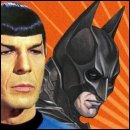
Some fictional characters arrive in pop culture looking inevitable. The Joker feels like Batman’s eternal nightmare. Spock feels welded to the bridge of the Enterprise. Rambo feels like he was born wearing a headband and carrying enough emotional baggage to qualify as a checked suitcase. But many iconic characters were nearly deleted, killed, redesigned, or minimized before anyone realized they were holding dynamite.
That is the strange magic of the creative process: the character who looks obvious in hindsight often looked risky, weird, unnecessary, or disposable at the start. A producer hesitates. A test audience groans. An editor adds one tiny panel. An actor gives a performance so good that writers quietly put away the fictional shovel. Suddenly, a near-mistake becomes a franchise engine.
This article explores seven iconic characters saved from the cutting room floor, not always literally by an editor’s scissors, but by last-minute creative judgment, audience reaction, actor chemistry, or plain old stubbornness. These almost-cut characters prove that pop culture history sometimes turns on a single decision. Somewhere, a writer sighs, “Fine, keep him alive,” and decades of fandom are born.
What Does “Saved from the Cutting Room Floor” Really Mean?
In film language, the cutting room floor refers to scenes removed during editing. Here, the phrase also works as a metaphor for characters nearly removed from a story’s future. Some were meant to die. Some were nearly redesigned into unrecognizable forms. Some were expected to appear briefly and vanish. Others survived because one person saw a spark before the rest of the room did.
These decisions matter because characters are not just names on a page. A great character can become a symbol, a Halloween costume, a meme, a billion-dollar brand, a philosophy, or the reason fans keep watching when the plot has started tying itself into sailor knots. Saving the right character can save the entire story.
1. The Joker: The Villain Who Was Supposed to Die Laughing
The Joker is now one of the most famous villains in American pop culture. He has been played as a gangster, prankster, anarchist, nightmare clown, tragic loner, and chaos goblin with excellent tailoring. Yet in his first Batman appearance, he was not guaranteed a long career terrorizing Gotham. He was nearly a one-and-done villain.
How We Almost Lost Him
In Batman #1, published in 1940, the Joker was intended to die after a confrontation with Batman. Writer Bill Finger reportedly worried that recurring villains could make Batman look ineffective. After all, if the Caped Crusader keeps catching the same maniac every month and he keeps escaping, Gotham may need a new security consultant.
The planned death would have ended the Joker’s story almost immediately. No “Why so serious?” No purple suits haunting cinema. No decades of Batman being psychologically roasted by a man who treats crime like dinner theater.
Who Saved Him?
DC editor Whitney Ellsworth saw potential in the character and had a final panel added showing that the Joker had survived. That one editorial choice reshaped Batman forever. A hero is often defined by his greatest enemy, and Batman without the Joker would be like Sherlock Holmes without Moriarty, peanut butter without jelly, or a superhero movie without a third-act sky beam.
The Joker’s survival gave Batman a recurring moral challenge. He was not just fighting a criminal; he was fighting chaos, obsession, and the terrifying idea that one bad day can break a person. All of that came from a character who nearly died before readers had time to fear him.
2. Jack Shephard: The Lost Leader Who Was Meant to Be a Shock Death
Jack Shephard became the emotional spine of Lost, the doctor who wakes up in the bamboo forest, runs toward disaster, and spends six seasons trying to fix people, islands, buttons, timelines, and occasionally his own face. But the original plan for Jack was far shorter and much more brutal.
How We Almost Lost Him
Early plans for the Lost pilot reportedly had Jack die during the first episode. The idea was bold: introduce him as the obvious hero, possibly with Michael Keaton in the role, then kill him to prove that nobody was safe. It would have been the television equivalent of inviting viewers into a house and immediately dropping the chandelier.
The twist might have worked as a shocking opening move. But it also risked alienating viewers before they had fully invested in the island’s mysteries. Killing the apparent main character can be thrilling, but it can also make audiences ask, “So who exactly did I just spend the last hour emotionally adopting?”
Who Saved Him?
The plan changed, Jack became a regular character, and the role went to Matthew Fox. This decision altered the shape of the entire series. Instead of being a sacrificed decoy protagonist, Jack became a long-running study in leadership, doubt, faith, control, and sacrifice.
Lost still delivered plenty of shocks, including polar bears, smoke monsters, hatches, numbers, flash-sideways timelines, and enough theories to keep the internet sweating for years. But keeping Jack alive gave the show a human anchor. Without him, the series might have been daring, but it would have lost one of its most important emotional compasses.
3. John Rambo: The Action Icon Who Survived His Own Ending
John Rambo is remembered as an action legend, but the original First Blood is much more tragic than its sequels suggest. Before Rambo became shorthand for explosive one-man warfare, he was a traumatized Vietnam veteran pushed to the edge by a society that had no idea what to do with him.
How We Almost Lost Him
David Morrell’s novel First Blood ends with Rambo dead. Director Ted Kotcheff also initially conceived the film as a tragedy, and a death ending was filmed. In that version, Rambo’s suffering culminated in suicide, creating a bleak final statement about trauma, rejection, and the cost of war.
Artistically, the ending made sense. Commercially and emotionally, it was much harder to accept. Audiences had watched Rambo be abused, hunted, and broken. To then kill him felt, to many viewers, like punishing the wounded man one last time.
Who Saved Him?
Sylvester Stallone argued for Rambo to survive, and test audiences rejected the death ending. The finished film lets Rambo live, though not exactly happily. He breaks down, surrenders, and walks away in custody. It is still sad, but it leaves a sliver of humanity intact.
That change created one of the biggest action franchises of the 1980s. It also transformed Rambo from a doomed tragic figure into a recurring cultural symbol. Depending on the decade, he has represented veteran trauma, American muscle, political fantasy, survivalism, and the dangers of owning too many knives without a clear weekend plan.
4. Spock: The “Too Alien” Character Who Became Star Trek’s Soul
Imagine Star Trek without Spock. It feels wrong, like a starship without a bridge or a sci-fi convention without someone correcting your pronunciation of “Vulcan.” Leonard Nimoy’s Spock became the franchise’s defining figure: logical, alien, conflicted, elegant, and occasionally sassier than his eyebrow suggested.
How We Almost Lost Him
In the early development of Star Trek, NBC executives reportedly worried that Spock’s pointed ears and arched eyebrows looked too devilish. The network feared that some viewers might react badly to a character who appeared, in their eyes, vaguely satanic. Apparently, the future was fine as long as it did not include sharp ears.
After the first pilot, many elements were changed, and Spock could have been removed along with them. Network caution might have sanded away the very thing that made the show feel truly otherworldly.
Who Saved Him?
Gene Roddenberry insisted that the show needed an alien presence on the ship to remind viewers they were not simply watching a workplace drama with better pajamas. Spock stayed, and the decision proved essential. His half-human, half-Vulcan identity gave the series one of its richest emotional engines.
Spock was not popular despite being strange. He was popular because he was strange. Fans connected with his outsider status, his restraint, his intelligence, and the quiet pain beneath all that logic. He taught pop culture that emotion can be powerful even when it is hidden behind perfect posture and a face that says, “I have calculated your nonsense and found it inefficient.”
5. Omar Little: The Short-Term Character Who Stole The Wire
Omar Little from The Wire is one of television’s most unforgettable characters. He robs drug dealers, follows his own moral code, whistles “The Farmer in the Dell,” and somehow turns a shotgun into a philosophical argument. In a show famous for realism, Omar felt almost mythic, yet he never broke the world around him.
How We Almost Lost Him
Michael K. Williams was reportedly told Omar would have a limited early run, and the character was expected by many to be short-lived. On paper, Omar could have been a colorful supporting figure: memorable, useful, and gone before the audience got too attached.
That would have been a huge loss. Omar brought a different kind of tension to The Wire. He was outside the police department and outside the drug organizations, which made him unpredictable. He could walk into the story like a folk hero with a loaded weapon and instantly tilt the room.
Who Saved Him?
Michael K. Williams saved Omar by making him impossible to ignore. His performance mixed danger, humor, vulnerability, pride, and pain. Omar could be terrifying in one scene and heartbreakingly human in the next. Writers expanded his presence, and the character became central to the show’s moral universe.
Omar’s survival mattered because he complicated the audience’s expectations. He was a criminal, but he had rules. He was feared, but also tender. He was larger than life, but grounded in real Baltimore inspirations. Without Omar, The Wire would still be brilliant. With Omar, it became legendary.
6. Wolverine: The X-Man Who Nearly Got Clawed Out of the Team
Wolverine is now practically the face of the X-Men. He has claws, a healing factor, an adamantium skeleton, a tragic past, and the temperament of a man who has been waiting in line at the DMV since 1974. But Logan was not always destined to dominate Marvel’s mutant universe.
How We Almost Lost Him
Wolverine began as a Canadian character introduced in The Incredible Hulk before joining the revamped X-Men. His early identity and origin were still in flux, and at one point, there were strange ideas floating around about him being connected to an actual wolverine evolved into human form. That is not a superhero origin so much as a wildlife documentary after three espressos.
Even after joining the X-Men, Wolverine was not instantly the breakout star. The team had many personalities competing for attention, and creators considered trimming or reshaping the roster. Wolverine could have faded into comic book trivia as “that angry short guy with the claws.”
Who Saved Him?
Artist John Byrne, himself Canadian, helped champion Wolverine and develop him into a sharper, richer character. Along with Chris Claremont’s writing, Wolverine evolved from a rough supporting player into a layered antihero with mystery, rage, loyalty, and vulnerability.
The result was one of Marvel’s most durable characters. Wolverine’s appeal comes from contradiction. He is brutal but protective, nearly immortal but emotionally scarred, solitary but desperate for belonging. He is the X-Men’s wild card, grumpy uncle, emotional landmine, and best-selling claw machine all at once.
7. Batman: The Hero Saved Before He Even Became Batman
Batman may be the most interesting case on this list because he was not saved from death. He was saved from being forgettable. Before he became the Dark Knight, Batman existed as an early concept from Bob Kane that did not yet have the full visual and psychological identity fans recognize today.
How We Almost Lost Him
Early Batman concepts reportedly included brighter costume elements, a domino-style mask, and stiff wings rather than the shadowy cowl and cape that define him now. In other words, Batman risked looking less like a creature of the night and more like a man who misunderstood the dress code for a bat-themed office party.
A weaker design could have doomed the character. Superhero history is full of forgotten figures who had one or two interesting pieces but never fully clicked. Batman needed more than a gimmick. He needed atmosphere, mystery, tragedy, and visual power.
Who Saved Him?
Bill Finger’s contributions helped transform the rough idea into Batman as we know him. Finger suggested key elements such as the cowl, cape, gloves, darker color scheme, and the name Bruce Wayne. He also helped shape Batman’s detective identity, origin, and early mythology.
Without Finger’s influence, there might still have been a Bat-Man, but not necessarily the Batman. That distinction matters. The saved version became a noir detective, a gothic superhero, a trauma-driven symbol of justice, and one of the most profitable fictional characters ever created. Not bad for a guy whose original design needed a serious wardrobe intervention.
Why These Saved Characters Became Iconic
The characters on this list survived for different reasons, but their stories share a few patterns. First, they all created contrast. Spock balanced Kirk’s emotion. Joker mirrored Batman’s darkness. Omar disrupted the rules of The Wire. Wolverine brought danger to a team built around idealism. Great characters often become iconic because they create friction.
Second, they gave audiences something unresolved. Jack Shephard was always trying to fix what could not be fixed. Rambo carried wounds that no action sequence could fully heal. Batman’s war on crime never ends because grief does not operate on a neat episode schedule. The best characters keep asking questions long after the credits roll.
Third, they were saved by people who trusted instinct. An editor saw a villain’s potential. A creator defended an alien. An actor found humanity in a role that might have disappeared. Audiences rejected an ending that felt too cruel. These moments remind us that storytelling is not purely mechanical. Sometimes the spreadsheet says “remove,” but the gut says “wait.”
Experience Section: What Writers, Filmmakers, and Fans Can Learn from Almost-Cut Characters
The most useful lesson from these seven iconic characters is that early drafts are not destiny. Anyone who writes fiction, edits video, develops games, runs a YouTube channel, or even plans a brand campaign knows the panic of deciding what stays and what goes. Sometimes cutting is necessary. Other times, the piece you are about to delete is the piece that gives the whole project electricity.
One practical experience many creators share is discovering that a “minor” character suddenly feels alive. Maybe the sidekick gets the best line. Maybe the villain’s motivation is more interesting than the hero’s. Maybe a background figure walks into a scene and somehow changes the temperature. When that happens, pay attention. Omar Little did not become unforgettable because he had the most screen time at first. He became unforgettable because every moment he appeared had weight.
Another lesson is that audience reaction matters, but not in a shallow way. The First Blood test audience did not simply demand a happy ending. They rejected an ending that felt emotionally wrong after the journey they had taken with Rambo. Good feedback identifies a broken promise. If a story spends two hours making viewers care about a wounded person, the ending must honor that care, even if it remains tragic.
For writers, the Joker offers a different warning: do not kill your best source of conflict too early. A strong antagonist is not just an obstacle. A strong antagonist reveals what the hero is made of. Batman became more interesting because the Joker kept returning with new moral pressure. If your hero feels flat, the solution may not be a louder hero. It may be a better rival.
For world-builders, Spock proves the value of strangeness. The very thing executives feared became the thing fans loved. Creators often feel pressure to make everything familiar, smooth, and immediately marketable. But memorable stories need texture. They need the odd detail, the unusual silhouette, the character who makes viewers lean forward and ask, “What is going on with that guy?”
For editors, Batman and Wolverine show that saving a character does not always mean preserving the first version. Sometimes you save a character by redesigning him completely. Batman needed Finger’s darker vision. Wolverine needed development beyond “angry claw man.” Revision is not betrayal. Revision is where the character becomes who he was trying to be.
For fans, these stories make rewatching and rereading more fun. Every time Jack opens his eye in the Lost pilot, you can imagine the alternate universe where he never made it past episode one. Every time Spock raises an eyebrow, you can appreciate the absurdity that someone once considered those ears a liability. Every time Batman appears from the shadows, you can silently thank the person who looked at the early design and thought, “Maybe less red. Maybe more nightmare.”
The big takeaway is simple: iconic characters are rarely born perfect. They are argued over, rescued, reshaped, defended, and sometimes saved by accident. The cutting room floor is full of lost possibilities. Thankfully, these seven climbed back onto the screen, page, and cultural imagination before the scissors closed.
Conclusion
The history of iconic characters saved from the cutting room floor is really a history of creative second chances. The Joker survived a single panel. Jack Shephard survived a shocking pilot twist. Rambo survived a devastating alternate ending. Spock survived network anxiety. Omar Little survived because Michael K. Williams made him unforgettable. Wolverine survived because creators saw more than claws. Batman survived because Bill Finger helped turn a rough idea into a legend.
These stories are funny, surprising, and oddly encouraging. They remind us that great characters do not always announce themselves politely. Sometimes they arrive messy, risky, inconvenient, or wearing the wrong costume. The trick is recognizing the spark before it gets swept into the trash.














