
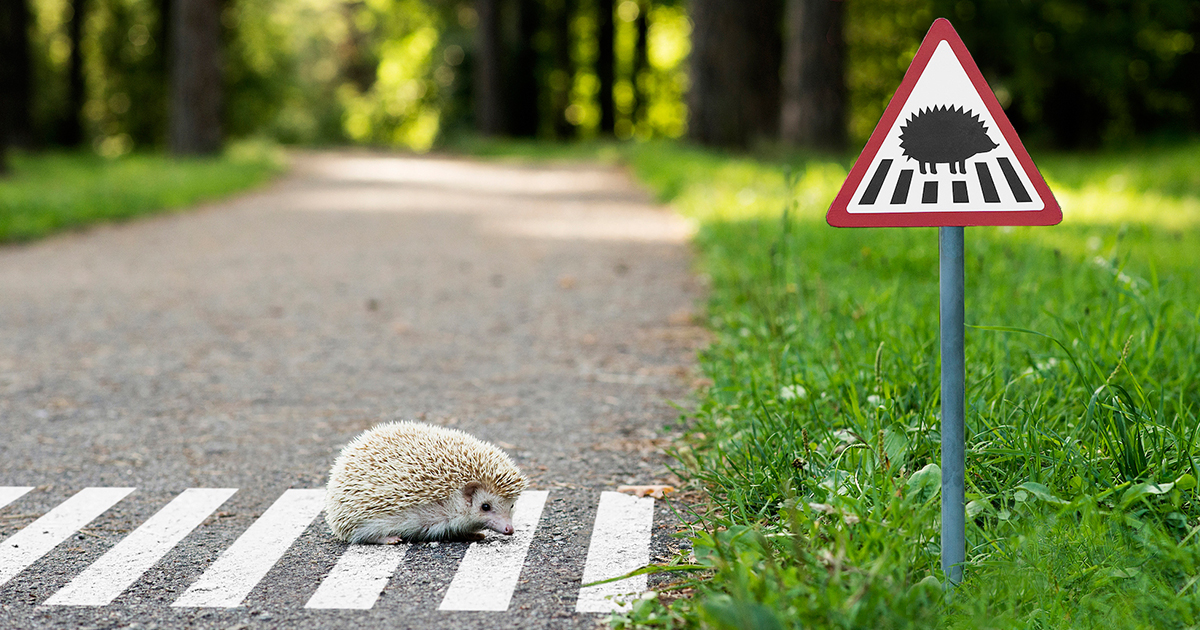
Some city projects arrive with bulldozers, blueprints, and enough paperwork to make a printer cry. Others arrive with a tiny sign, a tiny pole, and a hedgehog who looks like he is late for a very important meeting. In Vilnius, Lithuania, the creative agency Clinic 212 created one of the most charming urban art ideas imaginable: miniature road signs for the city’s smallest residents.
The project, known as #TINYROADSIGN, was built around a simple but surprisingly powerful message: humans are not the only ones living in the city. Birds, ducks, cats, hedgehogs, insects, and countless other creatures share sidewalks, parks, ponds, courtyards, and quiet corners with us. The tiny signs did not stop traffic in the official sense, but they did something even better. They stopped people in their thoughts.
Placed around Vilnius, these tiny road signs turned ordinary urban spaces into miniature stories. A hedgehog crossing appeared in Vingis Park. A bird airport popped up near Tauro Hill. Ducks received their own swimming pool sign in Žvėrynas. Cats were honored with a rest area in Naujamiestis. The result was part street art, part environmental reminder, and part proof that good design does not need to shout. Sometimes it just needs to be small enough to make adults bend down and smile.
What Was the Tiny Road Signs Project?
The Tiny Road Signs project was a creative urban installation by Clinic 212, a Vilnius-based agency. The idea was not to create legally binding traffic rules for hedgehogs, though frankly, that would make city council meetings much more adorable. Instead, the project used humor and miniature design to remind residents that cities are shared ecosystems.
Each sign copied the familiar visual language of road signage but scaled it down to suit animals rather than cars. The humor worked because the signs felt both absurd and completely logical. Of course hedgehogs should have a crosswalk. Of course ducks should have a swimming pool. Of course cats should have a rest area, although most cats would probably argue that the entire planet is their rest area.
What made the project memorable was its restraint. It did not lecture pedestrians about biodiversity. It did not cover a wall with a giant slogan. It simply inserted tiny, delightful moments into everyday places. People who discovered the signs were invited to look closer at the spaces around them and notice the small lives moving through the city.
Why Vilnius Was the Perfect City for Tiny Residents
Vilnius is not just a postcard-pretty European capital with cobblestone streets, leafy parks, and a historic old town. It is also a city with a strong relationship to green space. The Lithuanian capital has been recognized for its sustainability ambitions, and its public identity often highlights parks, walkability, trees, and access to greenery.
That matters because a project like Tiny Road Signs only works when people can imagine animals actually belonging in the city. Vilnius makes that idea easy. Vingis Park, for example, is one of the city’s major green spaces, popular for walking, cycling, roller-skating, concerts, and relaxed afternoons outdoors. It is exactly the kind of place where a hedgehog crossing feels less like a joke and more like a polite civic improvement.
Žvėrynas, known for its calmer residential feel and green character, gives ducks and other small creatures the kind of watery urban pockets they need. Tauro Hill, with open space and views, makes the “airport for birds” concept feel wonderfully natural. Naujamiestis, a more urban neighborhood, becomes more playful when a cat rest area appears in a backyard. In other words, the signs did not feel randomly dropped into the city. They matched the personality of their locations.
The Four Tiny Signs That Made the City Feel Bigger
1. Crosswalk for Hedgehogs in Vingis Park
The hedgehog crossing may be the star of the project because it captures the entire idea in one tiny scene. Hedgehogs are small, vulnerable, and easy to overlook. A miniature crosswalk asks a funny but serious question: what happens when the smallest city residents need to move through spaces built mostly for humans?
Roads and paved paths can fragment habitat and make animal movement more dangerous. Even in parks, animals must navigate human activity, bicycles, dogs, lights, noise, and foot traffic. A painted mini crossing cannot solve all of that, but it can make people more aware. Awareness is often the first step toward better behavior, such as slowing down, watching where we walk, keeping pets under control, and respecting green spaces.
2. Airport for Birds Near Tauro Hill
The bird airport sign is funny because birds already have the best transportation system in the city. No ticket line. No baggage fee. No announcement that your gate has changed to the opposite side of the airport. Still, the sign gives birds a kind of civic dignity. It treats their daily movement as something worth noticing.
Urban birds are among the most visible forms of wildlife. Pigeons, sparrows, crows, gulls, and many other species adapt to human environments with surprising intelligence. The sign encourages people to see birds not as background decoration, but as active residents using the city in ways we rarely consider.
3. Duck Swimming Pool in Žvėrynas
The duck swimming pool sign turns a pond into a tiny municipal facility. It is the kind of joke that works instantly: humans get pools, gyms, parking lots, and recreational areas, so why should ducks not have their own aquatic leisure zone?
Behind the humor is a practical reminder about water in cities. Ponds, rivers, wetlands, and drainage areas are not just scenery. They can support birds, amphibians, insects, and plants. Clean, safe water features also help people connect with nature without leaving the city. When ducks gather in an urban pond, they are not crashing the party. They are part of the neighborhood.
4. Rest Area for Cats in Naujamiestis
The cat rest area sign may be the least surprising of the four, because cats have never needed permission to rest. If there is a warm wall, a parked car, a cardboard box, a windowsill, or a suspiciously expensive chair, a cat has already filed the necessary paperwork.
Still, the sign adds a human wink to a common urban scene. Cats are among the animals most closely associated with city courtyards and residential blocks. Whether they are pets, strays, or semi-independent neighborhood celebrities, cats shape the emotional life of many streets. A tiny rest area sign gives them a role in the city’s informal map.
Why Tiny Design Can Create a Big Reaction
The genius of Tiny Road Signs is scale. If the signs had been full-sized billboards, the message might have felt heavy. By making the signs miniature, Clinic 212 turned people into explorers. Viewers had to notice, crouch, look closer, and share the discovery. That physical act of bending down matters. It changes perspectiveliterally.
Good public art often interrupts routine. It makes a person pause on a route they have walked a hundred times. A tiny sign does this gently. It does not block the path or demand applause. It waits quietly, like a small joke hidden in the city’s pocket.
The project also works because it is highly shareable. Photos of a hedgehog crossing or duck pool sign communicate the idea immediately. No long explanation is needed. In the age of visual culture, that kind of clarity is gold. A person sees the image, smiles, understands the message, and may think differently the next time they pass a park path or pond.
The Urban Wildlife Message Behind the Humor
Urban wildlife is not an exception. It is part of modern city life. Many animals use cities for food, shelter, nesting, and movement. Parks, gardens, riversides, vacant lots, rooftops, courtyards, and roadside vegetation can all become pieces of an urban habitat network.
However, city life is not easy for animals. Roads can replace habitat, divide green areas, and increase the risk of vehicle collisions. Bright lights can disrupt natural behavior. Noise can interfere with communication. Litter, pollution, and poor landscaping choices can reduce food sources and shelter. Even well-meaning humans can create problems by feeding wildlife inappropriate food or disturbing nests and dens.
This is why a project like Tiny Road Signs matters. It does not pretend to be a complete conservation program. Instead, it uses creativity to open the door to empathy. Once people start seeing animals as fellow city residents, they may become more willing to support wildlife-friendly planning, native planting, safer streets, cleaner water, and better green corridors.
Public Art With a Conservation Heart
There is a reason the project feels warmer than a standard awareness campaign. Public art can reach people emotionally before it reaches them intellectually. A miniature sign for hedgehogs does not begin with statistics. It begins with delight. Then, after the smile, comes the thought: maybe we really are sharing this place.
That emotional sequence is powerful. People are more likely to remember an idea when it is attached to surprise, humor, or beauty. Tiny Road Signs uses all three. It surprises people with scale, amuses them with the seriousness of animal “infrastructure,” and beautifies the city with small handcrafted details.
The project also avoids guilt as its main tool. Many environmental messages rely on fear or blame. Those can be necessary in some contexts, but they can also exhaust audiences. Tiny Road Signs takes a lighter route. It says, “Look, there are tiny neighbors here,” and trusts people to understand the rest.
Lessons Other Cities Can Learn From Vilnius
Not every city needs hedgehog traffic control, although the world would be a better place if more crosswalk meetings included hedgehog representation. The deeper lesson is that small interventions can change how people experience public space.
A city could create sidewalk markers for pollinator gardens, tiny “bee cafés” near native flowers, playful signs near storm drains reminding people that water flows to rivers, or small plaques identifying trees as homes for birds and insects. These projects do not need huge budgets. They need observation, care, and a sense of humor.
Urban planners, artists, schools, neighborhood groups, and local businesses can all borrow from the Tiny Road Signs concept. The best ideas would be site-specific. A coastal city might create signs for crabs or shorebirds. A desert city might highlight lizards and native bees. A river city might focus on turtles, frogs, and herons. The point is not to copy Vilnius exactly, but to copy its attention to overlooked life.
How Residents Can Help Tiny City Neighbors
Anyone inspired by the project can take practical steps to support urban wildlife. Start by noticing what already lives nearby. Watch which birds visit the balcony. Look for insects around flowers. Pay attention to animal paths near parks or alleys. Observation turns an ordinary block into a living map.
Next, reduce hazards. Keep trash sealed. Avoid leaving harmful food for animals. Drive slowly near parks, ponds, and wooded streets, especially at dawn and dusk. If you have a yard or balcony, add native plants where possible. Even a small container garden can provide food for pollinators if planted thoughtfully.
Pet owners can also help by keeping cats indoors or supervised and keeping dogs leashed in sensitive areas. These choices protect wildlife while also protecting pets. Cities are shared spaces, but sharing works best when the larger, louder residents behave with a little consideration.
Why the Project Still Feels Fresh Years Later
The Tiny Road Signs project first gained attention in 2015, yet it still feels modern because the idea has aged beautifully. In fact, it may feel even more relevant now. Cities around the world are talking more seriously about biodiversity, walkability, green infrastructure, climate resilience, and human access to nature. Tiny Road Signs fits neatly into that conversation, but it does so with a wink.
The project reminds us that sustainability is not only about large policies and technical systems. It is also about culture. Do residents feel connected to local nature? Do they notice animals? Do they understand that a park is not just a recreational asset but also habitat? Do they see a pond as more than a pretty reflection for sunset photos?
By turning animals into “residents,” the project shifts the frame. A resident is not an object. A resident belongs. That one word changes the emotional contract between people and place.
Experiences Inspired by Tiny Road Signs in Vilnius
Imagine walking through Vilnius on a soft summer morning. The city is awake, but not yet rushing. Cyclists pass through Vingis Park, parents push strollers, someone jogs with the heroic expression of a person who definitely deserves pastries afterward, and birds are already holding a loud committee meeting in the trees. Then, near the path, you notice something unusual: a tiny road sign. It is not for you. It is for a hedgehog.
That moment changes the walk. Suddenly the park is not just a human route from point A to point B. It becomes a shared landscape filled with possible crossings, hiding places, nests, puddles, and small dramas. You begin scanning the grass with more care. A rustle near the leaves feels important. A duck moving across a pond becomes less like background scenery and more like a citizen using public infrastructure without paying taxes, which is honestly very duck-like.
The best experience connected to this topic is not simply seeing the signs. It is feeling your attention sharpen. Tiny Road Signs teaches people to look downward, sideways, and closer. In a city, we often train ourselves to ignore details because there are too many of them: traffic lights, shop windows, phone notifications, construction noise, advertisements, and the eternal mystery of where we put our keys. A tiny sign cuts through that noise by being small, quiet, and unexpected.
For travelers, these signs also create a different kind of sightseeing. Instead of only chasing famous landmarks, you start exploring neighborhoods through small clues. Vingis Park becomes the place of the hedgehog crossing. Žvėrynas becomes the duck district. Tauro Hill becomes the bird airport. Naujamiestis becomes the official unofficial cat lounge. This kind of playful mapping makes a city feel more intimate.
For residents, the experience can be even stronger. A familiar street becomes new again. A backyard becomes a stage. A pond becomes a community pool for feathered locals. The project suggests that wonder does not always require travel, money, or a dramatic mountain view. Sometimes wonder is hiding beside a path, mounted on a tiny pole.
There is also a social experience built into the project. People want to show it to others. “Come look at this” is one of the most powerful sentences in public art. It turns discovery into connection. A parent can show a child. A friend can point it out during a walk. A photographer can capture it. A tourist can share it online. The tiny sign becomes a small engine for conversation.
And yes, it is funny. That matters. Environmental care can feel overwhelming when it is only discussed through crisis. Tiny Road Signs offers a lighter doorway into the same concern. It lets people laugh first, then care. The hedgehog does not need a policy speech. The hedgehog needs people to notice that it exists, that it moves, and that the city is also its home.
In the end, the experience of Tiny Road Signs is a lesson in humility. Humans build cities as if they belong only to us, then a bird lands on a roof, a duck claims a pond, a cat occupies a courtyard, and a hedgehog crosses a path with more confidence than most of us have entering a room. Vilnius gave these tiny residents tiny signs, and in doing so, gave everyone else a bigger way to see the city.
Conclusion
“We Made Tiny Road Signs For Tiny City Residents In Vilnius, Lithuania” is more than a cute art project. It is a small, clever reminder that cities are living places shared by humans and animals alike. Clinic 212’s miniature signs turned hedgehogs, birds, ducks, and cats into visible members of the urban community. With humor, design, and a gentle conservation message, the project showed how even the smallest public art can make people more aware of the world underfoot, overhead, and beside them.
The beauty of the project is that it does not demand perfection. It asks for attention. It asks us to slow down, look closer, and remember that a city is not only traffic, buildings, and schedules. It is also feathers, paws, wings, whiskers, and tiny feet crossing the path when we least expect it.













