
Babies are born with a lot of charm and very little ability to explain what is going on. They can tell you when they are hungry, sleepy, bored, or deeply offended by a diaper changebut they cannot say, “Excuse me, my left eye is blurry.” That is why parents and caregivers play such an important role in spotting early vision problems in babies.
Infant vision develops quickly during the first year of life. A newborn may only see clearly at close range, but within months, babies begin tracking faces, recognizing familiar people, reaching for toys, and using their eyes to explore the world. When something interferes with that development, early detection can make a huge difference.
The good news: many baby eye issues are treatable, especially when caught early. The less-good news: some signs can be subtle. A baby with one stronger eye may seem perfectly happy because the better-seeing eye does all the work. Sneaky? Yes. Common? Also yes.
This guide explains the signs of vision problems in babies, common causes, when to call a doctor, what eye exams may involve, and how parents can support healthy visual development at home.
How Baby Vision Normally Develops
Before talking about vision problems, it helps to know what “normal” baby vision looks like. Babies are not born seeing the world in high-definition. Their visual system is still developing, and the brain is learning how to use information from both eyes.
Newborn to 2 months
Newborns can see light, movement, shapes, and faces, but their distance vision is blurry. They focus best on objects about 8 to 12 inches awaythe perfect distance for staring dramatically at a parent during feeding time. Their eyes may also occasionally appear crossed or uncoordinated because eye muscles and brain-eye coordination are still maturing.
2 to 4 months
By around 2 to 3 months, many babies begin making steadier eye contact and following moving objects. They may track a parent walking across the room or follow a bright toy. Occasional eye crossing can still happen, but the eyes should gradually work together more smoothly.
5 to 8 months
Depth perception improves during this stage. Babies become better at judging distance, reaching for toys, and coordinating their hands and eyes. Color vision also becomes more refined. This is when a toy across the room may suddenly become the most fascinating object in the universe.
9 to 12 months
By the end of the first year, babies usually use their vision to crawl, pull up, cruise, point, grab, and explore. Their eyes should generally appear aligned, and they should respond to faces, objects, and movement in a consistent way.
Common Signs of Vision Problems in Babies
Some baby eye symptoms are harmless and temporary. Others deserve prompt medical attention. Parents do not need to panic over every sleepy eye rub, but certain patterns should not be ignored.
1. Poor eye contact after 2 to 3 months
If a baby does not seem to look at faces, make eye contact, or respond visually to a caregiver by around 2 to 3 months, it is worth mentioning to a pediatrician. Some babies develop at slightly different speeds, but lack of visual engagement can be a clue that the baby is not seeing clearly.
2. Trouble tracking objects
By around 3 months, many babies can follow a moving toy or face with their eyes. If a baby does not track movement, loses objects quickly, or seems unaware of things placed in front of them, a vision check may be needed.
3. Persistent crossed eyes or wandering eyes
Occasional eye crossing can be normal in very young babies, especially during the first few months. However, eyes that are constantly crossed, one eye that turns outward, or eye misalignment that continues beyond about 3 to 4 months should be evaluated. Persistent misalignment may be a sign of strabismus, sometimes called crossed eyes or wandering eye.
4. A white, gray, or cloudy pupil
A white or cloudy appearance in the pupil is a major red flag. Parents may notice it directly or in flash photos, where one pupil looks white instead of red. This can be linked to conditions such as congenital cataract, retinal disease, or, rarely, eye cancer. It needs urgent medical evaluation.
5. Excessive tearing or constant watery eyes
Watery eyes in babies are often caused by a blocked tear duct, especially when tearing appears without major redness. Many blocked tear ducts improve during infancy, but tearing with redness, swelling, yellow-green discharge, or pain may suggest infection and should be checked.
6. Red, crusty, swollen, or irritated eyes
Some discharge after sleep can happen, but persistent redness, swelling, crusting, or pus-like drainage may point to infection, inflammation, or a blocked tear duct. Newborn eye infections can be serious, so it is better to ask early than to wait and hope the eye “figures it out.” Eyes are clever, but they are not tiny doctors.
7. Unusual eye movements
Rapid, rhythmic, shaking, or jerking eye movements may be a sign of nystagmus or another vision-related condition. Babies may also seem unable to hold their gaze steady. These symptoms should be assessed by a pediatrician or pediatric eye specialist.
8. Strong light sensitivity
If a baby seems unusually bothered by light, constantly squeezes the eyes shut in normal lighting, or has tearing and discomfort around light, it may indicate irritation, corneal problems, glaucoma, or other eye disease.
9. Droopy eyelid covering the pupil
A droopy eyelid, called ptosis, can sometimes block vision. If the eyelid covers part of the pupil, the brain may not receive clear visual input from that eye, increasing the risk of amblyopia.
10. Frequent squinting, head tilting, or closing one eye
These signs are easier to notice in older babies and toddlers, but they can suggest that a child is trying to compensate for blurry vision, eye misalignment, or poor depth perception.
Common Causes of Vision Problems in Babies
Baby vision problems can come from the eye itself, the muscles that control eye movement, the nerve pathways, or the brain’s processing of visual information. Here are some of the most common causes.
Refractive errors
Refractive errors happen when the eye does not focus light properly. A baby may be nearsighted, farsighted, or have astigmatism. Mild farsightedness is common in young children and often improves, but significant or uneven refractive error can interfere with visual development.
If one eye sees much better than the other, the brain may start ignoring the blurrier eye. That can lead to amblyopia, also known as lazy eye.
Amblyopia
Amblyopia occurs when the brain favors one eye over the other. The eye itself may look normal, which is why amblyopia can be tricky. Causes include strabismus, unequal prescriptions between the eyes, cataract, droopy eyelid, or anything that blocks clear vision during early childhood.
Early treatment matters because the visual system is still developing. Treatment may include glasses, patching the stronger eye, special drops, or addressing the underlying cause.
Strabismus
Strabismus is eye misalignment. One eye may turn inward, outward, upward, or downward. Sometimes the turn is constant; other times it appears when the baby is tired or focusing. Strabismus can affect depth perception and may cause amblyopia if one eye becomes dominant.
Treatment depends on the cause and severity. Options may include glasses, patching, eye muscle exercises in selected cases, or surgery.
Congenital cataract
A cataract is clouding of the lens inside the eye. Although cataracts are often associated with older adults, babies can be born with them. A congenital cataract may appear as a cloudy or white pupil and can block vision during a critical period of development.
Some cataracts are small and monitored. Others require surgery and follow-up treatment such as glasses, contact lenses, or patching to help the brain learn to use the affected eye.
Blocked tear duct
A blocked tear duct is common in infants. Tears cannot drain normally, so the eye may look watery or crusty. Many cases improve on their own during the first year. A doctor may recommend gentle massage, cleaning, or treatment if infection develops. Persistent cases may need a procedure to open the duct.
Retinopathy of prematurity
Retinopathy of prematurity, or ROP, affects some babies born very early or very small. It involves abnormal blood vessel development in the retina, the light-sensitive tissue at the back of the eye. Premature babies often need scheduled eye screening in the neonatal period because ROP can progress before parents notice symptoms.
Not every premature baby develops ROP, and not every case needs treatment. When treatment is needed, pediatric eye specialists may use laser therapy, medication, or surgery depending on severity.
Eye infections
Newborns and babies can develop eye infections from bacteria, viruses, or irritation. Signs may include redness, swelling, discharge, crusting, and discomfort. Because infections can worsen quickly, especially in newborns, medical evaluation is important.
Structural or developmental eye conditions
Some babies are born with differences in eye development, such as microphthalmia, where one or both eyes are unusually small, or other structural conditions affecting the cornea, lens, retina, or optic nerve. These conditions vary widely and require specialist care.
Cortical visual impairment
Sometimes the eyes are structurally normal, but the brain has difficulty processing visual information. This is called cortical or cerebral visual impairment. It can occur in babies with certain neurologic conditions, prematurity-related complications, or brain injury. Diagnosis and support often involve multiple specialists.
When to Call a Doctor Right Away
Some symptoms should be treated as urgent. Contact a pediatrician or seek urgent care if your baby has:
- A white, gray, or cloudy pupil
- Sudden eye swelling, redness, or pain
- Yellow-green discharge or signs of infection
- Eye injury or chemical exposure
- Extreme light sensitivity
- One eye that suddenly turns or does not move normally
- Persistent eye misalignment after early infancy
- No visual response to faces, light, or movement
Parents should also ask about an eye exam sooner if the baby was premature, had a complicated birth, has a family history of childhood eye disease, has a known genetic condition, or has developmental concerns.
How Doctors Check Vision in Babies
Babies cannot read an eye chart, unless they are unusually advanced and also filing taxes. Fortunately, doctors have other ways to evaluate infant vision.
Newborn eye check
Newborns usually have their eyes checked soon after birth. A healthcare provider looks for obvious structural problems, infections, and the red reflexthe reddish reflection seen when light shines through the pupil. An abnormal red reflex may suggest cataract, retinal disease, or other eye problems.
Well-child vision screening
Pediatricians check the eyes during routine well-child visits. They may look at eye alignment, pupil response, red reflex, eyelid position, tracking, and whether the baby responds visually to faces or objects.
Comprehensive pediatric eye exam
If screening suggests a problem, the baby may be referred to a pediatric ophthalmologist or optometrist experienced with infants. A comprehensive exam may include dilating the pupils, checking the retina, measuring refractive error, assessing alignment, and testing how well the eyes work together.
Special screening for premature babies
Premature infants at risk for ROP need specific retinal screening. This is usually scheduled based on gestational age, birth weight, and neonatal health factors. Parents should follow the screening schedule closely because timing matters.
Treatment Options for Vision Problems in Babies
Treatment depends on the diagnosis. The goal is not just to make the eye look normal, but to help the brain receive clear, balanced visual input.
Glasses or contact lenses
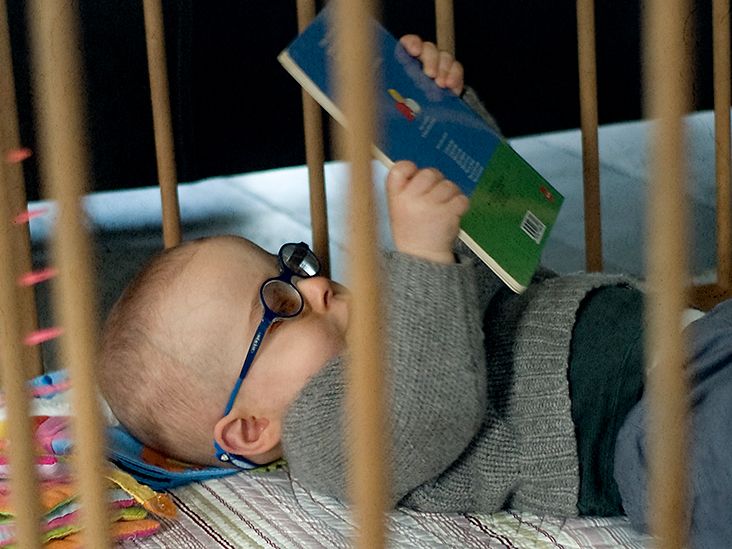
Babies can wear glasses when needed. Yes, tiny glasses exist, and yes, they are often adorable. They may be used for significant farsightedness, nearsightedness, astigmatism, or unequal prescriptions. Some babies may need contact lenses after cataract surgery.
Patching or eye drops for amblyopia
If one eye is weaker, doctors may recommend covering the stronger eye for certain periods so the brain uses the weaker eye. In some cases, special eye drops may blur the stronger eye temporarily. Treatment plans are personalized and should be followed carefully.
Surgery
Surgery may be needed for some conditions, including congenital cataracts, certain types of strabismus, severe ptosis, blocked tear ducts that do not improve, or advanced retinal disease. Surgery is usually followed by ongoing visual rehabilitation, because fixing the structure is only part of the job. The brain also needs practice using the corrected vision.
Medication
Eye infections may require prescription drops or ointment. Some retinal conditions may be treated with medication by a specialist. Parents should never use leftover eye drops or adult eye medication on a baby unless a doctor specifically prescribes it.
Early intervention services
If a baby has significant visual impairment, early intervention can support development. Specialists may help with visual stimulation, movement, play, feeding, and environmental adjustments. The goal is to help the baby explore safely and build skills with the vision they have.
How Parents Can Support Healthy Vision at Home
Parents cannot prevent every vision problem, but they can support visual development in simple ways.
- Attend all well-child visits and recommended screenings.
- Use age-appropriate toys with contrast, color, texture, and movement.
- Talk, smile, and make eye contact during feeding and play.
- Change the baby’s position during awake time to encourage looking in different directions.
- Protect the baby’s eyes from injury, smoke, harsh chemicals, and direct sunlight.
- Follow medical advice if patching, glasses, drops, or follow-up visits are prescribed.
Parents should also trust their instincts. If something about a baby’s eyes seems “off,” it is reasonable to ask. Pediatricians would much rather answer a cautious question than miss a treatable problem.
Experience Notes: What Parents Often Notice First
In real life, baby vision concerns rarely arrive with a flashing sign that says, “This is definitely an eye problem.” More often, parents notice small moments that repeat. A baby may not seem interested in faces. One eye may drift outward in every photo. A white reflection may appear in the same eye again and again. A baby may rub one eye constantly, tear all day, or tilt their head in a way that feels unusual.
One common parent experience is uncertainty. Newborns make all sorts of mysterious faces, dramatic eye rolls, and sleepy expressions. A little eye crossing in the early months can be normal, so parents may wonder whether they are overreacting. The useful question is not, “Am I being silly?” The useful question is, “Is this pattern persistent, worsening, or paired with other symptoms?” If the answer is yes, asking a doctor is wise.
Another common experience is discovering a problem through photos. Many families first notice an unusual white reflex in flash pictures. One strange photo can be a lighting issue. Repeated white reflection in the same eye deserves prompt evaluation. Parents should save the photos and show them to the pediatrician or eye doctor. A phone gallery can become surprisingly helpful medical evidencefinally, a noble purpose for the 847 baby pictures taken this week.
Parents of premature babies may have a different experience. Their child may already be scheduled for eye exams before leaving the hospital or soon after discharge. These visits can feel stressful, especially when the baby has already been through a lot. Still, ROP screening is important because serious retinal changes can happen quietly. Keeping those appointments is one of the best ways to protect long-term vision.
Families also learn that treatment takes patience. Glasses may be tossed. Eye patches may be peeled off with the determination of a tiny escape artist. Drops may require teamwork, songs, snacks, and emotional support for everyone involved. This does not mean treatment is failing. It means the baby is a baby. Consistency, follow-up, and realistic routines matter more than perfection.
Caregivers can make treatment easier by connecting it to daily habits. Glasses can go on after breakfast. Patching can happen during a favorite toy activity. Eye cleaning can be part of morning care. Follow-up appointments can be scheduled before leaving the clinic so they do not disappear into the family calendar black hole.
The biggest lesson from parent experience is simple: early action is empowering. Many baby vision problems are manageable when found early. Even when a condition is serious, diagnosis gives families a plan. Instead of guessing, parents can work with pediatricians, pediatric ophthalmologists, optometrists, therapists, and early intervention teams. Babies do not need perfect vision to thrive, but they do need attentive adults who notice, ask, and follow through.
Conclusion
Vision problems in babies can be subtle, but early signs often show up in everyday moments: poor eye contact, trouble tracking, persistent eye turning, cloudy pupils, unusual tearing, redness, light sensitivity, or abnormal eye movements. Some issues, such as blocked tear ducts, may be common and temporary. Others, such as congenital cataracts, retinopathy of prematurity, strabismus, or amblyopia, need timely care to protect developing vision.
The first year of life is a powerful window for visual development. When babies see clearly, their brains build the pathways needed for focusing, tracking, depth perception, movement, and learning. If something interrupts that process, early screening and treatment can help keep development on track.
Note: This article is for general educational purposes and should not replace medical advice. If a baby has sudden eye symptoms, a white or cloudy pupil, signs of infection, eye injury, or persistent eye misalignment, contact a pediatrician or pediatric eye specialist promptly.











