
Open up a vintage Soviet calculator and you do not simply find wires, keys, chips, and a display. You find a tiny argument with history. On the outside, an Elektronika calculator may look like a distant cousin of a 1970s Casio, Commodore, Texas Instruments, or Hewlett-Packard machine. It has a keypad, a number display, a plastic case, and the same heroic mission: turn human confusion into arithmetic. But once the screws come out, the story becomes much more interesting.
A Soviet calculator teardown reveals both the familiar and the strange. The familiar part is reassuring: engineers everywhere solved many of the same problems in similar ways. They needed a keyboard matrix, a display driver, a power source, a printed circuit board, and an integrated circuit to handle calculations. The strange part is where the fun begins: Cyrillic key legends, unusual chip packages, different manufacturing finishes, regional component choices, and a design philosophy shaped by Soviet industrial realities rather than Western consumer branding.
The result is not a museum piece that says, “Look how weird this is.” It is more like a pocket-size technical conversation across the Iron Curtain. Same math, different toolbox. Same goals, different constraints. Same little equals key, but with an accent.
What Makes the Elektronika MK-26 Teardown So Interesting?
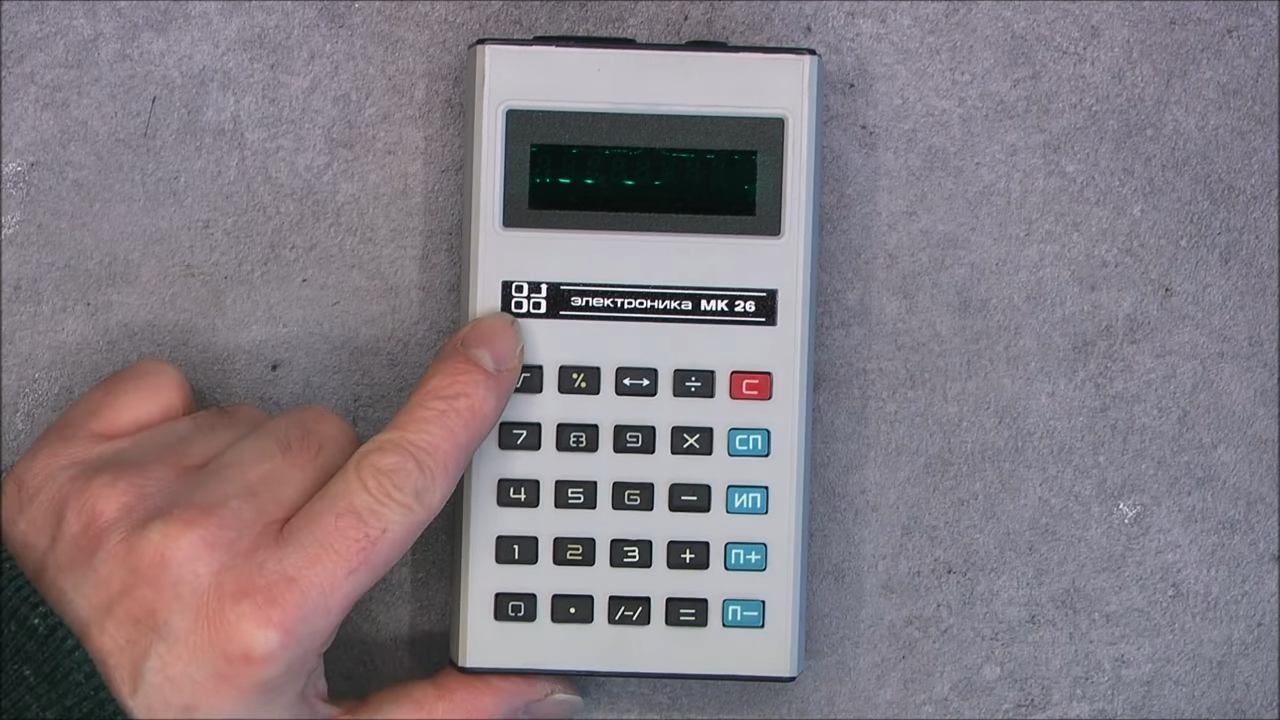
The Elektronika MK-26, a Soviet-era arithmetic calculator, is a great example of why vintage calculator teardown articles attract engineers, collectors, and people who still believe old electronics smell like adventure. It was not a programmable space-age wonder like some later Elektronika models, but that is exactly what makes it useful as a comparison point. It represents the everyday calculator: the sort of device that handled routine arithmetic, survived desk drawers, and probably heard a lot of muttering from engineers, students, and accountants.
From the outside, the MK-26 appears simple. It is a basic calculator with a compact body, a keypad, and a numeric display. The keyboard includes Cyrillic symbols, which instantly gives it visual character for anyone used to English-language legends. The layout is recognizable, but not quite familiar. It is like seeing a street sign in another country: you understand the concept, but your brain takes an extra second to stop wearing roller skates.
Inside, the design becomes even more revealing. Teardown photos and descriptions show a construction style that includes brown printed circuit boards, a display technology typical of its era, and a large integrated circuit package that may look unusual to Western hobbyists. Yet none of these things are random. They reflect production methods, parts availability, and the practical engineering culture behind Soviet consumer electronics.
A Quick History of Pocket Calculators
To understand the Soviet calculator teardown, it helps to remember how dramatic the calculator revolution really was. In the 1960s and 1970s, electronic calculators moved from expensive desktop machines to portable devices that could sit in a briefcase, then a pocket, then eventually a school backpack next to a half-eaten sandwich.
In the United States and Japan, companies such as Texas Instruments, Hewlett-Packard, Sharp, Canon, and Casio pushed calculator technology forward at a stunning pace. The HP-35, introduced in 1972, became famous as the first handheld scientific calculator. It could perform trigonometric, logarithmic, and exponential functions, making it a direct challenge to the slide rule. For engineers, this was not just convenient; it was revolutionary. The slide rule had been the badge of technical adulthood. Then a small electronic brick arrived and politely asked it to retire.
The broader calculator market quickly expanded. Basic four-function models became cheaper. Scientific calculators became more capable. Displays improved, power consumption dropped, and integrated circuits replaced more complicated assemblies. By the late 1970s and early 1980s, calculators were no longer exotic luxuries in many parts of the world. They were everyday tools.
The Soviet Union followed its own path through this technological shift. Under the Elektronika brand, Soviet factories produced calculators, watches, games, computers, and other electronic devices. Some calculators were basic arithmetic models, while others were advanced programmable machines with reverse Polish notation, memory registers, and engineering functions. The Soviet calculator family was broad, serious, and occasionally delightfully odd.
Similarities: Math Forces Everyone to Behave
The most important lesson from a Soviet calculator teardown is that engineering tends to converge. If two teams in different countries are asked to build a pocket calculator in the 1970s, they may disagree about fonts, case texture, and whether the circuit board looks like toast. But the core architecture will often look surprisingly similar.
1. The Same Basic Building Blocks
A calculator needs a way to accept input, process numbers, show results, and manage power. Whether it was designed in Moscow, Tokyo, Dallas, or Palo Alto, those needs do not change. The Elektronika MK-26 includes the same broad categories of parts seen in other calculators of the period: keypad contacts, a circuit board, display electronics, discrete components, and a main calculator integrated circuit.
This is where the teardown becomes charmingly practical. Under the national differences and collector mystique, the machine is still doing basic electronic chores. Press a key, close a contact, send a signal, update a register, display a digit. It is not magic. It is organized impatience.
2. Display Technology From the Same Era
Vintage calculators often used LED or vacuum fluorescent displays, depending on model, market, and period. These displays are part of the visual appeal of old electronics. A modern LCD is efficient and sensible, but a glowing vintage display has personality. It says, “I consume batteries, but I look fabulous.”
The Soviet calculator teardown highlights display choices that feel very much of the time. Early handheld and desktop calculators often had power-hungry displays, and designers had to balance brightness, cost, battery life, and component availability. Western calculators faced the same battle. Anyone who has used an old LED calculator knows the experience: beautiful digits, short battery life, and the quiet suspicion that the device is warming the room.
3. Keypad Matrix Logic
Calculator keyboards usually rely on matrix scanning. Instead of giving every key a dedicated wire, the keys are arranged in rows and columns. The processor scans the matrix to determine which key has been pressed. This saves wiring, reduces complexity, and makes the design more economical.
The MK-26 fits into this broader design logic. Its keypad may look regionally distinctive because of Cyrillic legends and layout choices, but the underlying principle is the same one found across countless calculators. Engineers around the world arrived at similar solutions because the math of manufacturing pushed them there.
Differences: The Soviet Personality Shows Up Fast
If similarities prove that engineers share a universal language, differences prove that manufacturing culture has an accent. Soviet calculators often feel different from Western consumer devices not because they were solving different problems, but because they solved them under different economic, industrial, and supply-chain conditions.
1. Cyrillic Key Legends
The most visible difference is the keypad. A Soviet calculator naturally used Cyrillic symbols for functions and labeling. To an American collector, this can make the device feel mysterious even when the function is ordinary. A memory key is still a memory key, but when the legend looks unfamiliar, the calculator gains instant Cold War charisma.
This difference matters for user experience. Western calculators were typically designed around English abbreviations such as “MR,” “MC,” “M+,” or “CE.” Soviet models used Russian abbreviations and conventions. The hardware might be conceptually similar, but the interface belonged to its own language environment.
2. Circuit Board Finish and Manufacturing Style
Many Western hobbyists expect green solder mask on printed circuit boards because it became so common. In some Soviet calculators, the boards may appear brown or lack the glossy green finish associated with later mass-market electronics. That does not automatically mean poor design. It means different production standards, different materials, and different priorities.
Modern eyes can be unfair. We see an old brown board and think, “That looks primitive.” But if the calculator worked, survived decades, and still produces correct answers, the board deserves respect. It may not win a beauty contest, but neither would most of us after spending forty years in a drawer next to leaking batteries and a mystery key from a filing cabinet.
3. Unusual Integrated Circuit Packages
One of the most intriguing details in Soviet electronics is the use of chip packages that may look unusual to people familiar with Western designs. A package that seems strange at first glance may actually be a standard regional or industrial format. The lesson is simple: “unfamiliar” does not mean “wrong.” It just means your personal electronics vocabulary has been hanging out in one neighborhood.
Soviet semiconductor manufacturing had its own standards and constraints. Some devices copied or adapted ideas from Western or Japanese electronics, while others reflected domestic design choices. In a calculator teardown, a single chip package can reveal a larger story about industrial independence, reverse engineering, and the realities of building consumer goods in a planned economy.
4. Heavier, Chunkier Construction
Many Soviet consumer devices have a reputation for feeling sturdy, heavy, or slightly overbuilt. This is not universally true, but it is common enough to become part of the collector conversation. Compared with some slim Japanese calculators of the same broad period, Soviet units can feel less polished and more industrial.
That does not make them inferior. It makes them different. A sleek Casio might feel like a carefully designed consumer product. A Soviet Elektronika might feel like it was assembled by someone who also knew how to repair a tractor and did not see why a calculator should be delicate. There is a certain charm in that.
Why Soviet Calculators Were Not Just Copies
It is tempting to reduce Soviet electronics to the word “copy,” but that is too simple. Yes, Soviet industry often studied, cloned, or adapted foreign technology. That was part of a larger global pattern, not a uniquely Soviet habit. Many countries and companies learned by imitation, reverse engineering, and incremental improvement. The calculator industry itself was full of shared ideas, common parts, and fast-moving competition.
But Soviet calculators were not merely photocopies with different labels. They existed in a different economic system, used different factories, served different buyers, and often followed different design priorities. Some advanced Elektronika models, such as programmable calculators in the MK series, developed cult followings because they offered unusual capabilities, hidden functions, or architectures that appealed to technically curious users.
The famous Elektronika MK-52, for example, is remembered as a sophisticated programmable calculator with non-volatile memory and expansion possibilities. The MK-85 pushed even further, offering BASIC programming and a pocket-computer personality. These were not disposable gadgets. They were serious tools in a world where personal computing resources were harder to access.
What the Teardown Says About Soviet Engineering
A teardown is not just a parts list. It is a personality test for an engineering culture. The MK-26 suggests a design environment where practicality mattered, standardization mattered, and component availability shaped decisions. It also suggests that Soviet engineers were working toward the same usability goals as their Western counterparts: portable arithmetic, reliable operation, and a workable human interface.
The differences are not flaws by default. Some are aesthetic. Some are economic. Some are technical. Some are simply the result of engineers using what they had. That last point may be the most important. Great engineering is not always about having the best components. Sometimes it is about making a useful machine from the parts your system can actually deliver.
In that sense, the MK-26 is a small but honest artifact. It does not pretend to be luxurious. It does not whisper “premium lifestyle accessory.” It says, “I calculate. What else did you expect, a cappuccino?”
Comparing Soviet and Western Calculator Design
Western calculators of the 1970s and 1980s often competed in open consumer markets. That competition rewarded thin cases, attractive displays, lower prices, better packaging, and clever advertising. Japanese brands in particular became masters of miniaturization and cost reduction. American brands such as HP and Texas Instruments built strong identities around engineering power, education, and professional use.
Soviet calculators operated in a different environment. Availability, state production targets, factory specialization, and domestic technical standards influenced design. A calculator might be expensive relative to wages, hard to find, or treated as a prized technical instrument rather than a casual school supply. That social context changes how people used and valued the device.
Western buyers might compare models in a store and choose the one with better styling or more functions. A Soviet buyer might simply be thrilled to obtain a working calculator at all. That difference in market pressure helps explain why some Soviet devices feel less refined cosmetically while still being technically fascinating.
The Beauty of Vintage Calculator Teardowns
Why do people still care about old calculators? After all, any cheap smartphone can outperform them while also taking photos, playing music, and distracting you from doing the calculation in the first place. The answer is that vintage calculators are understandable in a way modern devices often are not.
Open a modern phone and you find a dense sandwich of custom chips, tiny connectors, glued batteries, and components so small they appear to have been assembled by highly trained dust. Open a vintage calculator and you can often trace the design with your eyes. The keyboard connects here. The display sits there. The main chip does the thinking. The power circuit keeps the whole thing alive. It is complex, but not alien.
That makes a Soviet calculator teardown especially rewarding. It combines accessible electronics with historical context. You can learn about display technology, circuit board manufacturing, keypad design, semiconductor packaging, and Cold War industrial culture in one compact object. Not bad for something that originally existed to calculate grocery totals, engineering values, or school homework.
Lessons for Modern Makers and Collectors
The first lesson is humility. A design that looks odd may have been completely reasonable in its original context. The second lesson is curiosity. Before judging a component choice, ask what constraints shaped it. Was the part locally available? Was the factory already equipped to make that board style? Was repairability more important than elegance? Was the design inherited from an earlier model?
The third lesson is preservation. Old calculators are not just nostalgic desk toys. They are historical documents. Their circuit boards record manufacturing decisions. Their key legends record language and user-interface choices. Their displays record technological trade-offs. Even their failures tell stories about capacitors, batteries, plastics, and time.
Collectors should document these machines carefully: photograph the exterior, record model numbers, note serial markings, capture the PCB layout, and avoid destructive cleaning. A calculator that no longer powers on may still contain valuable information. Besides, every vintage electronics collector eventually learns the sacred rule: before applying power, check for battery corrosion. Ancient batteries are tiny chemical goblins with no respect for history.
Hands-On Experience: What It Feels Like to Explore a Soviet Calculator Teardown
The best way to appreciate a Soviet calculator teardown is to imagine the process from the workbench. The calculator arrives looking modest: a little worn, slightly yellowed, maybe with a case that rattles just enough to make you raise one eyebrow. You turn it over, find the screws, and immediately begin negotiating with plastic tabs that were not designed with your emotional well-being in mind.
Once the case opens, the first impression is usually surprise. The inside is not as alien as expected. There is a recognizable logic to the layout. The keyboard assembly sits where it should. The display occupies the obvious front position. The circuit board carries traces that are easy to follow compared with modern multilayer boards. For anyone who has opened Western calculators from the same era, the basic structure feels familiar. It is the details that keep pulling your attention back.
The Cyrillic key legends change the mood immediately. Even if you know what the functions do, the calculator feels like it belongs to a different classroom, a different desk, a different engineering office. It reminds you that technology is never culturally neutral. A calculator may speak in numbers, but its buttons speak in human language.
Then there is the board itself. A brown PCB without the modern green finish has a raw, practical look. It feels less like consumer electronics and more like lab equipment that wandered into a pocket-sized case. The solder joints may look handmade or uneven compared with modern automated perfection, but that is part of the appeal. You are looking at manufacturing history, not a showroom render.
The integrated circuit package is another moment of discovery. To Western-trained eyes, it may look unfamiliar, even awkward. But after a few minutes, the judgment fades. The package is simply another answer to the same question: how do we mount this silicon, connect it to the board, and make the calculator work reliably? Suddenly the strange part becomes less strange. It becomes evidence.
Testing the keys is its own little ritual. Vintage calculator buttons often have a feel that modern touchscreens cannot imitate. Some are soft and rubbery. Some click with mechanical confidence. Some require a press that says, “Please commit to this number.” If a key does not respond, the likely suspects are dirty contacts, worn pads, cracked solder joints, or corrosion. The repair process becomes a conversation with the object: clean a little, test a little, swear a little, repeat.
Power is where caution matters. Old battery compartments can hide corrosion, damaged springs, or residue from cells that gave up on life sometime during the Reagan administration. Applying power too quickly can damage components that might otherwise be saved. A careful hobbyist checks the contacts, inspects capacitors, looks for obvious shorts, and uses a current-limited supply when possible. The goal is not to shock the calculator awake like a movie scientist yelling “Live!” The goal is to avoid turning a repairable artifact into a decorative paperweight.
When the display finally lights, the emotional payoff is ridiculous and wonderful. It is just digits, yes. But those digits represent a restored connection to a vanished manufacturing world. The glow says the keyboard works, the chip works, the display driver works, and the engineers who designed it many decades ago still get the last word. For a brief moment, your bench is not just a bench. It is a tiny electronics museum with better lighting and more coffee.
That is the real joy of a Soviet calculator teardown. It does not merely show similarities and differences between Soviet and Western devices. It teaches you how to look. It trains you to see engineering choices as responses to constraints. It reminds you that every gadget, no matter how humble, was made by people solving practical problems with imperfect tools. And it proves that a basic calculator can still calculate something unexpected: the distance between cultures, and the surprising number of bridges between them.
Conclusion
The Soviet calculator teardown reveals a perfect mix of similarity and difference. The Elektronika MK-26 shares the universal bones of vintage calculator design: keypad matrix, display, circuit board, processor, power system, and a compact case built around practical arithmetic. Yet it also carries unmistakable regional identity through Cyrillic labeling, distinctive component choices, unusual packaging, and a manufacturing style shaped by Soviet industry.
That is why this teardown matters. It is not simply about whether one calculator was better than another. It is about how engineers in different systems approached the same problem. The MK-26 reminds us that technology is both universal and local. Numbers may be the same everywhere, but the machines that process them carry the fingerprints of the societies that built them.
For collectors, makers, historians, and anyone who enjoys opening old gadgets with suspiciously tiny screws, Soviet calculators are worth studying. They are practical, quirky, educational, and quietly beautiful in the way only old electronics can be. They prove that even a humble arithmetic machine can hold a surprisingly rich story under its plastic shell.














