
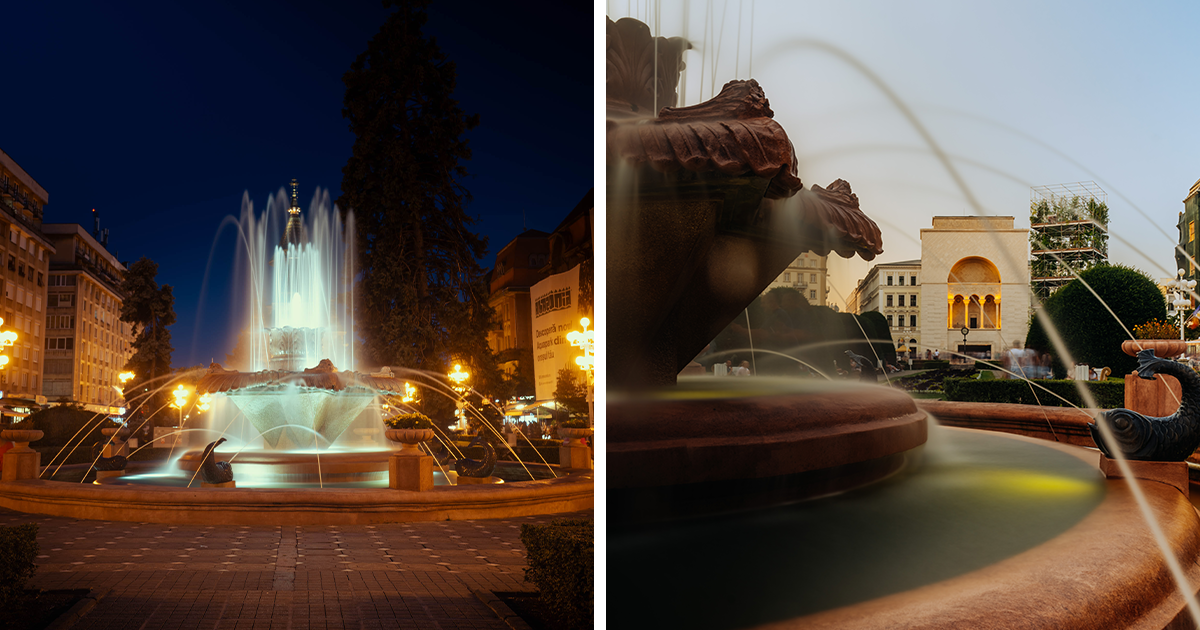
Some cities walk into the room wearing a crown. Paris has the Eiffel Tower. Rome has the Colosseum. Venice has canals so photogenic they make every phone camera feel like it just got promoted. Timisoara, meanwhile, enters quietly, orders a coffee, sits in a pastel-colored square, and waits for you to realize you have been ignoring one of Europe’s most charming cultural cities.
Located in western Romania, close to the borders with Serbia and Hungary, Timisoara became one of the three European Capitals of Culture in 2023, sharing the spotlight with Elefsina in Greece and Veszprem in Hungary. Its official cultural theme, “Shine your light – Light up your city,” was not just a poetic slogan. Timisoara has a serious relationship with light. In 1884, it became the first city in mainland Europe with fully electric street lighting, which is a very stylish way of saying, “We were glowing before glowing was cool.”
But Timisoara is not just a trivia answer. It is a city of broad squares, Secessionist facades, Baroque churches, riverside paths, revolutionary memory, student energy, multilingual culture, and enough architectural details to make your camera battery file a complaint with human resources. These 22 photo-inspired moments capture why Timisoara deserves more attention from travelers, photographers, culture lovers, and anyone who enjoys discovering places before they become the next overcrowded “hidden gem.”
Why Timisoara Deserves A Spot On Your Europe List
Timisoara is often called “Little Vienna,” and for once, the nickname is not just tourism-office jazz hands. The city has strong Habsburg influences, elegant squares, Viennese Secession architecture, and grand buildings that look like they were designed by someone who believed balconies should have personality. Yet Timisoara also feels unmistakably Romanian, with Orthodox domes, Banat traditions, coffee terraces, street art, and local rhythms that keep it from becoming a museum piece.
The city’s European Capital of Culture year highlighted what locals already knew: Timisoara is a creative crossroads. Romanian, German, Hungarian, Serbian, Jewish, Roma, Italian, and other communities have shaped its identity over centuries. That multicultural background is visible in its churches, food, street names, festivals, and everyday conversations. Walk a few blocks, and the city changes tone without changing address.
For travelers, Timisoara offers something increasingly rare in Europe: beauty without the elbow-to-elbow crowd choreography. You can photograph major landmarks, sit in historic squares, wander along the Bega River, and still have space to think, breathe, and wonder why your friends are all posting the same five places from Italy again.
My 22 Pics Of Timisoara: A Visual Walk Through The City
1. Union Square: The Pastel Heartbeat
Union Square, or Piata Unirii, is the kind of place that makes photographers suddenly speak in whispers, as if the buildings might be sleeping. The square is framed by colorful Baroque facades, the Roman Catholic Cathedral, the Serbian Orthodox Cathedral, and the Holy Trinity Monument. The colors are soft but confident: yellow, pink, mint, cream, and sky-blue, all lined up like a box of historic macarons.
2. The Holy Trinity Monument
At the center of Union Square stands the Holy Trinity Monument, a sculptural reminder of the city’s past and a natural anchor for photographs. It gives the square a sense of balance, and it is especially striking when the late afternoon light hits the stone. Timisoara has many elegant details, but this monument feels like the city politely asking you to slow down.
3. The Serbian Orthodox Cathedral
The Serbian Orthodox Cathedral adds another layer to Timisoara’s multicultural story. Its presence in Union Square is not decorative background; it is evidence of the city’s long-standing Serbian community and the layered identity of the Banat region. In photos, its towers rise calmly above the square, as if they have seen every century arrive late and leave confused.
4. The Roman Catholic Cathedral
Also in Union Square, the Roman Catholic Cathedral brings Baroque drama in the best possible way. Its yellow facade glows in sunlight, and its interior offers quiet contrast to the lively terraces outside. This is one of those places where the city’s Austrian-era history becomes visible without needing a lecture or a very serious guide holding a laminated map.
5. Victory Square: Big City Energy With A Human Pace
Victory Square, or Piata Victoriei, stretches with confidence between the Romanian Orthodox Metropolitan Cathedral and the National Opera House. It is grand, but not cold. People stroll, children chase pigeons, friends meet for coffee, and the buildings seem to compete for “Most Likely To End Up As Someone’s Phone Wallpaper.”
6. The Metropolitan Cathedral
The Romanian Orthodox Metropolitan Cathedral is one of Timisoara’s most recognizable landmarks. Its tall towers and patterned roof tiles create a dramatic skyline at the end of Victory Square. The cathedral looks especially powerful from a distance, but its details reward a closer look. The roof alone deserves its own fan club.
7. The National Opera House
At the opposite end of Victory Square, the National Opera House has cultural weight and historical importance. This area was central during the Romanian Revolution of 1989, when Timisoara became the first free city in Romania. Today, the square carries both everyday life and collective memory, which gives photographs here a deeper emotional texture.
8. Bullet Marks And Revolution Memory
Timisoara’s beauty is not only decorative. In parts of the city, traces of the 1989 Revolution remain visible. These marks are reminders that freedom is not an abstract concept but something people fought for in real streets, in real squares, under real fear. Photographing Timisoara means noticing not only color and architecture, but courage.
9. Liberty Square: Minimal, Open, And Surprisingly Photogenic
Liberty Square, or Piata Libertatii, has a different personality from Union Square. It feels more open, geometric, and modern in its layout, with historic buildings around it and a clean central space that plays beautifully with shadows. If Union Square is a romantic postcard, Liberty Square is a well-composed design magazine spread.
10. Maria Theresia Bastion
The Maria Theresia Bastion is one of the strongest reminders of Timisoara’s old fortress system. Built during the Habsburg period, it now serves cultural, commercial, and social purposes. That is one of Timisoara’s best tricks: it does not simply preserve old spaces behind ropes. It lets them breathe, work, and host modern life.
11. Huniade Castle
Huniade Castle is among the city’s oldest monuments and another excellent stop for history lovers. Its architectural character differs from the pastel elegance of the squares, adding a more medieval and fortified note to the city’s visual story. Timisoara is not a one-filter destination. It has range.
12. The Bega River
The Bega River gives Timisoara a relaxed rhythm. Riverside paths, bridges, boats, and green areas soften the city’s urban edges. After photographing squares and facades, walking by the Bega feels like letting your camera exhale. It is also a reminder that Timisoara is not just a city to look at, but a city to move through slowly.
13. Roses Park
Roses Park is one reason Timisoara is associated with flowers and garden charm. In warmer months, the park adds color, fragrance, and open-air calm to the city experience. It is the kind of place where you intend to take one quick photo and then somehow spend forty minutes photographing petals like you are auditioning for a botanical documentary.
14. Secessionist Facades
Timisoara’s Secessionist architecture may be one of its greatest visual treasures. Look up and you will find curved lines, floral motifs, expressive windows, ornamented balconies, and facades that clearly did not believe in being boring. These buildings are ideal for detail shots and prove that architectural personality existed long before Instagram captions did.
15. Colorful Restored Buildings
One of the pleasures of walking through Timisoara is seeing restored facades returning to life. The colors are cheerful but not cartoonish, elegant but not stiff. They give the city a warm visual identity that feels inviting in every season. Even cloudy weather looks better when the buildings are doing half the lighting work.
16. Street Cafes And Terraces
Timisoara is a terrace city. Coffee, conversation, people-watching, and lazy afternoon pauses are part of the experience. The cafe culture fits perfectly with the city’s walkable center. You do not rush through Timisoara; you orbit its squares, stop for espresso, and pretend you are “studying local culture,” which, technically, you are.
17. Art Encounters And Contemporary Culture
Timisoara’s 2023 cultural program included exhibitions, performances, festivals, and contemporary art events. The Art Encounters Biennial helped position the city as a serious cultural destination, not just a pretty backdrop. This matters because Timisoara’s creative scene is not frozen in the past. It is active, experimental, and very much alive.
18. The Brancusi Connection
During its European Capital of Culture year, Timisoara drew attention with major exhibitions connected to Romanian and European art, including the legacy of Constantin Brancusi. For visitors, this was a reminder that Romania’s cultural influence reaches far beyond castles, folklore, and Dracula souvenirs of suspicious quality.
19. Faber And Creative Reuse
Timisoara also shows how former industrial spaces can become creative hubs. Places like Faber reflect the city’s modern cultural energy: design, events, coworking, exhibitions, and community projects. It is the sort of adaptive reuse that makes urban explorers nod approvingly while pretending they discovered it by accident.
20. Multilingual Theater Culture
Timisoara has a rare theatrical identity, with state theater traditions in multiple languages. This reflects the city’s diverse population and its long role as a regional cultural meeting point. For a visitor, that multilingual spirit is not just an institutional fact; it appears in posters, events, conversations, and the general feeling that many histories are sharing the same streets.
21. Evening Lights In The City Center
Because Timisoara has such a strong history with electric street lighting, evening photography feels especially appropriate. The squares glow warmly, facades soften, and the city becomes cinematic without trying too hard. Night shots in Timisoara are not just pretty; they connect directly to the city’s identity as a place that once helped illuminate urban Europe.
22. Everyday Timisoara
The final photo is not a monument. It is the everyday city: a tram passing, friends laughing, a dog inspecting a square like it owns the deed, someone carrying flowers, a student with headphones, an elderly couple walking slowly under ornate windows. These moments are why Timisoara stays with you. The landmarks impress you, but the ordinary scenes make the city feel real.
What Made Timisoara A European Capital Of Culture In 2023?
The European Capital of Culture title is not given simply because a city has attractive buildings and a decent coffee situation, although Timisoara does very well in both departments. The title recognizes cities that use culture as a tool for connection, participation, creativity, and urban development.
Timisoara’s 2023 program was built around people, places, and connections. That framework matched the city’s character. It is a borderland city, a meeting point, a place shaped by empire, migration, trade, industry, revolution, and reinvention. Its Capital of Culture year emphasized courage, diversity, artistic collaboration, public space, heritage, and the idea that culture belongs not only in museums but in streets, neighborhoods, factories, schools, parks, and conversations.
The slogan “Shine your light – Light up your city” worked because it connected three layers of Timisoara’s identity: the city’s electric street lighting first, the revolutionary spark of 1989, and the creative energy of contemporary citizens. That is smart branding, but more importantly, it is meaningful storytelling.
Best Things To Do In Timisoara For First-Time Visitors
Walk The Three Main Squares
Start with Union Square, Liberty Square, and Victory Square. They are close enough to explore on foot, but each has a different mood. Together, they create a compact introduction to Timisoara’s architecture, history, and social life.
Follow The Bega River
The Bega River offers a slower route through the city. It is ideal for walking, cycling, or simply taking a break from photographing buildings that seem determined to out-charm each other.
Visit Museums And Galleries
Timisoara’s museums and art spaces help explain the city beyond its pretty exterior. The National Museum of Art, local galleries, heritage spaces, and contemporary venues reveal a city that has invested in both memory and experimentation.
Look For Architectural Details
Do not only photograph whole buildings. Timisoara rewards close looking. Door handles, window frames, balcony railings, ceramic ornaments, rooflines, and faded signs all tell small stories. In this city, even a corner building can behave like the main character.
Pause For Food And Coffee
Timisoara’s food scene reflects its multiethnic identity and modern lifestyle. You can find Romanian dishes, Central European flavors, Italian influences, bakeries, wine bars, and relaxed cafes. The best itinerary includes time to sit, eat, and let the city happen around you.
Photography Tips For Capturing Timisoara
For the best photos, visit Union Square early in the morning when the light is gentle and the terraces are still waking up. Victory Square works beautifully in late afternoon and blue hour, especially with the cathedral in the frame. Liberty Square is excellent for clean compositions, shadows, and wide shots.
Bring a wide-angle lens or use your phone’s wide setting for the squares, but do not forget portrait-style shots for architectural details. Timisoara’s facades are full of texture and ornament. A zoom lens or cropped frame can turn a single balcony into a full visual story.
Night photography is especially rewarding. Streetlights, illuminated monuments, and warm windows bring out the city’s historic atmosphere. Given Timisoara’s electric-lighting legacy, taking night photos here feels almost ceremonial. Just try not to block a tram while chasing the perfect angle. Trams are patient, but only in theory.
My Longer Experience: What Timisoara Feels Like Beyond The Photos
The thing about Timisoara is that it does not overwhelm you immediately. It does not grab your shoulders and shout, “Look at me, I am important!” Instead, it works more subtly. You arrive, walk into the center, and think, “This is pleasant.” Then you turn a corner and find a pink Secessionist facade with floral details. Then you enter Union Square and realize the city has been quietly setting a trap made of color, history, and excellent coffee.
What I loved most was the sense of space. Many European city centers are beautiful but crowded in a way that makes every photo include at least one stranger eating ice cream dramatically. Timisoara felt more generous. The squares were large enough for people to gather without crushing the atmosphere. You could stand still, frame a shot, wait for light to shift, and actually enjoy the moment instead of fighting a small international army of selfie sticks.
The city also has emotional depth. Victory Square is not just a pretty promenade; it is tied to the Revolution of 1989. Knowing that people gathered there and risked everything changes how you see the place. The beauty becomes more complicated. The buildings are not simply backdrops; they are witnesses. That gives Timisoara a seriousness beneath its cheerful colors.
At the same time, the city is wonderfully livable. People sit outside for coffee, students move between classes and cafes, families walk in the evening, and the Bega River gives everyone a natural place to slow down. It feels like a city that belongs to its residents first and visitors second, which is exactly why visiting feels rewarding. You are not stepping into a tourist machine. You are entering a real urban rhythm.
Photographically, Timisoara is a dream because it offers variety without demanding long transfers. In one walk, you can capture Baroque squares, Orthodox towers, Habsburg-era facades, modern cultural spaces, river scenes, parks, trams, and quiet side streets. The city’s palette is gentle but memorable: warm yellows, pale blues, dusty pinks, cream walls, red roofs, green parks, and golden evening light.
The European Capital of Culture title gave Timisoara a bigger stage, but the city’s appeal existed before 2023 and continues after it. That is the real reason to go. Not because a title told you to, but because Timisoara has the rare ability to feel historic and current at the same time. It is polished in places, rough around the edges in others, and better for that honesty.
If you enjoy cities with layered identities, Timisoara belongs on your list. If you like architecture, it belongs on your list. If you like culture without the exhausting feeling that every attraction has been pre-packaged for tour buses, it definitely belongs on your list. And if you like taking photos, charge your phone, clear your memory card, and prepare to apologize to your travel companions for saying, “Just one more shot,” approximately 73 times.
Conclusion
Timisoara may not be the first European city people mention when planning a cultural trip, and that is exactly part of its charm. It offers grand squares without grandstanding, history without dustiness, beauty without unbearable crowds, and creativity that feels rooted in real community life. Its role as European Capital of Culture 2023 helped introduce it to a wider audience, but Timisoara is more than a one-year title. It is a city of light, memory, architecture, flowers, riverside walks, and multicultural energy.
These 22 photo moments only begin to explain its appeal. Timisoara is best understood by wandering: through Union Square in the morning, along the Bega in the afternoon, across Victory Square at sunset, and beneath electric lights after dark. By then, the question changes. It is no longer “Have you heard of Timisoara?” It becomes, “Why did nobody tell me sooner?”
Note: This article is based on real public information about Timisoara, its history, architecture, European Capital of Culture 2023 program, landmarks, and visitor experience. It is written as original web-ready editorial content without source-link placeholders.












