
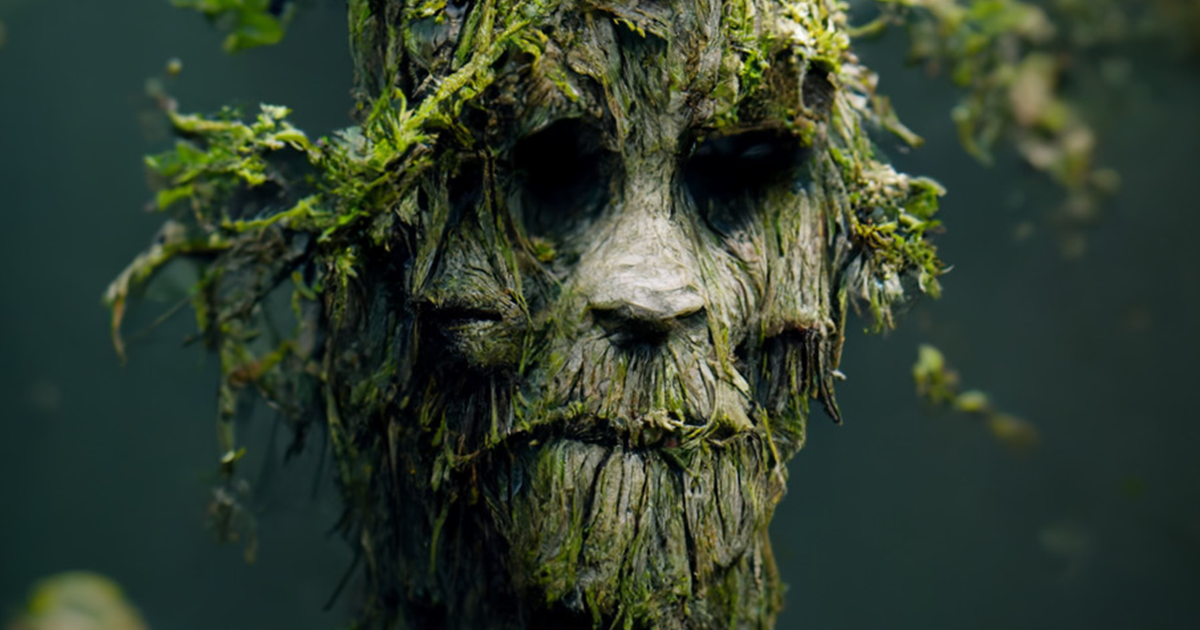
There was a time when building a fantasy world required a mountain of sketchbooks, a suspicious number of coffee mugs, and enough patience to outlast a medieval siege. Today, artificial intelligence can help turn a single sentence into a floating citadel, a desert kingdom, a dragon-sized marketplace, or a forest where the mushrooms look like they have better real estate than most of us.
But the most fascinating part of AI fantasy art is not that it can create something strange. Anyone can type “purple castle in space” and watch the pixels do cartwheels. The real magic happens when fantasy is built from real-world things: architecture, animals, weather, history, landscapes, fashion, folklore, and tiny details we barely notice in everyday life. A cracked stone stairway becomes the entrance to an ancient oracle. A jellyfish inspires a floating lantern beast. A European village square becomes a market for cloud merchants. A desert canyon turns into the ribcage of a sleeping giant.
That is the power of AI when used as a creative partner. It does not replace imagination; it gives imagination a turbo button. Sometimes that button also produces a six-fingered wizard holding a spoon the size of a canoe, but hey, even magic needs editing.
Why AI Fantasy Worlds Feel So Addictive
AI-generated fantasy worlds are addictive because they combine two pleasures humans already love: discovery and recognition. We want to see something new, but we also want our brains to whisper, “Wait, I know that.” A fantasy city based on real Venetian canals, Moroccan courtyards, Japanese shrines, and Art Nouveau balconies feels more believable than a random pile of towers. It has roots. It has texture. It feels like a place where someone could buy bread, lose a duel, and complain about rent.
That is why real-world references matter. The strongest fantasy art usually has a hidden skeleton made of reality. Mountains obey gravity. Animals have anatomy. Buildings need structure. Clothing tells us about climate, class, craft, and culture. Even the wildest fantasy landscape becomes more powerful when it borrows from geology, biology, history, and human behavior.
Real Things Make Imaginary Places More Believable
When creating a fantasy world with AI, real-world inspiration works like seasoning. Too little, and the world tastes bland. Too much, and suddenly your magical kingdom looks like a vacation brochure with a suspicious moon in the background.
The trick is transformation. A creator might begin with real-world references such as Tibetan monasteries, Icelandic lava fields, bioluminescent beaches, medieval armor, tropical birds, old fishing towns, or ancient trade routes. Then AI helps remix those ideas into scenes that feel familiar but impossible.
Architecture Becomes Storytelling
A fantasy building is never just a building. A city carved into cliffs suggests isolation, defense, and stubborn citizens with excellent calf muscles. A palace made of glass and coral suggests wealth, sea worship, and absolutely terrible maintenance bills. A village built around giant tree roots tells us the people live close to nature, or possibly that the trees are in charge and everyone is pretending not to notice.
AI tools can quickly explore these ideas. You can test whether a kingdom should look Roman, Persian, Gothic, Mayan-inspired, futuristic, rustic, or like a bakery designed by an elf with unlimited funding. The speed of experimentation makes worldbuilding more playful. Instead of committing to one visual direction too early, creators can generate variations, compare moods, and refine the strongest ideas.
Animals Become Mythical Creatures
The best monsters often begin with real animals. A dragon can borrow the posture of a big cat, the wings of a bat, the scales of a pangolin, and the attitude of a goose. Terrifying? Absolutely. Scientifically questionable? Also yes. But believable fantasy creatures often work because they feel biologically motivated. Their teeth, wings, horns, claws, fur, or glowing bits seem connected to how they survive.
AI is especially useful for creature exploration because it can combine visual traits quickly. A prompt might ask for a deer-like creature with moth wings, coral antlers, and eyes adapted to moonlight. The first result may be beautiful, weird, or accidentally shaped like a confused umbrella. But with careful revision, the creature can become part of a believable ecosystem.
The Human Still Matters More Than The Machine
AI can generate images, but the creator still makes the world meaningful. A prompt is not just a command; it is a creative decision. The person behind the prompt chooses the theme, references, emotional tone, setting, cultural influences, and final selection. They decide what belongs in the world and what gets banished to the folder named “cool but cursed.”
This is important because fantasy worldbuilding is not only about making pretty pictures. It is about consistency. If a floating city exists, how does it get water? If there are giant insects, do people fear them, farm them, ride them, or politely ask them to stop eating the roof? If a civilization worships falling stars, how does that belief affect festivals, architecture, clothing, language, and law?
AI can help visualize answers, but it does not automatically understand the deeper logic of a fictional culture. The human creator gives the world memory. AI supplies sparks; the artist builds the fire.
How A 35-Picture Fantasy Gallery Can Tell A Bigger Story
A gallery of 35 AI-generated fantasy pictures can be more than a parade of “look what the robot made.” When arranged thoughtfully, it can feel like a travel diary from a world that almost exists.
One image might show the entrance to a cliffside capital. Another reveals the street market below, where merchants sell spices, star-metal tools, and suspiciously intelligent fruit. A third introduces the local wildlife: shade snakes, glass-winged birds, or giant turtles carrying mossy shrines. A fourth shows a festival under falling meteors. By the tenth picture, viewers are no longer just looking at images. They are wondering who lives there, what they fear, what they celebrate, and whether tourists need travel insurance.
This is where AI art becomes worldbuilding. Each picture acts like a window. Together, they suggest geography, history, religion, economy, danger, and daily life. The more connected the images feel, the stronger the fantasy world becomes.
The Funniest Part: AI Is Brilliant And Weird
Anyone who has experimented with AI image generation knows the experience is part art studio, part slot machine, and part conversation with a very talented raccoon. You ask for “a noble queen wearing silver armor,” and the AI gives you a majestic ruler with twelve shoulder pads and a sword that appears to be melting into a decorative breadstick.
But those mistakes are not always failures. Sometimes they become inspiration. A strange building shape might suggest a new religion. A distorted animal might become a rare magical species. A lighting accident might create the perfect mood for a haunted valley. AI is not always accurate, but it is wonderfully generative. It throws visual surprises onto the table, and the creator decides which ones are treasures and which ones should quietly return to the swamp.
AI Fantasy Art And The Ethics Conversation
Of course, the rise of AI art also comes with serious questions. Creative tools do not exist in a bubble. Artists, designers, writers, photographers, and illustrators have raised concerns about training data, style imitation, credit, compensation, transparency, and copyright. These concerns matter.
For web publishing, creators should be honest about using AI, avoid misleading audiences, and be careful with prompts that imitate living artists too closely. Responsible AI art is not just about getting a cool result. It is about respecting the wider creative community. Fantasy is more fun when it does not step on real people on the way to the dragon cave.
There is also the question of ownership. In the United States, copyright guidance has emphasized the importance of human authorship. AI-assisted work may involve protectable human creativity when there is meaningful human selection, arrangement, editing, or original contribution, but purely machine-generated output raises complicated legal issues. For creators, the safest mindset is simple: treat AI as a tool, document your process, and make sure your human creativity is visible in the final work.
Why This Kind Of Project Works So Well Online
A project like “The Power Of AI: I Created A Fantasy World Mostly Based On Real World Things (35 Pics)” has strong web appeal because it blends visual curiosity with a clear creative hook. Readers immediately understand the promise: fantasy images, AI magic, and real-world inspiration. That combination is highly clickable because it invites both wonder and debate.
People who love art want to see the images. People curious about AI want to see what the technology can do. Worldbuilding fans want to inspect the lore. Skeptics want to judge whether the results feel soulless or impressive. And casual readers simply want to enjoy the digital equivalent of wandering into a museum where every painting looks like it came from a dream with excellent lighting.
That makes the topic ideal for a long-form blog post. It can discuss creativity, technology, visual storytelling, ethics, fantasy design, and personal experimentation without feeling like a technical manual. Nobody wants to read a 4,000-word spreadsheet about prompt weights while eating lunch. But a story about turning real-world details into a fantasy world? That has wings.
How To Create A Fantasy World With AI Without Making It Feel Random
If you want your own AI fantasy world to feel rich instead of chaotic, start with a central idea. Maybe your world is built around falling stars. Maybe every city grows from giant fossilized trees. Maybe the oceans float above the mountains. Maybe cats are the ruling class, which honestly would surprise no one.
Next, build a reference board. Include real places, animals, textures, fabrics, weather, tools, historical objects, and color palettes. The goal is not to copy reality but to give your fantasy a believable foundation. Then write prompts that combine setting, subject, style, lighting, mood, and story details.
For example, instead of prompting “fantasy village,” try something more specific: “a cliffside fishing village inspired by Mediterranean stone houses and Southeast Asian floating markets, built around glowing tide pools, warm sunset light, detailed daily life, cinematic fantasy concept art.” That prompt gives the AI structure. It also gives you something to judge. Does the village look livable? Does it match the culture you imagined? Does it make viewers want to zoom in?
The Future Of AI Worldbuilding
AI worldbuilding is still evolving quickly. Image tools are becoming better at following prompts, preserving character consistency, editing selected areas, and generating variations. For creators, this means the workflow is shifting from “one lucky prompt” to a more iterative process: brainstorm, generate, revise, combine, edit, curate, and publish.
That workflow feels closer to directing than simply clicking a button. The creator becomes a visual storyteller, art director, editor, and lore keeper. AI becomes the tireless assistant who never sleeps, never complains, and occasionally puts windows where elbows should be.
The most exciting future is not one where AI replaces artists. It is one where more people can explore visual storytelling, while skilled artists continue to bring taste, discipline, emotion, and originality to the process. AI can lower the barrier to entry, but human judgment remains the premium ingredient.
Personal Experience: What Creating An AI Fantasy World Teaches You
Working on an AI-assisted fantasy world teaches you very quickly that imagination is not a single lightning strike. It is more like gardening. You plant ideas, prune the weird branches, water the promising ones, and occasionally discover that something strange has grown in the corner and now deserves its own kingdom.
The first lesson is that prompts are not magic spells, even though they look suspiciously similar. A good prompt does not simply describe an object. It describes a relationship between mood, place, history, and visual logic. When I imagine a fantasy world based on real-world things, I do not begin with “beautiful castle.” I begin by asking what kind of people built it. Were they defending against storms, monsters, invaders, or taxes? Did they have stone, wood, bone, crystal, or recycled airship parts? Do they decorate everything because they are joyful, or because beauty is part of their religion?
The second lesson is that AI rewards specificity but punishes confusion. If you ask for too many ideas at once, the result can look like a Renaissance painting crashed into a video game menu during a thunderstorm. That can be entertaining, but it is not always useful. The best results often come from focusing each image on one strong concept: a festival, a creature, a marketplace, a sacred mountain, a border gate, a royal library, or a lonely road through an impossible forest.
The third lesson is that real-world references make the fantasy stronger. A market inspired by Istanbul’s bazaars, Vietnamese floating markets, and desert caravan routes already has movement, trade, smell, sound, and social life built into it. A creature inspired by owls, manta rays, and arctic foxes feels more grounded than a random “cool beast.” A temple inspired by cave monasteries and volcanic rock formations feels older, heavier, and more mysterious than a generic glowing shrine.
The fourth lesson is that curation matters as much as generation. AI can create dozens of images quickly, but not every image deserves to survive. Some are beautiful but do not fit the world. Some are technically impressive but emotionally flat. Some contain tiny errors that become impossible to unsee. Choosing the best images is an act of authorship. It is where taste enters the room, takes off its coat, and starts making decisions.
The fifth lesson is that mistakes can become lore. A strange tower leaning over a river might become an ancient observatory damaged by a starfall. A creature with too many eyes might become a sacred guardian that sees memories instead of light. A city with impossible bridges might become a place where gravity behaves differently after sunset. AI accidents are not always trash. Sometimes they are plot hooks wearing silly hats.
Most of all, creating a fantasy world with AI reminds you that technology is most powerful when it helps humans ask better questions. What would this place sound like? What do people eat there? What scares children at night? What songs do travelers sing? What real-world detail can be twisted just enough to feel magical? The images are only the doorway. The world begins when you step through and start imagining what lives on the other side.
Conclusion
The power of AI in fantasy worldbuilding is not just speed, beauty, or novelty. It is the ability to turn everyday reality into a playground for imagination. Real-world things give fantasy weight. AI gives creators a fast way to explore those transformations visually. Human creativity gives the results meaning.
A 35-picture AI fantasy gallery can be more than a collection of pretty images. It can become a map of a place that does not exist yet somehow feels familiar. It can show us castles inspired by real architecture, creatures shaped by real biology, landscapes born from real geography, and cultures hinted at through clothing, tools, rituals, and light.
AI may be powerful, but the best fantasy worlds still need a human dreamer behind the curtain. Preferably one with curiosity, patience, and the courage to delete the wizard with seven elbows.












