
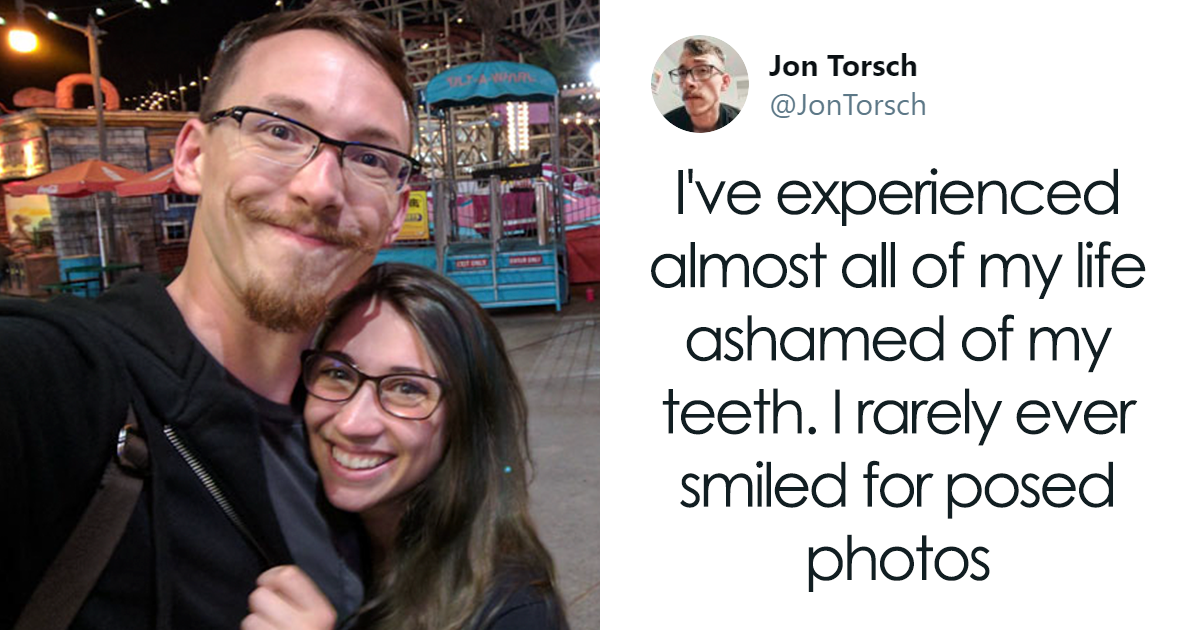
There are makeovers, and then there are life resets. A new haircut can make someone feel fresh. A better jacket can add a little swagger. But fixing your teeth? That can change how you speak, smile, eat, date, work, take photos, and walk into a room without mentally preparing for battle.
That is why one man’s story about transforming his smile struck such a nerve online. After years of feeling embarrassed by his teeth, he shared how dental treatment helped him regain confidence and changed the way he moved through the world. His point was simple but powerful: dental care should not be treated like a luxury upgrade reserved for people with extra cash. For many Americans, it is basic health care, basic dignity, and sometimes the difference between hiding from life and participating in it.
The internet loves a good before-and-after photo, of course. We are emotionally defenseless against them. But this story was not just about straighter teeth or a brighter smile. It opened a bigger conversation about why dental care is so expensive, why insurance often feels like a coupon wearing a tiny business suit, and why oral health is still separated from the rest of health care as if the mouth were an optional side quest.
Why One Smile Transformation Hit So Hard
The viral story centered on a man who explained that fixing his teeth did more than improve his appearance. It changed his confidence, his mental well-being, and the way people responded to him. That is not vanity. That is social reality.
Teeth sit right in the middle of the face, which is deeply inconvenient for anyone trying to hide dental problems. A person can cover a bad haircut with a hat. They can survive a questionable fashion phase by deleting old photos. But teeth appear every time someone talks, laughs, eats, interviews for a job, or meets a new person. When someone feels ashamed of their smile, they often learn little survival tricks: smiling with lips closed, avoiding photos, speaking less, laughing into a hand, or pretending they hate selfies when really they just hate the panic before the flash.
That is why the response to the story was so emotional. Many people recognized themselves in it. They knew what it felt like to budget around tooth pain, delay a checkup because rent came first, or feel judged for a dental problem that was really about cost, childhood access, genetics, fear, or a long chain of “I’ll deal with it later” moments.
Dental Care Is Health Care, Not Cosmetic Fluff
One of the most stubborn myths about dental care is that it is mostly cosmetic. Yes, people want nice smiles. That is allowed. Humans have been decorating themselves since before we invented Wi-Fi passwords. But oral health is not just about looking good in wedding photos.
Untreated tooth decay can cause pain, infection, difficulty eating, trouble speaking, sleep disruption, and missed school or work. Gum disease can lead to tooth loss and has been linked with broader health concerns. Dental problems can also affect nutrition because people with painful teeth may avoid crunchy fruits, vegetables, nuts, or protein-rich foods that require chewing. When your mouth hurts, a salad is not “wellness.” It is an obstacle course.
The mouth is connected to the body in the most literal way possible. Yet dental care is often carved out of regular health coverage, leaving people to navigate separate plans, annual maximums, waiting periods, exclusions, and surprise bills. It is a strange system. Imagine if eye care, mental health, and dental care all had to stand outside the main health-care house and knock politely every January.
The Cost Problem: Why People Delay Dental Treatment
Dental care can become expensive quickly. A routine cleaning may be manageable for many households, but fillings, crowns, root canals, periodontal treatment, orthodontics, dentures, implants, and emergency procedures can push costs into hundreds or thousands of dollars. For people living paycheck to paycheck, even a “small” dental bill can become a financial emergency.
This creates a cruel cycle. Preventive care is usually cheaper than emergency care, but people who cannot afford preventive visits often delay treatment until pain forces them into urgent care. By then, the problem may require a bigger procedure, more appointments, and more money. In other words, the system waits until the small fire becomes a kitchen renovation.
For low-income adults, uninsured workers, rural residents, and older adults on limited incomes, the barrier is not laziness or indifference. It is math. If the choice is dental treatment or groceries, groceries win. If the choice is a crown or car repair, the car may win because the car gets someone to work. Dental problems are often postponed not because they are unimportant, but because life keeps presenting more urgent invoices.
The Confidence Gap: How Teeth Affect Social Life
Fixing teeth can change a person’s social confidence because smiling is one of the main ways humans signal warmth. A person who hides their smile may be misread as unfriendly, shy, uninterested, or cold. Meanwhile, inside their head, they may simply be thinking, “Please do not notice my teeth.”
That kind of self-monitoring is exhausting. It turns ordinary conversations into little performances. You are not just listening to a joke; you are calculating whether laughing will reveal too much. You are not just posing for a group photo; you are deciding how to arrange your mouth. You are not just ordering lunch; you are hoping the food will not hurt.
When someone finally gets dental care, the change can feel enormous. They may smile more naturally, speak more freely, and stop shrinking themselves in social settings. That can affect friendships, dating, networking, and even the small daily interactions that make life feel less lonely. A confident smile will not solve every problem, but it can remove one heavy backpack from a person’s shoulders.
Work, Opportunity, and the Unfair “Smile Standard”
There is also an uncomfortable truth: teeth can affect how people are treated professionally. In job interviews, customer-facing roles, sales, hospitality, media, and leadership positions, appearance often influences first impressions. That does not mean it should matter as much as it does. But pretending it does not matter helps no one.
People with visible dental problems may face stigma, even when those problems come from poverty, lack of insurance, trauma, childhood neglect, medication side effects, genetics, or years without access to care. The result is deeply unfair. Dental issues can make it harder to get better-paying work, while better-paying work is often what makes dental care affordable. That is not a ladder. That is a hamster wheel with a co-pay.
Affordable dental care can therefore be an economic issue, not just a health issue. When people can treat dental problems early, they may be better able to interview confidently, communicate comfortably, and pursue opportunities without the invisible burden of shame.
Why Dental Insurance Often Disappoints People
Many Americans technically have dental coverage, but coverage does not always mean affordability. Dental plans often include annual maximums that have not kept pace with the real cost of major care. A plan may help with cleanings and basic procedures but still leave patients with large bills for crowns, implants, orthodontics, or complex restorative work.
This is where people get frustrated. They pay premiums, carry a card, and assume they are protected. Then a dentist explains the treatment plan, the front desk prints the estimate, and suddenly everyone in the room becomes very quiet.
Dental insurance can still be useful, especially for preventive visits and negotiated rates. But for major treatment, many plans function more like partial assistance than true protection. That is one reason people call for broader reform. If oral health affects pain, infection, nutrition, employment, and quality of life, then coverage should be stronger than “good luck, here is a discount and a pamphlet.”
Dental Care and Inequality: The Smile Divide Is Real
The affordability problem does not affect everyone equally. People with higher incomes are more likely to receive regular preventive care, address problems earlier, and access cosmetic or restorative options. People with lower incomes are more likely to delay treatment, experience untreated decay, and lose teeth that might have been saved with earlier intervention.
Rural communities may face another barrier: not enough dental providers nearby. Even when someone has coverage, it may be difficult to find a dentist who accepts their plan, especially public insurance. Transportation, appointment availability, time off work, and child care can also stand between a person and the dental chair.
The result is a national smile divide. On one side are people who can treat small problems while they are still small. On the other are people forced to wait until pain becomes unbearable. That divide is not about personal character. It is about access.
What Affordable Dental Care Could Actually Look Like
Making dental care affordable does not require one magical policy wand, although that would be convenient and probably sold separately. It requires several practical changes working together.
1. Stronger preventive coverage
Cleanings, exams, fluoride treatment, sealants, and early cavity care can prevent more expensive procedures later. When preventive care is easy to access, people are less likely to end up needing emergency treatment.
2. Better adult dental benefits
Children’s dental coverage has received more policy attention than adult dental care, but adults need teeth too. Shocking, yes. Adults eat, work, speak, and experience dental pain. Expanding adult dental benefits through public and private coverage would help reduce untreated disease.
3. Integrating oral health with primary care
Doctors and dentists often operate in separate systems, even though oral health and overall health overlap. Screening for oral health problems in primary care settings, improving referrals, and connecting medical and dental records could help catch problems earlier.
4. Support for dental schools and community clinics
Dental schools, federally qualified health centers, mobile clinics, and nonprofit programs can provide lower-cost care. These options are especially important for people who are uninsured or underinsured. They are not a full replacement for a fair national system, but they are a lifeline.
5. Transparent pricing
Dental treatment plans can feel confusing, especially when patients are anxious or in pain. Clear estimates, plain-language explanations, and upfront conversations about alternatives can help patients make informed decisions without feeling trapped.
Why Shame Makes Dental Problems Worse
One of the most harmful parts of dental stigma is shame. People with dental issues are often judged as careless, unhygienic, or irresponsible. That judgment ignores reality. Dental problems can begin in childhood, when a person has no control over insurance, transportation, diet, or whether a parent can afford dental visits. They can also result from illness, medication, injury, pregnancy, eating disorders, disability, anxiety, or plain old financial bad luck.
Shame keeps people away from dentists. The longer they wait, the worse the problems become. Then the shame grows. It is a miserable loop, and nobody escapes it by being scolded.
A better approach is compassion plus practical help. Dentists who explain without judging can change a patient’s entire relationship with care. Friends and family can help by avoiding cruel jokes about teeth. And society can help by treating oral health as a public-health priority instead of a personal luxury item.
The Emotional Side of Fixing Teeth
When someone fixes their teeth after years of embarrassment, the emotional shift can be surprisingly deep. It is not just, “Now my smile looks better.” It is, “I do not have to plan every facial expression anymore.” It is, “I can laugh without checking myself.” It is, “I can meet people without apologizing silently for my face.”
For some people, dental treatment feels like getting a piece of themselves back. They may become more outgoing, take more photos, speak up in meetings, go on dates, or simply enjoy eating without fear. That kind of change is difficult to measure on a dental chart, but it matters.
This is why the viral story resonated. It reminded people that dental care is not just about enamel, brackets, crowns, or X-rays. It is about participation in everyday life. A smile is social currency, emotional expression, and sometimes armor. Everyone deserves one they are not afraid to use.
Experience Section: What Stories Like This Teach Us About Teeth, Money, and Dignity
Stories about dental transformation often start with a photo, but the real story usually begins years earlier. Maybe someone had crowded teeth as a child but braces were too expensive. Maybe they broke a tooth and patched the problem temporarily because rent was due. Maybe they avoided dentists after one painful experience and then felt too embarrassed to return. Maybe they worked jobs without benefits and watched a small cavity become a major problem. By the time the person finally gets treatment, they are not just fixing teeth. They are closing a long chapter of discomfort, fear, and self-protection.
One common experience is learning how much mental space dental insecurity takes up. People who feel ashamed of their teeth may not notice how often they are managing it because it becomes automatic. They choose seats in dimmer corners. They avoid laughing too widely. They decline video calls. They delete photos. They speak carefully. They may even build a personality around being “the quiet one” when, underneath, they are simply tired of feeling seen in the wrong way.
Then treatment begins. It might be braces, aligners, fillings, crowns, gum therapy, whitening, dentures, implants, or a combination of procedures. The process can be uncomfortable, expensive, and slow. There may be appointments, payment plans, temporary soreness, awkward trays, dietary changes, and moments where the mirror does not yet match the hope. Dental transformation is rarely as effortless as a before-and-after post makes it look. The internet shows the glow-up; real life includes the invoice, the numb lip, and trying not to drool after anesthesia.
But as progress appears, people often describe small victories. The first open-mouth smile in a photo. The first meal without pain. The first conversation where they do not think about their teeth. The first compliment that feels kind instead of embarrassing. These moments add up. Confidence is not always a dramatic movie scene with inspirational music. Sometimes it is ordering a sandwich without calculating which side of your mouth can handle it.
These experiences also reveal why affordability matters so much. Dental care can transform lives, but only for people who can reach it. When treatment is priced out of reach, the message becomes painful: your confidence, comfort, and health are available, but only if your bank account cooperates. That is a hard thing to accept in a country that already knows how to prevent and treat many oral-health problems.
Affordable dental care would not mean everyone gets a Hollywood smile on demand. It would mean people can get exams, cleanings, fillings, extractions, infection treatment, gum care, dentures, and medically necessary restorative work before problems destroy their health or dignity. It would mean a cracked tooth does not become a financial cliff. It would mean people do not have to launch an online fundraiser for a root canal. It would mean fewer people smiling with their lips sealed because the system sealed off their options first.
The biggest lesson from stories like this is that dental care is personal, but the problem is structural. Individual people carry the pain, embarrassment, and bills. But the barriers are built into coverage rules, provider shortages, benefit limits, and the long-standing habit of treating oral health as separate from health. Fixing that would help millions of people, not just cosmetically, but socially, emotionally, economically, and physically.
A changed smile can look like confidence. It can also look like relief. It can look like someone finally laughing without editing themselves. And that is exactly why dental care should be affordable: because nobody should have to hide from their own life over a treatable health problem.
Conclusion
The story of a guy whose life changed after fixing his teeth is not just a feel-good internet moment. It is a reminder that oral health affects confidence, opportunity, comfort, and dignity. Dental care helps people eat, speak, work, smile, and connect with others. When it is unaffordable, the consequences reach far beyond a toothache.
Affordable dental care should be part of a serious conversation about health equity in America. Preventive services, stronger insurance, expanded public benefits, community clinics, transparent pricing, and less stigma can all help close the gap. A healthy smile should not be a luxury product. It should be a realistic part of everyday health care.












