
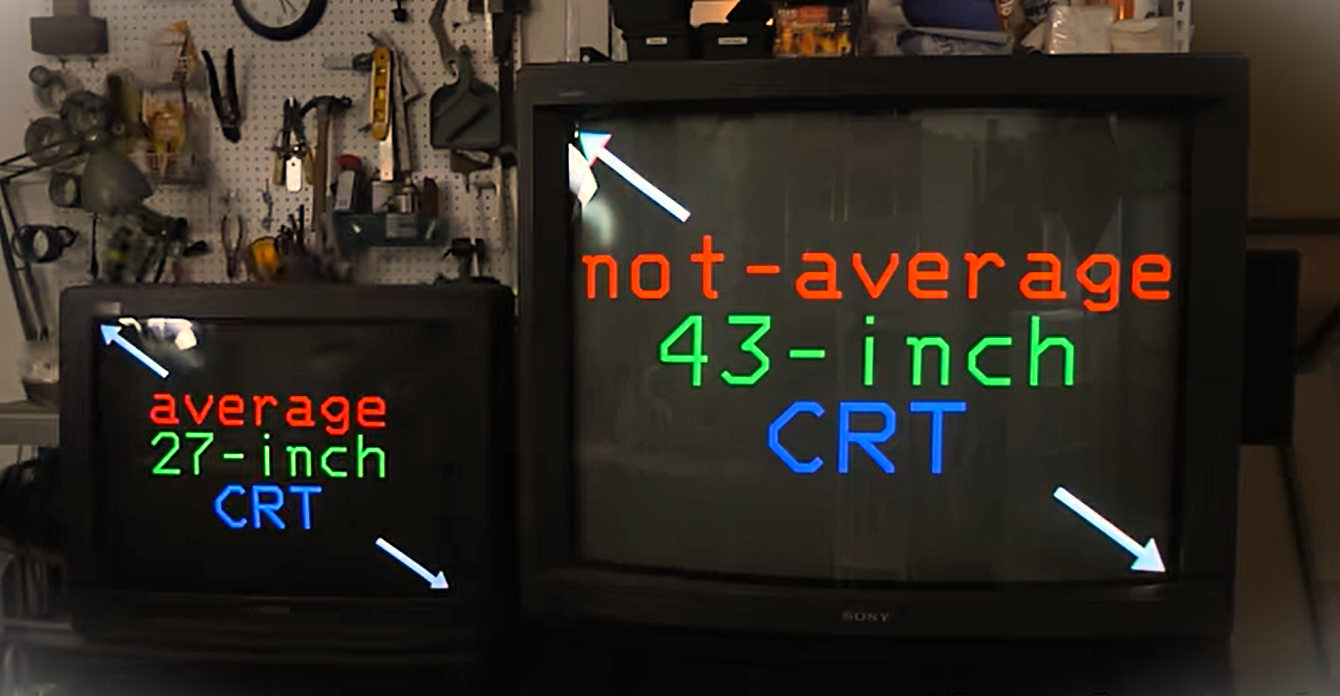
Some technology becomes obsolete. Some becomes collectible. And some becomes so outrageously heavy, rare, and wonderfully impractical that it turns into a legend with handles, casters, and possibly its own gravitational field. That is the charm behind the story of the Sony PVM-4300, also known as the KX-45ED1, the “Big Boy” CRT that recently found a new wave of attention through a mini documentary about its rediscovery and preservation.
In an era when televisions are thin enough to make a wall nervous, the idea of chasing down a 440-pound cathode-ray tube display sounds mildly ridiculous. But for retro technology fans, CRT collectors, vintage gaming enthusiasts, and anyone who loves hardware with a little drama baked into the glass, the quest for the Big Boy CRT is more than a scavenger hunt. It is a reminder that old technology can still carry cultural weightsometimes literally enough weight to require multiple adults, a dolly, and a serious conversation with your lower back.
The mini documentary built around this rare display taps into everything that makes retrotech fascinating: mystery, engineering ambition, international teamwork, online community magic, and the stubborn belief that a piece of technology should not vanish just because it no longer fits neatly into a modern entertainment center.
What Is the “Big Boy” CRT?
The “Big Boy” CRT is shorthand for Sony’s PVM-4300, a massive professional-grade Trinitron display released at the end of the 1980s. It was not merely a large television. It was a statement piece, a prestige machine, and one of the most extreme consumer-adjacent CRT displays ever produced. With a 45-inch tube and about 43 inches of visible screen, it dwarfed the 20-inch and 27-inch sets that most families remember from living rooms, bedrooms, and basement gaming caves.
To put that in perspective, a common 27-inch CRT already feels like a punishment assigned by a gym teacher with a grudge. The PVM-4300 weighed around 440 pounds. That is not “ask a friend to help” heavy. That is “reconsider the architectural integrity of your staircase” heavy.
Sony built the PVM-4300 during the golden age of Trinitron technology. Trinitron displays were known for bright color, strong contrast, and a distinctive aperture grille design that helped Sony stand apart from conventional shadow-mask CRT sets. The Big Boy took that legacy to its most theatrical conclusion: a gigantic tube display aimed at videophiles, professional users, corporate environments, and anyone wealthy enough to say, “Yes, I would like my television to arrive with the emotional footprint of a grand piano.”
Why This Mini Documentary Matters
The mini doc is compelling because it does not treat the CRT as a dusty relic. It treats it like a missing artifact. That is the right framing. For years, the Sony PVM-4300 existed in the minds of many enthusiasts as a near-mythical machine. Photos circulated. Specs were discussed. Rumors multiplied. But actual surviving units were almost impossibly scarce.
The story follows a familiar but irresistible pattern: a rare object is discovered, time is limited, logistics are messy, and the internet becomes both map and rescue team. The preservation effort around the Big Boy CRT shows how online communities can move from casual fascination to real-world action. A collector may start with a post, a clue, or a rumor, but the success of a rescue often depends on strangers willing to help because they understand the importance of the object.
That is what gives the documentary its emotional spark. The star is a hulking display, yes, but the real story is people. Someone has to care enough to investigate. Someone has to travel. Someone has to verify the unit. Someone has to figure out transportation. Someone has to prevent a rare CRT from becoming e-waste, warehouse clutter, or a cautionary tale titled “Oops, We Threw Away a Museum Piece.”
The Engineering Flex Behind Sony’s Giant CRT
The PVM-4300 belongs to the broader Trinitron family, one of Sony’s most influential display technologies. Introduced in the late 1960s, Trinitron changed expectations for color television by using a single-gun, three-cathode system and an aperture grille rather than a traditional shadow mask. In everyday terms, the picture looked bright, sharp, and colorful enough to make competing sets seem like they had woken up from a nap.
CRTs work by firing electron beams toward a phosphor-coated screen. Magnetic fields steer those beams, and when electrons hit the phosphors, the image appears. Color CRTs use red, green, and blue information to create the full picture. It is a beautifully physical process: light made by electricity, vacuum, glass, metal, and timing. Compared with modern flat panels, CRTs feel almost mechanical in spirit, even though they are electronic marvels.
Scaling that technology to the size of the Big Boy was not simple. Bigger CRTs required enormous glass envelopes, stronger structures, more demanding manufacturing tolerances, and careful control of geometry, convergence, heat, and safety. A tiny display flaw that might be tolerable on a small tube could become glaring on a 43-inch visible screen. The PVM-4300 was therefore not just a big TV. It was Sony showing off what it could do when engineering ambition was allowed to put on a tuxedo and bench-press a coffee table.
Why CRTs Still Have a Cult Following
Anyone who has spent time in retro gaming circles knows that CRTs never truly died. They simply moved from department stores to garages, thrift shops, studios, arcade bars, and the carefully reinforced shelves of enthusiasts. Modern displays are sharper, lighter, brighter, and more convenient. But older games were often designed around the visual behavior of CRT screens. Scanlines, phosphor glow, softer edges, analog blending, and low input latency all shape the experience.
On a flat panel, a 16-bit sprite can look blocky and exposed, like it showed up to a fancy dinner wearing gym shorts. On a CRT, the same sprite may appear smoother, more textured, and closer to what the original artists expected players to see. Composite video blur, aperture grille patterns, and phosphor bloom all become part of the art. In that sense, the display is not merely a screen. It is part of the creative pipeline.
This is why professional video monitors, broadcast monitors, and high-end Trinitrons remain desirable. Collectors are not just chasing nostalgia. They are chasing accuracy, motion clarity, analog warmth, and the specific look of media created for tube displays. The Big Boy CRT magnifies that appeal. It is a dream object: impractical, rare, technically impressive, and loaded with personality.
The Preservation Problem: CRTs Are Not Easy Pets
Saving a CRT is not like saving an old poster or a vintage game cartridge. CRTs are heavy, fragile, and potentially dangerous if handled incorrectly. They contain high-voltage components, vacuum tubes that can implode if damaged, and glass that may include lead in certain sections. Repair and recycling require care. Moving one requires planning. Moving a Sony PVM-4300 requires either professional equipment or a team of friends who love you very, very much.
The environmental side matters too. In the United States, CRTs marked for disposal can fall under hazardous waste rules because of lead in the funnel glass. Repair and reuse are often encouraged before recycling, but recycling itself has become harder as demand for new CRT glass has collapsed. In other words, preservation is not just nostalgia. It can be a responsible alternative when done safely and properly.
The Big Boy story highlights this tension. A rare CRT is valuable as a historical object, but only if someone can preserve it responsibly. Letting it disappear would be a loss. Mishandling it would be reckless. The documentary succeeds because it shows the middle path: enthusiasm paired with practical action.
From Internet Myth to Physical Artifact
One reason this story works so well is that the PVM-4300 spent years occupying a strange space between documentation and folklore. Many people had heard of it. Few had seen one. Fewer still had interacted with a surviving unit. That kind of scarcity creates a special energy in collector communities. A single photo, brochure scan, or forum post can become a breadcrumb in a years-long hunt.
The mini doc turns those breadcrumbs into a narrative. It reminds viewers that the internet is not only a place for arguments about cable quality and aspect ratios. Sometimes it is a preservation network. A person in one country finds a lead. Another person in another city checks it out. A community helps identify, verify, and celebrate the discovery. Suddenly, an object that might have been forgotten becomes part of a living archive.
That is especially important for late-analog technology. Devices from the 1980s and 1990s are old enough to be endangered but not always old enough to be institutionally protected. Museums cannot save everything. Companies often discard records. Owners move, downsize, or pass equipment along without knowing its significance. Enthusiasts fill the gap, and stories like this show why their work matters.
The Human Side of Heavy Hardware
The charm of retrotech is not only technical. It is emotional. A CRT carries memories: Saturday morning cartoons, VHS tapes, camcorder playback, local news graphics, Nintendo marathons, PlayStation boot screens, school AV carts, and that one family member who slapped the side of the TV like they were negotiating with a vending machine.
The Big Boy CRT is obviously not an ordinary household set, but it amplifies those memories. It represents the peak of an era when bigger tubes meant bigger spectacle. Before thin OLED panels and 8K marketing banners, making a huge, high-quality CRT was a flex of materials science and manufacturing courage. Sony did not simply stretch a display. It built a glass monument to analog ambition.
That is why the mini doc resonates beyond the CRT collector niche. It is about the thrill of finding something that should not have survived. It is about seeing people rally around an object because it represents craftsmanship, history, and shared curiosity. It is about the joy of saying, “This matters,” even when the object in question weighs more than a refrigerator and is less convenient than almost everything sold today.
Why “Retrotechtacular” Is the Perfect Word
“Retrotechtacular” sounds playful, but it captures the mood perfectly. The Big Boy CRT story is retro, technical, and spectacular all at once. It has the seriousness of preservation, the excitement of a treasure hunt, and the absurd comedy of trying to move a display that seems personally opposed to being moved.
Modern technology often hides its complexity. Phones are sealed slabs. TVs are impossibly thin panels. Software updates arrive silently. CRTs, by contrast, are visibly engineered objects. You can see their depth, feel their mass, hear their faint whine, and watch the screen come alive in a way that feels almost theatrical. The PVM-4300 is that experience turned up to full volume.
What the Big Boy CRT Teaches Us About Tech History
The quest for the Big Boy CRT teaches a simple lesson: technology history is not only written by the products that sold in the millions. It is also written by the oddballs, prototypes, prestige machines, and rare commercial experiments that pushed boundaries. The PVM-4300 was never going to become the average living-room television. It was too expensive, too heavy, and too extreme. But that is exactly why it is interesting.
Devices like this reveal what companies valued at a particular moment. In the late 1980s, Sony’s display reputation was tied to image quality, engineering excellence, and the prestige of Trinitron. The Big Boy was a physical expression of that identity. It said, “We can build this,” and sometimes that statement alone matters.
Today, the value is different. The PVM-4300 is no longer a luxury display competing for wealthy buyers. It is a historical artifact, a conversation starter, and a reminder that innovation often leaves behind strange and wonderful fossils. Preserving those fossils helps future viewers understand not just what technology did, but what people dreamed it could become.
Experiences Related to the Big Boy CRT: The Joy, Fear, and Back Pain of Analog Treasure Hunting
Anyone who has ever hunted for old electronics knows the experience is part research project, part road trip, and part comedy sketch. You start with a simple goal: find a nice CRT for retro games, vintage video work, or display collecting. Then suddenly you are messaging strangers, comparing input ports, studying blurry marketplace photos, and asking deeply practical questions like, “Does it power on?” and “Is it on the second floor?” That second question is where dreams go to develop muscle strain.
The Big Boy CRT story feels familiar because every collector has a smaller version of it. Maybe it is a 20-inch Sony Trinitron found in a neighbor’s garage. Maybe it is a JVC D-Series discovered under a pile of holiday decorations. Maybe it is a professional video monitor rescued from a school, studio, hospital, or production house. The scale changes, but the feeling is the same: a mix of excitement, uncertainty, and the quiet knowledge that you should have brought better gloves.
The first experience many people have with CRT collecting is surprise. They remember old TVs as junk because flat panels replaced them so quickly. Then they connect a Super Nintendo, Sega Genesis, PlayStation, VCR, or old camcorder and realize the picture has a character that modern screens struggle to imitate. The colors glow differently. Motion feels immediate. Low-resolution graphics suddenly make sense. Even imperfections become charming. A little geometry wobble? That is not a defect; that is the TV reminding you it has a personality.
The second experience is logistical humility. CRTs teach respect through mass. A lightweight modern display can be lifted casually. A large tube TV must be approached like furniture with secrets. You measure doorways. You clear paths. You recruit helpers. You lift from the bottom, not from decorative plastic trim that may be older than some adults with mortgages. You learn that “free TV” can still cost you pizza, gasoline, and a meaningful conversation with your spine.
The third experience is community. CRT enthusiasts are often generous with advice because everyone knows the stakes. They help identify models, explain inputs, warn about dangerous repairs, recommend safe cleaning methods, and celebrate successful rescues. The Big Boy mini doc captures that spirit beautifully. Preservation rarely happens alone. It happens because people share knowledge, time, and enthusiasm.
Finally, there is the emotional experience. Bringing an old CRT back into use feels different from buying a new gadget. It feels like reconnecting a piece of the media ecosystem that shaped decades of games, movies, broadcasts, and home videos. When a rare set survives, especially one as dramatic as the PVM-4300, it becomes more than equipment. It becomes proof that technology can have an afterlife when people care enough to save it.
Conclusion: A Giant Screen With an Even Bigger Story
The quest for the “Big Boy” CRT is not just a story about a rare Sony display. It is a story about why old technology still matters. The PVM-4300 represents a peak moment in CRT engineering, a time when manufacturers competed not only on convenience but on visual performance, physical craftsmanship, and sheer technical bravado.
The mini documentary gives that history a new home by transforming a niche collector hunt into a human story. It celebrates the people who notice what others overlook, the communities that rally around preservation, and the strange joy of saving a machine that is equal parts television, sculpture, and weightlifting challenge.
In a world obsessed with thinner, faster, and newer, the Big Boy CRT reminds us that bigger, older, and weirder can still be wonderful. Sometimes the future is exciting. Sometimes the past rolls in on a dolly and steals the show.
Note: This publication-ready article synthesizes publicly available information about the Sony PVM-4300, CRT technology, Trinitron history, retro display culture, and responsible CRT preservation, rewritten in original language for web publishing.












