
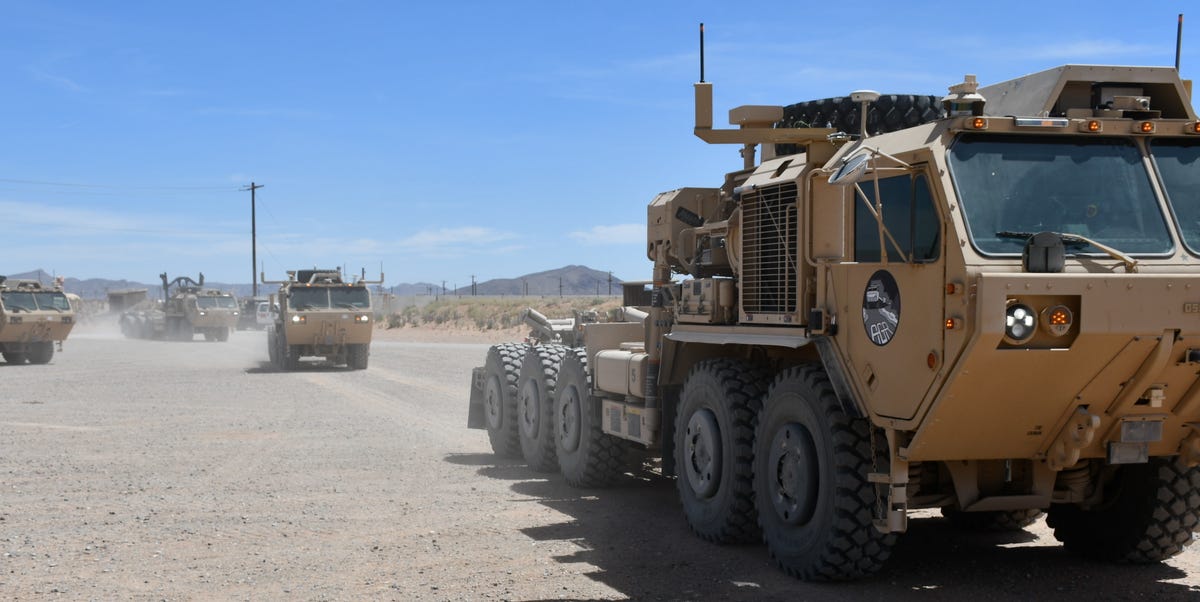
The phrase “robot brain” sounds like something a Hollywood screenwriter would slap onto a whiteboard right before the explosions begin. But in the U.S. Army’s world of autonomous ground vehicles, it is a surprisingly useful nickname. The Army has spent years developing a common autonomy system that can help trucks, tracked vehicles, robotic combat vehicles, and armored platforms navigate, follow routes, avoid obstacles, and operate with less direct human input.
This is not about a tank waking up one morning, ordering coffee, and deciding it prefers jazz. It is about a software-and-sensor architecture designed to give military vehicles a shared set of robotic behaviors. In practical terms, the Army wants armored vehicles and support vehicles that can move supplies, scout dangerous roads, assist formations, and reduce risk to soldiers in the dirtiest, dullest, and most dangerous missions on the battlefield.
At the center of this effort is the U.S. Army DEVCOM Ground Vehicle Systems Center, known as GVSC, located at Detroit Arsenal in Michigan. GVSC has worked on autonomy for wheeled and tracked platforms, including leader-follower convoy technology, the Robotic Technology Kernel, Project Origin robotic combat vehicle experiments, and autonomous resupply vehicles. Together, these projects show a clear direction: the future Army vehicle may still have armor, tracks, wheels, and weapons, but its real advantage could come from software.
What Is the Army’s “Robot Brain”?
The Army’s robot brain is best understood as a modular autonomy stack. It combines sensors, onboard computers, control software, robotic behaviors, and vehicle interfaces so a machine can understand its surroundings and act on commands. Instead of building a unique autonomous system for every truck, carrier, or robotic vehicle, the Army has been moving toward reusable software that can be adapted across platforms.
One important piece of that effort is the Robotic Technology Kernel, often shortened to RTK. RTK is described as a government-owned library of modular software packages for autonomous ground platforms. Its purpose is to make autonomy more portable. In plain English: the Army does not want every robot vehicle to speak a different language. It wants a common brain that can be taught to drive different bodies.
That matters because Army vehicles are wildly different. A 10-wheel Palletized Load System truck does not handle like a tracked M113 surrogate. A robotic combat vehicle does not behave like a forklift. A left-hand-drive American truck is not the same as a right-hand-drive British lorry. Yet the core problems remain similar: detect obstacles, understand terrain, calculate a path, avoid danger, and respond to human commands.
Why the Army Wants Autonomous Armored Vehicles
The military case for autonomous armored vehicles is not just “robots are cool,” although, admittedly, robots are cool. The deeper reason is survival. Convoys are vulnerable. Resupply routes can be mined, watched by drones, or targeted by artillery. Reconnaissance can expose soldiers before commanders fully understand what is ahead. Casualty evacuation, route clearance, and forward logistics can force troops into danger before the actual fight even begins.
Autonomous ground vehicles give the Army another option. A robotic vehicle can move ahead of soldiers, carry equipment, block an intersection, perform route reconnaissance, or act as a decoy. It can sit in “silent watch” with a low heat signature. It can carry smoke, surveillance payloads, electronic warfare systems, or weapons that remain under human control. In short, it can take the first punch so soldiers do not have to.
The Army has repeatedly emphasized that autonomy is not meant to replace soldiers. It is meant to reduce cognitive burden and physical risk. A soldier should not have to stare at a screen every second to babysit a robotic vehicle like it is a toddler with a chainsaw. The long-term goal is for robots to behave more like teammates: receiving intent, handling routine driving, and alerting humans when the situation requires judgment.
How the Technology Works
Sensors Give the Vehicle Awareness
An autonomous armored vehicle needs to know what is around it. That awareness can come from cameras, lidar, radar, GPS, inertial navigation, and other sensors. Civilian self-driving cars often rely on lane markings, road signs, high-definition maps, and predictable traffic rules. Army vehicles cannot assume any of that. They may operate in forests, deserts, mud, smoke, darkness, damaged roads, or places where GPS is jammed or unreliable.
That makes military autonomy harder than the average city commute. A commercial robotaxi may complain about double-parked delivery vans. An Army robot has to think about craters, tree lines, ditches, debris, mines, bad weather, enemy interference, and terrain that was perfectly fine yesterday but looks like pudding today.
Drive-by-Wire Turns Commands Into Motion
For software to control a vehicle, it must be able to operate steering, braking, throttle, transmission, and other movement systems. This is where drive-by-wire technology comes in. Instead of purely mechanical or hydraulic control, the vehicle receives electronic commands. The autonomy system can then tell the vehicle to slow down, stop, turn, reverse, or maintain a route.
Adding drive-by-wire to military vehicles is not always simple. Older platforms were not designed to become robots. Engineers must adapt the control system, integrate sensors, test safety behavior, and ensure the vehicle can still be operated manually when needed. The robot brain may be software, but it still has to wrestle with very physical machines.
Autonomous Behaviors Make the System Useful
The magic is not one single algorithm. It is a set of behaviors. These can include driver warning, driver assistance, teleoperation, waypoint navigation, leader-follower convoy operations, obstacle avoidance, route replanning, formation movement, and limited exploration or mapping. Each behavior adds a layer of usefulness.
For example, a vehicle in leader-follower mode can trail a human-driven lead truck while maintaining spacing and route discipline. A vehicle in waypoint mode can move toward a destination selected by an operator. A vehicle with obstacle avoidance can stop or maneuver when something blocks its path. The more reliable these behaviors become, the less time soldiers must spend micromanaging the machine.
Leader-Follower Convoys: The Practical First Step
One of the Army’s most practical autonomy programs has been leader-follower ground resupply. The concept is simple enough to explain at dinner without frightening your relatives: one manned vehicle leads, and unmanned follower vehicles trail behind it. The lead vehicle makes decisions, while the followers use sensors and autonomy to stay in formation.
This approach is attractive because logistics convoys are essential and dangerous. Fuel, ammunition, water, food, repair parts, and medical supplies must move whether the route is safe or not. Removing soldiers from some vehicles in a convoy can reduce exposure while preserving transport capacity. It also helps with manpower. If one driver can effectively guide several trucks, the unit can do more with fewer people in harm’s way.
The Army has tested leader-follower systems on Palletized Load System trucks and other logistics vehicles. These vehicles are not glamorous, but wars are not won by glamour. They are won by fuel, ammunition, maintenance, and the stubborn ability to get heavy things to the right place at the wrong time. If autonomy can make that process safer, commanders will pay attention.
Project Origin and Robotic Combat Vehicle Experiments
Project Origin became one of the Army’s most visible robotic vehicle testbeds. It used robotic platforms to gather soldier feedback and technical data in realistic training environments. The point was not to unveil a perfect robot warrior. The point was to learn quickly, break things safely, and discover what soldiers actually need when robots join a formation.
In exercises at major training centers, Project Origin vehicles supported missions such as route reconnaissance, blocking intersections, denying helicopter landing zones, carrying mission payloads, and helping opposing forces simulate enemy robotic systems. In one exercise, robotic platforms were used with payloads such as smoke generators, tethered unmanned aircraft systems, electronic warfare components, and remotely operated weapon stations.
That kind of experimentation is valuable because PowerPoint robots are always brave, cheap, and obedient. Field robots are more honest. They get stuck. They lose communications. They meet mud. They expose weak user interfaces. They show commanders what is useful, what is awkward, and what belongs in the “nice idea, please never make me use this again” drawer.
The Human Still Matters
Despite all the excitement around autonomous armored vehicles, the human role remains central. The Army’s approach has emphasized human control over lethal decisions. Navigation software and weapons control are separate concerns, and the use of force requires human authorization. This distinction matters, because controlling a vehicle is not the same as deciding when to fire a weapon.
The most realistic near-term future is not a battlefield full of fully independent robot tanks roaming around like metallic cowboys. It is more likely to be human-machine teaming. Soldiers will command, supervise, redirect, authorize, and intervene. Robots will scout, carry, follow, watch, jam, smoke, and sometimes draw fire. The goal is not to remove people from war but to keep them farther from unnecessary danger.
Why a Common Robot Brain Is a Big Deal
A shared autonomy system can reduce duplication, speed development, and make upgrades easier. If each vehicle program creates its own isolated software, the Army ends up with a garage full of robots that cannot share tools, lessons, or improvements. A modular architecture allows improvements in perception, planning, cybersecurity, or control to move across multiple platforms.
This is especially important as the Army works with industry partners. Contractors may build different vehicles, but the Army benefits when autonomy remains open, modular, and government-influenced. That gives the service more flexibility and reduces the risk of being locked into one vendor’s ecosystem. In a fast-changing battlefield, vendor lock-in is not just annoying; it can become operationally expensive.
The Army’s interest in high-assurance computing also shows how serious this problem is. A robot brain must be secure, reliable, and resilient. If an autonomous vehicle can be confused, spoofed, jammed, or hacked, it becomes a liability. Cybersecurity is not a decorative feature. It is part of the drivetrain.
The Drone War Reality Check
By 2025, the Army’s robotic combat vehicle plans faced a major reality check. Reports indicated that the service was reconsidering or halting parts of the Robotic Combat Vehicle acquisition strategy. The reason was not that autonomy had become useless. The reason was that expensive robotic combat platforms had to be judged against the brutal economics of modern warfare.
Battlefields in Ukraine and elsewhere have shown that cheap drones can threaten expensive armored systems. A multimillion-dollar unmanned combat vehicle may sound efficient until an inexpensive drone and munition can damage or destroy it. That does not end the case for robotic armored vehicles, but it changes the requirements. Future systems may need to be cheaper, smaller, more numerous, more modular, easier to repair, and harder to detect.
This is where the robot brain concept may become even more important than any one vehicle. Platforms can change. Programs can be paused, canceled, restructured, or renamed by a committee that has clearly had too much coffee. But autonomy software, common control systems, payload integration, and human-machine teaming lessons can carry forward. The brain may outlive the body.
Potential Uses for Autonomous Armored Vehicles
Reconnaissance and Scouting
Robotic vehicles can move ahead of crewed formations to detect enemy positions, obstacles, ambushes, or contaminated areas. Even limited autonomy can help a small team see more terrain without exposing soldiers immediately.
Autonomous Resupply
Driverless or semi-autonomous resupply vehicles can move ammunition, fuel, food, water, and equipment to forward units. This is one of the most realistic early uses because logistics routes are repetitive, dangerous, and manpower-heavy.
Route Clearance and Obstacle Work
Robots can investigate suspicious roads, carry sensors, or support breaching tasks. Sending a machine first is often better than asking soldiers to discover the problem the traditional way, which is a polite phrase for “badly.”
Casualty Evacuation
Future unmanned ground systems could help move wounded soldiers from dangerous areas. This mission is difficult, emotional, and urgent, but it is exactly the kind of task where reducing exposure for rescuers could save lives.
Decoys and Deception
Robotic vehicles can create signatures, block roads, deploy smoke, or force the enemy to reveal positions. In modern warfare, making the enemy waste attention and ammunition can be a victory all by itself.
Challenges the Army Still Has to Solve
The Army’s robot brain is promising, but it faces tough problems. Off-road autonomy remains difficult. Communications can be jammed. GPS may be unavailable. Mud, snow, dust, smoke, and vegetation can confuse sensors. Human operators need interfaces that are clear under stress. Maintenance crews need systems they can repair without summoning a wizard from a software lab.
There is also the question of trust. Soldiers must trust a robot enough to use it, but not so much that they assume it can do everything. Good autonomy requires calibrated trust. The vehicle should be predictable, transparent, and honest about its limits. If it is stuck, it should say so. If it cannot classify an obstacle, it should alert the operator. A robot that pretends to be confident when it is confused is not futuristic; it is just dangerous with extra steps.
Cost is another major issue. The Army must avoid building robotic systems so expensive that commanders become afraid to risk them. A battlefield robot should be useful enough to matter but affordable enough to lose when the mission demands it. That balance is hard, but the drone era has made it unavoidable.
Experience-Based Lessons From the Robot Brain Era
The most important experience from Army robotics experiments is that autonomy becomes real only when soldiers touch it, test it, curse at it, fix it, and try again. Laboratory demonstrations are useful, but field exercises reveal the truth. A robot vehicle that glides beautifully across a clean test track may behave very differently when asked to move through a wet training area, communicate through trees, follow a convoy at night, and avoid becoming the world’s most expensive lawn ornament.
One lesson is that soldiers quickly identify practical value. They do not need a robot to be perfect. They need it to reduce risk, save time, carry weight, or create tactical options. If a robotic vehicle can hold a roadblock for long hours, deliver supplies without exposing a driver, or scout a suspicious route, soldiers will understand its purpose. If it requires constant attention and creates more work than it removes, they will understand that too, usually with colorful vocabulary.
Another experience is that the user interface can make or break the system. A robot brain may contain advanced algorithms, but the soldier sees the screen, controller, alerts, map, and command flow. If the interface is confusing, the autonomy feels unreliable even when the underlying software is strong. The best systems make complex behavior feel simple. The operator should not need a doctoral degree in robotics to tell a vehicle, “Follow that truck, avoid that ditch, and please do not embarrass us in front of the colonel.”
Field experience also shows why modular payloads matter. A robotic platform becomes more valuable when it can carry different mission packages. Today it may carry smoke. Tomorrow it may carry sensors. Next week it may support electronic warfare, counter-drone tools, cargo, or casualty evacuation equipment. The vehicle is the body, but the mission package is the personality. The robot brain must be flexible enough to understand and support that changing role.
Maintenance experience is equally important. Soldiers and mechanics need rugged systems, replaceable components, clear diagnostics, and training that matches operational reality. If a sensor fails in the field, the unit should know whether the vehicle can continue in a degraded mode or must be pulled from the mission. Autonomy is not just a software problem; it is a sustainment problem. Batteries, cables, mounts, processors, antennas, and actuators all matter.
Perhaps the biggest lesson is that autonomy changes tactics slowly and then suddenly. At first, units use robots cautiously. Then they discover small advantages. A robotic vehicle can draw attention. It can carry extra gear. It can watch a gap. It can make the enemy react. Over time, commanders begin planning around those capabilities. That is when the robot brain stops being a gadget and becomes part of the formation.
Conclusion
The U.S. Army’s development of a robot brain for controlling armored vehicles is not a single invention with a shiny red button. It is a long-running shift toward software-defined ground warfare. Through GVSC, RTK, leader-follower convoys, Project Origin, autonomous resupply, and robotic combat vehicle experiments, the Army has been learning how to make machines move with more independence while keeping soldiers in command.
The future may not belong to giant robot tanks alone. In fact, the Army’s recent reassessment of expensive robotic combat vehicles suggests the future could favor smaller, cheaper, modular, and more adaptable systems. But the core idea remains powerful: if the Army can build a trusted autonomy architecture that works across many platforms, it can upgrade how vehicles move, scout, resupply, and protect soldiers.
In other words, the robot brain is less about replacing the warrior and more about changing the team. The armored vehicle of tomorrow may still rumble, crawl, and carry armor like its ancestors. The difference is that it may also think just enough to keep humans safer, formations faster, and commanders one step ahead. Not bad for a brain that does not even need coffee.
Note: This article synthesizes publicly available information from U.S. Army program updates, DEVCOM Ground Vehicle Systems Center materials, congressional research, defense industry reporting, and autonomous vehicle technology coverage. Program names, acquisition plans, and procurement status may continue to evolve as the Army adjusts requirements for future battlefields.











