
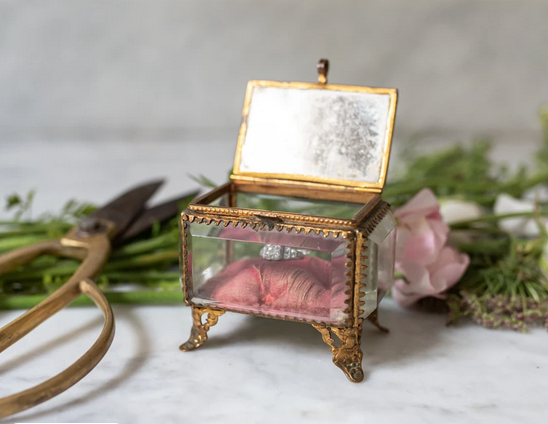
A Victorian jewelry casket box is not just a place to hide earrings from the mysterious household goblin who steals one half of every pair. It is a miniature stage for romance, status, craftsmanship, and the wonderfully dramatic taste of the 19th century. These ornate boxes were designed to hold rings, brooches, lockets, bracelets, watch chains, mourning jewelry, love tokens, and all the little treasures that made a dressing table feel like a private museum.
The word “casket” may sound a bit intense today, but in the world of antiques it often means a small decorative case or chest. A Victorian jewelry casket box might be made of gilded metal, beveled glass, velvet, silk, papier-mâché, leather, celluloid, wood, enamel, or even marble. Some were sweet and delicate. Others looked as if a tiny palace had decided to become a jewelry box and retire on a vanity.
Collectors love these pieces because they combine beauty with usefulness. They are decorative, historical, tactile, and surprisingly personal. Open one and you are not just looking at a box. You are peeking into the daily rituals of another era, when dressing for dinner could involve gloves, pins, perfume, hair ornaments, and enough accessories to require a small logistics department.
What Is a Victorian Jewelry Casket Box?
A Victorian jewelry casket box is a decorative container associated with the Victorian era, broadly connected to Queen Victoria’s reign from 1837 to 1901 and the design movements that followed closely into the early 20th century. These boxes were made to store jewelry and personal keepsakes, but their appearance was often just as important as their function.
Unlike a plain modern jewelry organizer, a Victorian casket was meant to be seen. It sat on a dresser, vanity, writing table, or mantel as part of the room’s personality. A lady’s jewelry box could signal taste, sentiment, wealth, travel, or family history. Even smaller examples had flair: little feet, hinged lids, floral relief, glass panels, padded interiors, miniature locks, and sometimes a finial that looked far more important than any finial has a right to look.
Many antique jewelry caskets were made in Europe, especially France, England, Germany, Austria, and Russia. American manufacturers also produced highly collectible art-metal jewel boxes in the late Victorian and Edwardian periods, particularly around 1900 to 1925. These American pieces often featured Art Nouveau influence, with flowing lines, flowers, maidens, scrolls, and natural motifs.
Why Victorian Jewelry Caskets Became So Popular
The Victorian age loved objects with meaning. Jewelry was not merely decorative; it could mark courtship, marriage, mourning, friendship, travel, religion, and family ties. Lockets might hold hair or portraits. Brooches could commemorate a loved one. Rings carried symbols. Cameos, chains, and charms were all part of a visual language that people understood with impressive seriousness.
As the middle class grew, more households wanted stylish decorative goods. Industrial advances made ornate objects easier to produce, while mail-order catalogs and department stores helped bring fashionable accessories into American homes. A beautiful jewelry casket box was both practical and aspirational. It gave personal treasures a proper throne, because apparently tossing a garnet brooch into a drawer next to loose buttons was not the Victorian way.
These boxes also fit perfectly into the era’s love of domestic display. The Victorian home was layered, expressive, and full of objects. A jewelry casket added sparkle to the dressing area and helped organize the small luxuries of daily life. It was storage, decoration, and emotional architecture in one compact package.
Common Materials Used in Victorian Jewelry Casket Boxes
Ormolu and Gilt Metal
One of the most recognizable styles is the ormolu jewelry casket. Ormolu refers to a gold-colored decorative metal finish, historically associated with gilded bronze but also used more broadly in antique descriptions for gilt metal mounts and ornament. These boxes often feature elaborate metal frames, floral garlands, scrollwork, cherubs, paw feet, or mythological scenes.
French ormolu caskets from the late 19th century are especially admired. Some were cast with bas-relief figures, winged putti, classical scenes, and tufted fabric interiors. They can feel grand even when small, like a jewelry box that has read too much poetry and now insists on being addressed formally.
Beveled Glass
Beveled glass jewelry casket boxes are highly popular among collectors because they display the contents while adding sparkle. Their angled glass edges catch light beautifully, creating a jewel-like effect even before jewelry is placed inside. Clear, amber, green, and rose-tinted glass panels appear in different examples, often held together by gilt metal frames.
These boxes are sometimes described as miniature vitrines. They are ideal for displaying cameos, rings, pearls, watch fobs, or small heirlooms. The catch, of course, is that glass reveals whether you have arranged your jewelry tastefully or simply created a tiny treasure landslide.
Velvet, Silk, Satin, and Faille Linings
The interior of a Victorian jewelry casket matters almost as much as the exterior. Velvet, silk, satin, faille, and padded fabric linings protected delicate jewelry and added a luxurious touch. Pale silk linings were common in some art-metal boxes, while brighter velvet interiors appeared in many decorative caskets.
Original lining can increase charm, but condition is important. Torn, faded, stained, or replaced interiors affect value. Still, a slightly worn lining can be part of the appeal. It shows the box was used, loved, and trusted with someone’s favorite things.
Papier-Mâché, Lacquer, and Mother-of-Pearl
Victorian decorative arts also embraced papier-mâché, especially in black lacquered pieces with gilding, painted flowers, and mother-of-pearl inlay. These boxes and small cabinets could be richly embellished while remaining lightweight. Some mid-19th-century British examples show brilliant floral decoration and luxurious interiors.
Mother-of-pearl catches light in a softer way than glass or metal. It gives the box a romantic shimmer, less “royal treasury” and more “moonlight behaving itself indoors.”
Celluloid and Early Decorative Plastics
Later Victorian and early 20th-century jewelry boxes sometimes used celluloid, an early plastic material that could imitate ivory, shell, or decorative relief. Celluloid vanity boxes often featured romantic scenes, flowers, portraits, or raised designs. These pieces are charming but should be handled carefully, kept away from heat, and stored with good ventilation.
Popular Styles and Motifs
Victorian jewelry casket boxes appear in a wide range of designs. Some lean Gothic, with architectural shapes and dark romantic energy. Others are Rococo Revival, overflowing with curves, shells, flowers, and scrolls. Late Victorian and Edwardian examples often move toward Art Nouveau, with flowing lines and nature-inspired decoration.
Common motifs include roses, lilies, violets, vines, birds, cherubs, bows, ribbons, classical figures, paw feet, shields, medallions, and female profiles. A flower was rarely just a flower. In Victorian visual culture, flowers could suggest love, remembrance, modesty, purity, friendship, or longing. In other words, a jewelry box covered in blossoms was basically a group chat in metal form.
Victorian Jewelry Casket Box vs. Jewelry Box: What Is the Difference?
The terms overlap, but “casket” usually suggests a small chest-like container with a hinged lid, decorative structure, and a sense of preciousness. A jewelry box may be simple or modern, while a jewelry casket often feels more architectural and ornamental.
A Victorian jewelry casket box may have raised feet, a domed lid, metal mounts, glass sides, fitted compartments, padded lining, or a lock. It is often collectible as a decorative object even when empty. A plain jewelry box stores things. A casket makes a small ceremony out of opening the lid.
How to Identify an Authentic Victorian Jewelry Casket Box
Authenticating a Victorian jewelry casket box requires looking at construction, materials, wear, and style. Genuine antique pieces usually show age in ways that are difficult to fake perfectly. Hinges may have softened movement, gilt surfaces may show gentle rubbing, fabric may have faded, and metal may have natural patina.
Look for hand-finished details rather than perfectly uniform modern casting. Examine the screws, hinges, seams, glass edges, feet, and interior lining. Beveled glass should feel substantial, and older panels may show small bubbles, waves, or minor imperfections. Metalwork may include maker marks, patent marks, or model numbers, especially on American art-metal boxes from the early 1900s.
Condition matters, but perfection is not always realistic. A 120-year-old box with no wear at all deserves a closer look. Either it lived a very sheltered life, or it is politely pretending to be older than it is.
Famous Makers and Collectible Names
American art-metal jewelry boxes from roughly 1900 to 1925 are a collecting category of their own. Makers associated with these boxes include Jennings Brothers, Kronheimer & Oldenbusch, Benedict Manufacturing Company, N.B. Rogers, Brainard & Wilson, Weidlich Brothers, and The Art Metal Works. Many produced boxes in Art Nouveau or revival styles, with finishes that imitated gold, silver, bronze, copper, or ivory.
European examples may not always be signed, but French, German, Austrian, English, and Russian caskets can be desirable when quality is high. Auction records show late 19th-century jewelry caskets made from ormolu, marble, enamel, silver, crystal, brass, and silk-lined interiors. In general, collectors reward craftsmanship, originality, visual appeal, and provenance.
How Much Is a Victorian Jewelry Casket Box Worth?
Value depends on age, maker, material, size, condition, rarity, and demand. Small unsigned vintage-style boxes may sell modestly, while high-quality antique French ormolu caskets, sterling silver boxes, enamel examples, or documented 19th-century pieces can command much higher prices. Auction-house examples with fine materials and strong design tend to sit in a different category from common decorative dresser boxes.
Factors that can increase value include original lining, intact beveled glass, working hinges, original key, known maker, unusual shape, excellent casting, rare color, documented provenance, and strong decorative presence. Damage that can reduce value includes cracked glass, missing feet, broken hinges, replaced panels, heavy corrosion, loose mounts, bad repairs, and fabric interiors that smell like an attic had a long emotional breakdown.
How to Style a Victorian Jewelry Casket Box at Home
A Victorian jewelry casket box works beautifully in modern interiors because it brings contrast. Place one on a clean white dresser and it instantly becomes the star. Pair it with antique perfume bottles, a small mirror, a silver tray, or a framed photograph for a romantic vanity arrangement.
For a minimalist room, one ornate casket adds warmth without turning the space into a costume drama. For maximalist decor, it blends naturally with books, candles, art, and layered textiles. A glass casket can display favorite rings or brooches. A velvet-lined metal casket can hold heirloom jewelry, handwritten notes, cufflinks, rosaries, coins, or small keepsakes.
The secret is restraint. One jewelry casket says “curated vintage charm.” Twelve crowded on a shelf may say “tiny haunted palace inventory,” which is also a look, but choose your adventure.
Care and Cleaning Tips
Antique jewelry caskets should be cleaned gently. Avoid harsh chemicals, soaking, abrasive cloths, and aggressive polishing. Gilded finishes can be thin, and over-cleaning may remove the very patina collectors value. Use a soft dry cloth for dusting. For glass panels, apply a small amount of glass cleaner to a cloth rather than spraying directly onto the box, so liquid does not seep into seams or fabric.
Keep velvet and silk interiors dry. If the lining is dusty, use a soft brush or low-suction vacuum with a protective screen. Do not store antique boxes in damp basements, hot attics, or direct sunlight. Metal, fabric, glass, and early plastics all prefer stable conditions.
If a hinge is loose or a foot is missing, consult a professional restorer. A quick glue job may solve today’s problem and create tomorrow’s regret. Antique repair is one place where “good enough” can become “why did I do that?” very quickly.
Buying Guide: What to Look For Before You Purchase
Before buying a Victorian jewelry casket box, decide whether you want display value, historical authenticity, daily use, or investment potential. If you plan to use it often, prioritize sturdy hinges, clean lining, and practical size. If you collect, look for originality, maker marks, unusual forms, and strong design.
Ask sellers for clear photos of the top, base, sides, interior, hinge, feet, corners, and any marks. Check measurements carefully; antique caskets can look larger in photos than they are. Read descriptions closely. Words like “Victorian style” may mean the piece is inspired by the era, not actually from it. That is not always bad, but it should affect price.
Also pay attention to shipping. Glass and ornate metal boxes are vulnerable to damage. A good seller should pack the casket like it is being sent across the ocean by nervous angels.
Why Collectors Still Love Victorian Jewelry Casket Boxes
The continuing appeal of the Victorian jewelry casket box comes from its mix of beauty, history, and intimacy. It is small enough to live comfortably in a modern home but rich enough to start a conversation. It can hold jewelry, but it also holds atmosphere.
These objects remind us that storage used to be decorative. Everyday rituals were given visual drama. A ring was not simply removed and dropped into a tray; it was placed inside a velvet-lined box with a hinged lid and possibly guarded by cherubs. Was that necessary? Absolutely not. Was it fabulous? Completely.
Experience Section: Living With a Victorian Jewelry Casket Box
Owning a Victorian jewelry casket box feels different from owning an ordinary container. The first experience is usually visual. You notice the glint of beveled glass, the glow of aged gilt metal, the softness of velvet, or the tiny architectural details that make the piece feel important. Then comes the second experience: opening it. A good antique casket has a little pause built into it. The hinge lifts, the lid rises, and suddenly the object becomes personal.
One of the best ways to enjoy a Victorian jewelry casket box is to give it a specific role. Instead of using it as a general dumping ground for every necklace, receipt, and mysterious screw you swear belongs to something, choose a theme. Use one box for rings, one for brooches, one for family keepsakes, or one for jewelry you wear on special occasions. A clear beveled glass casket is perfect for display pieces, while a closed velvet or metal casket is better for items you want protected from dust and sunlight.
Another experience collectors often mention is the pleasure of discovery. Antique boxes have clues. A faded lining can suggest years of use. A tiny maker mark can lead to research. A replaced hinge may tell a story of repair. A worn corner shows where hands touched it again and again. These details make the box feel less like a product and more like a survivor.
Shopping for one can also be surprisingly entertaining. You may begin with a simple search for an antique jewelry box and end up learning about ormolu, Art Nouveau, Victorian mourning customs, French decorative arts, early American manufacturers, and why velvet interiors seem to attract dust with supernatural enthusiasm. The learning curve is part of the fun. Each box teaches you how to look more carefully.
In daily life, a Victorian jewelry casket box adds a small ceremony to ordinary moments. Taking off earrings at night becomes slightly more elegant. Choosing a ring in the morning feels intentional. Even storing a simple chain feels nicer when the chain rests on velvet instead of wrestling with three other necklaces in a plastic tray.
The most practical advice is to use the box, but respectfully. Do not overload fragile glass examples. Do not force old hinges. Do not polish away the finish in pursuit of factory-new shine. Let the age show. That gentle wear is part of the charm. A Victorian jewelry casket box is not supposed to look like it came out of a mall yesterday. It should look as if it knows a few secrets and has decided, very politely, not to gossip.
Conclusion
A Victorian jewelry casket box is more than antique storage. It is a decorative object, a collector’s item, a historical clue, and a tiny celebration of personal treasures. Whether made from ormolu, beveled glass, papier-mâché, velvet, silk, silver, enamel, or carved wood, each casket reflects the Victorian love of beauty, symbolism, and display.
For collectors, these boxes offer variety and charm. For decorators, they bring instant character. For jewelry lovers, they turn storage into ritual. And for anyone who appreciates objects with soul, a Victorian jewelry casket box proves that even the smallest household item can carry history with style.











