
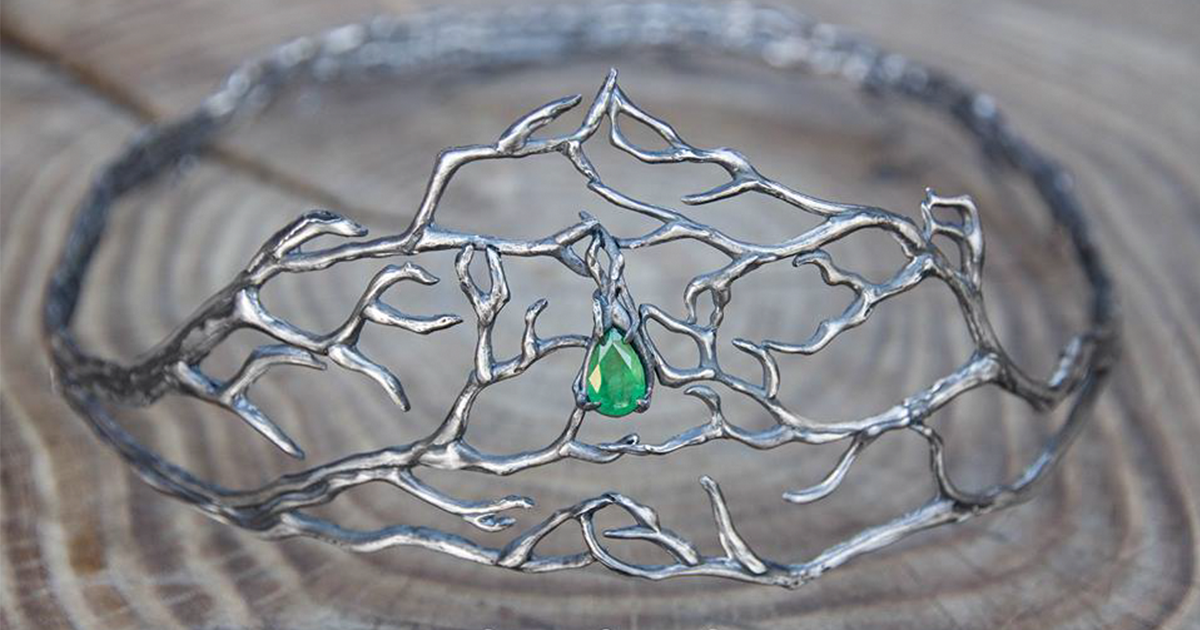
Some families argue over who forgot to take out the trash. The Kochut brothers turned sibling energy into handcrafted jewelry that looks as if a forest, a mountain stream, and a fantasy novel all met for coffee and decided to become wearable art. Yuri, Roman, and Igor Kochut, three Ukrainian brothers from Uzhhorod, built a jewelry brand around nature-inspired design, hand craftsmanship, and a deep respect for materials that feel alive before they ever become rings, pendants, or bracelets.
Their story is more than a charming “brothers with tools” tale. It is a case study in how modern artisan jewelry can combine engineering, tradition, imagination, and emotional storytelling. Kochut jewelry often features branches, bark textures, raw stones, floral shapes, insects, symbolic patterns, and organic metalwork. The result is jewelry that does not politely sit on the hand like a shy accessory. It makes an entrance. Quietly, elegantly, and sometimes with the energy of a tiny enchanted tree.
In a market crowded with mass-produced pieces, Kochut stands out because the brand’s work feels personal. Every curve, stone, and hammered detail suggests a human hand and a natural source. This is why the story of three Ukrainian brothers creating jewelry inspired by nature continues to attract people who love handmade jewelry, nature engagement rings, unique wedding bands, Ukrainian craftsmanship, and meaningful design.
Who Are the Kochut Brothers?
The Kochut brand was founded by three brothers: Yuri, Roman, and Igor Kochut. They come from Uzhhorod, a city in western Ukraine near the Carpathian region. That geography matters. When your surroundings include forests, mountains, river valleys, changing seasons, and old-world architecture, inspiration does not exactly have to knock politely. It kicks the door open wearing mossy boots.
The brothers began experimenting with handmade objects when they were young. Before their professional jewelry work became known internationally, they tried different materials and techniques, including wood, ceramic, copper, brass, tin, steel, and eventually silver, gold, and gemstones. Their background in mechanical engineering gave them a technical foundation that many purely artistic brands do not have. They learned how metals behave under pressure, heat, cutting, polishing, oxidizing, and shaping.
That blend of engineering and art became the heart of Kochut jewelry. Their pieces are not only decorative; they are constructed. They are planned, modeled, cast, carved, finished, and set with a careful understanding of structure. In plain English: the jewelry looks magical, but the magic wears safety goggles.
Why Nature Became Their Design Language
Nature is the main character in the Kochut story. The brothers have described inspiration coming from stones, forests, mountain peaks, the sky, moss on tree bark, insects, branches, and dreamlike natural forms. Instead of treating nature as a pretty background, they use it as a design system. A twig becomes a ring band. Bark becomes texture. A raw crystal becomes the emotional center of a pendant. A flower becomes a sculptural setting. A tree becomes a symbol of roots, memory, growth, and connection.
This approach is powerful because nature-inspired jewelry has always carried meaning. Leaves suggest renewal. Branches suggest growth. Flowers suggest beauty and transformation. Stones suggest time, earth, and endurance. When these motifs are used thoughtfully, jewelry becomes more than decoration. It becomes a small personal landscape.
That is especially true for engagement rings and wedding bands. A smooth, standard ring can be beautiful, but a branch-like ring with a gemstone tucked into the design feels like it has a story. It may remind the wearer of a forest walk, a proposal outdoors, a shared love of hiking, or simply the idea that love grows in imperfect, beautiful, living shapes.
The Kochut Style: Organic, Detailed, and Deeply Handmade
Kochut jewelry is often described as handcrafted, nature-inspired, and artistic. The brand’s collections have included themes such as floral designs, forest elements, emotional symbolism, fantasy motifs, and Mokume Gane metalwork. The pieces are usually not minimalist in the “barely there” sense. They are detailed, textured, and expressive. They look like they have been discovered rather than manufactured.
One of the most recognizable Kochut ideas is the branch ring. Instead of a perfectly plain band, the metal may twist and stretch like a small twig. The surface can show bark-like texture. A gemstone may appear as if it has grown naturally from the branch. This creates the feeling that the ring belongs to a woodland queen, a poetic botanist, or someone who owns at least one very dramatic candle.
The brothers also use raw and unusual stones, which helps each piece feel one-of-a-kind. A polished gemstone can be stunning, but a raw crystal has a different personality. It has edges, inclusions, unevenness, and visual surprises. In Kochut’s design language, those irregularities are not flaws. They are the point. Nature does not mass-produce identical sunsets, and Kochut does not try to make every stone behave like it came from a spreadsheet.
Engineering Meets Poetry
The most interesting thing about the Kochut brothers is not only that they make beautiful jewelry. It is that they approach beauty through both emotion and technique. Their mechanical engineering background helps them understand metal at a practical level. Jewelry must be wearable, durable, balanced, and comfortable. A ring can look like an enchanted oak branch, but it still has to survive real life: handwashing, winter gloves, desk work, grocery bags, and the occasional dramatic hand gesture during a conversation.
Many Kochut pieces involve wax casting, hand finishing, stone setting, polishing, oxidation, and decorative coatings. Oxidized silver can create dark, moody contrast that makes details stand out. Gold can add warmth. Rhodium and other surface treatments can change color and durability. These choices are not random. They help give each piece its atmosphere.
The brothers also use 3D modeling for some designs, which allows precision before the physical work begins. This is a strong example of modern artisan jewelry: technology does not replace the hand; it supports it. The design can be carefully developed, but the final character still comes from skilled finishing and material sensitivity.
Mokume Gane and the Beauty of “Wood Grain” Metal
One technique associated with Kochut’s work is Mokume Gane, a Japanese metalworking method known for patterns that resemble wood grain. The name is often translated as “wood grain metal.” In jewelry, it involves layering different metals and manipulating them so that flowing, organic patterns appear across the surface.
For a nature-inspired brand, Mokume Gane makes perfect sense. It lets metal behave visually like wood, water, stone, or clouds. No two patterns are exactly alike, which fits perfectly with Kochut’s love of uniqueness. A Mokume Gane ring can feel ancient and futuristic at the same time, like something discovered in a mountain cave by a very fashionable archaeologist.
This technique also reinforces the idea that jewelry can show process. Instead of hiding how something is made, Mokume Gane celebrates transformation. Layers become pattern. Pressure becomes beauty. Fire becomes structure. That is not a bad metaphor for life, marriage, or trying to assemble furniture without losing your dignity.
Ukrainian Craftsmanship With a Global Audience
Kochut began as a Ukrainian workshop, but its audience is international. The brand has developed online channels and regional websites that introduce its jewelry to customers beyond Ukraine. Its identity remains rooted in Ukrainian craftsmanship, but the emotional language of the work travels easily. A branch, a stone, a flower, or a tree does not need translation.
That global reach is important because handmade jewelry buyers often want more than a product. They want a story. They want to know who made the piece, what inspired it, and why it feels different from something pulled out of a factory tray. Kochut offers that story naturally: three brothers, a home workshop, experiments with humble materials, engineering education, Ukrainian roots, and a long devotion to turning nature into wearable art.
The brothers’ work also reflects a larger movement in jewelry design. Modern buyers increasingly look for custom pieces, artisan finishes, colored gemstones, raw stones, botanical motifs, and meaningful symbolism. Instead of choosing jewelry only by carat size or shine, many people now ask, “Does this feel like me?” Kochut answers that question with rings and pendants that feel personal, textured, and emotionally specific.
What Makes Kochut Jewelry Different?
1. Nature Is Not Just Decoration
Many brands use a leaf here or a flower there. Kochut goes deeper. Nature shapes the structure of the jewelry. Branches become bands. Bark becomes surface. Stones become characters. The design grows from the natural idea rather than simply placing a natural symbol on top.
2. The Pieces Feel Individual
Because the brand often uses handcrafting, textured metal, raw stones, and complex finishes, the jewelry has a strong sense of individuality. Even similar designs can feel different because the stones and surface details vary.
3. The Work Balances Romance and Strength
Kochut jewelry can be delicate, but it rarely feels fragile in spirit. The pieces often have a rugged, earthy elegance. They are romantic, but not sugary. Think less “princess in a glass castle” and more “forest poet who knows how to build a cabin.”
4. The Brand Has a Clear Story
Good branding is not just a logo. It is memory. People remember Kochut because the story is simple and strong: three Ukrainian brothers create handmade jewelry inspired by nature. That sentence alone has roots, characters, craft, place, and emotion.
Nature-Inspired Jewelry and the Art Nouveau Connection
Kochut’s work also fits into a long history of nature-inspired design. Art Nouveau, a style popular from the late 19th to early 20th century, famously used flowing lines, flowers, vines, insects, and organic forms in jewelry, glass, architecture, and decorative arts. Designers of that era wanted to move away from rigid historical imitation and create something alive, fluid, and modern.
Although Kochut is a contemporary brand, its love of organic forms echoes that tradition. The difference is that Kochut’s work often feels more earthy and tactile. Art Nouveau can be dreamy and decorative; Kochut often feels like it still has soil under its fingernailsin the best possible way.
This connection helps explain why nature-inspired jewelry never really goes out of style. Trends may change, but humans keep returning to flowers, trees, stones, animals, and the sky for meaning. Nature is the oldest design archive on Earth, and thankfully, it does not require a monthly subscription.
Examples of Kochut-Inspired Design Themes
While individual collections and product names change over time, several recurring themes define the Kochut aesthetic.
Branch and Bark Rings
These designs mimic the texture and movement of tree branches. They are popular for engagement rings and wedding bands because they symbolize growth, resilience, and natural connection.
Tree of Life Motifs
The Tree of Life is a powerful symbol found in many cultures. In jewelry, it often represents family, roots, strength, renewal, and spiritual balance. Kochut’s approach gives this symbol a sculptural, organic feeling.
Raw Stone Jewelry
Raw crystals and natural stones give the pieces a wilder look. Instead of perfect symmetry, the design celebrates natural character. This is ideal for people who like jewelry with personality rather than showroom stiffness.
Floral and Forest Elements
Flowers, leaves, vines, insects, and forest textures appear throughout nature-inspired jewelry. Kochut uses these elements with enough detail to feel artistic but enough wearability to remain practical.
Fantasy and Mythic Details
Some Kochut pieces have a fantasy quality. They may feel elvish, medieval, symbolic, or mythical. This makes the brand especially appealing to people who love jewelry that feels like it wandered out of a legend and politely asked for a ring box.
How to Style Nature-Inspired Jewelry
Nature-inspired jewelry works best when it is allowed to breathe. A detailed Kochut-style ring can be the centerpiece of an outfit, so it does not need to fight six bracelets, four statement necklaces, and earrings visible from another time zone.
For everyday wear, pair a textured branch ring with simple clothing: linen shirts, knitwear, denim, neutral colors, or soft earth tones. The contrast between organic jewelry and clean styling helps the piece stand out. For formal occasions, nature-inspired gold or gemstone jewelry can soften a structured dress, suit, or minimalist look.
For engagement or wedding styling, Kochut-inspired rings are ideal for couples who want something meaningful and nontraditional. They pair beautifully with outdoor ceremonies, woodland weddings, garden venues, rustic tablescapes, and floral arrangements. That said, they also work perfectly well in a city hall wedding. Trees grow in cities too; they just have stronger opinions about parking.
Why This Story Matters
The story of the Kochut brothers matters because it shows how craft can turn into identity. They did not simply copy jewelry trends. They built a recognizable world from their own interests, skills, family bond, and environment. That is the lesson many artists, designers, and small business owners can learn from them: originality often begins close to home.
Their journey also challenges the idea that traditional craft and modern technology are opposites. Kochut uses handwork, engineering knowledge, digital design, metal science, and old-world inspiration together. The result is not cold or mechanical. It is warmer because the technique supports the emotion.
Most importantly, Kochut jewelry reminds us that beauty does not have to be polished into sameness. A rough stone can be beautiful. A bark texture can be elegant. A ring can look like a branch and still feel luxurious. Nature is full of irregular lines, unexpected colors, and imperfect surfaces. The Kochut brothers simply had the good sense to listen.
Experience Notes: Living With Jewelry Inspired by Nature
Wearing nature-inspired jewelry feels different from wearing a standard accessory. A simple metal band may be elegant, but a ring shaped like a twig or set with a raw stone invites conversation. People notice it. They lean closer. They ask where it came from. Suddenly, your hand has become a tiny museum exhibit, except nobody has to whisper.
The first experience many people have with this kind of jewelry is visual surprise. Nature-inspired pieces are rarely flat or predictable. They have texture, depth, and movement. A branch ring may catch light along its raised bark pattern. An oxidized silver pendant may look darker in the grooves and brighter on the edges. A raw gemstone may change character depending on the angle. This makes the jewelry feel alive throughout the day.
There is also an emotional experience. Jewelry inspired by nature often feels grounding. It can remind the wearer of a favorite place: a forest trail, a mountain view, a garden after rain, a childhood tree, or a quiet weekend away from screens. In a world where many objects are smooth, digital, and disposable, a handcrafted piece with organic texture can feel refreshingly real.
For couples, nature-inspired engagement rings and wedding bands can carry personal meaning. A tree branch design may symbolize growing together. A floral setting may represent renewal. A stone with natural inclusions may stand for honesty and individuality. These are not generic symbols printed on a greeting card. They are built into the object itself, which makes the meaning feel more intimate.
There is a practical side too. Textured jewelry develops a relationship with the wearer. Small shadows, polished high points, and darkened recesses can become more beautiful with time. Unlike ultra-slick jewelry that panics at the first scratch, organic designs often absorb wear gracefully. A little life does not ruin them. It joins the design.
Of course, detailed handmade jewelry also asks for care. Rings with raised textures, stones, or complex settings should be cleaned gently and checked occasionally. They are strong enough for normal wear, but they are not gardening tools, rock-climbing gear, or emergency bottle openers. Jewelry may be inspired by nature, but that does not mean it wants to fight a lawn mower.
The best experience comes when the wearer chooses a piece that matches their personality. Someone who loves minimalism may prefer a subtle bark-textured band. Someone drawn to fantasy may love a dramatic branch ring with a bold stone. Someone sentimental may choose a Tree of Life motif. The beauty of this style is that it offers many emotional doors into the same forest.
That is why the Kochut brothers’ work resonates. Their jewelry does not feel like decoration added at the end of an outfit. It feels like a personal object with memory, craft, and atmosphere. It gives the wearer a small piece of nature to carry through ordinary daysmeetings, errands, dinners, celebrations, and those mysterious moments when you walk into a room and forget why you entered. At least your ring still knows who it is.
Conclusion
Three Ukrainian brothers creating jewelry inspired by nature is more than a feel-good creative story. It is a reminder that meaningful design grows from place, skill, patience, and imagination. Yuri, Roman, and Igor Kochut built a brand that transforms branches, stones, flowers, forests, and symbols into wearable art. Their jewelry is handcrafted, emotional, and technically thoughtful, combining Ukrainian craftsmanship with a design language that speaks to people around the world.
In an age of fast production and look-alike accessories, Kochut proves that slow, detailed, nature-inspired jewelry still has power. A ring can be a sculpture. A pendant can be a memory. A gemstone can be a landscape. And three brothers with curiosity, tools, and a love of nature can turn metal into something that feels surprisingly alive.
Note: This article is original, written in standard American English for web publication, and based on publicly available information about Kochut, Ukrainian handmade jewelry, nature-inspired design, and artisan jewelry techniques. Source links are intentionally omitted as requested.














