
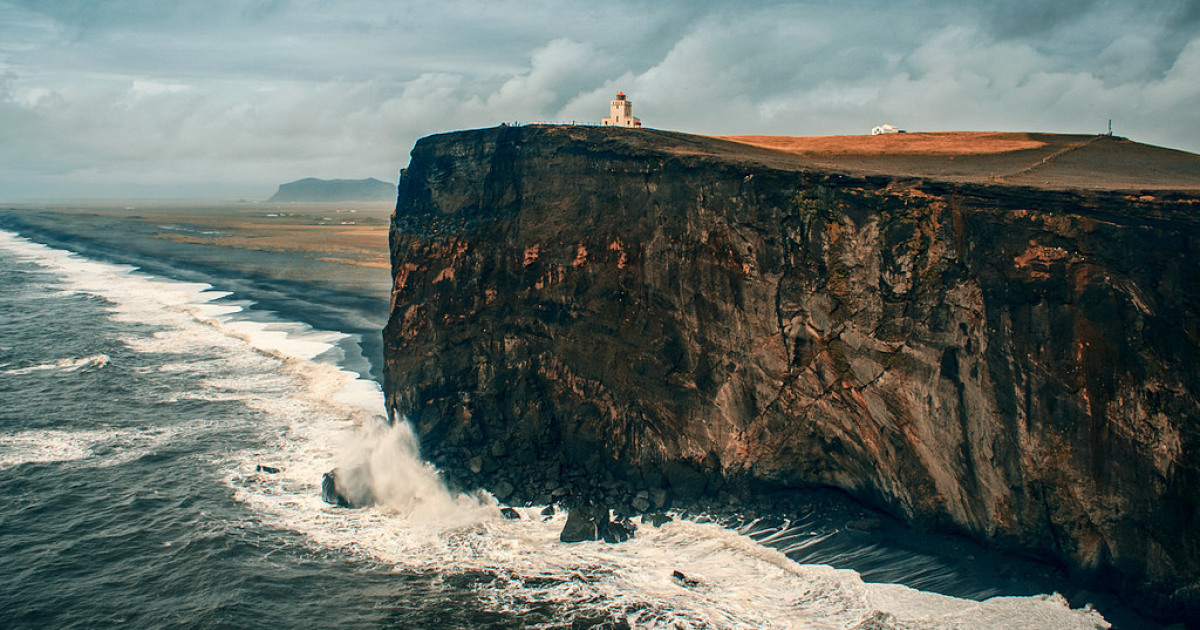
Some friends send blurry brunch photos. Some send gym selfies in lighting so dramatic it deserves its own Oscar category. And then there is my talented friend, who takes gorgeous photos of Iceland so beautiful they make your phone screen feel underqualified. One minute you are answering emails; the next, you are staring at a black sand beach, a glacier lagoon, or a green ribbon of northern lights and wondering whether your office chair has always been this emotionally small.
Iceland is one of those places that seems designed by a committee of poets, geologists, photographers, and one very enthusiastic weather wizard. It has volcanoes, glaciers, waterfalls, lava fields, mossy cliffs, steaming hot springs, ice caves, sea stacks, sheep with the confidence of retired rock stars, and skies that change mood faster than a group chat planning dinner. For a landscape photographer, it is less a destination and more an all-you-can-shoot buffet.
This article is part admiration, part Iceland travel photography guide, and part love letter to the kind of creative friend who can stand in freezing wind, adjust a tripod with numb fingers, and somehow come home with images that look like Earth showing off.
Why Iceland Looks Like It Was Built for Landscape Photography
The phrase “Land of Fire and Ice” gets used so often that it almost sounds like a tourism slogan printed on a mug. In Iceland, though, it is not marketing fluff. It is basically a geological job description. The island sits on the Mid-Atlantic Ridge, where the North American and Eurasian tectonic plates slowly pull apart. That rift creates volcanic activity, geothermal energy, rugged lava fields, and a raw, unfinished feeling in the landscape.
At the same time, Iceland is home to vast glaciers, including Vatnajökull, one of Europe’s largest ice caps. When volcanic heat and glacial ice share the same island, the results are spectacular: black sand beaches, braided glacial rivers, ice caves, steaming valleys, glacier lagoons, and waterfalls that appear to have been placed exactly where a photographer would want them. Nature, in Iceland, has suspiciously good composition skills.
The Landscape Has Built-In Drama
Many destinations make photographers hunt for a good angle. Iceland often feels like it is posing. Take the South Coast, where Seljalandsfoss drops from a cliff in a shimmering curtain and Skógafoss thunders down with the confidence of a waterfall that knows it is famous. Then there is Reynisfjara, the black sand beach near Vík, where basalt columns, sea stacks, and Atlantic waves create a scene that feels both ancient and cinematic.
My friend’s best Iceland photos do not just show beautiful places. They capture tension: soft snow against hard volcanic rock, blue ice against black sand, warm sunset light on cold mountains, tiny human figures standing beneath giant skies. That contrast is the secret sauce. Iceland is beautiful, yes, but it is not polite beauty. It is moody, muscular, and occasionally windy enough to rearrange your personality.
What Makes Iceland Photos So Instantly Recognizable?
Scroll through enough travel photography and you start to notice that Iceland has a visual signature. Even before someone tags the location, you can often guess it. The clues are everywhere: black beaches, glacial blues, moss-covered lava, lonely roads, turf-roofed churches, horses with luxurious hair, and waterfalls that look like they were installed by a fantasy film crew with an unlimited budget.
Black Sand Beaches and Basalt Columns
Iceland’s black sand beaches are created from volcanic material broken down by wind, waves, and time. In photos, that dark sand acts like a natural stage. White surf becomes brighter. Blue ice becomes jewel-like. A lone red jacket becomes a tiny exclamation mark in a giant monochrome sentence.
Reynisfjara is especially photogenic, but it also deserves respect. Its sneaker waves are dangerous and unpredictable, which is why good photographers keep their distance from the water. No photo is worth becoming an accidental cautionary tale. The best Iceland photographers know that patience, planning, and safety create stronger images than reckless posing ever will.
Glaciers, Ice Caves, and Diamond Beach
If black sand gives Iceland photos their drama, ice gives them their magic. At Jökulsárlón Glacier Lagoon, chunks of ice break from the nearby glacier and float through a silvery lagoon before some wash onto Diamond Beach. There, clear and blue ice fragments sit on dark volcanic sand like scattered gemstones. It is one of those places where even a casual snapshot can look expensive.
Inside Iceland’s winter ice caves, the light becomes something else entirely. Blue walls glow from within, textures ripple like frozen silk, and every curve seems sculpted by a patient artist with a fondness for cold fingers. My friend once described photographing ice caves as “trying to take portraits of time.” That sounds dramatic until you see the pictures. Then it sounds accurate.
Waterfalls That Refuse to Be Background Scenery
Iceland’s waterfalls are not shy. Gullfoss plunges in massive tiers along the Golden Circle. Seljalandsfoss lets visitors walk behind the falling water when conditions allow. Skógafoss throws mist into the air and often rewards photographers with rainbows. Smaller waterfalls appear beside roads, behind farms, below cliffs, and in places that would be major attractions almost anywhere else.
Photographically, waterfalls are generous subjects. Use a faster shutter speed and they become explosive and textured. Use a slower shutter speed with a tripod and they turn silky, dreamy, and slightly unfair to other landscapes. Iceland gives photographers both options, often with dramatic clouds included at no extra charge.
The Magic of Icelandic Light
Great landscape photography is not only about location. It is about light, and Iceland has some of the strangest, most rewarding light on Earth. Because the country sits far north, the sun behaves differently than it does in lower latitudes. In summer, daylight can stretch late into the night, creating long golden hours that feel like a cheat code. In winter, daylight is brief, but the low sun can cast soft, angled light for much of the day.
Midnight Sun: When Golden Hour Takes a Vacation
During Iceland’s summer months, the midnight sun gives photographers extended time to work with glowing skies. Instead of rushing to catch a ten-minute sunset, photographers can wander through long evenings where the light lingers and changes gradually. This is ideal for road trips, coastal shots, mountain scenes, and those peaceful images where the whole world seems to be holding its breath.
Of course, it also means sleep becomes negotiable. A photographer in Iceland during summer may say, “I’ll just take one more shot,” and suddenly it is 1:30 a.m., the sky is peach-colored, and breakfast is closer than bedtime.
Northern Lights: The Sky’s Most Dramatic Performance Review
In winter, Iceland offers the possibility of seeing the aurora borealis. The northern lights happen when charged particles from the sun interact with Earth’s magnetic field and atmosphere, producing curtains of green, purple, red, or white light. For photographers, the aurora is thrilling because it is beautiful, unpredictable, and just inconvenient enough to keep everyone humble.
Capturing the northern lights requires more than luck. Photographers usually need dark skies, clear weather, low light pollution, a sturdy tripod, manual focus, a wide aperture, and a long exposure. They also need patience, warm clothing, and the emotional resilience to stand in the cold while the aurora forecast says “maybe” with the energy of a flaky friend.
When it works, though, it really works. My friend’s aurora photos are the kind of images that make people stop scrolling. The green light seems to ripple above mountains, churches, waterfalls, or empty roads, turning familiar landscapes into something mythic. It is the difference between a nice photo and a photo that makes someone whisper, “Okay, that is ridiculous.”
What My Friend Gets Right Behind the Camera
Anyone can point a camera at Iceland and come home with something pretty. The country is generous that way. But truly gorgeous Iceland photography requires more than being present in a beautiful place. My friend’s work stands out because it has intention. The images feel composed, patient, and emotionally aware. They are not just records of where the camera was. They are stories about what it felt like to be there.
Composition That Gives the Eye Somewhere to Travel
In strong landscape photography, the viewer’s eye needs a path. A road curves toward a mountain. A river leads into the distance. A person in a yellow coat provides scale beneath a cliff. A line of waves pulls attention toward sea stacks. Iceland is full of natural leading lines, and my friend uses them beautifully.
One of my favorite photos shows a narrow road cutting through a lava field toward a snow-covered ridge. There is no dramatic sunset, no aurora, no waterfall doing Olympic-level gymnastics. Just a road, a mountain, and a soft gray sky. Yet it works because the composition invites you forward. You feel like the journey is still happening.
Color Without Turning the Landscape Into Candy
Iceland has a subtle color palette: charcoal sand, blue ice, green moss, rust-red volcanic soil, white snow, silver water, and skies that drift from lavender to gold. Editing these photos requires restraint. Push the saturation too far and the landscape starts looking like a fantasy video game menu. Keep it too flat and you lose the atmosphere.
My friend’s editing style respects the place. The photos are rich but believable. The blues in the ice glow without screaming. The greens in the moss feel alive but not radioactive. The shadows hold detail. The highlights do not look like they have been attacked by a brightness slider with unresolved issues.
Scale That Makes Humans Look Properly Tiny
Some of the strongest Iceland photos include people, but not in the usual vacation-photo way. Instead of making the person the star, they become a scale marker. A tiny figure standing near a glacier or waterfall shows how enormous the scene really is. It is humbling in the best way.
In one image, my friend captured a person standing near an ice cave entrance. The figure is small, bundled, and nearly swallowed by the blue arch of ice. The photo says more than “I went here.” It says, “Look how big the world is, and look how briefly we get to stand inside its wonders.” Not bad for a camera click.
Best Places in Iceland for Gorgeous Photos
Iceland is not short on photogenic locations. The challenge is not finding beauty; it is deciding where to point the lens before the weather changes, the light moves, or a sheep walks into the frame like it owns the copyright.
The Golden Circle
The Golden Circle is popular for good reason. It includes Þingvellir National Park, the Geysir geothermal area, and Gullfoss waterfall. For photographers, it offers tectonic rift landscapes, erupting hot springs, wide views, and powerful water features within a manageable route from Reykjavík.
The South Coast
The South Coast is a dream for Iceland travel photography. Seljalandsfoss, Skógafoss, Reynisfjara, Dyrhólaey, Vík, Sólheimajökull, Jökulsárlón, and Diamond Beach can all become unforgettable subjects. The scenery changes quickly, from farmland to cliffs to glaciers to ocean, which keeps the camera busy and the memory cards mildly nervous.
Snæfellsnes Peninsula
Often called “Iceland in miniature,” the Snæfellsnes Peninsula offers mountains, lava fields, fishing villages, sea cliffs, beaches, and the famous Kirkjufell mountain. Kirkjufell is one of Iceland’s most photographed peaks, especially when paired with the nearby waterfall. It is the kind of place where tripods gather at sunset like metal-legged birds.
The Highlands
Iceland’s Highlands are more remote and often accessible only in summer by suitable vehicles, but they reward serious photographers with rhyolite mountains, volcanic deserts, hot springs, and vast empty spaces. Landmannalaugar is especially famous for its colorful mountains and hiking trails. The Highlands feel less like a place you visit and more like a place that quietly judges whether your jacket is waterproof enough.
Photography Tips Inspired by Iceland
Looking at my friend’s Iceland photos has taught me that great images come from a blend of planning and surrender. You plan the route, pack the gear, check the weather, charge the batteries, and choose the location. Then Iceland laughs softly and changes the sky anyway.
Bring the Right Gear, But Do Not Worship It
A weather-sealed camera helps. A wide-angle lens is useful for waterfalls, auroras, beaches, and mountain scenes. A telephoto lens can compress distant ridges and isolate details. A sturdy tripod is essential for northern lights, long exposures, and low-light landscapes. Lens cloths, extra batteries, waterproof covers, and gloves are not glamorous, but neither is trying to wipe waterfall mist off your lens with a sleeve that is already wet.
Still, the gear is only part of the story. Some of the best Iceland images come from noticing: a reflection in a puddle, a bird crossing a pale sky, steam drifting over a valley, sunlight breaking through clouds for ten seconds. Cameras matter, but attention matters more.
Respect Weather and Safety
Icelandic weather changes quickly. Wind, rain, snow, fog, and sudden sunshine may all appear in the same day, possibly before lunch. Travelers should monitor road conditions, weather alerts, and local safety guidance, especially in winter or when visiting remote areas. Good photographers do not treat safety as an obstacle to creativity. They treat it as the reason they get to keep creating.
Respecting Iceland also means staying on marked paths, avoiding off-road driving, not walking on fragile moss, and never ignoring warning signs for the sake of a photo. The best souvenir is an image. The worst souvenir is a rescue invoice and a starring role in a local safety briefing.
Let Bad Weather Add Character
Blue skies are lovely, but Iceland often shines in weather that would cancel a picnic. Mist softens cliffs. Rain deepens colors. Storm clouds add drama. Snow simplifies busy scenes. Wind gives waterfalls strange sideways movement. A moody day can create more memorable photos than perfect sunshine.
My friend seems especially good at this. Instead of waiting for postcard weather, they use whatever the landscape offers. A gray sky becomes minimalism. Fog becomes mystery. Rain becomes texture. The lesson is useful beyond photography: sometimes the conditions you did not ask for are the ones that make the story interesting.
Why These Photos Feel Personal
The best thing about my friend’s Iceland photography is that it does not feel like a checklist. Yes, the famous places appear: waterfalls, black beaches, glaciers, auroras. But the images also include quieter moments: a lonely church under low clouds, steam rising behind a roadside fence, footprints in snow, a parked car dwarfed by mountains, a coffee cup on a dashboard while rain dots the windshield.
That is what separates gorgeous travel photography from generic destination content. The camera does not simply ask, “What is impressive here?” It asks, “What does this moment feel like?” Iceland provides the spectacle, but the photographer provides the point of view.
Experiences Related to Watching a Friend Photograph Iceland
Watching a talented friend photograph Iceland is an experience of admiration mixed with mild personal embarrassment. You realize very quickly that you both saw the same mountain, but only one of you understood what to do with it. I might look at a glacier and think, “Wow, big ice.” My friend looks at it and sees layers, shadow, texture, scale, blue tones, a foreground, a possible leading line, and the exact moment when the cloud cover might open for five seconds. This is why some people make art and some of us make enthusiastic comments like, “Nice!”
One of the most memorable experiences connected to these Iceland photos is the feeling of waiting. Photography in Iceland is not always action-packed. Sometimes it is standing beside a tripod while the wind tries to enter your jacket through legal and illegal means. Sometimes it is sitting in a rental car, watching rain slide down the windows, hoping the mountain will reappear. Sometimes it is driving an hour toward a possible aurora display that may or may not happen, which feels suspiciously like chasing a celebrity who has not confirmed attendance.
But that waiting changes how you see. You begin to notice small things: how the clouds move over a ridge, how the color of ice shifts when the sun drops lower, how the ocean sounds different on a black sand beach, how a waterfall’s mist catches light before the rainbow appears. Iceland rewards people who slow down. My friend’s photos carry that slowness inside them. They feel patient, not grabbed.
There is also a social experience to these photos. Every time my friend shares a new Iceland image, the reactions are predictable. Someone says, “This looks unreal.” Someone asks what camera they used. Someone else announces that Iceland is now on their bucket list, as if the photo personally reached into their calendar and rearranged their future. A good photo does that. It does not simply show where the photographer went. It creates desire, curiosity, and a tiny ache to be somewhere else.
I especially love the photos that include imperfections. A bit of spray on the lens. Wind-blown grass. A road sign in the distance. A boot print near the frame. These details remind me that the image was made by a real person in real weather, not generated by a fantasy machine. Iceland can look otherworldly, but the best photos keep one foot in the human experience. They say: someone stood here, felt the cold, waited for the light, and cared enough to frame the moment well.
The experience also changed how I think about travel. Before seeing my friend’s Iceland photos, I thought of travel photography mostly as proof: proof you went, proof you saw, proof your vacation contained at least one impressive background. Now I see it more as interpretation. Ten people can stand at the same waterfall and make ten different images. One will focus on power. One on mist. One on scale. One on the tiny flowers near the path. The location is shared, but the vision is personal.
That is why I keep returning to my friend’s Iceland gallery. The photos are gorgeous, yes, but they are also generous. They let me borrow someone else’s attention. They remind me that beauty is not just found; it is noticed, waited for, protected, and sometimes edited at midnight with cold hands and too much coffee. If Iceland is a masterpiece of fire, ice, wind, and water, then my talented friend has done something wonderful: they brought back pieces of that masterpiece without taking anything away from the land itself.
Conclusion
A talented friend of mine takes gorgeous photos of Iceland, and the more I look at them, the more I understand why this country inspires photographers from around the world. Iceland is not merely scenic. It is layered, restless, dangerous in places, delicate in others, and constantly changing. Its glaciers, waterfalls, volcanoes, beaches, auroras, and strange northern light create endless opportunities for unforgettable images.
But the real beauty of these photos comes from the person behind the camera. Iceland provides the drama; the photographer provides the patience, respect, timing, and emotional intelligence. That combination turns landscapes into stories. It turns travel into art. And it turns a simple message from a friend into a sudden desire to pack waterproof boots, charge every battery in the house, and go see what the sky is doing near the Arctic Circle.
Note: This is an original, publish-ready SEO article written in standard American English and informed by established travel, geology, safety, and photography knowledge about Iceland.














