
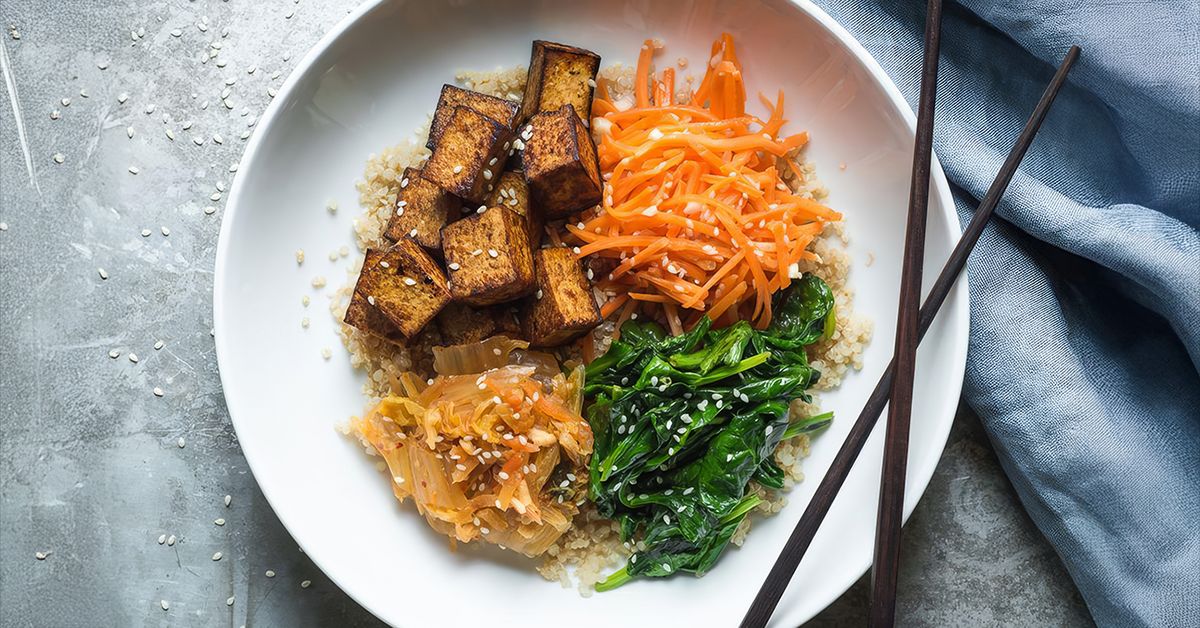
Some dinners arrive at the table quietly. Veggie bibimbap bowls with tofu and kimchi do not. They show up looking like a rainbow took a yoga class, landed in a bowl of rice, and decided to become dinner. There is crisp tofu, glossy vegetables, tangy kimchi, nutty sesame oil, warm rice, and a spicy-sweet gochujang sauce that basically says, “Please cancel your bland meal plans.”
Bibimbap is a beloved Korean mixed rice bowl built around balance: rice, vegetables, protein, sauce, texture, and heat. The word itself points to the whole ideamixed rice. But the magic is not just in the mixing. It is in the contrast. Hot rice meets cool kimchi. Crispy tofu meets tender spinach. Sweet carrots meet earthy mushrooms. The sauce ties everything together like the friend who remembers everyone’s birthday and also brings snacks.
This vegetarian bibimbap bowl keeps the spirit of the classic dish while making it weeknight-friendly and plant-forward. Instead of beef, we use tofu. Instead of complicated prep, we cook simple vegetables quickly and season them well. Instead of pretending dinner must be fancy to be exciting, we let humble ingredients do the heavy lifting.
What Makes Veggie Bibimbap Bowls So Good?
The best veggie bibimbap bowls work because they are not one-note. A good bowl has five key elements: a hearty base, colorful vegetables, a satisfying protein, something fermented or pickled, and a bold sauce. In this version, short-grain rice or brown rice forms the base, tofu adds plant protein, kimchi brings tang and crunch, and gochujang sauce gives the bowl its signature Korean-inspired kick.
Unlike many “healthy bowls” that taste like a spreadsheet with lettuce, bibimbap feels generous. It is nutritious without acting smug about it. You get fiber from vegetables, protein from tofu, complex flavor from fermented kimchi, and energy from rice. It is the kind of meal that satisfies both the person trying to eat more vegetables and the person who believes “more vegetables” usually means sadness with dressing.
Ingredients for Veggie Bibimbap Bowls with Tofu and Kimchi
For the Bowl
- 2 cups cooked short-grain white rice, brown rice, or mixed grain rice
- 14 ounces extra-firm tofu, pressed and cubed
- 1 tablespoon soy sauce or tamari
- 1 teaspoon toasted sesame oil
- 1 teaspoon rice vinegar
- 1 tablespoon cornstarch for crispier tofu
- 1 tablespoon neutral oil for cooking
- 1 cup spinach or baby spinach
- 1 cup carrots, julienned or shredded
- 1 cup zucchini, thinly sliced
- 1 cup mushrooms, sliced
- 1 cup bean sprouts, optional but excellent
- 1/2 cup napa cabbage kimchi, chopped
- 2 teaspoons sesame seeds
- 2 scallions, thinly sliced
- Optional: fried egg, cucumber, roasted seaweed, or avocado
For the Gochujang Sauce
- 2 tablespoons gochujang
- 1 tablespoon rice vinegar
- 1 tablespoon toasted sesame oil
- 1 tablespoon maple syrup, honey, or brown sugar
- 1 teaspoon soy sauce or tamari
- 1 small garlic clove, grated
- 1 to 2 tablespoons warm water, to thin
How to Make Veggie Bibimbap Bowls
1. Press and Season the Tofu
Start with extra-firm tofu. Press it for at least 15 minutes to remove excess water. This step is not glamorous, but neither is soggy tofu, and we are choosing joy today. Cut the tofu into cubes and toss it with soy sauce, sesame oil, rice vinegar, and cornstarch. The cornstarch helps create a lightly crisp exterior when pan-fried or baked.
2. Cook the Tofu Until Golden
Heat a skillet over medium-high heat with a little neutral oil. Add the tofu in a single layer and cook until golden on several sides, about 8 to 10 minutes. Avoid stirring every three seconds. Tofu needs a little personal space to brown properly. When it is crisp and golden, set it aside.
3. Prepare the Vegetables Separately
Classic bibimbap often treats each vegetable with care, cooking and seasoning them separately so every topping has its own personality. You do not need to turn your kitchen into a restaurant prep station, but cooking vegetables one at a time does make a difference.
Sauté spinach quickly with a drop of sesame oil and a pinch of salt. Cook carrots until just tender but still bright. Sauté zucchini until lightly softened. Cook mushrooms until they release their moisture and turn savory and golden. Bean sprouts can be blanched or quickly stir-fried. The goal is not mush. The goal is “vegetables with dignity.”
4. Mix the Sauce
In a small bowl, whisk together gochujang, rice vinegar, sesame oil, sweetener, soy sauce, garlic, and warm water. The sauce should be pourable but not watery. Taste and adjust. Add more sweetener for balance, more vinegar for brightness, or more gochujang if you want the bowl to politely slap your taste buds awake.
5. Assemble the Bowls
Spoon warm rice into bowls. Arrange tofu, spinach, carrots, zucchini, mushrooms, bean sprouts, and kimchi in separate sections on top. This is your moment to be artistic. Make it pretty. You are about to mix it all together anyway, but for 30 glorious seconds, your dinner can look like a magazine cover.
Drizzle with gochujang sauce, sprinkle with sesame seeds and scallions, and add optional toppings such as a fried egg, cucumber ribbons, roasted seaweed, or avocado. Serve immediately.
Why Kimchi Belongs in This Bowl
Kimchi is not just a sidekick here. It is the flavor alarm clock. Its tangy, spicy, fermented crunch wakes up the rice, cuts through the richness of sesame oil, and makes tofu taste more exciting. Napa cabbage kimchi is the most common choice, but radish kimchi also works beautifully if you like extra crunch.
For vegetarian bibimbap bowls, check the kimchi label. Some traditional kimchi contains fish sauce, shrimp paste, or other seafood ingredients. Many U.S. grocery stores now carry vegan kimchi, and it is usually clearly labeled. If you are making this bowl fully plant-based, vegan kimchi is the way to go.
Tofu Tips for Better Texture
Tofu has a reputation problem, mostly because people keep treating it like a wet sponge and then acting surprised when it behaves like one. The fix is simple: choose extra-firm tofu, press it, season it, and cook it with enough heat.
For pan-fried tofu, use a large skillet so the cubes are not crowded. Crowding traps steam, and steam is the enemy of crisp edges. For baked tofu, spread cubes on a parchment-lined baking sheet and bake at 400°F until golden, flipping once. For air-fryer tofu, cook at 375°F until crisp, shaking halfway through.
If you want deeper flavor, marinate tofu for 20 to 30 minutes before cooking. A simple mix of soy sauce, garlic, sesame oil, ginger, and rice vinegar works well. Just remember to pat the tofu lightly before adding cornstarch, or the coating can get clumpy.
Best Vegetables for Vegetarian Bibimbap
The classic bibimbap vegetable lineup often includes spinach, bean sprouts, carrots, mushrooms, zucchini, and sometimes cucumber or fernbrake. For a home version, use what you have. The bowl is forgiving. It will not call the bibimbap police if you add roasted broccoli.
Great Vegetable Options
- Spinach: Quick-cooking, tender, and perfect with sesame oil.
- Carrots: Sweet, colorful, and pleasantly crisp.
- Zucchini: Mild and juicy, especially when lightly sautéed.
- Mushrooms: Earthy and savory, adding depth without meat.
- Bean sprouts: Fresh, crunchy, and classic.
- Cucumber: Cool and refreshing, best added raw.
- Red cabbage: Crunchy, bright, and budget-friendly.
- Bok choy: Tender stems, leafy tops, and fast cooking.
Rice Choices: White, Brown, or Crispy?
Short-grain white rice is traditional and gives bibimbap that slightly sticky, comforting base. Brown rice adds nuttier flavor and more fiber. Mixed grains can make the bowl heartier. Cauliflower rice works if you want a lighter version, although it will not deliver the same cozy chew as real rice.
If you want a crispy rice effect without a stone bowl, heat a cast-iron or nonstick skillet with a little sesame oil. Press cooked rice into the pan and let it cook undisturbed until the bottom gets golden and crisp. Then transfer it to your bowl or build the toppings right in the skillet. This gives you a dolsot-style crunch without needing special equipment.
How to Make It Vegan, Gluten-Free, or Meal-Prep Friendly
Vegan Version
This bowl is already easy to make vegan. Use tofu as the protein, skip the egg, choose vegan kimchi, and sweeten the sauce with maple syrup or brown sugar instead of honey.
Gluten-Free Version
Use tamari instead of soy sauce and check your gochujang label, because some brands contain wheat. Many gluten-free gochujang options are available, but the label matters.
Meal Prep Version
Cook the rice, tofu, and vegetables ahead, but store the kimchi and sauce separately. Reheat the rice, tofu, and cooked vegetables before serving, then add kimchi and sauce at the end. This keeps the kimchi lively and prevents the whole container from becoming one spicy mystery puddle.
Food Safety and Storage Tips
Because bibimbap bowls often include cooked rice, tofu, and vegetables, storage matters. Refrigerate leftovers promptly in airtight containers. Cooked leftovers are generally best eaten within three to four days. Reheat rice and tofu until steaming hot, and add kimchi after reheating to preserve its crunch and tang.
For lunch packing, store sauce in a small container. Nobody wants to open a lunchbox and discover that gochujang has staged a hostile takeover. Keep wet ingredients separate until mealtime whenever possible.
Flavor Variations to Try
Once you understand the basic bibimbap bowl formula, you can change it endlessly. Try spicy gochujang tofu with roasted sweet potatoes in winter. Add cucumber, shredded lettuce, and chilled tofu in summer. Use quinoa instead of rice for a modern grain bowl twist. Add edamame for extra plant protein. Top with crushed roasted seaweed for a salty finish.
For a richer bowl, add a sunny-side-up egg and let the yolk mix into the sauce. For a crunchier bowl, add toasted sesame seeds, roasted peanuts, or crispy onions. For more heat, add gochugaru or a spoonful of extra kimchi juice to the sauce.
Common Mistakes to Avoid
Using Wet Tofu
Unpressed tofu does not brown well. Press it first, even briefly. Your skillet will thank you.
Overcooking the Vegetables
Bibimbap is about contrast. If every vegetable is soft, the bowl loses its sparkle. Cook vegetables just enough to bring out flavor while keeping color and texture.
Adding Too Much Sauce Too Soon
Gochujang sauce is bold. Start with a spoonful, mix, taste, and add more. You can always increase the heat, but you cannot un-spice your rice without calling in emergency cucumbers.
Forgetting the Sesame Oil
Toasted sesame oil gives bibimbap its nutty aroma. Use it as a finishing flavor, not just a cooking oil. A little goes a long way.
Serving Suggestions
Veggie bibimbap bowls with tofu and kimchi are satisfying on their own, but they also pair well with simple sides. Try cucumber salad, miso soup, roasted seaweed, quick pickled radishes, or steamed edamame. For a cozy dinner, serve with hot barley tea or sparkling water with lime.
If you are cooking for a group, set up a bibimbap bar. Place rice, tofu, vegetables, kimchi, sauce, sesame seeds, scallions, and optional eggs in separate bowls. Let everyone build their own. This is especially useful when one person wants extra spice, another wants no mushrooms, and someone else believes every meal needs avocado because they are emotionally committed to brunch.
Experience Notes: What It Is Like to Make and Eat This Bowl
The first time you make veggie bibimbap bowls at home, you may look at the separate piles of vegetables and wonder if you have accidentally signed up for a tiny cooking marathon. Spinach in one pan, carrots after that, mushrooms next, tofu waiting on the cutting board like it has a meeting to attend. But once the bowl comes together, the effort makes sense. Each ingredient has its own flavor, and when you finally mix everything, the result tastes layered instead of random.
There is also something deeply satisfying about building the bowl. You start with warm rice, then arrange toppings in little colorful sections. The orange carrots sit beside green zucchini, the mushrooms add a darker savory corner, the tofu brings golden cubes of protein, and the kimchi sits there glowing red like it knows it is the main character. Even before the sauce goes on, the bowl looks cheerful.
The real moment happens when you mix it. Bibimbap is not a dish for people who fear commitment. You take that carefully arranged bowl and stir it until the sauce coats the rice, the kimchi mingles with the vegetables, and the tofu gets dragged into the delicious chaos. It feels a little wrong at first, like messing up a freshly made bed. Then you take a bite and immediately understand the assignment.
The tofu is especially important. When it is crisp outside and tender inside, it gives the bowl substance. It absorbs the sauce without disappearing. The kimchi brings acidity that keeps the rice from feeling heavy. The sesame oil adds warmth, the vegetables add freshness, and the gochujang sauce makes everything taste intentional. This is not a sad vegetarian substitute for bibimbap. It is a complete dinner with its own personality.
As a weeknight meal, this bowl has one major advantage: it welcomes leftovers. Yesterday’s rice? Perfect. Half a zucchini? Slice it. A lonely carrot? Shred it. Mushrooms that need a purpose before they become compost? Bibimbap has a job opening. Even the sauce can be made ahead and kept in the refrigerator for several days. Once you have the sauce ready, the bowl becomes much faster.
It is also a great recipe for learning how to season vegetables simply. A pinch of salt, a little garlic, a few drops of sesame oil, and a hot pan can do more than a complicated dressing. The vegetables do not need to be buried under sauce. They just need enough seasoning to show up confidently.
Another useful lesson: kimchi changes the whole mood of a dish. Add a little, and the bowl tastes bright. Add a lot, and it becomes bold, funky, spicy, and impossible to ignore. If you are new to kimchi, start small. If you already love it, add extra and drizzle in a spoonful of kimchi juice. That move is not subtle, but subtlety is overrated at dinner.
Veggie bibimbap bowls also make eating vegetables feel less like a duty. Nobody is sitting at the table negotiating with plain steamed broccoli. Instead, every bite is different. One spoonful has tofu and mushrooms. The next has kimchi and spinach. The next has crispy rice from the bottom of the pan. It keeps your attention, which is more than can be said for many “healthy dinner bowls” that taste like they were designed by a committee of tired rabbits.
For meal prep, the best experience comes from storing components separately. Keep rice in one container, tofu and cooked vegetables in another, sauce in a small jar, and kimchi in its own container. At mealtime, reheat the rice and tofu, then add kimchi and sauce fresh. The result tastes closer to a newly made bowl and less like leftovers wearing a disguise.
In the end, making veggie bibimbap bowls with tofu and kimchi feels like a small kitchen win. It is colorful, flexible, nourishing, and exciting enough to break the “what should I eat?” loop. It proves that vegetarian food can be comforting, spicy, crunchy, savory, and fun all at once. And yes, it may leave you with several bowls to wash, but that is a small price to pay for a dinner that tastes like it has a personality.
Conclusion
Veggie bibimbap bowls with tofu and kimchi are the perfect mix of comfort food and fresh, colorful eating. They bring together warm rice, crisp tofu, seasoned vegetables, fermented kimchi, and bold gochujang sauce in one deeply satisfying bowl. The recipe is flexible enough for busy weeknights, meal prep, vegan diets, gluten-free adaptations, and creative clean-out-the-fridge dinners.
The secret is balance. Do not rush the tofu. Do not drown the vegetables. Let the kimchi shine. Use the sauce wisely. Then mix everything together and enjoy the beautiful mess. Whether you are new to Korean-inspired cooking or already have a gochujang jar permanently living in your fridge, this bowl deserves a regular spot in your dinner rotation.











