
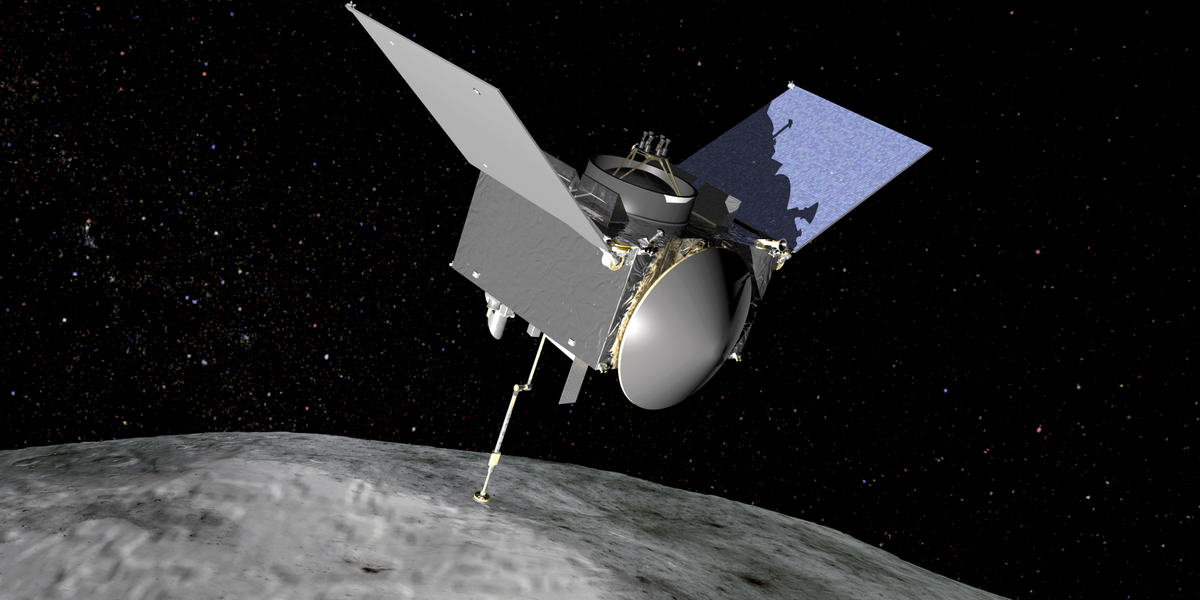
Watching NASA’s OSIRIS-REx rendezvous with an asteroid is not exactly like watching a superhero land on a skyscraper. There are no flaming capes, no dramatic one-liners, and definitely no asteroid parking attendant waving orange batons. But in its own quiet, nerve-rattling, science-soaked way, OSIRIS-REx arriving at asteroid Bennu was one of the most thrilling space events of the modern era.
Why? Because this was not just a spacecraft taking a cosmic selfie. OSIRIS-REx had to travel millions of miles, match the motion of a tiny spinning asteroid, map its rugged surface, collect ancient dust without landing, and bring that material back to Earth. That is not a road trip. That is a seven-year interplanetary obstacle course with a sample cup.
The mission gave viewers a rare chance to watch space exploration unfold in real time. NASA’s OSIRIS-REx mission showed how careful engineering, patient science, and a little bit of “please work, please work, please work” energy can turn a distant asteroid into a laboratory sample on Earth.
What Was NASA’s OSIRIS-REx Mission?
OSIRIS-REx stands for Origins, Spectral Interpretation, Resource Identification, and Security-Regolith Explorer. Yes, NASA does enjoy turning mission names into alphabet soup, but this one actually tells you what the spacecraft was built to do.
The spacecraft launched on September 8, 2016, aboard an Atlas V rocket from Cape Canaveral. Its destination was Bennu, a near-Earth asteroid about 1,600 feet wide. Bennu is small by planetary standards, but scientifically it is a heavyweight. It is a primitive, carbon-rich asteroid, meaning it preserves material from the early solar system. In plain English: Bennu is older than every mountain, dinosaur, smartphone, and questionable microwave burrito on Earth.
The mission’s goal was bold: fly to Bennu, study it up close, collect at least 60 grams of surface material, and return that sample to Earth. NASA had studied asteroids before, but OSIRIS-REx became the first U.S. mission to collect a sample from an asteroid and deliver it back to our planet.
The Big Rendezvous: When OSIRIS-REx Met Bennu
On December 3, 2018, after more than two years of travel, OSIRIS-REx arrived at Bennu. The word “arrived” sounds simple, as if the spacecraft pulled into a driveway and turned off the engine. In reality, the rendezvous required the spacecraft to precisely match Bennu’s speed and trajectory while operating in a region where gravity is almost comically weak.
Bennu’s gravity is so tiny that a spacecraft cannot behave around it the way satellites behave around Earth. OSIRIS-REx had to use careful navigation, optical tracking, and repeated maneuvers to approach safely. The asteroid is not a smooth gray marble, either. Early images revealed a surface covered with boulders, craters, ridges, and hazards. It looked less like a sandy beach and more like a cosmic construction site after a rough weekend.
For viewers following NASA’s coverage, the rendezvous was a slow-burn spectacle. Instead of an explosion-filled scene, the drama came from precision. Every image brought Bennu into sharper focus. A small dot became a lumpy spinning top. Then the spinning top became a world with geography, history, and personality. Bennu was no longer “an asteroid.” It was a place.
Why Bennu Matters So Much
Bennu is important because it may contain clues about the ingredients that helped make Earth habitable. Scientists believe asteroids like Bennu could have delivered water-bearing minerals and organic compounds to the early Earth. That does not mean Bennu brought life here in a tiny space lunchbox. It means asteroids may have delivered some of the chemistry that helped life eventually emerge.
Because Bennu is ancient, its rocks and dust preserve information from around 4.5 billion years ago. Earth has weather, plate tectonics, oceans, volcanoes, and humans with bulldozers. All of these constantly recycle the planet’s surface. Bennu, by contrast, is closer to a preserved record of early solar system material.
Studying Bennu also helps with planetary defense. Bennu is classified as a near-Earth asteroid, and tracking its orbit improves scientists’ understanding of how sunlight, gravity, and other forces can alter an asteroid’s path over time. The mission was not just about where we came from. It was also about how we protect where we live.
How to Watch the OSIRIS-REx Story Like a Space Fan
Although the original Bennu rendezvous happened in 2018, the mission remains highly watchable. NASA and mission partners released animations, approach images, press briefings, TAG sampling footage, sample-return coverage, and science updates. In other words, the mission left behind a full documentary trail for anyone who wants to relive it.
Start With the Arrival at Bennu
The best way to begin is with NASA’s arrival visuals. These show Bennu changing from a bright speck into a detailed asteroid. Viewers can see its rough shape, rotation, and rocky surface. This stage is useful because it helps you understand why the mission team quickly realized Bennu would be harder to sample than expected.
Watch the Mapping Phase
After arrival, OSIRIS-REx spent months mapping Bennu. The spacecraft studied the asteroid’s shape, brightness, mineral composition, surface temperature, and potential sample sites. This may sound like slow science, but it is where the mission became a detective story. Scientists had to find a place safe enough to touch and valuable enough to sample.
Do Not Miss the TAG Sampling Footage
The most famous moment came on October 20, 2020, when OSIRIS-REx performed its Touch-And-Go sample collection maneuver, commonly called TAG. The spacecraft descended toward the Nightingale sample site, extended its TAGSAM arm, briefly touched Bennu, fired nitrogen gas to stir up material, and backed away.
The footage is astonishing because Bennu did not behave like a solid parking lot. The surface looked loose and fragile, almost as if the spacecraft had poked a pile of dark cereal crumbs in microgravity. The spacecraft collected so much material that some particles initially leaked from the sampler head, forcing the team to stow the sample sooner than planned. It was a good problem, but still the kind that makes mission managers age six months before dinner.
The Sample Return: Bennu Comes to Earth
On September 24, 2023, OSIRIS-REx delivered its sample capsule to Earth. The capsule entered the atmosphere, parachuted down, and landed in the Utah desert. For the mission team, this was the finish line of a journey that had started seven years earlier. For scientists, it was the beginning of decades of research.
The returned material was taken to NASA’s Johnson Space Center, where teams began opening, documenting, and studying the sample under carefully controlled conditions. Early results showed carbon-rich material and evidence of water-bearing minerals. Later analyses revealed an even richer chemical story, including amino acids and nucleobases, which are important molecules in biology.
That does not mean scientists found life on Bennu. They did not. What they found is arguably more interesting: evidence that the raw ingredients associated with life’s chemistry can form in space environments and survive inside ancient asteroid material. Bennu is not an alien petri dish. It is a cosmic pantry of prebiotic clues.
What OSIRIS-REx Taught Scientists
OSIRIS-REx changed how researchers think about small asteroids. Before arrival, mission planners expected Bennu to have smoother regions with plenty of fine material. Instead, Bennu greeted them with boulders everywhere, like the asteroid version of “surprise, I redecorated.”
The mission showed that small rubble-pile asteroids can be more rugged, porous, and unpredictable than expected. Bennu’s surface also revealed signs of geological processes in microgravity, including particle movement, cracking, and space weathering. Every image helped scientists understand how sunlight, impacts, and weak gravity shape small bodies over long periods.
The returned sample provided a powerful reality check for remote sensing. Spacecraft instruments can infer minerals and chemistry from orbit, but nothing compares to studying real grains in laboratories. Once scientists had Bennu material on Earth, they could use advanced instruments far too large and delicate to fly on a spacecraft.
Why the Rendezvous Was So Hard
Rendezvousing with Bennu required more than pointing a spacecraft in the right direction. The asteroid is small, dark, and constantly moving. Its weak gravity meant navigation had to be extremely precise. Even sunlight pushing gently on the spacecraft had to be considered.
Then there was the challenge of communication delay. OSIRIS-REx could not be joystick-controlled like a drone at a park. Commands had to be planned in advance, uploaded, executed, and checked later. When the spacecraft touched Bennu, the team on Earth had to trust years of preparation, simulations, and engineering decisions.
That is what makes the mission so impressive. It combined automation and human judgment. The spacecraft had to act on its own during key moments, but every maneuver reflected years of work from scientists, engineers, navigators, software teams, technicians, and mission planners.
OSIRIS-REx Became OSIRIS-APEX
After releasing the Bennu sample capsule, the spacecraft did not retire to a quiet orbit with a tiny hammock. NASA extended the mission and renamed the spacecraft OSIRIS-APEX, short for OSIRIS-Apophis Explorer. Its new destination is Apophis, another near-Earth asteroid that will make a close approach to Earth in 2029.
OSIRIS-APEX will study how Earth’s gravity affects Apophis during that flyby. This extended mission gives scientists another rare opportunity to compare asteroid surfaces, structures, and behavior. It also proves that a well-built spacecraft can keep delivering science long after its original mission is complete.
What Viewers Can Learn From Watching the Mission
Watching OSIRIS-REx is a reminder that space exploration is not always about instant spectacle. Sometimes the most exciting achievements happen slowly, one image, one maneuver, and one careful decision at a time.
The mission also makes abstract science feel personal. A carbon-rich asteroid becomes a destination. A sample capsule becomes a treasure chest. A robotic arm touching a dark rock hundreds of millions of miles away becomes a human achievement, even though no human hands were anywhere near Bennu.
For students, space fans, science writers, and anyone who has ever looked at the night sky and wondered what is out there, OSIRIS-REx is a perfect case study. It connects astronomy, chemistry, geology, engineering, planetary defense, and the search for life’s ingredients into one unforgettable mission.
Experience: What It Feels Like to Watch NASA Chase an Asteroid
Watching NASA’s OSIRIS-REx rendezvous with Bennu is a different kind of excitement from watching a rocket launch. A launch gives you fire, thunder, and a countdown that makes everyone hold their breath. The Bennu rendezvous gives you something quieter but deeper: the feeling of seeing a distant object slowly become real.
At first, Bennu appears like a tiny dot in the darkness. It could be mistaken for a speck on a screen. Then, frame by frame, it grows. You begin to notice its shape. It is not round like a basketball. It looks more like a spinning top made by a very serious rock collector. Then the surface appears, and suddenly the mission feels less like astronomy and more like exploration.
One of the most memorable parts of watching the mission is realizing how patient space science must be. On Earth, we are used to instant updates, instant messages, instant food, and instant complaints about slow Wi-Fi. OSIRIS-REx operated on a different rhythm. The spacecraft traveled for years before reaching Bennu. It spent months mapping the asteroid before attempting to collect a sample. It took more years to return that sample home. The mission teaches patience in a world that often treats waiting as a software bug.
Another powerful experience is watching the TAG maneuver. Even if you know the outcome, the footage still feels tense. The spacecraft descends toward a surface covered with rocks. The sampling arm reaches out. For a moment, a machine built by humans touches a world that has existed since the early solar system. Then dust and fragments burst upward, and the spacecraft backs away. It is graceful, strange, and slightly chaotic, like ballet performed by a refrigerator in deep space.
The sample return creates a different emotional reaction. The capsule landing in Utah looks simple compared with the journey behind it, but that simplicity is exactly what makes it moving. Inside that small capsule was material older than Earth’s oldest rocks, material that had traveled across space, been collected by a robotic explorer, and returned safely for scientists to study. It is the kind of moment that makes science feel both enormous and surprisingly intimate.
For anyone writing about the mission, teaching it, or simply watching it for fun, OSIRIS-REx offers a rare storytelling gift. It has a clear beginning, a difficult journey, an alien destination, a risky touch, a dramatic return, and a sequel. It has ancient chemistry, modern engineering, and a spacecraft that changed names like a musician entering a new creative era.
Most importantly, the mission makes the universe feel connected to everyday life. Bennu is not just a rock far away. It is part of the same solar system story that produced Earth, oceans, chemistry, and eventually people curious enough to send a spacecraft to scoop dust from an asteroid. Watching OSIRIS-REx is watching humanity ask a very old question in a very modern way: where did all this come from?
Conclusion
NASA’s OSIRIS-REx rendezvous with asteroid Bennu was more than a milestone in robotic exploration. It was a masterclass in precision, patience, and scientific curiosity. From launch in 2016 to arrival at Bennu in 2018, sample collection in 2020, and sample return in 2023, the mission turned a distant asteroid into a hands-on scientific treasure.
For viewers, the mission remains one of the best space stories to watch because every chapter matters. The approach images reveal a hidden world. The mapping campaign shows how difficult asteroid exploration can be. The TAG maneuver delivers real suspense. The sample return brings ancient material into modern laboratories. And the OSIRIS-APEX mission promises a new asteroid adventure at Apophis.
In the end, OSIRIS-REx reminds us that space exploration is not only about going farther. Sometimes it is about bringing a tiny piece of “far away” back home, placing it under a microscope, and letting the oldest dust in the solar system tell its story.














